


Our group conducts research in the projects listed below. Please feel free to contact the individual project members or Prof. Dr. Bert Arnrich.
Cognitive Ergonomics and Health
We are a dynamic and interdisciplinary team dedicated to advancing cognitive ergonomics and healthcare technology. Our research encompasses a broad range of topics, from the innovative use of wearable EEG devices and multimodal sensors for mental health assessments to their application in assessing cognitive load in software development. We integrate advanced methodologies like affective computing, signal processing, and machine learning to enhance healthcare applications and software engineering practices. Our work aims at understanding and managing conditions and states like epilepsy, mental workload, and stress through real-time monitoring and data analysis. We encourage collaboration and knowledge-sharing, inviting students and researchers to engage with our diverse projects.
A Cost-Effective Psychophysiological Assessment of Cognitive Load in Software Development
We are researching the physiological responses and cognitive load that software developers exhibit when comprehending source code. For this purpose, we use cost-effective body sensors that can be easily deployed in software development settings and for empirical software engineering research.

Mental States in Healthy Cohorts and Epilepsy Patients
We develop AI systems to monitor mental states (stress, workload, emotions) using wearable brain sensors, moving from lab settings to real-world use and clinical applications in epilepsy patients where stress triggers seizures. We create real-time emotion detection methods from EEG data, test cognitive load monitoring in daily life, and apply these methods to epilepsy care.

SAP - Developer Experience in times of Generative AI
SAP is a German software company that aims to provide the best-possible environment to collaboratively deliver enterprise applications. This includes increasing development productivity without compromising on developer experience and satisfaction. In this SAP-HPI research project, we conduct empirical studies directly at SAP to collect real-world, multimodal data on developers' experiences at work including their interaction with Generative AI. A developer-centered holistic perspective is taken.
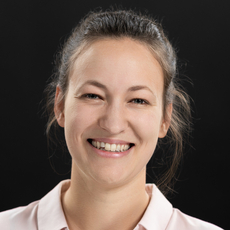
Charlotte Brandebusemeyer
PhD Student
Phone: +49-(0)331 5509-3445
Mail: char.brandebusemeyer@hpi.de
Measuring Mental Workload in daily life using EEG, PPG and EDA Sensors
We study how to measure mental workload in everyday life using brain and body sensors (EEG, PPG, and EDA). Data were collected from 20 people during lab tasks and daily activities to see how mental effort affects their bodies. The goal is to identify key physiological signals that best indicate mental workload outside controlled settings.

Clinical Informatics
We focus on the use of electronic health records (EHRs) to improve the quality and efficiency of healthcare delivery. EHRs contain a wealth of information about patients’ medical history, diagnoses, treatments, and outcomes, which can be leveraged to support clinical decision-making, enhance patient safety, and facilitate personalized medicine. However, EHR data also pose significant challenges, such as heterogeneity, complexity, privacy, and security. Our group aims to address these challenges by developing novel methods and tools for EHR data analysis and management. Some of our research topics include time-series analysis and alarm fatigue in clinical settings, where we seek to extract meaningful patterns and insights from high-dimensional and noisy EHR data, and federated learning, where we explore a secure and privacy-preserving way of sharing and learning from EHR data across different institutions.
PreCare-ML: Predicting Cardiovascular Events using Machine Learning
We develop AI systems that automatically analyze hospital records to predict individual patients' risk of heart attacks and strokes. This allows hospitals to screen all patients instead of just a selected few, catching more high-risk people who need preventive care. We standardized data across multiple hospitals, built secure AI infrastructure, and created tools to help communicate risks to patients.

Human Motion Analysis
We are a hub of innovation and exploration in healthcare technology. We focus on developing and applying advanced motion analysis techniques, such as real-time pose estimation and analysis of point cloud data, to enhance healthcare applications. We utilize cutting-edge tools, including Inertial Measurement Units (IMUs), 3D cameras, and machine learning algorithms. The scope of our research extends to mental health, exploring the complexities of disorders like Obsessive-Compulsive Disorder (OCD) and bipolar by employing biofeedback methods and human activity recognition. Our group is also involved in creating realistic synthetic data simulations in gaming engines such as Unity, understanding sensor placement optimization, and combining different sensor inputs into a multimodal classification approach. We value collaboration and knowledge-sharing and welcome students and researchers eager to contribute to and learn from our diverse projects.
Sensor‑S Study: Effect of Using Wearables on Patient Engagement in Post‑Stroke Rehabilitation
We are investigating how wearable sensors and personalized feedback delivered through a mobile application influence stroke patients’ adherence and motivation during their rehabilitation. This study aims to develop an innovative rehabilitation approach that better supports stroke patients in their recovery.

OCD Early Warning System and Sensor-Supported Treatment Options
We develop an early warning system for obsessive-compulsive disorder (OCD) using everyday smart devices like phones and watches. By tracking a person’s location and activities, the system can detect repetitive or compulsive behaviors early. Early detection allows faster treatment with cognitive behavioral therapy, improving recovery chances and supporting patients unobtrusively.
Voice Analysis for Healthcare
We pioneer cutting-edge voice analysis techniques that are applied to healthcare topics. Our focus lies in the development and application of advanced methods, leveraging machine learning algorithms and voice data, to enhance healthcare applications. Utilizing tools such as voice recordings and smartphones, our research delves into the quantification of neurological disorders, covering a spectrum from psychiatric disorders like depression and schizophrenia to neurodegenerative disorders such as Alzheimer's and Parkinson's disease.
Cognitive Load Quantification through Voice Analysis
We researched the prediction of cognitive load from voice recordings. Participants performed several tasks under different levels of cognitive load. Voice analysis was used to measure acoustic parameters in the participants' speech in order to predict the different levels of cognitive load they experienced.

Concluded Projects
For an extended overview of concluded projects, please see the separate page.