Hasso-Plattner-Institut
Prof. Dr. Bernhard Renard
 

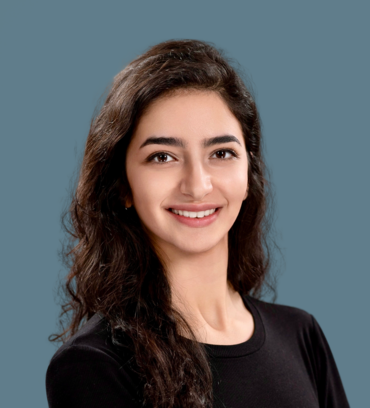
Ferdous Nasri, M.Sc.

Research Scientist, AI & Bioinformatics for Global Health

 Phone:+49 (0)331 5509 - 4969
 E-mail:Ferdous.Nasri(at)hpi.de
 Organization:Hasso Plattner Institute, University of Potsdam
 Address:August-Bebel-Str. 88, 14482 Potsdam, Germany
 Room:HPI Campus I, K-E.09/10
 LinkedIn (CV):https://www.linkedin.com/in/ferbsx/
 Twitter:@ferbsx

Research

Building Reliable AI and Machine Learning Tools for Genomic Surveillance and Global Health

I am a computer scientist and bioinformatician working at the intersection of frontier AI and global health. My research develops algorithms and machine learning methods that turn complex genomic data into reliable, real-world tools for detecting pathogens, tracking outbreaks, and supporting public health decisions, and, increasingly, for making biological data usable by AI agents without sacrificing accuracy in high-stakes settings like outbreak response.

Over the course of my PhD I have worked across the full pipeline of computational pathogen surveillance, from low-level sequence algorithms to deployed public-health tools and, most recently, AI-agent infrastructure:

  • Real-time sequence analysis : I developed and implemented an efficient indexing and alignment algorithm that can align and analyse sequences as they are being sequenced (project details).
  • Deep learning for pathogen detection : I curated a fungi-hosts database and used ResNets to detect fungal pathogenic potential from short DNA samples (published paperproject details).
  • Genomic surveillance at scale : I led the development of MpoxRadar, a worldwide MPXV genomic surveillance dashboard (published in Nucleic Acids Research), and have worked on modelling and predicting the spread of emerging diseases and their mutations, including spatio-temporal population-immunity methods presented at ICLR, ISMB/ECCB, and GLBIO  (pre-printproject details).
  • AI agents for science : Most recently, I was first author on gget virus, a deterministic retrieval layer that lets AI agents reliably access global viral sequence data, featured on Anthropic's science blog (pre-print).

This work has been shaped by international collaboration and a strong applied streak: a visiting-scientist project with the Sabeti Lab at the Broad Institute of MIT and Harvard, a research stay at IFAP in Brazil, a multi-institution early-warning-system project (DAKI-FWS) with partners including Fraunhofer HHI and the Robert Koch Institute, and several award-winning hackathon and datathon projects across Europe, most recently as a finalist at the 2026 AI×Bio Hackathon in Berlin. Alongside research, I founded Code Curious, a non-profit that has introduced over 1,600 people from underrepresented groups to programming. I enjoy not only building these tools but communicating their value; across teams, borders, and audiences.

Keywords:

Machine Learning, AI Agents for Science, Genomic Surveillance, Viral Sequence Retrieval, Epidemiology, Pathogenicity Prediction

 

Collaborations

  • Visiting Scientist on a self-organised collaborative project at the Sabeti lab at the BROAD Institute of MIT and Harvard, "a research organization dedicated to understanding the roots of disease and closing the gap between new biological insights and impact for patients" (link).
  • Research exchange stay at IFAP in Macapá, Brazil (link).
  • Multi-year project on Data and AI supported Early Warning System to stabilise the German Economy (DAKI) working closely with Fraunhofer HHI, NETCHECK, Robert-Koch Institute, HANZA, Justus-Liebeig University Giessen, LogiBall, Zuse Institute Berlin (ZIB). (link).

Publications and achievements

  • Anthropic Science post: "Paving the way for agents in biologyhttps://www.anthropic.com/research/agents-in-biology, 2026
  • Ferdous Nasri, Sarah Gurev, Patrick Varilly, Krithik Ramesh, Nuala A. O'Leary, Jonah Cool, Bernhard Y. Renard, Pardis C. Sabeti, Laura Luebbert. "Deterministic access to global viral sequence data enables robust agentic scientific discovery", arXiv 2026, https://arxiv.org/abs/2606.06749
  • Finalist at the AI x Bio Hackathon in Berlin, Germany (link) with "AGEmma: Agent system for longevity research & evaluation", 2026.
  • Won 1st place at the CENTURI Hackathon in Marseille, France (link) with "DeepForce: Deep single molecule unfolding detection", 2024.
  • Won 2nd place at the MobiDataLab Codagon in Leuven, Belgium (link) with "AI-driven analytics transforming existing urban data into accessibility plans", 2023.
  • Won 2nd place at the MobiDataLab Hackathon in Paris, France (link) with "Transforming urban pedestrian mobility: a data-driven solution for city planning", 2023 (POLIS network).
  • Ferdous Nasri*, Simon Cyrani*, Lukas Wenner, and Bernhard Y. Renard. "Immunity score calibration based on vaccination rebalancing", ICLR - MLGH Workshop, 2023; https://openreview.net/forum?id=1VMoclIsQEe
  • Won 1st Place at the MobiDataLab Datathon in Berlin, Germany (link) with "An environmental approach to disability data", 2023 (Datathon post, 'here' post).
  • Ferdous Nasri, Kunaphas Kongkitimanon, Alice Wittig, Jorge Sánchez Cortés, Annika Brinkmann, Andreas Nitsche, Anna-Juliane Schmachtenberg, Bernhard Y Renard, Stephan Fuchs. "MpoxRadar: a worldwide MPXV genomic surveillance dashboard", Nucleic Acids Research, 2023;, gkad325, https://doi.org/10.1093/nar/gkad325
  • Bartoszewicz, Jakub M.*, Ferdous Nasri*, Melania Nowicka, and Bernhard Y. Renard. "Detecting DNA of novel fungal pathogens using ResNets and a curated fungi-hosts data collection." Bioinformatics 38, no. Supplement_2 (2022): ii168-ii174. https://doi.org/10.1093/bioinformatics/btac495

Scientific community participation

2026

  • Digital Heath Innovation Forum in Potsdam, Germany (link).

2025

  • Digital Health Summit in Cape Town, South Africa (link), Poster presenting my work titled: "Spatio‑temporal immunity index tool for infectious diseases",

  • Joint Meeting of the German Research Training Groups at Schloss Dagstuhl, Germany (link) Talk and Poster presenting my work on "Algorithmic Approaches to Mutation Surveillance and Effective Population Immunity Modelling for Infectious Diseases",

  • The 33rd annual Intelligent Systems For Molecular Biology (ISMB) and the 24th annual European Conference on Computational Biology (ECCB) in Liverpool, UK (link), Poster presented with the title: "Modeling and Visualising Spatio-Temporal Immunity for Multiple Infectious Diseases"

2024

  • The 16th Great Lakes Bioinformatics (GLBIO) conference in Pittsburgh, USA (link), Talk presenting my work titled: "Graph-based Linear Optimization for Spatial-temporal Population Immunity Calculation",
  • The 23rd European Conference on Computational Biology (ECCB) in Turku, Finland (link), Poster presenting my work titled: "Spatial-temporal Immunity Index Tool for Infectious Diseases",
  • EmpowerHER+ conference in Potsdam, Germany (link), Invited panel discussion on "What needs to change? Rethinking academic career paths".

2023

  • The 31st annual Intelligent Systems For Molecular Biology (ISMB) and the 22nd annual European Conference on Computational Biology (ECCB) in Lyon, France (link), Talk presenting my work titled: "Platform for global genomic surveillance of emerging diseases applied to Mpox",
  • The Eleventh International Conference on Learning Representations (ICLR) in Kigali, Rwanda (link), Poster presentation with the title: "Immunity score calibration based on vaccination rebalancing",
  • The 20th Basel Computational Biology Conference (BC2) in Basel, Switzerland (link). Poster presented with the title: "High-resolution spatial and temporal immunity scores based on vaccination, recoveries and accounting for immunity waning".
  • Organised the Data Analytics and Computational Statistics & Future Research Ideas and ENDeavors Symposium (DACS&Friends), in Potsdam, Germany.

2022

  • First International Summer School on Data Science for Mobility in Santorini (Kamari village), Greece (link),
  • 21st European Conference on Computational Biology (ECCB 2022) in Barcelona (Sitges), Spain, Poster presentation with the title: "LIVE-DREAM: Live analysis of NGS data using an optimized hierarchical inter-leaved Bloom Filter index" (link),
  • German Conference on Bioinformatics 2022 (GCB 2022) in Halle, Germany, Poster presentation with the title: "Integration of contact, mobility, vaccination, and SARS-CoV-2 incidence data for prediction using statistical and machine learning models" (link),
  • "Workshop: The future of compressed data structures, 20 years after the FM-index" in Lipari, Italy (link),
  • Lipari School Computational Complex and Social Systems with the topic: "Data Science: Models, Algorithms, AI and Beyond" in Lipari, Italy (link).

2021

  • German Conference on Bioinformatics 2021 (GCB 2021), Poster presentation with the title: "Pathogenic potential prediction of novel fungal DNA based on a newly curated fungi-host database" (link),
  • International Society for Computational Biology (ISCB) Student Council Symposium (SCS) 2021 (link),
  • 29th Intelligent Systems for Molecular Biology and 20th European Conference on Computational Biology (ISMB/ECCB 2021), Poster presentation with the title: "Pathogenic potential prediction of novel fungal DNA using ResNets based on a newly curated fungi-host database" (link).

Teaching

Winter Term 2025/2026

  • Master thesis supervision (30 ECTS)

Winter Term 2024/2025

  • Biomedical Data Types - Genomics lectures (Bachelor's Elective Module - 3 ECTS)

Summer Term 2023

Summer Term 2022

Winter Term 2021/2022