

December 2-4, 2025
AI is shaping our future — it’s up to us to shape AI.
We are entering a new era of AI. Intelligent systems are rapidly transforming business, government, and daily life. At the same time, amid massive geopolitical shifts, there is an urgent need to reduce technological dependencies and accelerate the development of independent, cutting-edge technologies. As AI reshapes our economies, societies, and politics, the demand for true technological sovereignty has never been more critical. Will we shape the future of AI — or be shaped by it?
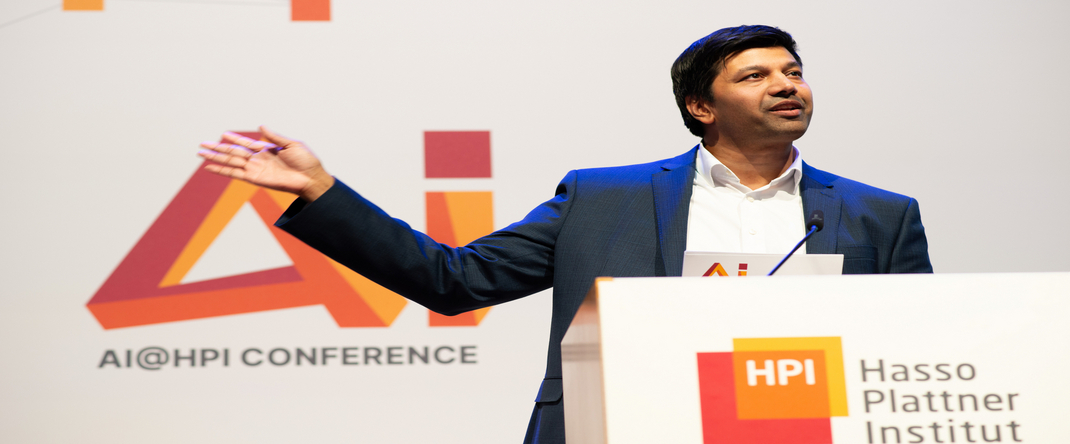
The AI@HPI Conference: Shaping AI Sovereignty was dedicated to one of the defining challenges of our time: creating a framework for AI that is innovative, values-driven, and future-proof. The conference brought together scientific excellence, economic responsibility, and political leadership to develop concrete strategies for a sovereign and independent approach to artificial intelligence.
A Glimpse into the AI@HPI Conference
A short video capturing the atmosphere, conversations, and ideas shared during the conference.


Key Topics of the Conference
We aimed to address the big questions of where AI is heading and how Europe can take the lead with systems that are competitive, responsible, and sovereign. To truly achieve AI sovereignty, we must engage in a comprehensive discussion across multiple dimensions — including technology, regulation, infrastructure, and data. Main topics in our program included:
- How do we achieve European digital sovereignty in artificial intelligence through coordinated infrastructure, innovation, and administration?
- How can we empower German and European industry and SMEs to harness AI systems and drive sustainable value creation?
- What strategies will build a strong European science and innovation ecosystem for AI?
- How can legal and regulatory frameworks ensure trustworthy development, implementation, and governance of sovereign AI?
- What values should guide AI development to support democracy, civil society, and public trust across Europe?
The event featured keynotes, panel discussions, technical sessions, in-depth workshops and networking opportunities.
Speakers (Selection)
-
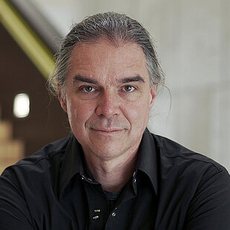
Prof. Dr. Holger H. Hoos
Professor in AI at the RWTH Aachen University, Chair at CAIRNE
More Prof. Dr. Holger H. Hoos
Professor in AI at the RWTH Aachen University, Chair at CAIRNE
Holger H. Hoos holds an Alexander von Humboldt Professorship in AI at RWTH Aachen University (Germany), where he also leads the RWTH AI Center. Holger's research is aimed at methodological and technological advances in human-centred AI, AI for Good and AI for All. Specifically, he seeks to improve the efficiency of AI methods, by automatically increasing performance and reducing resource needs; and to broaden access to and use of cutting-edge AI methods. Overall, Holger and his group develop and study AI methods that augment rather than replace human intelligence, and that help human experts to overcome their biases and limitations. Known for his work on machine learning and optimisation methods for the automated design of high-performance algorithms and on stochastic local search, Holger has developed - and vigorously pursues - the paradigm of programming by optimisation (PbO); he is also one of the originators of the concept of automated machine learning (AutoML). Holger has a penchant for work at the boundaries between computing science and other disciplines; much of his work is inspired by and has broad impact on real-world applications.
In November 2021, Holger has been selected for an Alexander von Humboldt Professorship in AI, Germany's most highly-endowed research award, which honours its recipients for their outstanding research record and aims to facilitate long-term and groundbreaking research contributions. Supported by this award and substantial additional resources made available by the university, he started building a new research group at RWTH Aachen University (Germany), dedicated to methodological and technological advances in human-centred AI, AI for Good and AI for All, in January 2022.
-
Prof. Dr. Maja Göpel
Political economist, transformation and sustainability scholar, Global Eco Transition gGmbH
More Prof. Dr. Maja Göpel
Political economist, transformation and sustainability scholar, Global Eco Transition gGmbH
Prof. Dr. Maja Göpel is a political economist and an influential voice for the sustainable transformation of society, working at the intersection of economy, politics, and society. The policy advisor, bestselling author (“Rethinking Our World”, “We can do better”, Scribe Publishers, translated into 10 languages, “Werte”, Brandstätter Verlag), and sought-after speaker is a professor for sustainability transformation at Leuphana University Lüneburg and founder of “Mission Wertvoll“.
She was Director of Research at The New Institute and Secretary-General of the German Advisory Council on Global Change (WBGU). Before that, she headed the Berlin office of the Wuppertal Institute for Climate, Environment, Energy, after having helped set up the World Future Council for six years as Director Future Justice at the Brussels office and as Campaign Manager Climate Energy in Hamburg. Maja Göpel is a member of the Club of Rome, the World Future Council, the Balaton Group, and a co-initiator of the “Scientists for Future” network. She was a member of the Bioeconomy Council of the German Federal Government.
Her work has been recognized with multiple awards in Germany, the most recent ones being the Theodor Heuss Prize and the Science Communication Medal of the Max Planck Institute Göttingen.
-
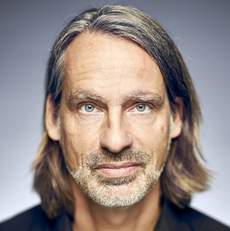
Richard David Precht
Philosopher, Journalist, Author
More Richard David Precht
Philosopher, Journalist, Author
Richard David Precht, born in 1964, is a philosopher, journalist, and author, and one of the most prominent intellectuals in the German-speaking world. He is an honorary professor of philosophy and aesthetics at the Hanns Eisler Academy of Music in Berlin. His books, such as “Wer bin ich – und wenn ja, wie viele?”, “Liebe - ein unordentliches Gefühl” and “Die Kunst, kein Egoist zu sein” are international bestsellers and have been translated into more than 40 languages.
“Von der Pflicht. Eine Betrachtung” was published in 2021, followed in April 2022 by “Freiheit für alle. Das Ende der Arbeit wie wir sie kannten". In the latter, he shows how changes in the world of work are transforming our lives, our culture, our ideas about education, and ultimately society as a whole—and what enormous challenges politicians face, particularly in restructuring our social system toward an unconditional basic income.
In 2023, he published “Die vierte Gewalt” together with Harald Welzer. His essay “Das Jahrhundert der Toleranz”, published in May 2024, is a plea for a value-based foreign policy and refers to the need for a new world order in times of international crises. His latest essay, “Angststillstand. Warum die Meinungsfreiheit schwindet”, will be published in October 2025. Since 2012, Richard David Precht has hosted the philosophy program ‘Precht’ on ZDF. In the ZDF podcast “Lanz & Precht,” Richard David Precht and Markus Lanz discuss the socially and politically relevant topics of our time. In 2024, it became the No. 1 podcast in Germany.
-
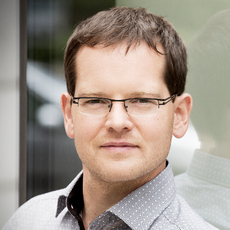
Prof. Dr. Christian Mayr
Professor, TU Dresden/SpiNNcloud Systems
More Prof. Dr. Christian Mayr
Professor, TU Dresden/SpiNNcloud Systems
Christian Mayr is a Professor of Electrical Engineering at TU Dresden, heading the Chair of Highly-Parallel VLSI-Systems and Neuromorphic Circuits. His career encompasses postings at Infineon, Philips, University Zurich, TU Dresden und John-Hopkins University Baltimore. His research interests include bio-inspired circuits, brain-machine interfaces, AD converters and general mixed-signal VLSI-design.
He is author/co-author of over 200 publications and holds 4 patents. He is a PI in the EU flagship ‘Human Brain Project’ as well as in the German excellency clusters CETI and cfaed. His chair has spawned 4 spinoff companies with 250 employees.
-
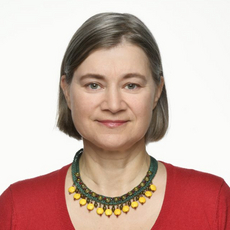
Anke Domscheit-Berg
Digital Policy Expert and Advisor, Speaker, Publicist
More Anke Domscheit-Berg
Digital Policy Expert and Advisor, Speaker, Publicist
Anke Domscheit-Berg is a German book author and publicist who has been a member of the Bundestag from 2017-2025 representing her party as digital policy speaker and as member in the Bundestag Enquete Commission for Artificial Intelligence leading the project group „AI and the Government“. Prior to entering politics, she held several corporate roles for Accenture, McKinsey, and Microsoft Germany, and served as a Senior Policy Advisor at the World Future Council. Among other roles, she has been an Advisory Board member for the Federal Regulation Authority in Germany. Since April 2025 she has been working again as publicist and independent Digital Policy Expert and Advisor.
Her professional focus is on ethics and AI, digitalisation of public administation, climate impact of digitalisation, digital violence, cyber security, and digital sovereignty instead of a digital society dominated by a Tech Bro oligarchy.
Domscheit-Berg holds degrees in Applied Textile Art (GDR), International Business Administration (BA) and European Business Administration (MA, UK). With her husband Daniel, she lives in the State of Brandenburg, where they engage to pilot their vision of a digital society which benefits all, is sustainable and does not harm people or the environment. Together they founded a non profit, engaging in barrier free access to the internet, digital education, means of production, creativity and technology, known as „Verstehbahnhof“ in a rural trainstation building, recognized amongst many other awards, as one of the „Digital Places in the Country of Ideas“. To limit their digital climate footprint, access heat of their mini data center in the cellar is reused, and a self made solar fence provides energy for it.
-

Mei Lin Fung
Vice Chair Steering Committee, UN AI for Good Impact
More Mei Lin Fung
Vice Chair Steering Committee, UN AI for Good Impact
Mei Lin Fung is a globally recognized technology and policy leader, serving as Vice Chair of the UN AI for Good Impact Steering Committee and Chair of the IEEE SSIT Sustainability Committee. She co-founded the People-Centered Internet with Vint Cerf and currently co-leads the Nehitek Foundation. Her career spans roles at Shell, Intel, and Oracle, where she was part of the original team that pioneered Customer Relationship Management systems.
She has co-authored numerous G7 Think Tank (Think7) policy briefs (2022–2025) on MSME financing, digital public infrastructure, and AI governance. Mei Lin served as socio-technical lead for the US Department of Defense’s Federal Health Futures project under Lt. Gen. Bruce Green, bringing Douglas Engelbart’s networked improvement communities into federal medicine.
Her current work emphasizes using Digital Public Infrastructure and securitization to finance MSMEs globally, while advancing inclusive science and AI governance. She continues to bridge technical communities (IEEE, ACM, ITU) with policy leaders worldwide.
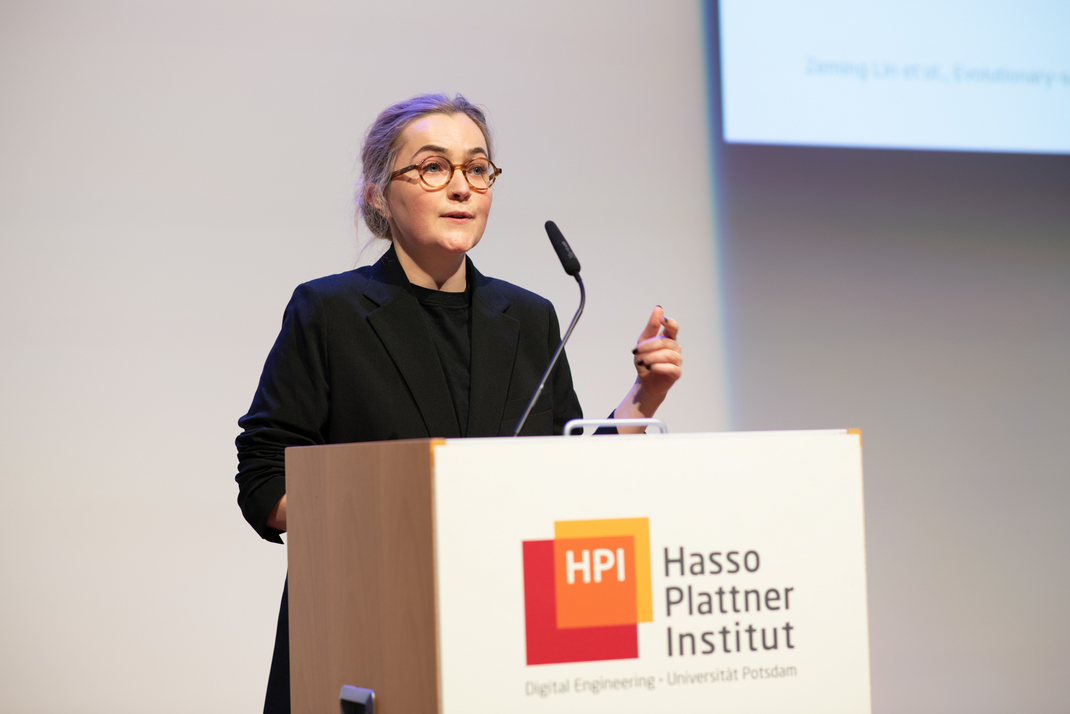
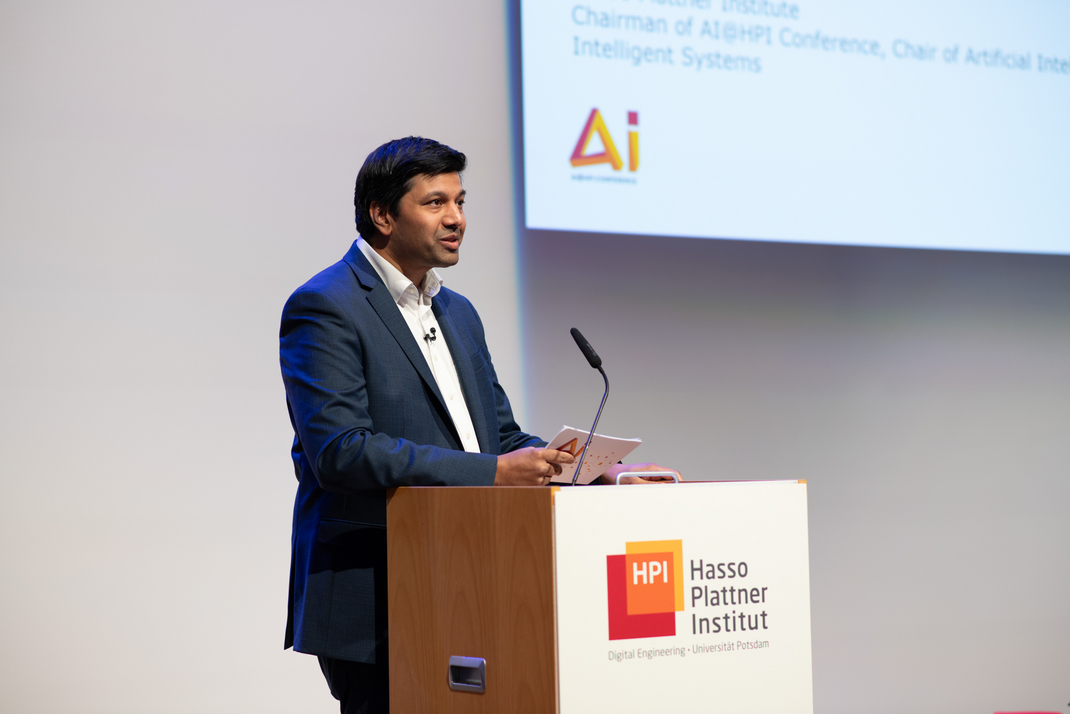
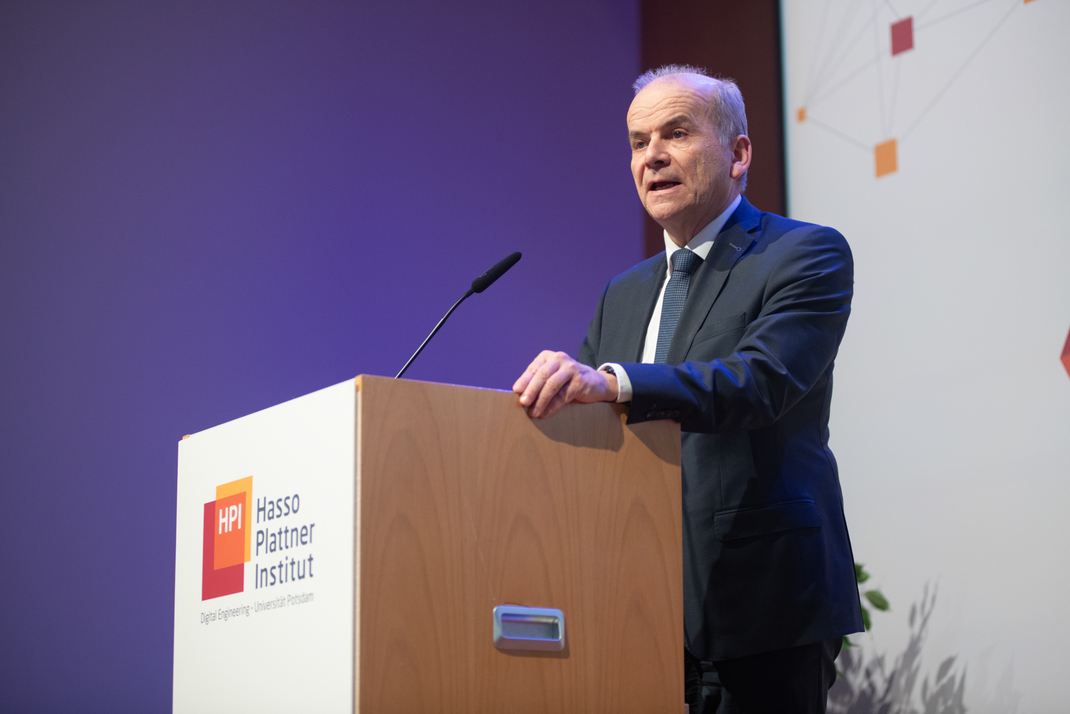
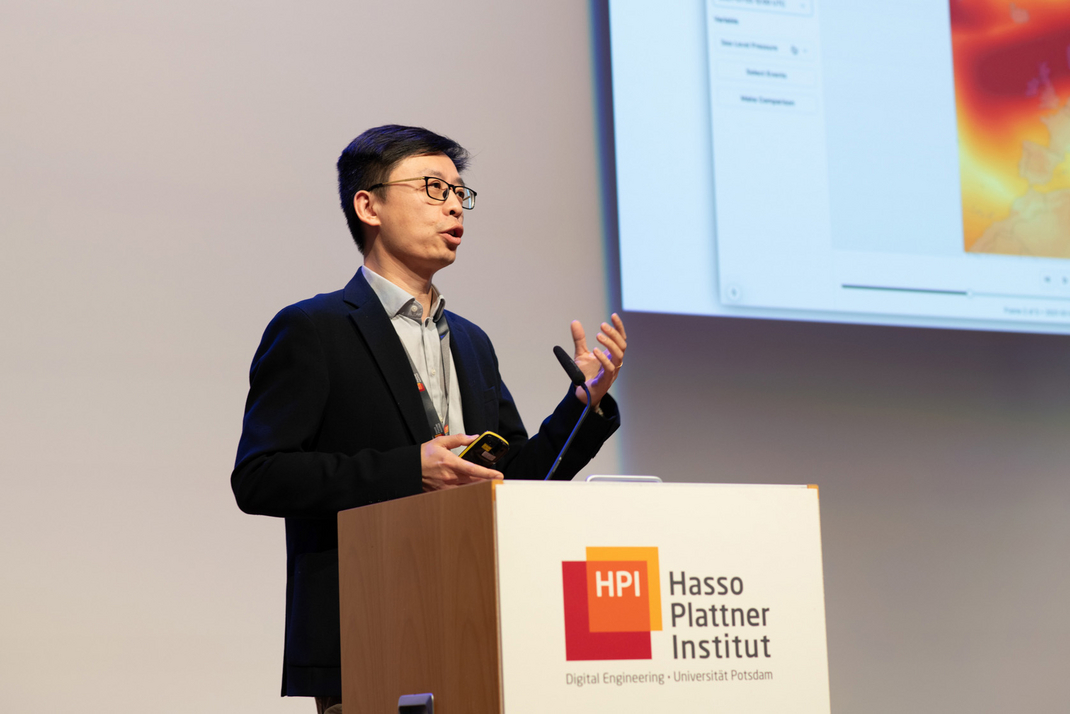
Impressions AI@HPI 2025 (Photos: HPI/Gareth Harmer)
-
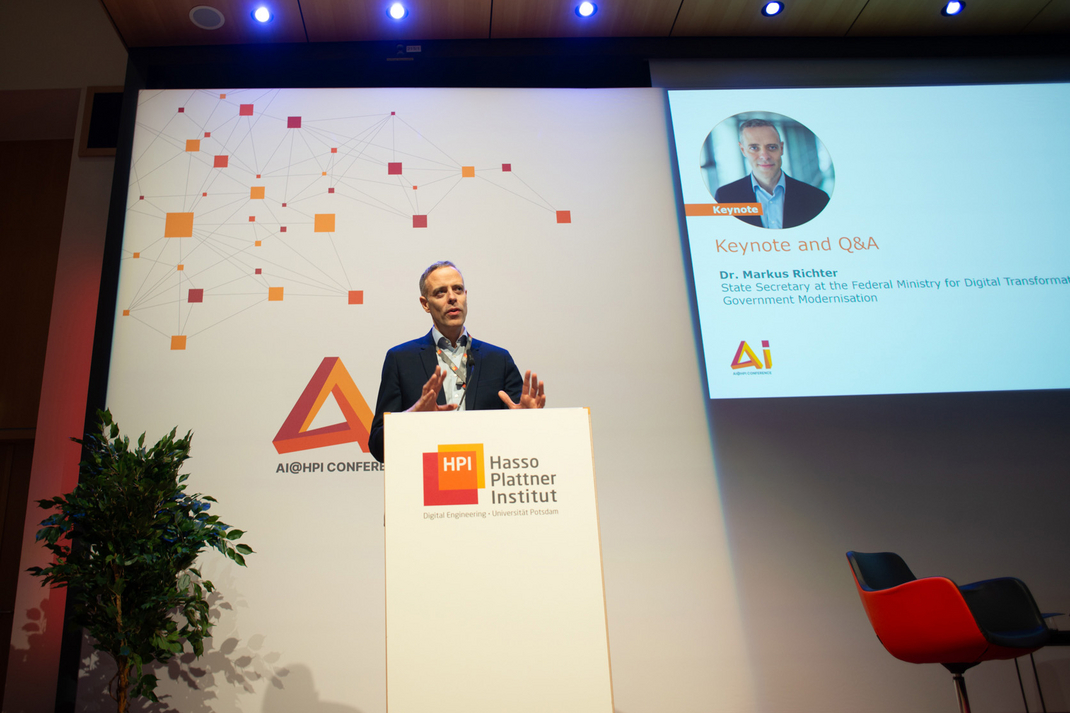 AI@HPI Conference 2-4 December 2025
-
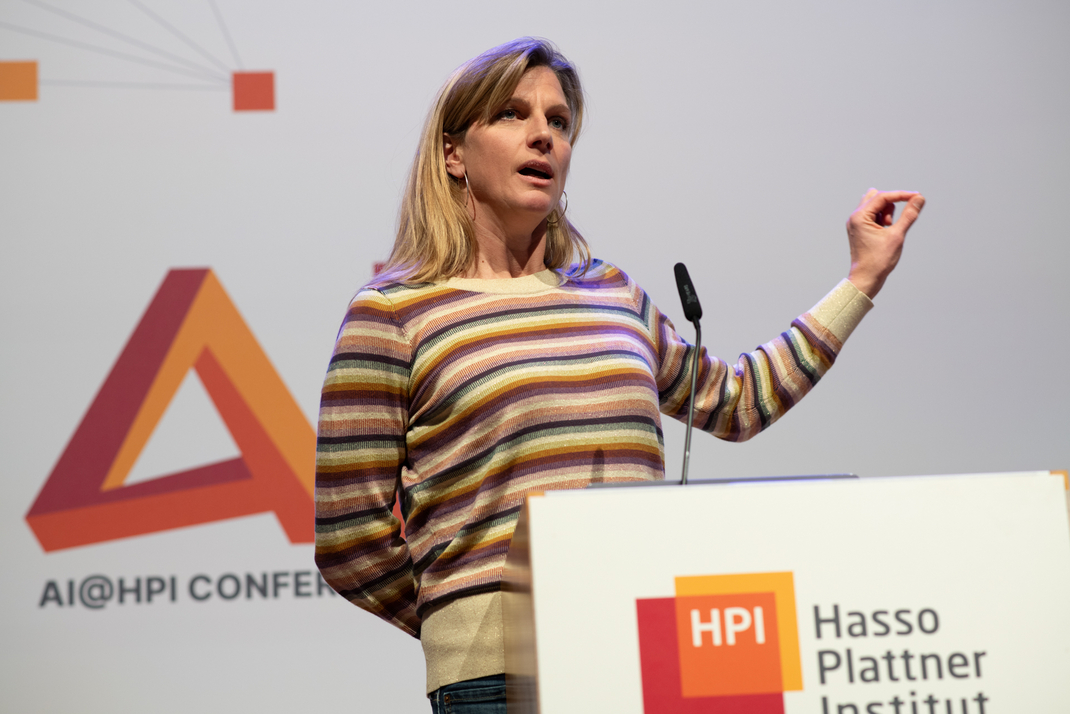 AI@HPI Conference: Shaping AI Sovereignty
-

-
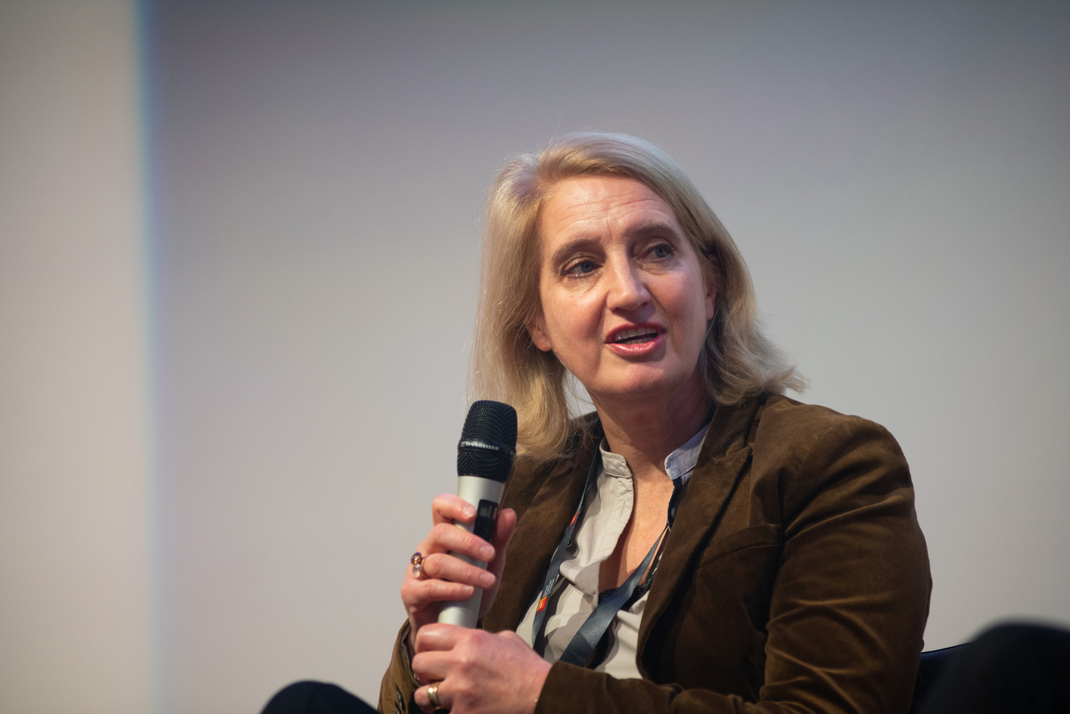 AI@HPI Conference 2-4 December 2025
-
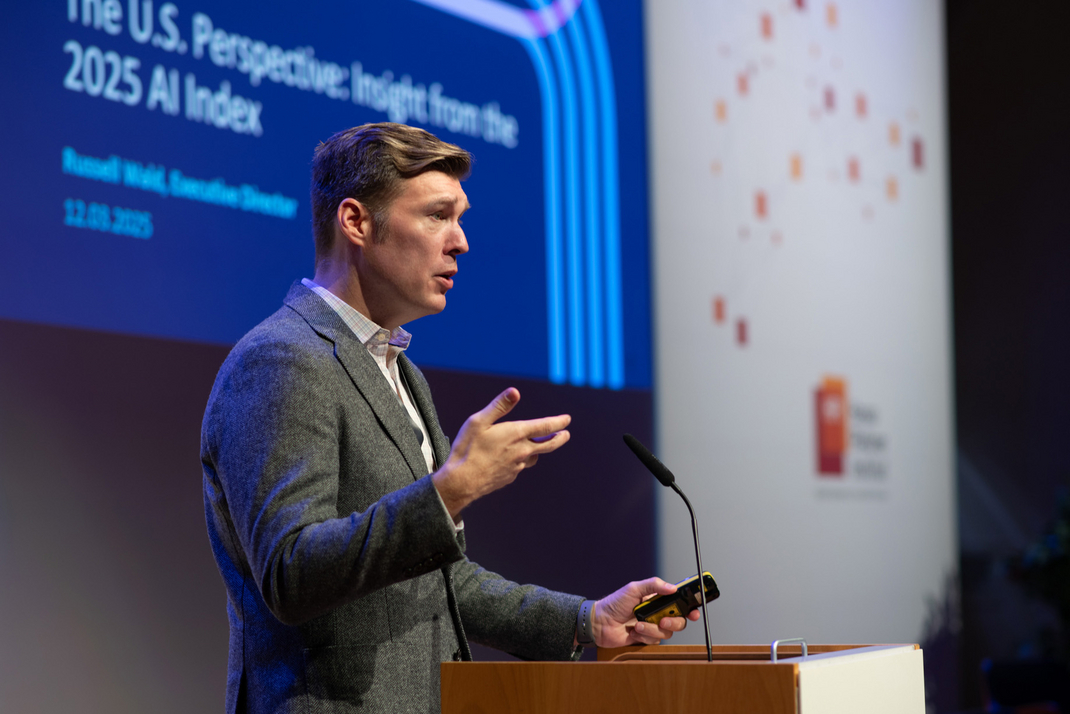 AI@HPI Conference 2-4 December 2025
-
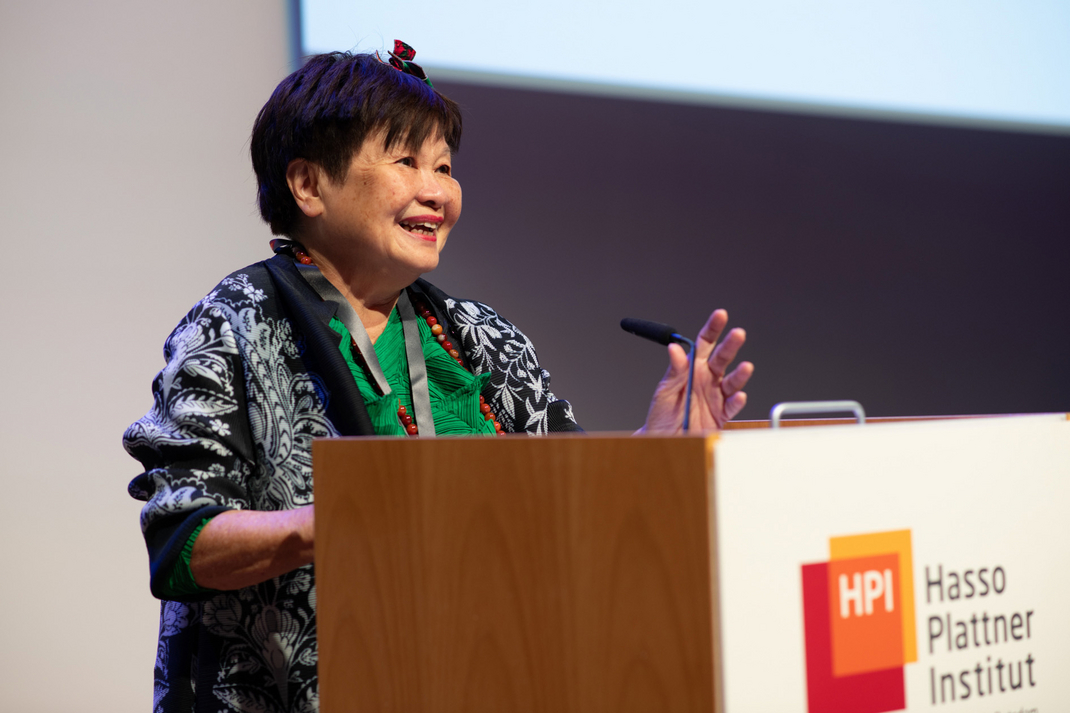 AI@HPI Conference 2-4 December 2025
-
 AI@HPI Conference 2-4 December 2025
-
 AI@HPI Conference: Shaping AI Sovereignty
 -
 AI@HPI Conference 2-4 December 2025
-
 AI@HPI Conference: Shaping AI Sovereignty
 -
 AI@HPI Conference 2-4 December 2025
-
-
 AI@HPI Conference: Shaping AI Sovereignty
-
Program
Tuesday, December 2, 2025
8:00 am Registration
9:00–9:15 am Welcome and Opening
- Prof. Dr. Gerard de Melo, Chairman of the AI@HPI Conference, Chair of Artificial Intelligence and Intelligent Systems, Hasso Plattner Institute
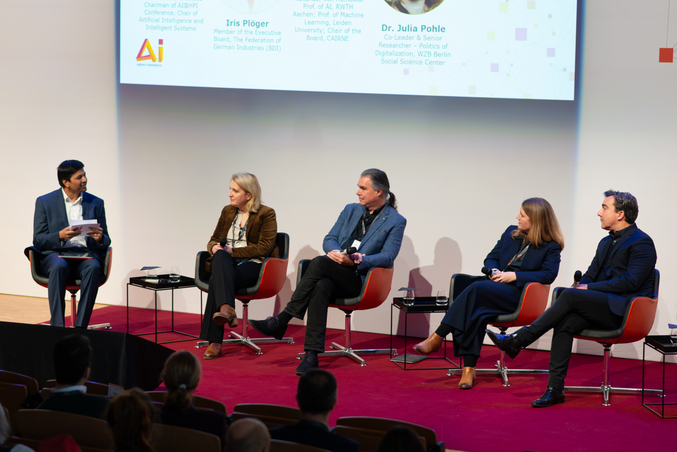
9:15–10:30 am What Does AI Sovereignty Mean? Exploring a European Vision (Keynote & Panel)
Moderation: Prof. Dr. Gerard de Melo, Chairman of the AI@HPI Conference, Chair of Artificial Intelligence and Intelligent Systems, Hasso Plattner Institute
- Dr. Markus Richter, State Secretary at the Federal Ministry for Digital Affairs and State Modernisation (Keynote with Q&A)
- Iris Plöger, Member of the Executive Board, The Federation of German Industries (BDI)
- Prof. Dr. Holger Hoos, Alexander von Humboldt Professor of AI & Chair of AI Methodology, RWTH Aachen University; Professor of Machine Learning at Leiden University; Chair of the Board of CAIRNE (Confederation of Laboratories for Artificial Intelligence Research in Europe)
- Dr. Julia Pohle, Co-Leader & Senior Researcher – Politics of Digitalization, WZB Berlin Social Science Center
- Jens Redmer, Principal, New Products, Google
10:30–11:00 am Break
11:00–11:15 am Spotlight Talk: Beyond Digitization: How Artificial Intelligence Can Drive Europe's Sustainable Future
- Prof. Dr. Maja Göpel, Political Economist, Transformation and Sustainability Scholar
11:15–12:15 pm Powering Tomorrow: Setting up the AI Infrastructure of the Future
Moderation: Niclas Vogt, Head of Communications & Press Spokesperson at the German Startup Association
- Dr. Andreas Nauerz, Member of the Executive Board and CPO, IONOS SE
- Nikolaus Hagl, Head of Sovereign Cloud (SAP SE), CEO of Delos Cloud GmbH
- Prof. Dr. Dr. Christian Mayr, Chair of Highly–Parallel VLSI–Systems and Neuro–Microelectronics at Dresden University of Technology
- Dr. Maxim Schnjakin, Head of AI Competence Center, Bundesdruckerei
12:15–1:15 pm Lunch
1:15–1:30 pm Keynote: Technological Sovereignty and the Future of AI Made in Europe
- Prof. Dr. Holger Hoos, Alexander von Humboldt Professor of AI & Chair of AI Methodology, RWTH Aachen University; Professor of Machine Learning at Leiden University; Chair of the Board of CAIRNE (Confederation of Laboratories for Artificial Intelligence Research in Europe)
1:30–2:30 pm Regulate to Lead: Does European Legislation Enable Innovation?
Moderation: Jamal Lammert, Policy Advisor at eco – Association of the Internet Industry
- Prof. Dr. Phillip Hacker, Chair for Law and Ethics of the Digital Society, European New School of Digital Studies (ENS)
- Laura Jugel, Legal and Policy Officer in Unit AI Regulation and Compliance, AI Office, European Commission
- Christian Rupp, Chief Digital Officer PROSOZ Herten GmbH, Chairman Innovation Mine e. V., Board Member NEGZ (Nationales E–Government Zentrum)
- Malte Firlus, Head of EU AI Policy at Amazon
2:30-2:45 Keynote: The High-Tech Agenda Germany – Our Path Toward AI Sovereignty and AI-Based Value Creation
- Dr. Rolf-Dieter Jungk, State Secretary at the Federal Ministry for Research, Technology and Space
2:45–3:15 pm Break
3:15–5:30 pm Workshops
As AI systems become increasingly embedded in our daily lives, the question is no longer whether we can build them — but whether we can trust them, and whether they continue to include us. In this interactive session, leading experts from technology, design, and education explore how we can design AI systems that are both trustworthy and meaningfully human-in-the-loop. Participants will join a hands-on co-design workshop to translate insights into concrete design principles. Together, we’ll prototype a “Design for Trust & Human-in-the-Loop” playbook — shaping how AI can empower, rather than replace, human agency.
Get an inside look at the Future Technology Platform (FTP) – a cutting-edge ecosystem for AI research and development. Explore how NVIDIA ARM DevKits, Graphcore IPUs, and Intel Gaudi2 accelerators can power your projects, and learn how to access the platform for your own experiments.
AI coding assistants like GitHub Copilot can boost productivity – but only if you know how to use them right. This workshop combines an intro talk, hands-on coding with real-world examples, and a best-practice exchange to help you unlock Copilot’s full potential.
Tired of searching endlessly through long reports or PDFs? This hands-on workshop shows how Retrieval-Augmented Generation (RAG) and local AI models can instantly deliver the answers you need – secure, fast, and without the cloud.
Initially we introduce the initiative Generative AI for SMEs of the BMFTR (PWC, Possible). Then we give insights how the GenKI4Media project provides generative AI solutions for specific domains and achieves sovereignty regarding AI, LLMs, infrastructure and results. We will engage participants to elaborate on use cases, required services, benefits and data sovereignty.
5:30–6:00 pm Break (+ Opening Christmas Market)
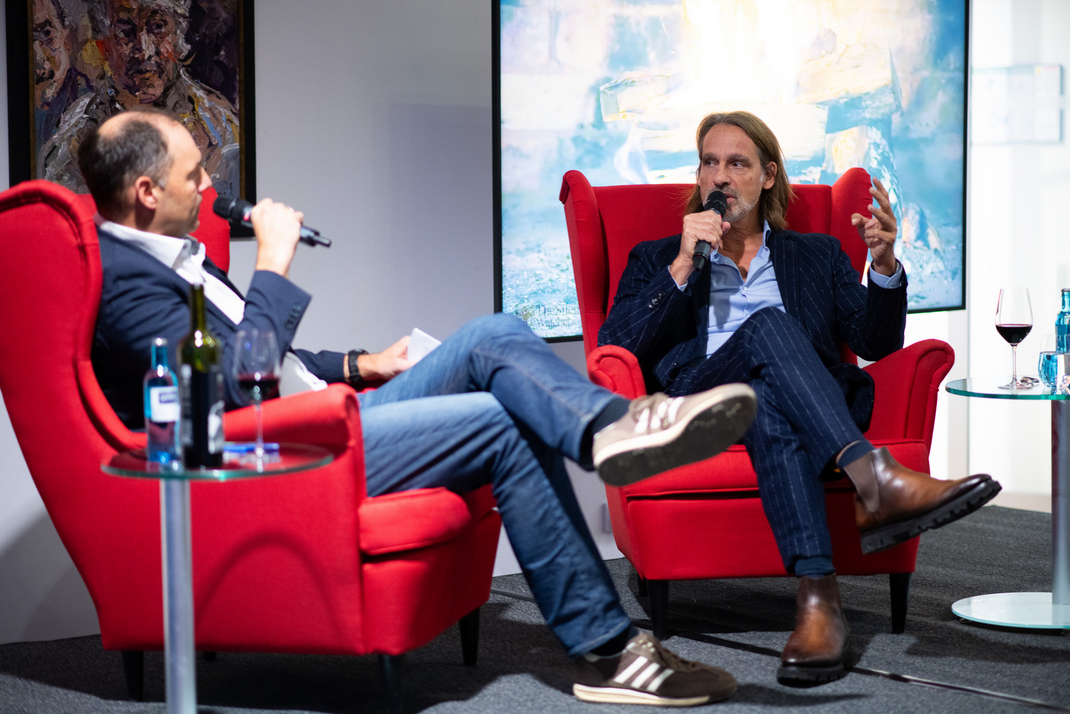
6:00–6:50 pm Fireside Chat
Moderation: Prof. Dr. Ralf Herbrich, Chair of Artificial Intelligence and Sustainability, Hasso Plattner Institute
- Prof. Dr. Richard David Precht, Philosopher and Author
6:50–7:00 pm Wrap–up
- Prof. Dr. Gerard de Melo
7:00 pm Dinner
Wednesday, December 3, 2025
8:00 am Registration
9:00–9:05 am Welcome back
- Prof. Dr. Gerard de Melo, Chairman of the AI@HPI Conference, Chair of Artificial Intelligence and Intelligent Systems, Hasso Plattner Institute
09:05–09:25 am Spotlights: AI Advancements and Adoption in the U.S., China and Southeast Asia
- Russell Wald, Executive Director at Stanford Institute for
Human–Centered Artificial Intelligence (HAI) - Mei Lin Fung, Vice Chair UN AI for Good Impact Steering Committee, Chair of the Technical Committee on Sustainability, Institute of Electrical and Electronics Engineers
09:25–10:30 am Standards at Scale: Human–Centered AI and Digital Public Infrastructure
Moderation: Prof. Dr. Max Senges, Managing Director at the Institute for Electronic Business, University of the Arts Berlin
- Mei Lin Fung, Vice Chair UN AI for Good Impact Steering Committee, Chair of the Technical Committee on Sustainability, Institute of Electrical and Electronics Engineers
- Russell Wald, Executive Director at Stanford Institute for
Human–Centered Artificial Intelligence (HAI) - Dr. Maximilian Lukas Wehage, Head of the Artificial Intelligence Project Group, Federal Ministry for Digital Transformation and Government Modernisation
- Daniel Moritz, CTO neXenio GmbH
10:30–11:00 am Break
11:00–12:00 pm Smart Finance: What is the Role of Agentic AI in Finance and Business?
Moderation: Nora Glasmeier, Associate Digital Finance at the Association of German Banks (Bundesverband deutscher Banken e. V.)
- Dr. Sebastian Schäfer, CEO of House of Finance & Tech Berlin
- Prof. Dr. Maxim Ulrich, Chair of Financial Economics and Risk Management at KIT,
Karlsruhe Institute of Technology - Michael MacFarland, Head of Operations and Chief Architect for
Common Securitization Solution (USFINTECH) - Christoph Rabenseifner, Chief Strategy & Innovation Officer and Managing Director, Deutsche Bank AG
12:00–1:00 pm Lunch
1:00–2:00 pm What It Takes to Build the Next Generation of Software Champions
Moderation: Oliver Voß, Editorial Director for Digitalization & AI, Cybersecurity, and Smart City at Tagesspiegel Background
- Yann Lechelle, CEO and Co-Founder, Probabl.ai; Board Member, JEDI – the European ARPA
- Daniel Beutel, Co-Founder & CEO Flower Labs
- Dr. Thomas Wollmann, CTO Merantix Momentum
2:00–2:15 pm Keynote
Dr. Benjamin Grimm, Minister for Justice and Digitalization of the State of Brandenburg
2:15–3:15 pm Recent AI Research Projects at HPI
Moderation: Dilem Kaya, Master's student, Hasso Plattner Institute
- Dr. Haojin Yang, Research Group Leader Multimedia and Machine Learning, Hasso Plattner Institute
Energy-Efficient AI Model for Weather Forecasting - Christian Adriano, Research Scientist, System Analysis and Modeling Group, Hasso Plattner Institute
Causality and the Next Era of AIs Learning Together - David Hahn, Head of Entrepreneurship Program HPI Engine, Hasso Plattner Institute
From Research Lab to Market Impact: Building Europe's AI Entrepreneurship Pipeline - Pia Francesca Rissom, PhD Student, Hasso Plattner Institute
AI for Proteins: Predicting Functional Effects of Genetic Variants in Ion Channels
3:15–3:45 pm Break
3:45–5:45 pm Workshops
Step into the future of brain-inspired computing. This workshop introduces the SpiNNaker-2 architecture, explores real-world use cases in neuroscience and AI, and offers hands-on experience running algorithms directly on cutting-edge neuromorphic hardware.
How can AI systems move beyond pattern recognition to true reasoning? This session explores the latest approaches to logic, abstraction, and multi-step problem solving. With expert talks, cross-center insights, and interactive discussion, participants will help shape new ideas and collaborations at the cutting edge of AI reasoning.
Stop wasting hours scrubbing through recordings. In this workshop, you’ll learn how AI-driven speech recognition and computer vision make videos and audio instantly searchable – from automatic transcripts to semantic and visual search.
In this workshop, you’ll take part in a mini hackathon where you and other participants develop an AI concept for a real-world use case: the automated assessment of students and their exam responses. Alongside conceptual work, you’ll experiment with different large language models and craft prompts to explore their practical strengths and limitations. Finally, you’ll reflect together on possible implications and challenges of such AI-based evaluation systems — for instance, regarding ethical impacts.
We are not just witnessing technological progress, we are entering a new paradigm of co-intelligence, one in which AI becomes a strategic partner for evolving individuals, teams, and organisations.
This workshop is hosted by Prof. Dr. Max Senges (University of the Arts Berlin) and Martin Talmeier (Mittelstand-Digital Zentrum Berlin/Hasso-Plattner Institute). It introduces a practical and reflective approach to develop a good critical relationship with AI and unleash innovation. Based on the socio-economic vision "AI to Unleash Human Potential", we combine hands-on AI literacy with inner reflection and organisational impact thinking.
During the workshop we will engage in hands-on exercises around:
- Mindset: Developing a Sovereign Relationship with AI
We examine your current beliefs and narratives about AI. What empowers you — and what holds you back? - Inner Work: AI as Alter Ego & Sparring Partner
Experience AI as a tool for reflection and personal insight — a trusted companion for navigating complex questions. - Centaur-Work: Mapping Your Hybrid Intelligence
Explore how AI can practically support and augment your day-to-day work.
You’ll leave with a refined understanding of your relationship with AI and clear approaches for integrating AI in ways that unleash your and your organization's potential.
Decentralized and federated AI can let Europe flip the script—by connecting the compute and data we already have across hospitals, factories, vehicles, cities, and public institutions. Instead of waiting for a single giant model, Europe can lead now by orchestrating many models that learn collaboratively while data stays local and compliant.
In this conceptual workshop, we’ll map the opportunity and show sector snapshots:
Healthcare: cross-hospital learning that boosts diagnostics without moving patient data.
Mobility & Automotive: fleet learning that improves safety and traffic in real time.
Manufacturing & Energy: edge intelligence for predictive maintenance and smarter grids.
Finance & Public Sector: shared risk and fraud models that respect sovereignty and regulation.
We’ll outline the building blocks—federated learning, edge orchestration, interoperable protocols, and governance—and why Europe is uniquely positioned: a massive single market, world-class research, trusted public institutions, and strong SMEs ready to plug in.
Leave with an action-oriented playbook for pilots, partnerships, and policy—so Europe’s distributed assets can act as one and accelerate the continent into AI superpower status.
5:45–6:30 pm Break (+ Opening Christmas Market)
6:30–6:35 pm Wrap–up
- Prof. Dr. Gerard de Melo
6:35 pm Dinner
Thursday, December 4, 2025
Moderation: Bao Nguyen, AI & Design Thinking Coach
8:00 am: Registration
9:00–9:05 am: Welcome + Agenda
- Lasse Kohlmeyer, Project Lead of the AI Service Centre Berlin-Brandenburg
09:05–09:20 am: Technological Sovereignty & AI for Independent Entrepreneurs
- Bao Nguyen, AI & Design Thinking Coach
09:20–09:45 am: AI Made in Germany: Building Sovereignty Through the AI Service Centres (German)
- Dr. Alexandra-Gwyn Paetz, Head of Technological Sovereignty & Innovation, Federal Ministry of Research, Technology and Space
09:45–11:00 am: From Idea to Service – How AI Research Turns into Practice (German)
Moderation: Dr. Xenia Grote, Scientific Coordinator at University of Bonn and Project Manager of WestAI
Hosted by WestAI – A Consortium Project of University of Bonn, Fraunhofer-Gesellschaft, Jülich Research Centre, RWTH Aachen University, Dortmund Technical University, Paderborn University
Discover how cutting-edge research turns into real AI solutions: In a series of short pitches, WestAI researchers and partners present their approaches and applications that grew out of them. Alongside success stories, they share what it takes to build sovereign AI structures, the hurdles encountered on the way, and the lessons learned for future projects.
- 09:45–10:00 am: Welcome and Introduction of WestAI
- Dr. Joachim Köhler, Head of Department at Fraunhofer IAIS and Executive Director of WestAI
- 10:00–10:15 am: Multibox Detector Fine-Tuning for WestAI Services
- Denny Gert, AI Consultant at Jülich Research Centre and Service Member of WestAI
- 10:15–10:30 am: AI as an Exam Evaluator
- Claudius Ellsel, Research Assistant at TU Berlin
& Zeynep Arslan, AI Consultant at Jülich Research Centre and Service Member of WestAI
- Claudius Ellsel, Research Assistant at TU Berlin
- 10:30–10:45 am: Scaling Laws, HPC Training, and Parameter Efficient Fine Tuning for Foundation Models in Flood Modeling
- Adrian Holt, CTO and Co-Founder of FloodWaive Predictive Intelligence GmbH
- 10:45–11:00 am: Integrating Teaching, Research, and Software Innovation: Highlights from WestAI and TrAInee Projects
- Ayushya Pare, Research Assistant at University of Bonn and Service Member of WestAI
- 09:45–10:00 am: Welcome and Introduction of WestAI
11:00–11:30 am: Break
11:30 am–12:45 pm: Bringing LLMs to Hesse (English)
Hosted by hessian.AI Service Center – A Project of hessian.AI and Darmstadt University of Technology
The session begins with a 15-minute introduction by the hessian.AISC before moving into three focused 20-minute talks with discussion. The first highlights key learnings from setting up a high-performance cluster, the second explores the interplay of prompts and graphs, and the third addresses pressing questions of safety, trust, and safeguards in AI systems.
- 11:30–11:45 am: hessianAI.SC Introduction
- Florian Kieser, Lead hessianAI.SC
- 11:45 am–12:05 pm: Key Learnings from Setting Up HPC Clusters
- Tim Noack, Researcher hessianAI.SC
- 12:05–12:25 pm: Interplay of Prompts and Graphs
- Mert Tiftikci, Researcher hessianAI.SC
- 12:25–12:45 pm: Safety, Trust, and Safeguards in AI systems
- Falko Helm, Researcher hessianAI.SC
- 11:30–11:45 am: hessianAI.SC Introduction
12:45–1:45 pm: Lunch
1:45–3:00 pm: KISSKI AI Services (English)
Hosted by AI Service Centre for Sensitive and Critical Infrastructures – A Consortium Project of GWDG, University of Göttingen, Lebnitz University Hannover, HAWK, Fraunhofer IEE, aQua
The session starts with a short introduction to the KISSKI AI services, their applications, and selected pilot projects that have already been implemented — with a special focus on the energy and healthcare sectors. It continues with an introduction to the SAIA framework and demonstrates how it can be transferred to other computing centers and architectures.
- 1:45–2:00 pm: KISSKI Introduction
- Sascha Safenreider, Researcher GWDG
- 2:00–2:20 pm: KISSKI AI Services
- Hauke Kirchner, Researcher GWDG
- 2:20–2:40 pm: Using MCP for Chat AI
- Jakob Hördt, Researcher GWDG
- 2:40–3:00 pm: Handling Sensitive Health Data
- Lars Quentin, Researcher GWDG
- 1:45–2:00 pm: KISSKI Introduction
3:00–3:30 pm: Break
3:30–4:45 pm: Talk & Panel: Sovereignty in the Age of AI
- Hosted by the AI Service Centre Berlin Brandenburg – A project of the Hasso Plattner Institute
- 3:30–3:40 pm: Talk (English)
- Dr. Vera Schmitt, Head of the XplaiNLP research group at TU Berlin and Guest Researcher at Speech and Language Technology Lab, German Research Center for Artificial Intelligence
- Dr. Vera Schmitt, Head of the XplaiNLP research group at TU Berlin and Guest Researcher at Speech and Language Technology Lab, German Research Center for Artificial Intelligence
- 3:40–4:45 pm: Panel (English): How can Europe secure its sovereignty in the age of AI? In this panel hosted by AISC.HPI, experts from politics and research come together to discuss risks, strategies, responsibilities and opportunities for strengthening Europe’s position in AI.
Moderation: Prof. Dr. Holger Karl, Lead AI-Service Centre Berlin Brandenburg and Professor for Internet Technology and Softwarization
- Dr. Vera Schmitt, Head of the XplaiNLP research group at TU Berlin and Guest Researcher at Speech and Language Technology Lab, German Research Center for Artificial Intelligence
- Anke Domscheit-Berg, Digital Policy Expert and Advisor, speaker and publicist, Member of the Bundestag from 2017 to 2025
- Lucy Czachowski, Policy Officer Artificial Intelligence & Cloud, Bitkom
- Matt Harrison, Global Research Engagement Lead, AWS
- 3:30–3:40 pm: Talk (English)
4:45–5:00 pm: Wrap–up
- Prof. Dr. Holger Karl & Lasse Kohlmeyer, Project Leads of the AI Service Centre Berlin-Brandenburg
Conference of the German AI Service Centres
As part of the conference, we also hosted the Conference of the German AI Service Centres. These centres, funded by the German Federal Ministry of Research, Technology and Space (BMFTR) — including one at HPI — showcased a wide range of practical projects that are already making sovereign AI a reality today.




Partners
-

Tagesspiegel Background
Tagesspiegel Background is the specialist media outlet providing exclusive and up-to-date background information on politics and regulation. We provide our readers with independent, reliable, and well-founded information on decisions and processes. This gives them a knowledge advantage for their daily activities.
In our specialist journalistic briefings, we deliver all the relevant news on specialist political debates, industry viewpoints, and interesting facts about the actors involved every working day, even before they appear on the public agenda—on weekdays at 6 a.m., by email or on our web portal.
In our specialist political monitoring, we provide weekly transparency and analysis of regulatory processes and legislative procedures: we follow these in detail, keep an eye on procedural deadlines, and make relevant original documents from the political arena available ad hoc by email.
More -

-

-

SVA
SVA is one of Germany's leading IT service providers and employs more than 3,300 people at 28 locations. SVA's corporate goal is to combine high-quality IT products from leading manufacturers with SVA's project expertise, range of services, and flexibility in order to develop optimal solutions for its customers. In addition, SVA offers a range of its own software products that significantly increase the possibilities for solution design.
SVA's areas of expertise are:
- Agile IT & Software Development
- Big Data & AI
- Business Continuity
- Cyber Security
- Data Center & Cloud
- Digital Process Solutions
- Modern Workplace
- Mainframe
- SAP
-

-

-

-
-

-
Wirtschaftsförderung Land Brandenburg GmbH
The Wirtschaftsförderung Land Brandenburg GmbH (Economic Development Agency Brandenburg) is the central point of contact for investors, local entrepreneurs, and technology-oriented start-ups. The aim of cluster management within the WFBB is to network business and science in such a way that the innovative strength and thus the competitiveness of companies in particular are strengthened. Together with the other players in the cluster, they are driving forward strategic development in the areas of digital transformation, the Green Deal, transport and energy transition, eHealth, and innovative supply concepts.
More -

-

-

-
-

-

Bundesdruckerei
Bundesdruckerei
As a technology company owned by the German federal government, the Bundesdruckerei Group contributes to the digital sovereignty of Germany and Europe with its digital and security expertise. In doing so, it builds trust in society. Its individual companies offer identification systems as well as products and solutions for cybersecurity and digitalization: for the public sector and areas of society and the economy that require protection.
More