Why do we still need leadership today?
Selina: Leadership remains essential, not just as a structural necessity but as a driving force in today’s complex work environments. Agile teams need alignment to be effective, and leaders provide that by setting a clear direction while at the same time flexibly designing the path to the goal. They also play a key role in bridging organizational strategy with the teams’ expertise, ensuring valuable insights flow both ways.
How does digitalization challenge leadership?
Selina: Digitalization is accelerating change, requiring leaders to adapt quickly. Successful leaders embrace agility, understand technological impact, and foster collaboration instead of relying on top-down decision-making. Anticipating future trends and staying proactive in the face of disruption is more critical than ever.
How do you approach the complex issue of leadership in your workshops?
Selina: At HPI d-school, we identified four principles of modern leadership that create the foundation for effective, adaptable, and people-centric organizations.
A human-centered approach ensures that decisions are driven by real user needs rather than internal debates, fostering engagement, innovation, and sustainable success. An experimental mindset allows leaders to embrace uncertainty, test ideas quickly, and learn from feedback rather than relying on rigid plans, making organizations more agile in a rapidly changing world. Providing Psychological safety is crucial, as it enables teams to take risks, voice diverse perspectives, and learn from mistakes, leading to higher collaboration, creativity, and performance. Finally, strategic clarity of the leadership provides teams with a clear sense of direction, ensuring alignment with the company’s vision and empowering them to make informed decisions that drive meaningful impact. By integrating these principles, leaders create environments where both people and businesses can thrive.
How can an experimental mindset be developed?
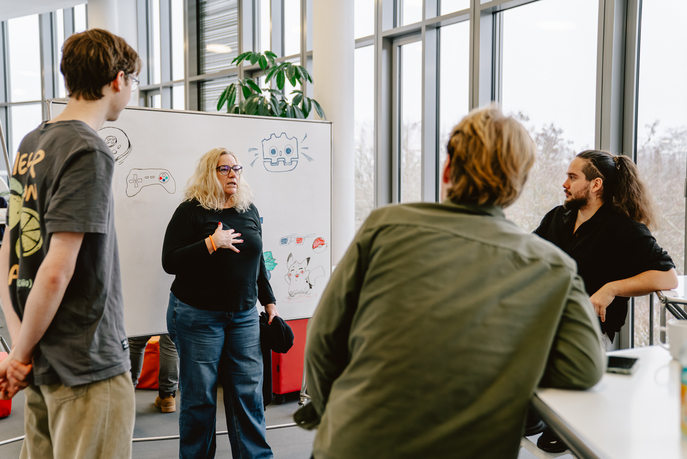
Selina: An experimental mindset comes from thinking in small steps, gathering feedback, and recognizing early warning signs. In leadership workshops, participants quickly test ideas and refine them based on immediate feedback. Recognizing early signals helps leaders make proactive adjustments.
How can students start developing leadership skills?
Selina: Leadership starts early. Students can develop essential skills by taking responsibility in group projects, using agile methods, and integrating reflection and feedback into their work. The ability to balance self-organization with teamwork is key to effective leadership.
What are the biggest challenges for leaders applying these principles?
Selina: Many organizations still rely on rigid hierarchies and slow decision-making processes, making agility difficult. Without a culture that embraces learning from mistakes, teams struggle to innovate. Leadership today is about more than managing tasks – it is about fostering adaptability, innovation, and long-term success.