News

Organizational resilience: Why cybersecurity needs more than just technology

Intro

How can organizations remain capable of acting when uncertainty becomes the norm?

This question was the focus of our workshop “Organizational Resilience: Actively Shaping Future-Readiness” which we, as the HPI d-school, Professional Development, conducted as part of the Potsdam Conference on National Cybersecurity.

The 2026 conference will explore how cybersecurity can be reimagined in times of global upheaval. Cyberattacks on critical infrastructure, disinformation, technological dependencies, and new risks posed by artificial intelligence make it clear: Cybersecurity is not merely a specialized technical task. It affects the overall ability of organizations to function effectively.  

This is precisely where organizational resilience comes into play. It describes an organization’s ability to prepare for changing conditions, withstand disruptions, adapt, and learn from crises. For cybersecurity, this means that technical protection systems are important. However, they only become effective when people, teams, and structures work together well — and, above all, agilely — even under pressure. 
Interesting for

Executives, Manager, Professionals

From Protection Mode to Design Mode

One statement from the conference really stuck with me: The attacker only needs to succeed once, while the defender must succeed every time.

This asymmetry defines cybersecurity. Attackers look for a vulnerability. Organizations must keep an eye on many potential vulnerabilities at the same time, share information, make decisions, and react quickly in an emergency.

This requires more than just contingency plans. It requires organizations that remain vigilant, take complexity seriously, share responsibility, and learn from mistakes. In our workshop, we therefore viewed resilience not as rigid resistance, but as a dynamic balance of stability, adaptability, and creative power.

What a LEGO Exercise on Resilience Reveals

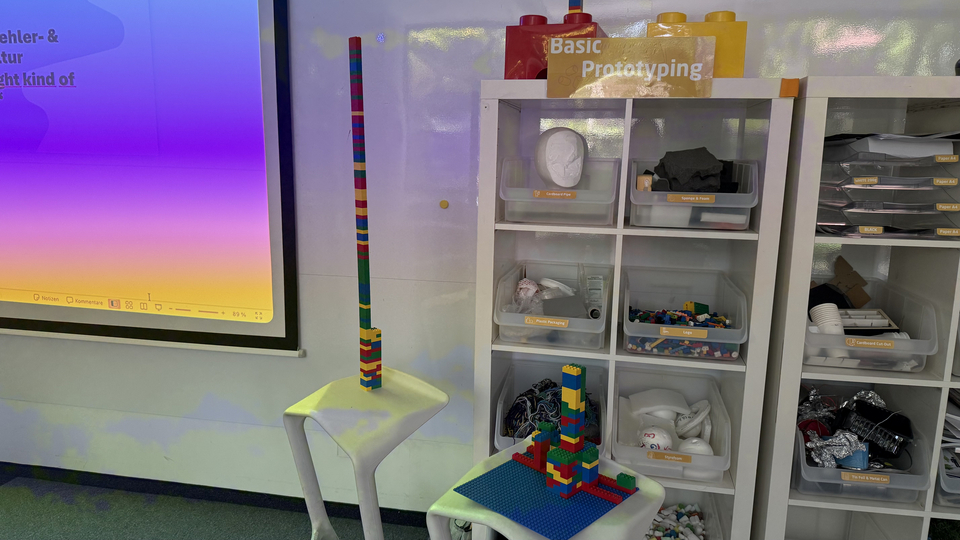
This concept became particularly tangible during an interactive exercise using LEGO bricks. The participants worked on a shared task: “Build the tallest tower.” At the same time, they had to manage their own individual tasks, limited information, and shared resources. Furthermore, they were not allowed to speak to one another.

It quickly became clear that when each person simply tries to perform their own task as well as possible, the common goal is lost sight of. This is precisely the pattern many organizations recognize. Teams optimize their own responsibilities, departments secure their processes, and individual units meet their targets. Nevertheless, the overall system can remain vulnerable if communication, coordination, and a shared understanding of the situation are lacking.

The exercise highlighted how important it is to first understand the big picture. What do we want to achieve together? What resources do we have at our disposal? What information are we missing? Who sees something that others don’t yet see? And what are the consequences if I fulfill my own task 100 percent but thereby jeopardize the shared outcome? How do I communicate when words no longer help?  

This perspective is central to cybersecurity. In an emergency, it is not enough for individual departments to function perfectly. IT, leadership, communication, legal, operational teams, and external partners must work together to become capable of taking action. Resilience does not arise from individual optimization, but rather through shared understanding, experimentation, adaptation, and learning. Resilience is a team effort — no one protects critical infrastructure alone.

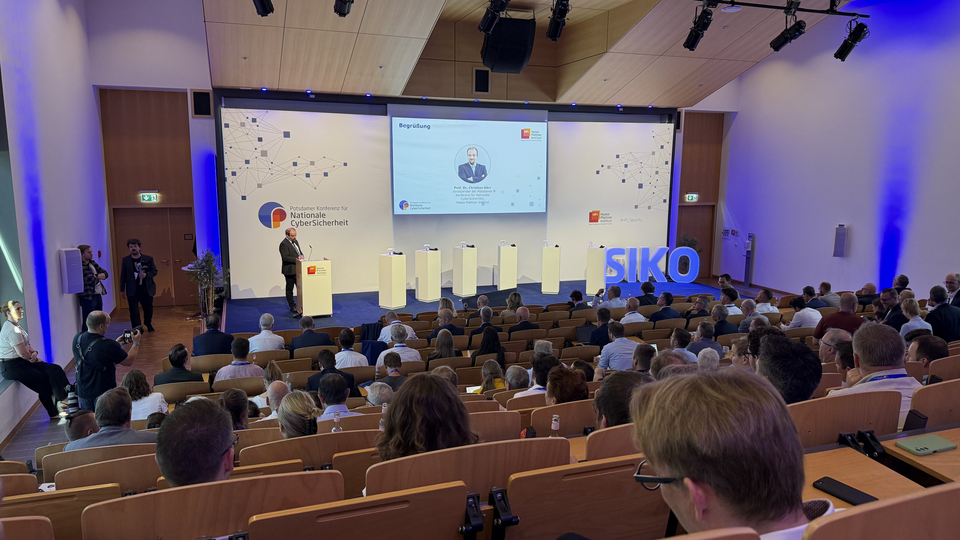
  • Wide view of a conference auditorium during the opening of the Potsdam Conference for National Cybersecurity, with a speaker at the podium and attendees seated throughout the hall.
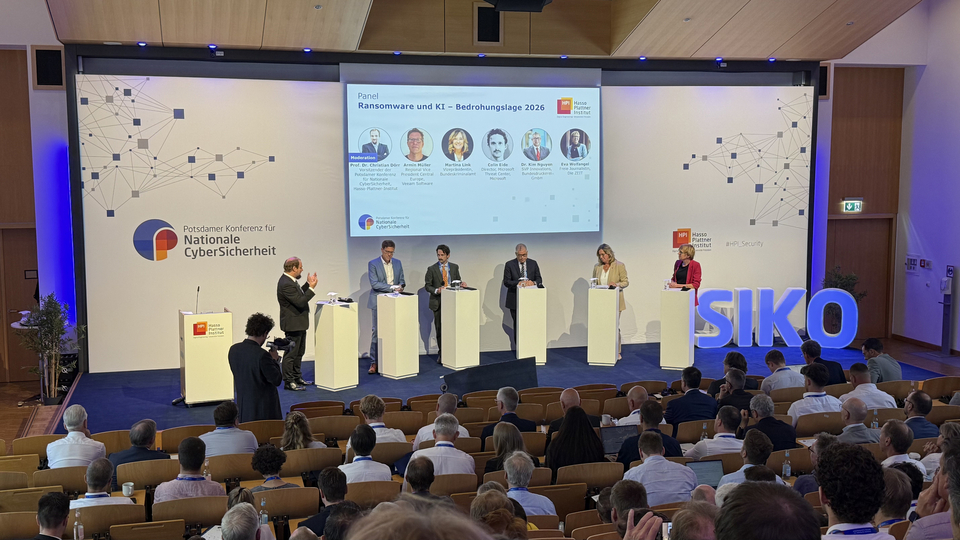
  • A large auditorium hosts a panel discussion on ransomware and AI at the Potsdam Conference for National Cybersecurity, with panelists on stage and an audience seated in front.
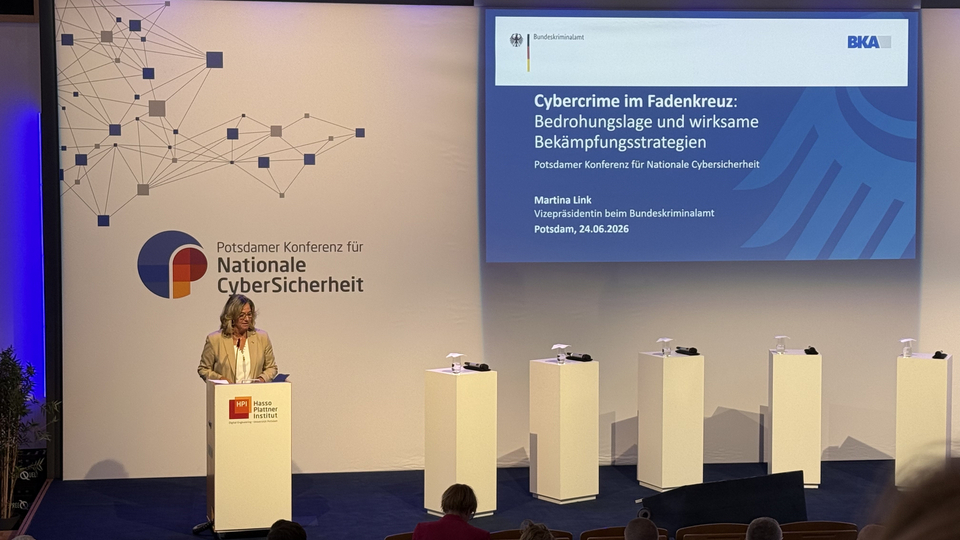
  • A speaker stands at a podium during a cybersecurity conference presentation, with a large screen showing a slide about cybercrime threats and countermeasures.
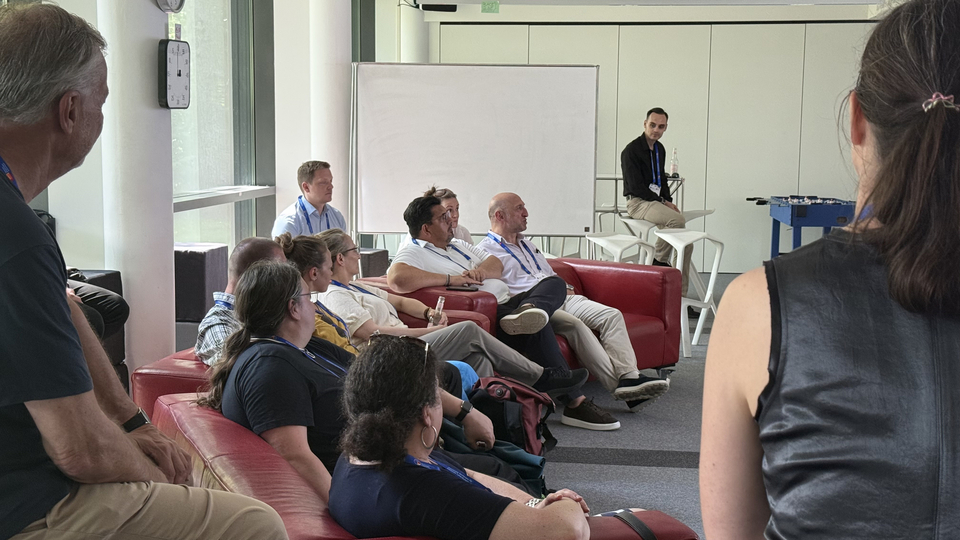
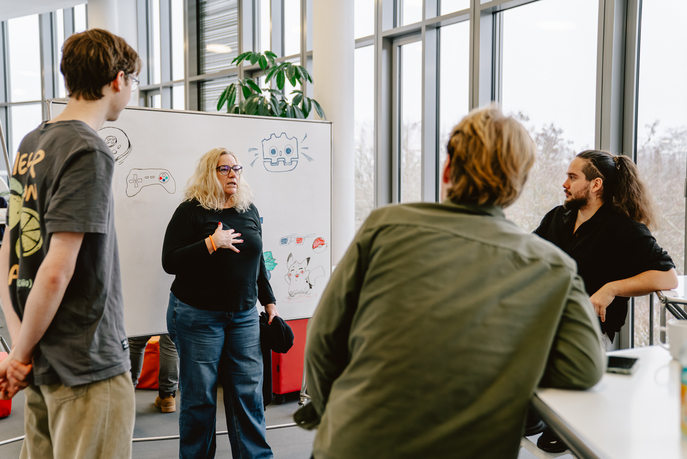
  • A group discussion in a conference lounge, with participants seated on red sofas while a facilitator addresses the room.
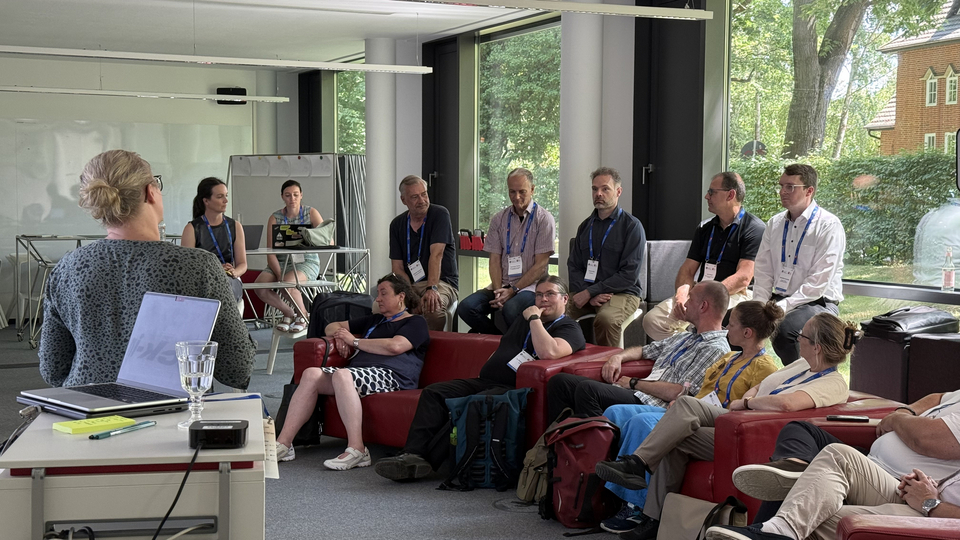
  • Participants sit on red sofas and benches in a bright conference room, listening to a facilitator presenting from a laptop.
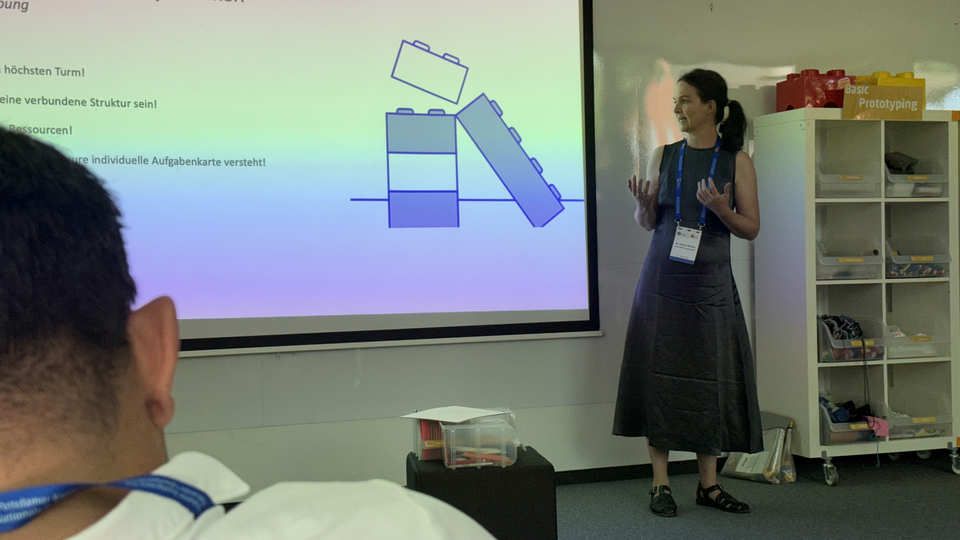
  • A facilitator stands beside a projected slide with a LEGO tower illustration, explaining instructions for a basic prototyping challenge.
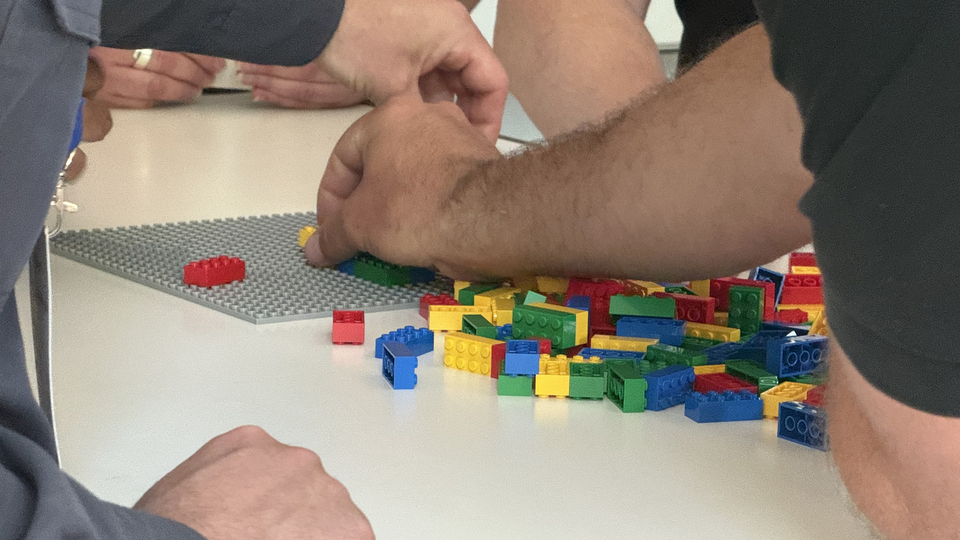
  • Close-up of several hands assembling colorful LEGO bricks on a baseplate during a collaborative prototyping activity.
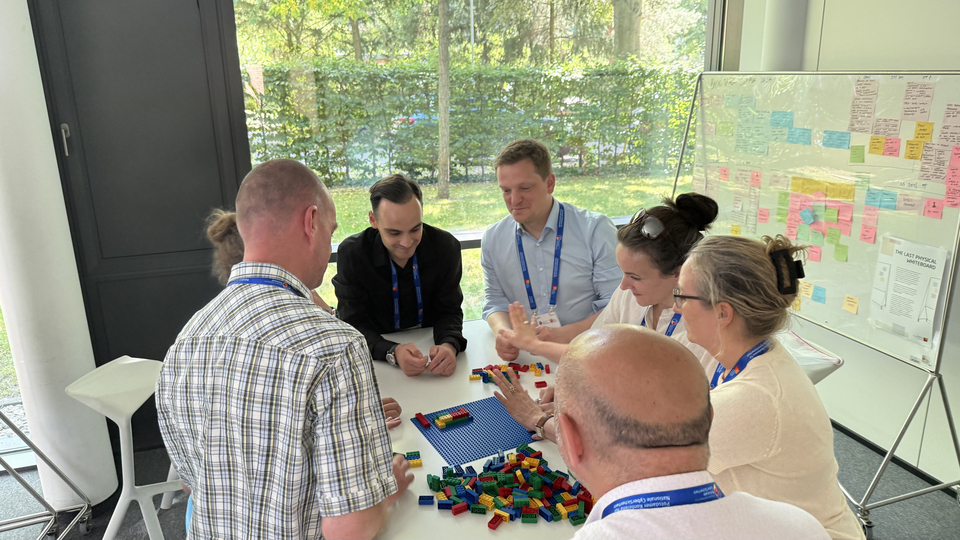
  • Workshop participants gather around a table with colorful LEGO bricks, discussing and building a prototype together near a whiteboard covered with sticky notes.
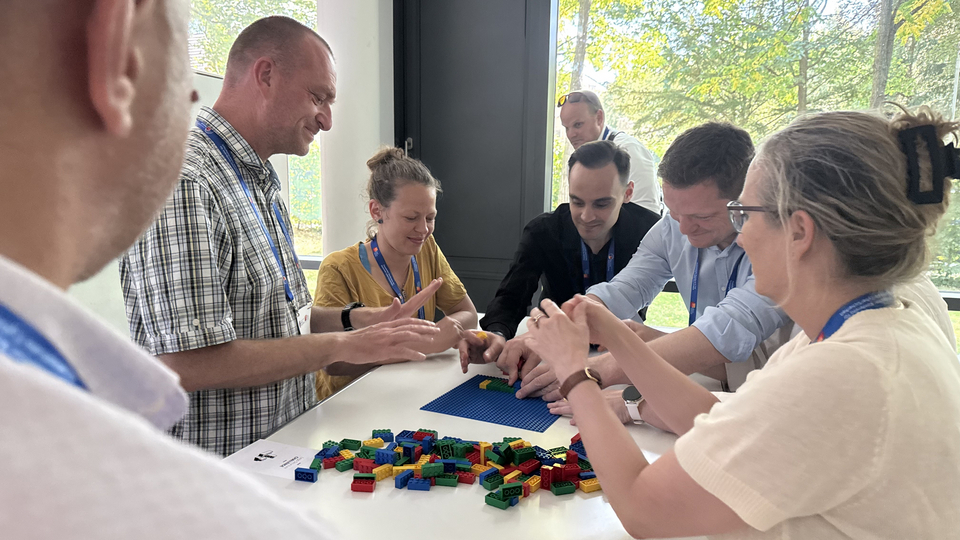
  • A group of workshop participants sit and stand around a table, collaboratively building a small LEGO structure on a blue baseplate.
  • A basic prototyping area with shelves of craft materials and LEGO bricks, with two tall LEGO tower structures built on small tables in front.

Communication is a security factor

Another lesson learned from the exercise: Resilient organizations challenge hasty assumptions. They utilize all available resources and ask why others behave the way they do. This mindset is crucial in crises.

Cyber incidents create time pressure, uncertainty, and stress. If people then fail to speak openly, do not report risks, or hesitate for fear of being blamed, an organization loses valuable time. Communication and psychological safety thus become genuine security factors.

That’s another reason why we discussed mistakes and a culture of learning in the workshop. In Germany in particular, failure often carries negative connotations. For resilient organizations, however, it’s not about glossing over mistakes. It’s about viewing them in a nuanced way—as avoidable mistakes, mistakes caused by complexity, and intelligent mistakes. Some errors must be prevented through clear standards and checklists. Others arise in complex situations despite good preparation and are unavoidable, but they must be manageable. Hypothesis-based “intelligent errors” are even desirable and should be consciously encouraged, because they enable new knowledge to be gained in a controlled experimental setting.

Resilience arises from collective action

The Potsdam Conference explores how we can move from reactive defense to actively shaping security, resilience, and digital sovereignty. Our workshop demonstrated that this process begins within organizations themselves. It begins where people take responsibility not only for their own tasks but also for the system as a whole.

Organizational resilience is therefore not a side issue of cybersecurity. It is a prerequisite for technical strategies to be effective in an emergency. It manifests itself in the way we communicate, make decisions, discuss mistakes, and remain capable of acting amid uncertainty.

For us at the HPI d-school, this means we create learning spaces where people can explore new ways of thinking and acting. After all, future-readiness does not arise from analysis alone. It emerges through collective action. Dealing with mistakes, communicating within teams, and acting in the face of uncertainty are skills that can be learned — here with us!

Further news

  • News
    Moral and Ethics using AI
    Why critical thinking is becoming a key skill for the future when dealing with AI
    • Academic Programs
    • Innovation
    • Professional Development
    • Artificial intelligence
  • News
    Mitarbeiter:innenfoto
    AI can reveal patterns, but innovation needs human judgment. Marc Stussak explains why critical thinking and empathy remain essential.
    • Professional Development
    • Innovation
    • Artificial intelligence
  • News
    What future skills do we need, and how can we acquire them? A look at experimentation, a culture of learning from mistakes, and Design Thinking.
    • Academic Programs
    • Professional Development
    • Design Thinking
    • Digital upskilling
  • News
    HPI at Potsdamer Tag der Wissenschaften 2026
    Hands-on experiments, computer science activities, and digital learning offers brought research to life for visitors.
    • Academic Programs
    • Design Thinking
    • Innovation
    • Research

Contact

Do you have any questions? We will be happy to help you.