The range of skills we’ll need as people – both in our professional lives and as part of our (global) society – is as diverse as a colorful bouquet of flowers. It includes everything from the ability to communicate with empathy to actively shaping the digital transformation. This can quickly feel overwhelming – for individuals as well as entire social groups.
It helps to focus on the small steps and contributions that each person can make within the scope of their respective possibilities and circumstances. In this newsletter on the topic of “Future Skills,” we highlight a few specific skills. Just yesterday, we had a discussion in our office on exactly this topic. And every participant left the room with a question mark: To what extent must the “learning spaces” for these skills also change? What does a suitable learning space for this look like?
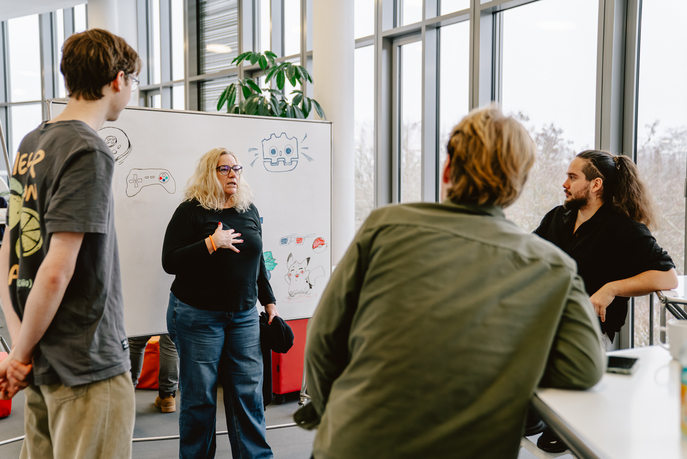
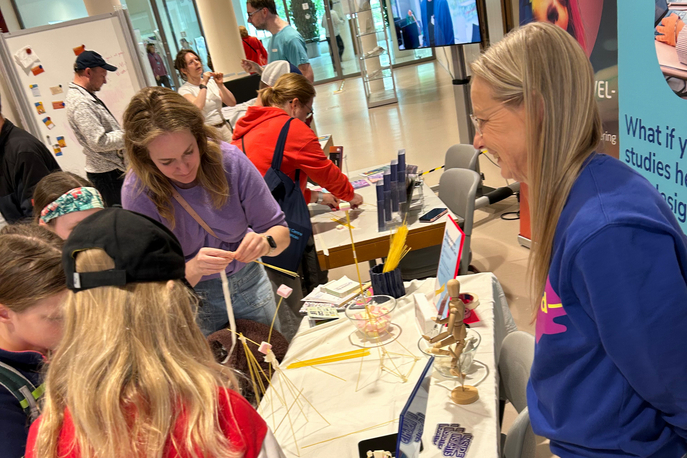
At the HPI d-school, we are committed to teaching “Future Skills.” Our programs, workshops, and courses are designed to impart cross-functional competencies that are needed regardless of a specific industry: collaboration in diverse teams, self-reflection, empathy, flexibility, and agility, as well as the ability to build organizational resilience or navigate digital transformation. To make this learning successful, our participants – students and professionals – need a safe space for experimentation, for making mistakes, and for reflecting on them.
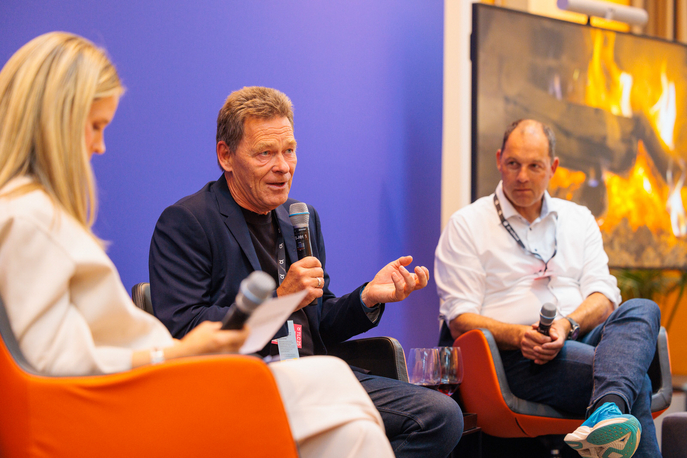
We haven’t yet found a precise answer to our own question about the ideal learning space. Like so many things, it’s a process that requires curiosity, a willingness to experiment, and the courage to make mistakes. These are skills that Dr. Hans Koenigsmann emphasized in his conversation with students. Because only in this way can we learn and improve. Incidentally, this is a fundamental concept in the mindset of Design Thinking. That’s why you’ll always find new and exciting formats with us, such as our online impulse sessions. So we have the most important tools for the future on board. We can work with that.