From makerspace to Design Thinking community
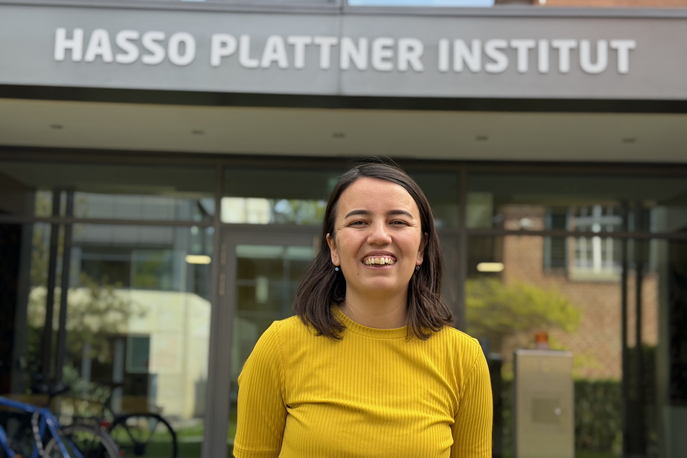
Raluca first participated in the Global Design Thinking Workshop at HPI d-school in 2019, seeking to experience the method beyond articles and books. Her employer, Lucian Blaga University of Sibiu (ULBS), received a donation from Hasso Plattner – the starting point for a Makerspace project. However, the project quickly evolved into a Makerspace and Design Studio, which became the first D-School in Romania. Since 2020, she has worked there as the first and, to date, the only full-time employee and remains closely connected to the HPI d-school.
Design Thinking in Romania: collaboration instead of monologues
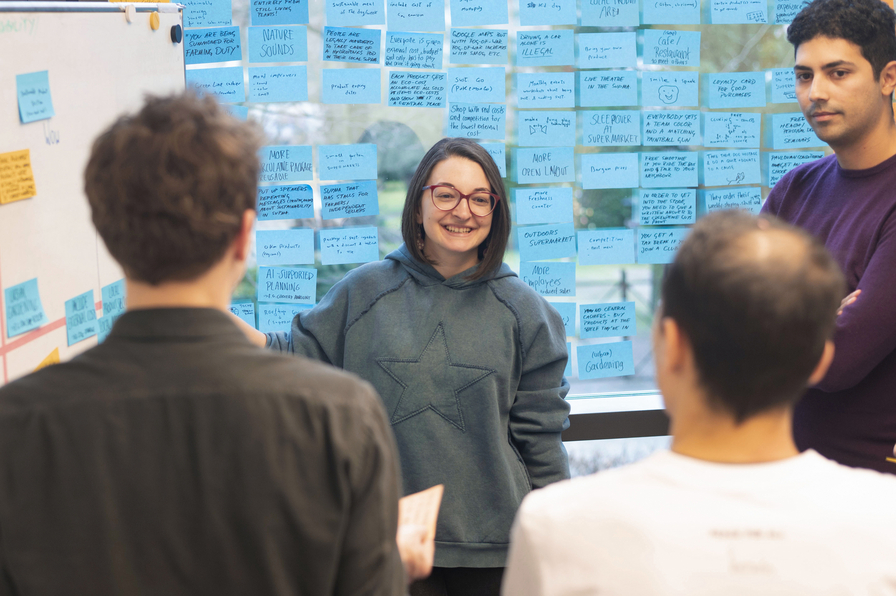
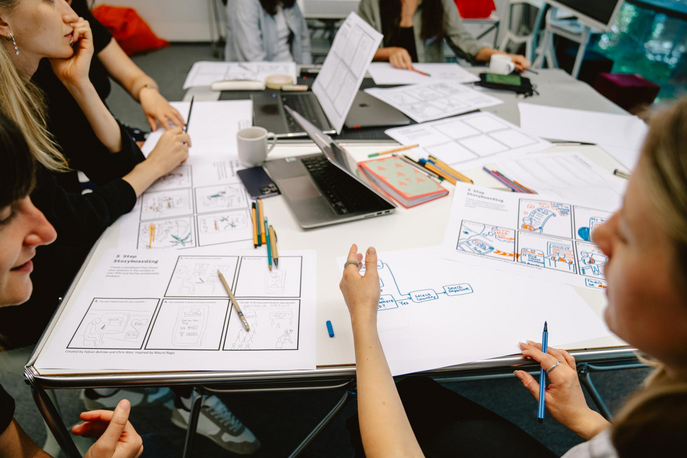
Whether in businesses or public institutions, Design Thinking can fundamentally change the work environment. "Instead of lengthy meetings where only a few people speak, Design Thinking promotes interactive and collaborative processes," says Raluca. “Even without prototyping, Design Thinking can transform long meetings into interactive, shorter sessions using simple Post-its, where people truly collaborate and co-create ideas.”
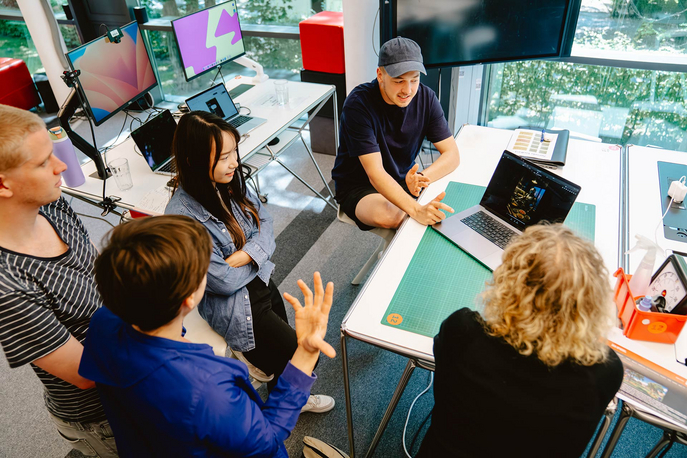
When asked about the differences in the method compared to Germany, she points to the education system in Romania, where many students are already working or have a packed curriculum. For this reason, she focuses on compact formats with high-quality support: “We have 12-week courses, but only one session per week. We make sure that each team of 4 to 6 people is assigned a coach to ensure optimal guidance and individual support.”
Prototyping as a gamechanger
A central insight from Raluca’s coaching practice is that teams tend to get lost in perfectionism and excessive analysis. “The magic of prototyping is that it helps teams quickly get into action. Even a ten-minute prototype can help refocus and develop a shared direction.”
Learning through reframing: a special coaching experience
One project that stands out in Raluca’s memory involved a team of two high school students, two university students, and a 70-year-old designer working on a solution for the university library. Originally, the focus was on new seating options and the entrance redesign, but through the Design Thinking method, it quickly became apparent that many students didn’t even know where the library was after the pandemic. “For me, that was a prime example of why we start in the problem space (in this case awareness) before looking for the right solutions.”
The future of Design Thinking: from theory to real application
Raluca is not a follower of short-lived trends. Her focus is on not just teaching Design Thinking but embedding it sustainably in practice. “Many d-schools around the world already have projects that connect various stakeholders over the long term. I wonder how we can bridge the gap between teaching and real-world application even better and also use it in administration.”
Raluca’s most important advice for aspiring coaches
"Inner attitude: SAVE IT 4 EVER!" This phrase has accompanied her since her coaching training and reminds her of how important it is to manage her energy consciously. “I say this in a very pragmatic way. Coaching means working intensively with many people. If you want to do that successfully in the long run, you also need to take care of yourself.”