News

Design Thinking – innovative ideas for sustainability

Intro

Germany wants to be climate-neutral by 2045, in 21 years. That sounds like a long time. But on second glance, it is not, considering that innovations take two to four years to find a market-relevant business model. In addition, it can take up to ten or more years before the new products are available to many users. Even tech stars like Apple, founded in 1976, were almost bankrupt twenty years later. We only have a short time left to develop practical solutions for greater sustainability in a wide range of industries. Much innovation potential lies in information technology, one of our core competencies at HPI. Combined with the expertise in Design Thinking at the HPI d-school, it is the perfect prerequisite for driving innovation for climate protection. This resulted in a research project entitled "digistainable NOW!" in collaboration with the German Business Initiative for Energy Efficiency (DENEFF), funded by the Federal Ministry for Economic Affairs and Climate Protection, to uncover innovative potential through a series of Design Thinking formats such as innovation circle workshops for students and young professionals. The project will continue in 2024. What are our findings?
 

Interesting for

Young Professionals, Students, Graduates

We are addressing the need for innovation for more sustainability

When you talk to companies and initiatives that want to advance sustainability within their own organization, you often hear: "We don't know where and how to start." The United Nations (UN) Sustainable Development Goals (SDGs) are challenging to grasp. Initial ideas seem to get stuck in the day-to-day business. Young professionals despair when they see new approaches to sustainability in companies dissolve like a fog. Task forces that develop business cases around a new sustainable product or service run out of steam halfway through. "I am taking part in the innovation circle workshops at the HPI d-school as part of this project to learn how Design Thinking can help me implement ideas and innovations more effectively," said one workshop participant. She had more than fifteen years of experience in the industry.

Developing a new approach to Design Thinking

Innovations in the field of sustainability are complex. The effects are manifold, the goals often unspecific and the future scope unclear. In this complex and ever-changing world, who could anticipate people's needs in ten, twelve or fifteen years? The Design Thinking method, for example, offers a great toolbox for bringing people together in the flow and thus freely generating ideas. Design Thinking helps to integrate people's living conditions into software developers' mindsets. It enables rapid and iterative loops to prototypes that can be tested from the user's perspective. This toolbox suits most innovation processes, especially those that aim for immediate implementation. However, an additional toolset is required when imagining future living and working scenarios or dealing with a worldwide network of partners tackling open innovation processes. That's what our new Design Thinking Studios at the HPI d-school are for.

Invitation to experimental learning within new Design Thinking formats

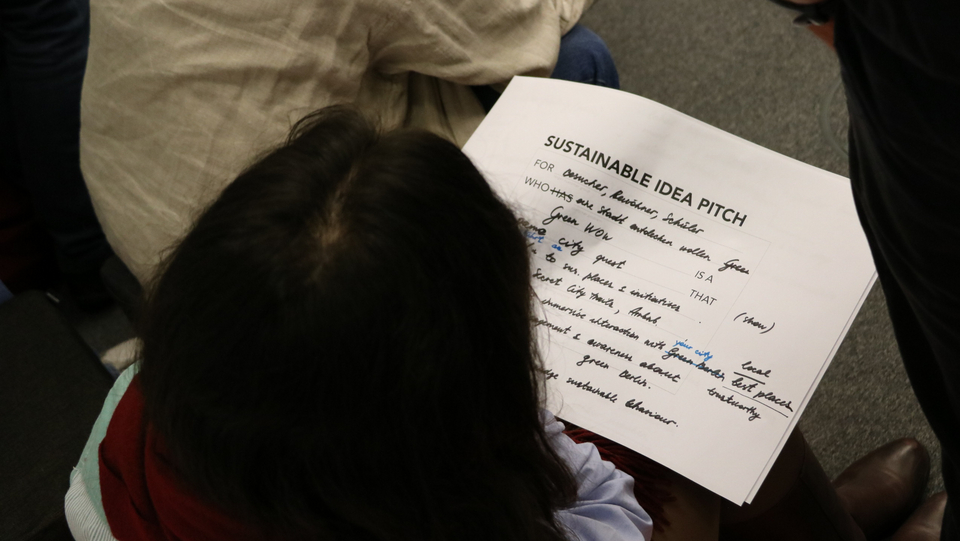
"Give material an identity because material without identity is waste." This paradigm, introduced by two participants of the Innovation Circle workshop in February 2024 on sustainability in the construction and building sector, could save tons of CO2 in the future. Provided that they succeed in developing sustainable products and services. Provided, secondly, that they succeed in influencing the future behavior of builders and owners to plan a building sustainably. Thirdly, if they succeed in bringing together producers of building materials and providing their data.
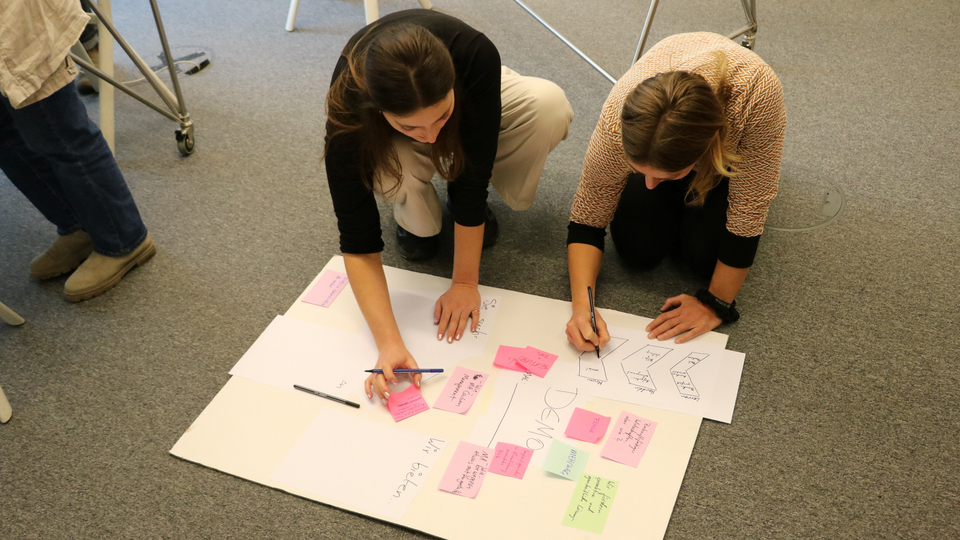
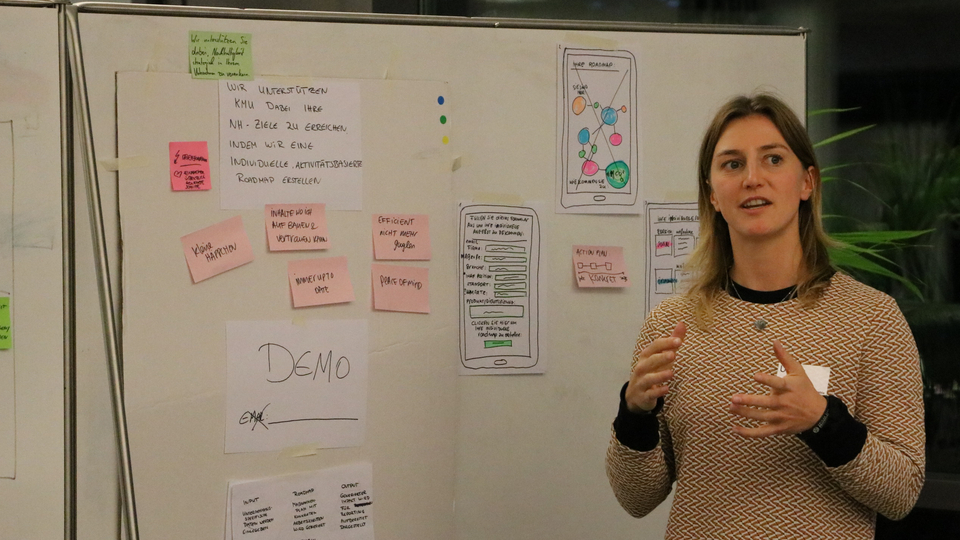
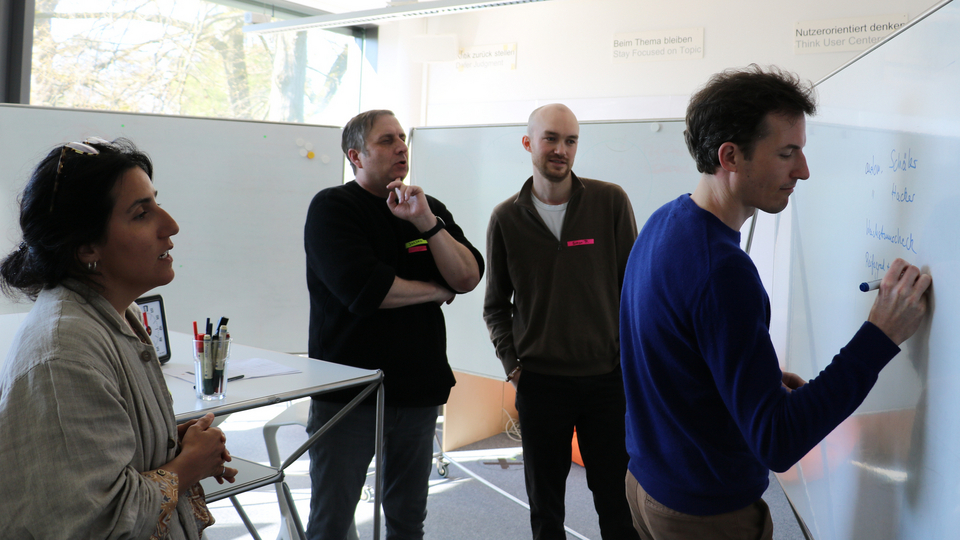
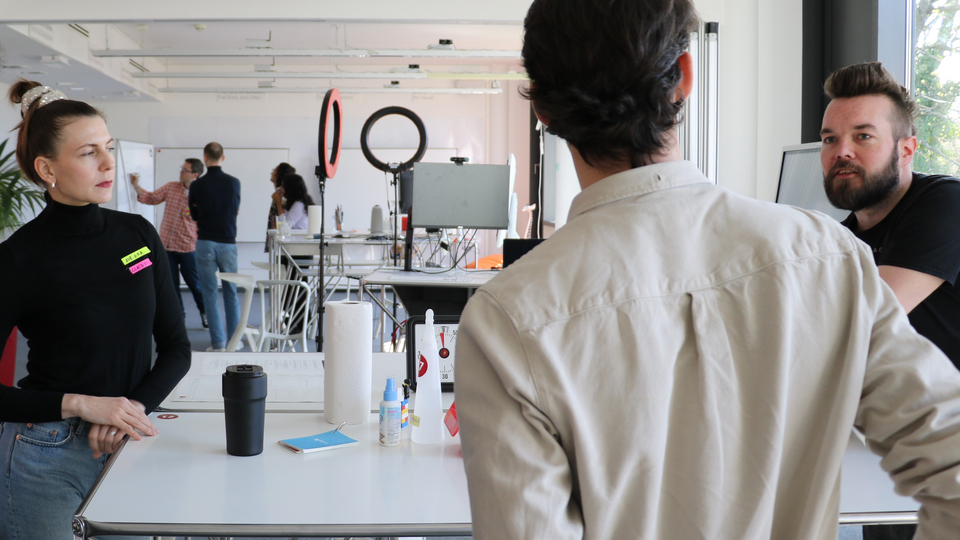
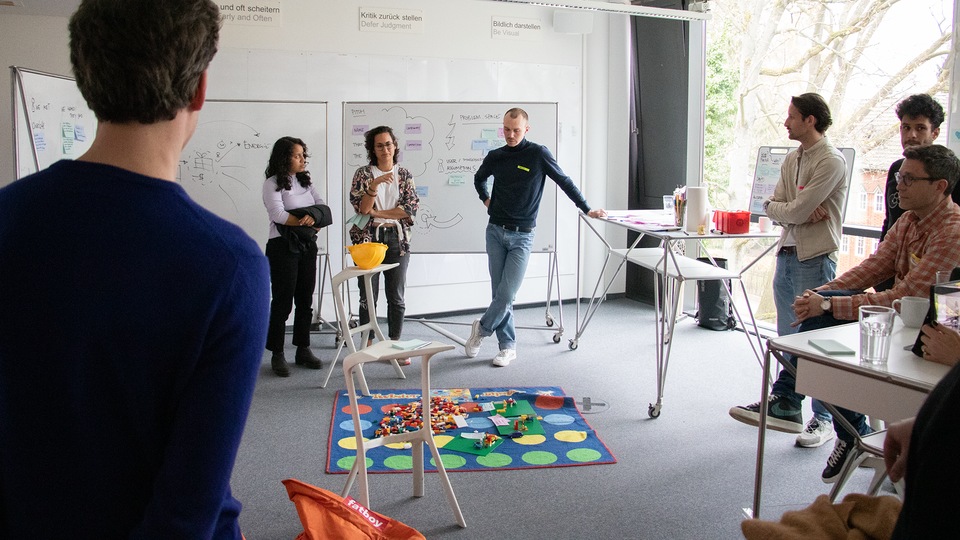
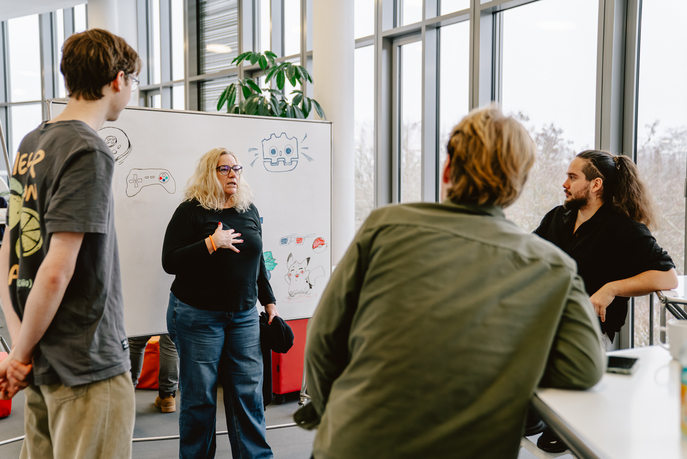
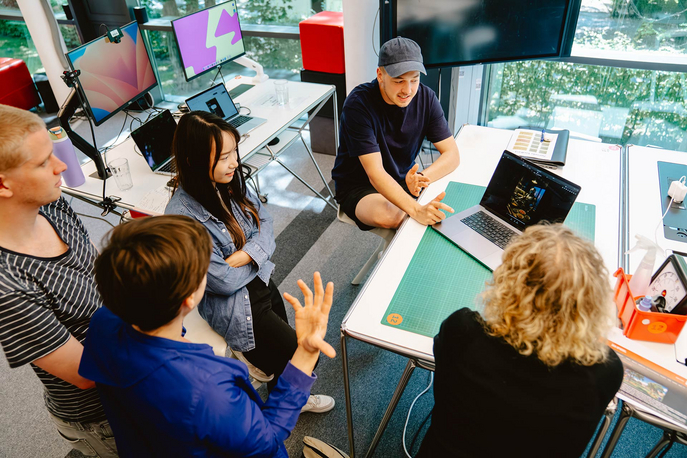
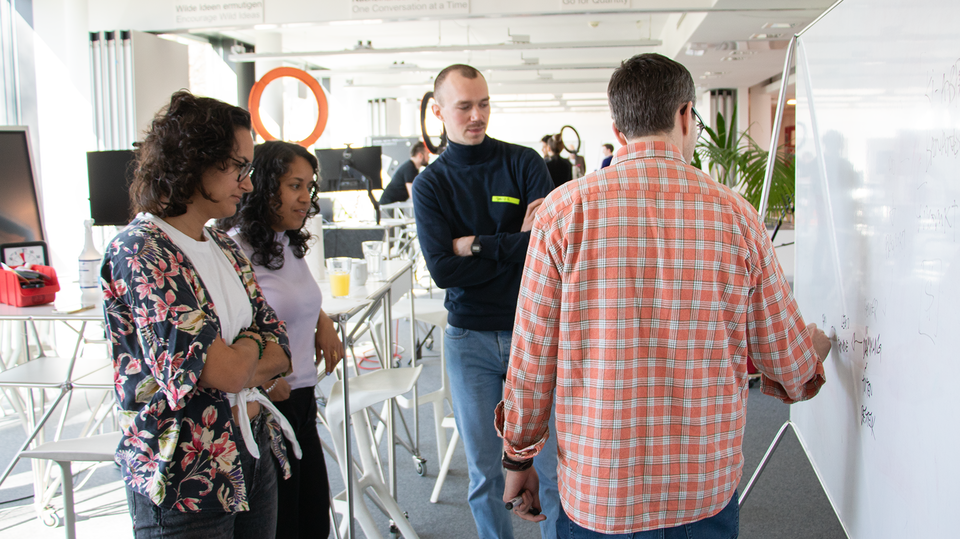
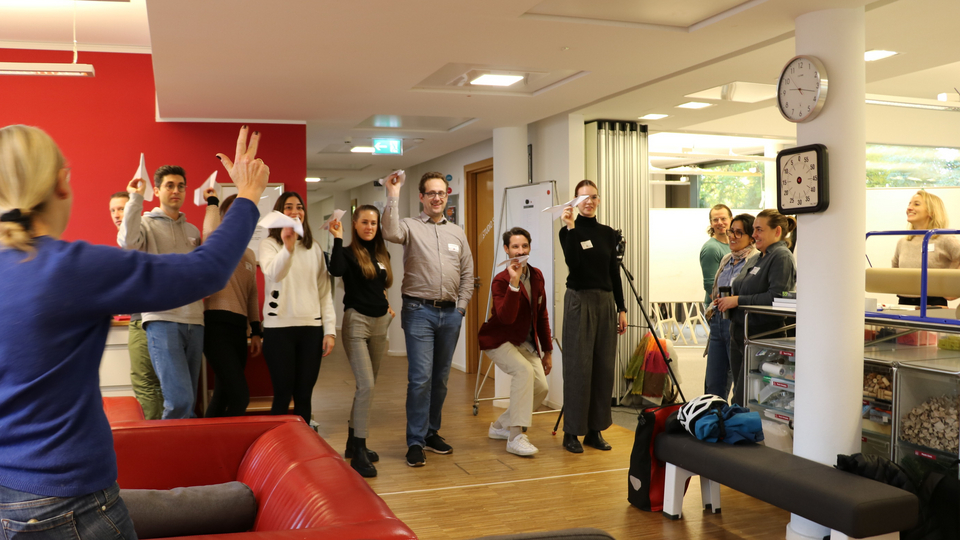
In our Design Thinking Studios at Academic Programs, we invite students, young professionals, and partner organizations with specific challenges in the field of sustainability to experiment with us at the d-school for a better and sustainable future. Proven Design Thinking tools are combined with new methods in an experimental learning setting. 

Design Thinking Studios for Sustainability and Open Innovation in Education will start twice a year in April and October from 2024.

Would you like to become a project partner and submit a practical project for the participants to work on? Please get in touch with us.

Bring your ideas. Shape the future together with us.

From this perspective, we write

We are on a journey towards new approaches for more sustainability and want to share the questions and hurdles we encounter and insights with the public. We assume our readers face similar problems and challenges when applying Design Thinking. We bring our expertise in a human- and life-centered perspective to solving problems and are open to experimenting with new approaches. We want to share these experiences with others. Enjoy reading!

Further news

Contact

Do you have any questions? We will be happy to help you.

Jochen Nünning
Coach (external)
Mitarbeiter:innenfoto