News

On the way to a sustainable supermarket of the future

Intro

Our project partner Cradle to Cradle (C2C)

"Think positive!" This call is more accessible said than done. Aren't the problems around us overwhelming? Climate change, environmental pollution, natural disasters, and wars – to name just a few man-made flashpoints – are enough to make us sit back, feeling helpless, and wonder, "What can I do to change any of this?" Cradle to Cradle (C2C) takes a giant leap over this hurdle with an elegant solution. The NGO does not get involved in a "We have to produce less of this and consume less of that." C2C consciously seeks added value. "Because if we only do less damage through our actions, we only delay the problems we cause as a result, but do not solve them" can be read in the principles of C2C.
Interesting for

Graduates, Students, Young Professionals
The supermarket of the future - a challenge by C2C

A challenge for practical solutions for a sustainable circular economy

C2C projects use concrete examples to show what a sustainable circular economy with direct benefits for all stakeholders can look like. These projects result in organizers, producers, and suppliers who have gained practical experience and more aware consumers who actively participate in the pilot projects. The guiding principle is that the more tangible the experience for all participants, the closer we get to attractive solutions with added value for the environment and society. This was the challenge that C2C presented to the participants in March 2024: "Rethink the supermarket as a focal point of urban life and a place where people come into contact with all the relevant issues around sustainability. Rethink it as a place where people are nudged to engage with these issues positively, which benefits them, and then leave that place feeling confident."

The GDTW is an ideal setting for a challenge from the circular economy

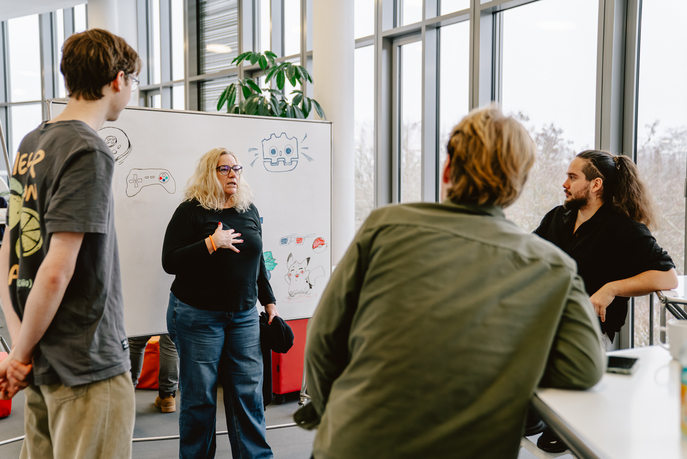
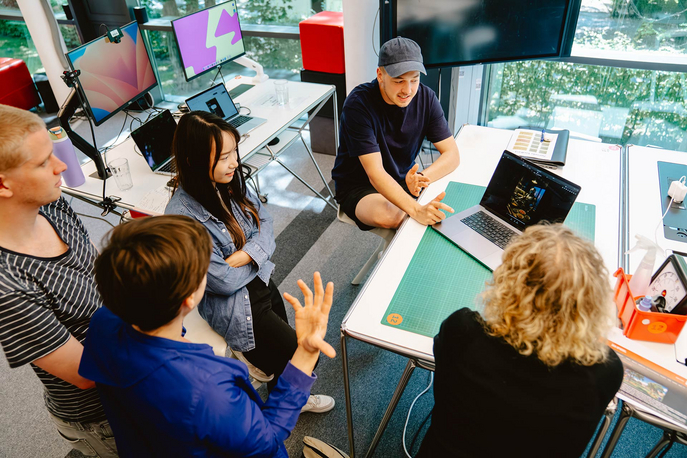
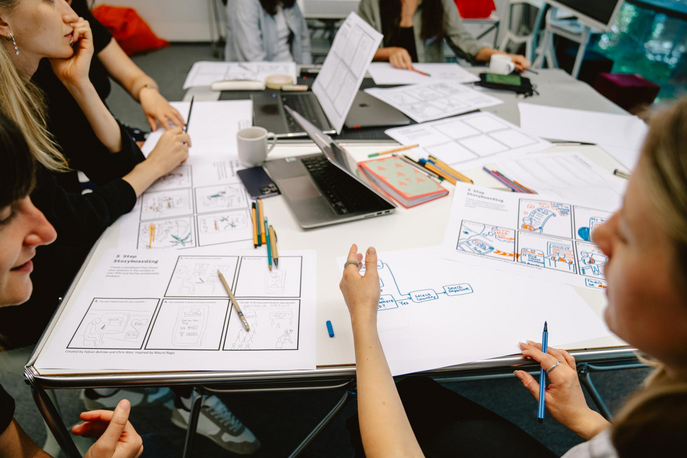
"Problems can only be solved if they are fully understood" is one of the principles of Cradle to Cradle. This perfectly matches the Design Thinking approach practiced in the Global Design Thinking Workshop at the HPI School of Design Thinking (d-school). The first two phases of the Design Thinking method deal intensively with the entire problem context, such as sustainability and users' perspectives. The aim is to develop a deep understanding of the challenges in the circular economy and sustainability issues from the users' perspective. This means that the teams, equipped with pen and paper, set off for the supermarket, accompany consumers as they shop, and interview residents and passers-by around the supermarket. The team summarizes the findings and immediately creates the prototypes.

Supermarket of the future - a challenge by C2C

What should the supermarket of the future look like?

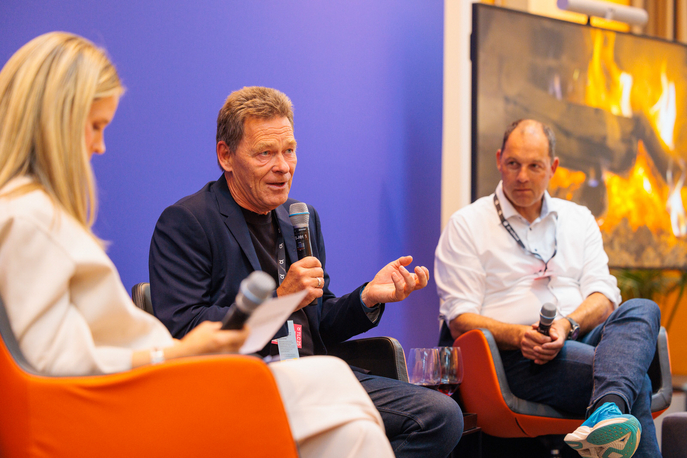
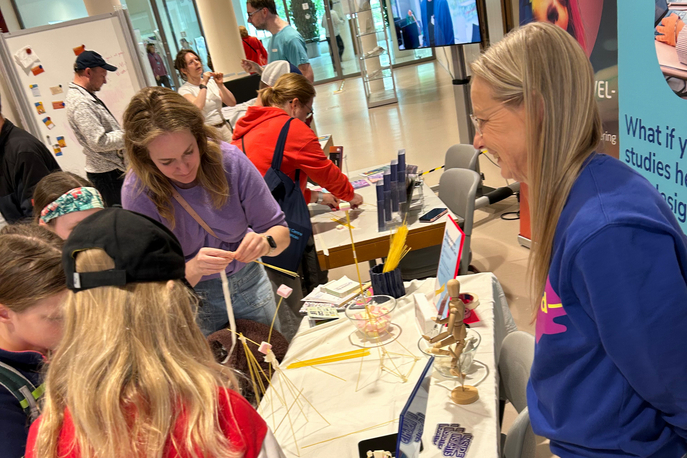
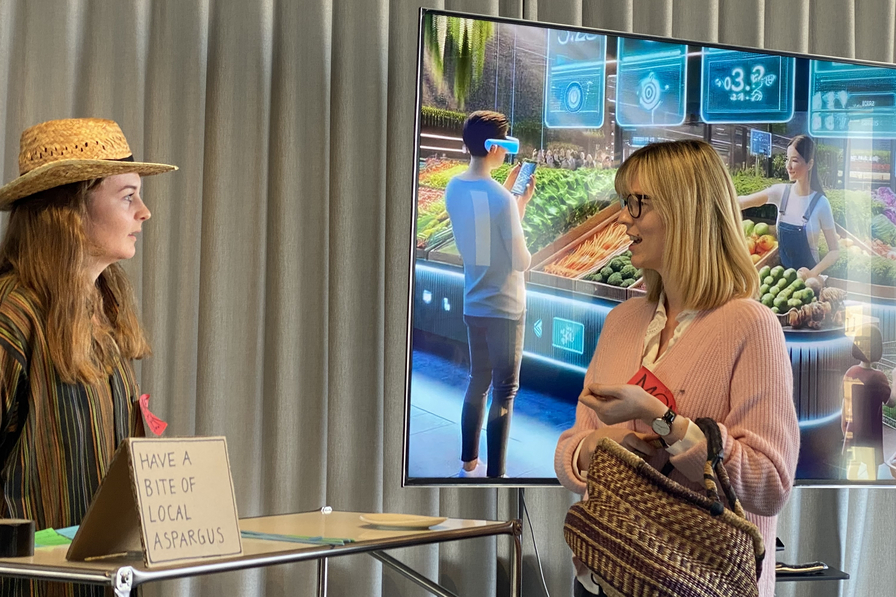
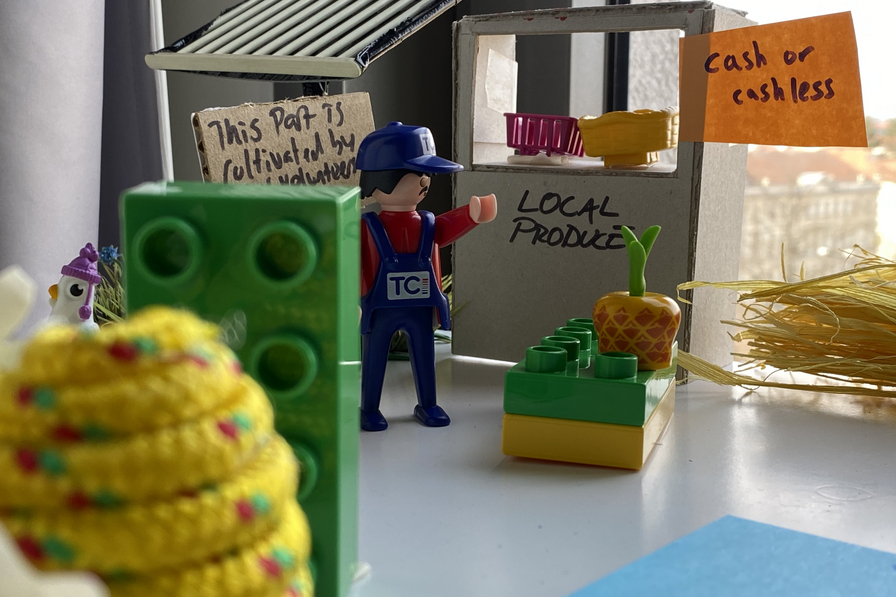
After just one week, the participants of the Global Design Thinking Workshop presented their prototypes at the Potsdam Lab in the city center on March 13th, 2024. They discussed their findings with representatives of Cradle to Cradle. For the project partners, the finished solutions are essential and provide surprising insights from interactions with potential users. Among other things, the teams found that older people are more interested in health aspects and are open to the digital communication of related information directly at the point of purchase. The insight that users associate sustainability with food primarily with the place of production led to functions in the prototypes that made local food producers more tangible for consumers.
All in all, the six teams presented our project partner, Cradle to Cradle, with a range of solutions and new approaches, which the partner will take home in a comprehensive document for further development.

From this perspective, we write

The new direction of our academic programs focuses on pressing issues, such as the path to greater sustainability, open innovation architectures in education, digitalization in healthcare and crisis communication, and much more. Within the framework of these topics, students develop human-centred solutions using Design Thinking. Our goal is to expand Design Thinking with tools and methods that enable us to address these complex issues with a view to a positive, livable future. We cooperate with global networks like the Global Design Thinking Alliance (GDTA).

Further news

Contact

Do you have any questions? We will be happy to help you.