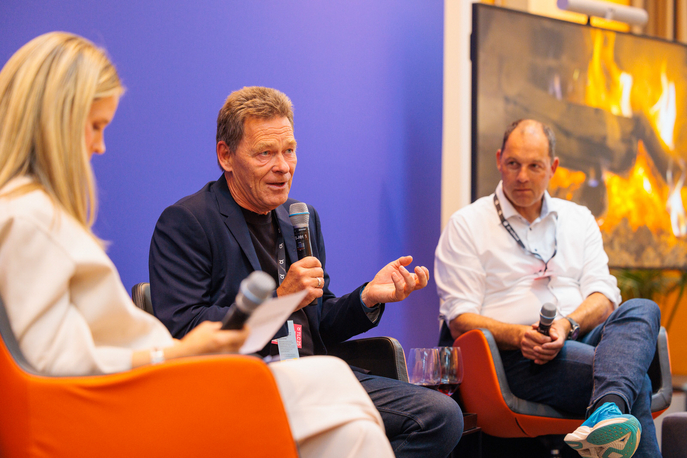
Which challenge in the field of urban mobility is currently on your mind the most? Where do you see the greatest opportunities for new solutions in urban transportation?
Chinh: The biggest challenge is achieving a real shift towards sustainable transport modes, not just for climate and safety reasons, but also for personal health and social cohesion. E-bikes, e-cars, and digital mobility solutions open new opportunities, but in dense cities, public transport will always remain the backbone of urban mobility.
How do you ensure user trust and data privacy while collecting mobility data?
Chinh: Location data is highly sensitive, and protecting it is non-negotiable. We focus on transparent communication and thoughtful UX/UI design, because trust requires both. Trust is earned not just by saying the right things, but merited by building systems that actually keep users safe and in control.
What role do prototyping and testing play in your everyday work or within your company?
Chinh: We use a broad definition of prototyping: almost everything we build is a prototype that has to prove itself in the real world. With agile product development, each iteration is a test; improved, adapted, or replaced as we learn.
What have you learned from collaborating with such a diverse group of stakeholders (e.g. many different transport operators)?
Chinh: In the end, it’s always about people. Collaboration works when you adapt to different communication and working styles, and when you build bridges between stakeholders, gain empathy and understand their needs. That’s the real key to making progress.
How do you turn a prototype into a solution that really scales?
Chinh: Scaling comes after proving real value. Early on, it’s enough to have a rough idea that your idea is able to scale it its core. But initially, we solve problems pragmatically without anticipating every edge case. By the time scaling becomes the challenge, the product has already evolved past the stages of prototyping, testing, reaching product-market fit etc. Only then you refine the details and map out a scaling plan.
If you look back at your Guest Talk at the HPI d-school – what is the main message you’d like participants to take away?
Chinh: Organizational context is often underestimated, but it matters as much as the idea itself! Innovation succeeds or fails depending on the structures around it. A brilliant idea won’t speak for itself; you need the right allies and the right environment to make it thrive.
Thanks for the interview!