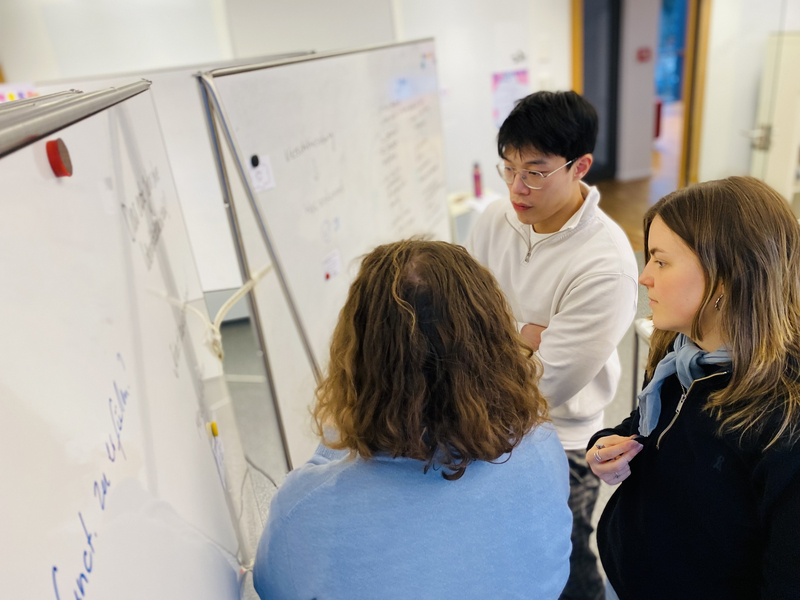
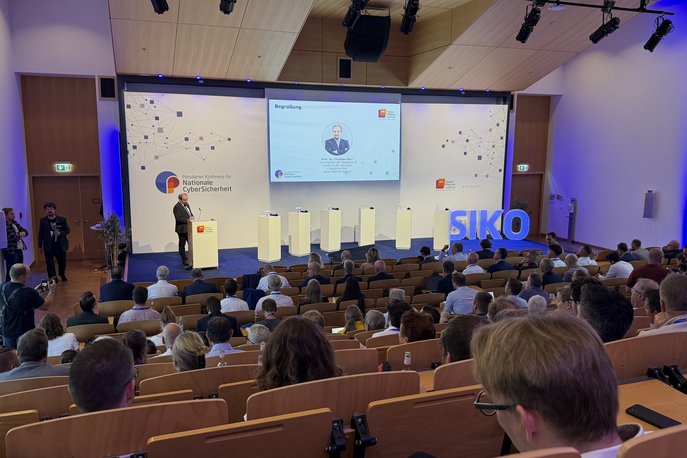
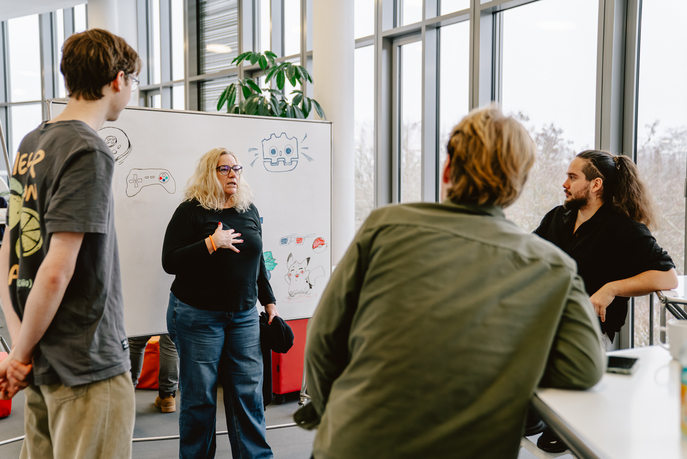
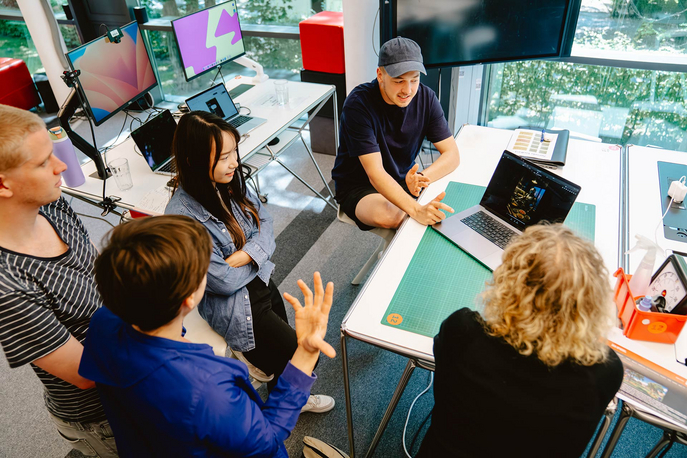
We talked to students in our “Foundations for Design Thinking” course about “point of view” and what “aha” moments they took away from the course.
Accessibility Settings
It is important to us that you have a smooth navigation experience on our website. To ensure this, you can set global settings for your view of the website here.
Animations
We use some animations on this website. If you find these annoying, you can switch them off here at any time.
We talked to students in our “Foundations for Design Thinking” course about “point of view” and what “aha” moments they took away from the course.
Point of view (PoV) is a central step in Design Thinking – and at the same time a skill that goes far beyond this approach. It refers to a consciously formulated standpoint: For whom are we actually solving which problem – and why exactly this one? Instead of rushing to develop ideas, a good point of view means empathizing with others, bundling perspectives, and setting a clear focus. Those who master this skill can structure complex situations, make better decisions, and explain to their team why certain solutions are being pursued. This is a valuable skill for students in particular, both during their studies and in project work, and later in their careers.
In the Design Thinking Foundations course, this skill became tangible for many participants. One student describes the point of view as consciously addressing the question: "Who is the person for whom we want to solve a problem? What has she experienced, what are her values, her fears?“ Another participant with a technical background reports an ”aha" moment: In his working group, he initially formulated a problem in purely technical terms – for example, data security. It was only through working together on the point of view that the focus shifted to the human situation behind it, for example, trust between people. This perspective was “more tangible for many more people” than a purely technical solution. Students from non-technical disciplines also found the course eye-opening: in particular, consciously separating problem definition from solution finding helped them to take more time to really understand the issue before coming up with ideas.
The participants agree: a well-formulated point of view not only helps in the course, but also in future projects and in professional life. Those who learn not to narrow down problems too early remain more open to different options and avoid rushing into a seemingly obvious solution. This is particularly crucial in interdisciplinary teams. A clear point of view serves as a “common thread” that can be used to guide further decisions – whether in software development, social sciences, or design. The ability to translate perspectives and make them understandable thus becomes a real key competence.
Students can acquire precisely these skills in the courses offered by the HPI d-school. In interdisciplinary teams, with real-world problems and plenty of room for reflection, you learn not only to understand point of view theoretically, but also to apply it in practice. Design Thinking at the HPI d-school means combining methodological competence with personal development – and preparing specifically for the challenges of a complex, dynamic working world. Anyone who wants to learn how to ask better questions, develop well-founded points of view, and work together to create viable solutions will find the right environment here.