With the rapid pace of change today – from digital disruptions to global shifts – the debate in education often narrows on what should be taught and learned rather than why it matters and from whom. Yet the more profound question is: “What kind of agency do we want people to develop?” Should people be able to proactively and creatively find solutions in unfamiliar situations, or should they reactively adapt to new circumstances? Once the desired type of agency is clear, we can formulate the knowledge, abilities, and fundamental attitudes that learners should acquire – the necessary “future skills.”
This enables us to redesign education: Once we have defined our target agency here, we can translate future skills into learning objectives and learning journeys: What should learners be able to do in real situations? How will they experience that they have become more creative and collaborative? How do they know that they are designing for impact? Putting this into practice means working in a cycle of action – reflection – adaptation, supported by digital tools and environments that help us to learn.
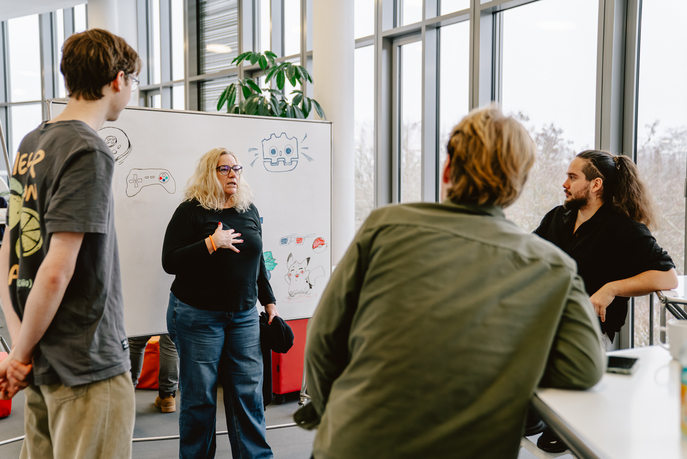
This perspective extends the conversation to the institutional level: How do we build educational resilience into our curricula so that programs enable our learners to shape the future rather than merely adapt to changing conditions? Education needs space for experimentation – dedicated spaces where learning communities can explore real challenges, create and prototype, reflect and iterate.
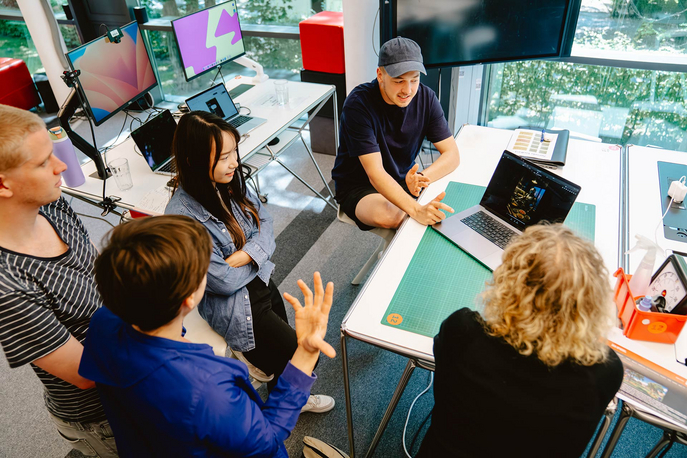
With our collaboration with the Siemens Stiftung, we offered this prototype of a creativity hub: nearly 200 teachers piloted Design Thinking at their schools to engage differently with STEM education, learning in classrooms, and their school, and most of them addressed Sustainable Development topics. These pilots show how agency grows and what conditions enable it: dedicated time, skilled facilitation, leadership backing, and a strong learning community. They offer a sneak peek into what dedicated creativity hubs could make possible at scale.
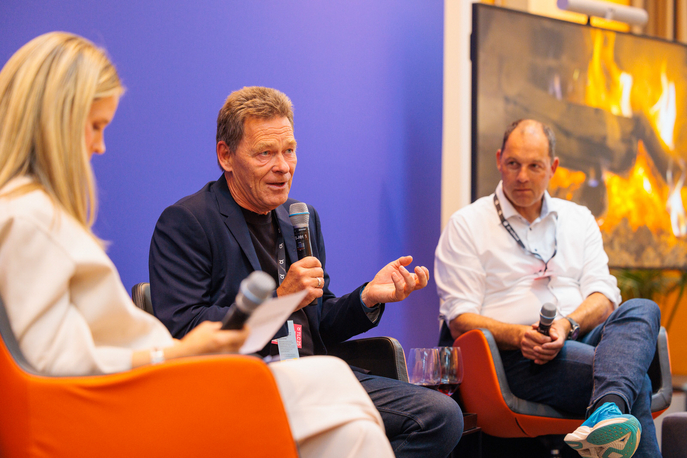
Sherif Osman provides further inspiration on how learning spaces can be designed in an interview on “Learning Experience Design.” He explains why universities should become true hubs of curiosity.
For students, our programs at the HPI d-school not only offer learning spaces, but also demonstrate real impact – for example, in the project with the NGO Kiron. The article by Carleton, T. and Uebernickel, F. shows how well-formulated project tasks unleash real creativity in students.