

“We knew that speed was key– delivering a molecular diagnosis in less than an hour was an ambitious goal.”
When that spot on the MRI turns out to be the worst-case diagnosis – a brain tumor – patients, doctors and families often don't yet know exactly what kind of tumor it is.
A biopsy is often not performed because the brain is difficult to access. During surgery, neurosurgeons must work with very limited information. A full evaluation - a molecular diagnosis of the tumor - takes a long time. The result often only comes weeks later, and in some cases a second surgery is needed. That’s why time is such a critical factor: ideally, tumor classification would be possible during the operation.
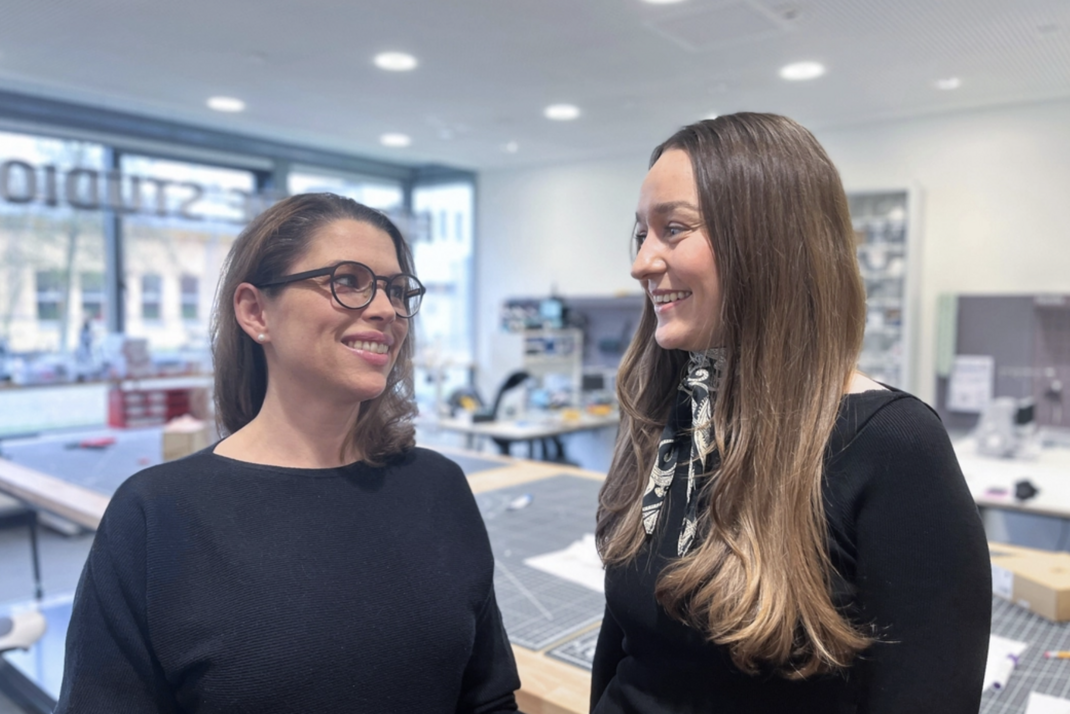
This is exactly what Professor Helene Kretzmer (head of the Computational Genomics department), her research assistant and PhD student Mara Steiger, and their collaboration partners are working on. Nearly 5 years ago, Helene (then at the Max Planck Institute for Molecular Genetics in Berlin) began working on this topic. Today, Helene and Mara Steiger are at the forefront of a research field investigating new possibilities for intraoperative diagnostics.
“We knew that speed was key – delivering a molecular diagnosis in less than an hour was an ambitious goal,” says Helene Kretzmer. The biggest challenge was to combine machine learning with limited sequencing data, explains Mara Steiger: “We optimized a classical machine learning model to work reliably with extremely limited data - this was the key to delivering accurate results within the short surgical timeframe.”
If this proves effective, their new method could bring substantial benefits to patient care. The results are promising - their method, MethyLYZR, delivers highly precise classifications as expected and works reliably across different datasets.
“I would almost say no one was more skeptical than I was. Every time Mara came back with new results, I kept looking for the catch [...] We are not the only ones in this field, there are a few other groups working on similar methods. But currently, no one is as fast as we are!” says Helene Kretzmer.
Thanks to the new method developed by Helene and her collaboration partners, classifying a tumor takes less than an hour. A timeframe that has the potential to revolutionize the current diagnostic standards. In practice, it would work like this: The brain tumor surgery begins, a sample is taken, and while the surgeons proceed with a partial resection, receive the classification results shortly after and can then follow a more informed and targeted approach to tumor resection.
For the first time, surgery could be tailored to the specific molecular characteristics of a brain tumor - not just its localization and proximity to critical brain regions.
This is the result of years of work with researchers from the University Medical Center Schleswig-Holstein (UKSH), the Christian-Albrechts-Universität zu Kiel (CAU) and the Max Planck Institute for Molecular Genetics (MPIMG). The two HPI scientists Helene and Mara have laid an essential foundation for molecular diagnostics during surgery. They are now continuing clinical trials and exploring regulatory considerations and practical implementation.
“... I'm really excited about where this is going. And I would like to be able to look into the future to see whether it will really make a difference in patient care. Personally, this makes me eager to explore further: where else can modeling and machine learning have a real impact?” says Helene.
Helene and Mara’s method has now been published in the prestigious journal “Nature Medicine”.