

The History of the Hasso Plattner Institute and its Founder
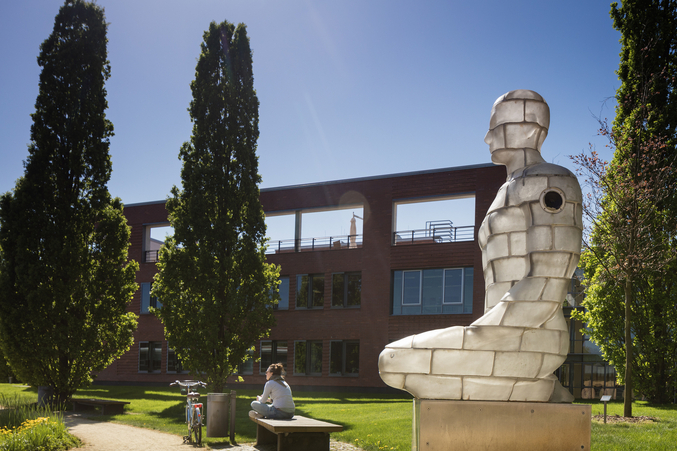
The Hasso Plattner Institute for Digital Engineering gGmbH is a non-profit research institute. It was founded in 1998. The sole shareholder is the Hasso Plattner Foundation. The Hasso Plattner Institute for Digital Engineering gGmbH operates the Hasso Plattner Institute in Potsdam and, together with the University of Potsdam, the joint Digital Engineering Faculty. This is a privately funded faculty of the University of Potsdam. The Digital Engineering Faculty combines unique, practice-oriented degree programs with innovative methods and excellent research in close cooperation with business and industry.
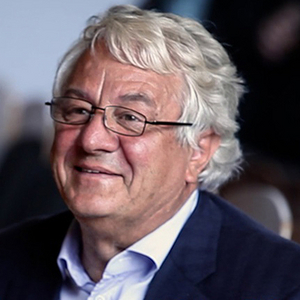
This institute here in Potsdam is my contribution to educating internationally competitive young managers who shape and advance the digital world.
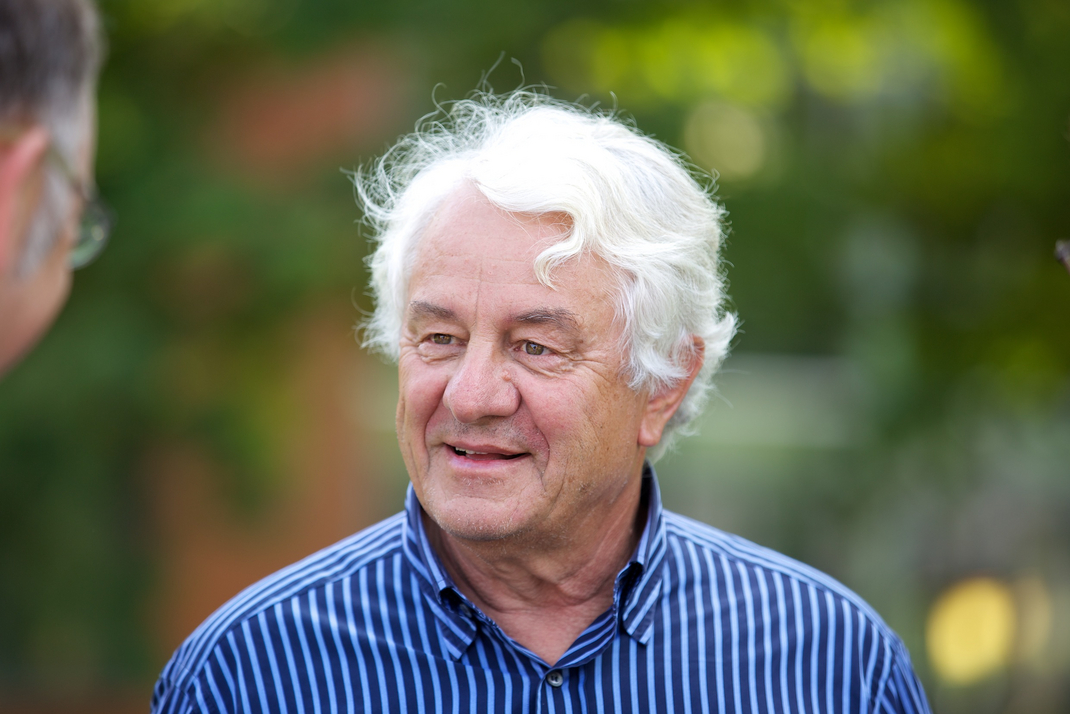
Prof. Dr. Hasso Plattner, Founder
Hasso Plattner: the visionary behind HPI
Hasso Plattner, the founder of the Hasso Plattner Institute, is a visionary and an IT pioneer. By establishing the institute in 1998, he laid the foundation for a unique computer science education that has enabled numerous graduates to shape the digital world. His commitment to cutting-edge technologies and innovation extends far beyond the Institute.
Potsdam becomes a hub for talent from all over the world
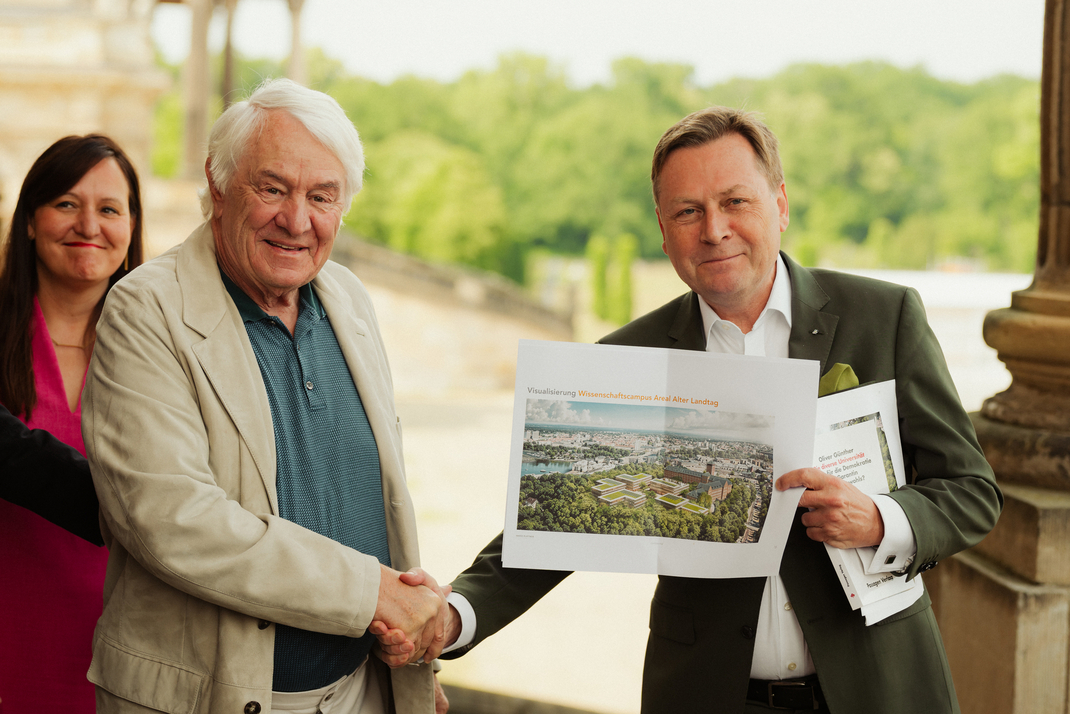
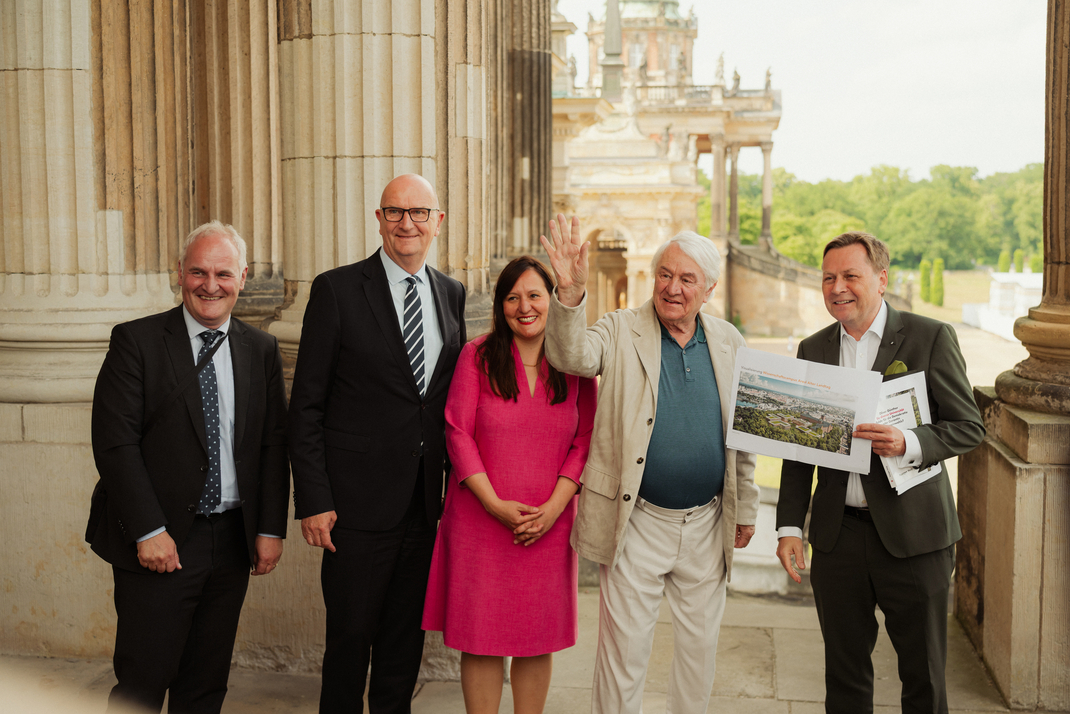
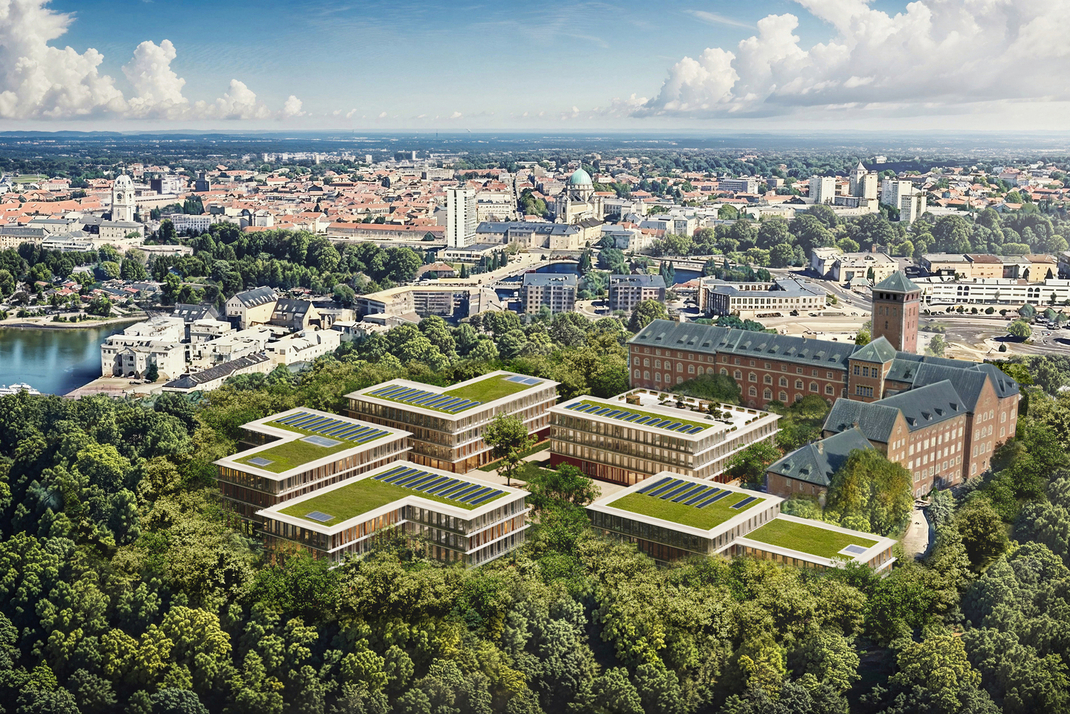
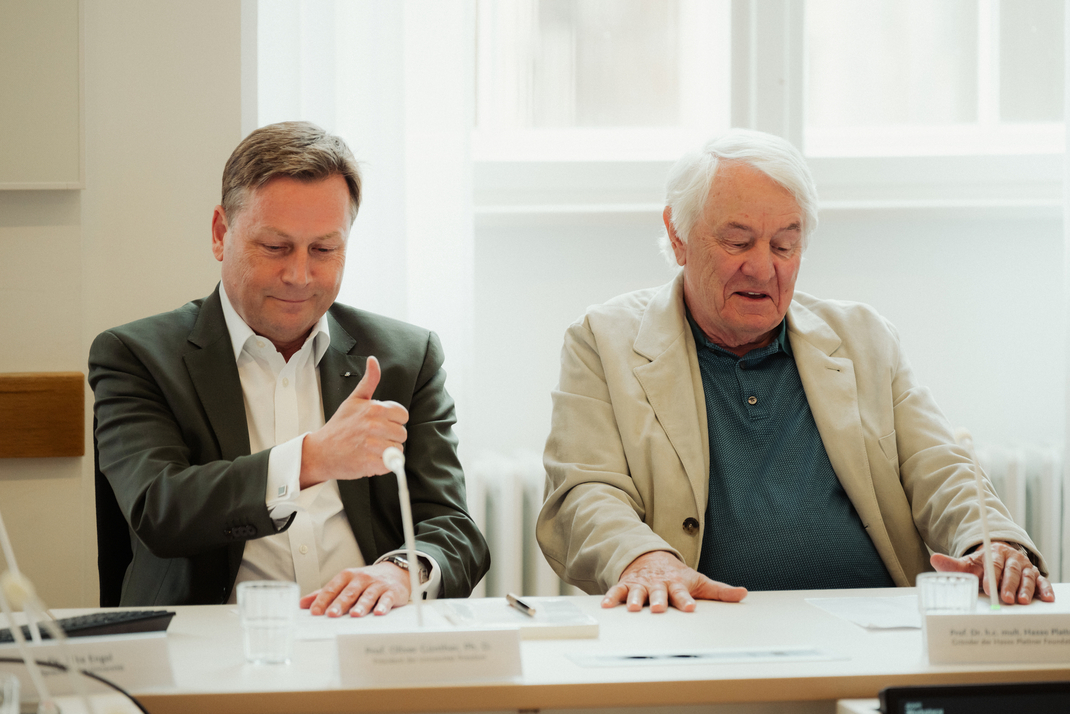
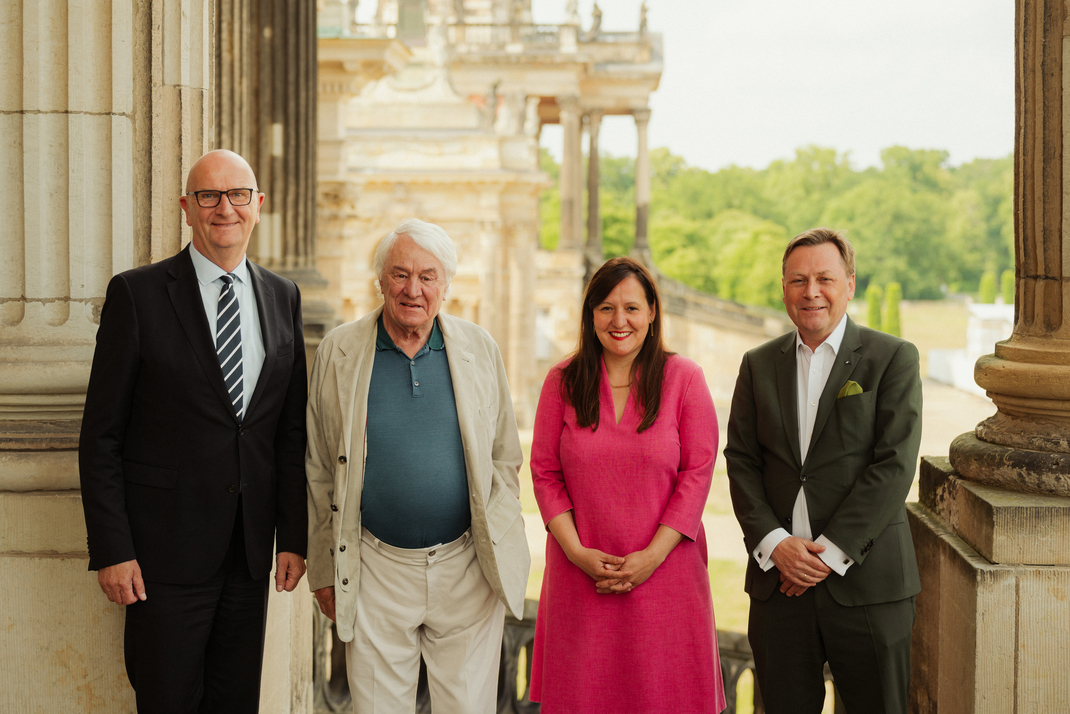
In June 2025, Hasso Plattner announced extensive plans for a campus expansion of the University of Potsdam on the Brauhausberg hill. Over the next ten years, exceptional study and research conditions will be created on the historic site of the former state parliament building. At the same time, the Hasso Plattner Institute (HPI) at the Griebnitzsee site will continue its expansion and development as a leading international computer science institute with the aim of strengthening Europe's digital sovereignty. To this end, HPI will develop additional degree programs, international collaborations, and research priorities, particularly in the field of artificial intelligence. The basis for the comprehensive development of both sites is a letter of intent signed today between the State of Brandenburg, the University of Potsdam, and the Hasso Plattner Foundation.



Prof. Hasso Plattner (born January 21, 1944, in Berlin) studied communications engineering at the University of Karlsruhe, graduating in the late 1960s with a degree in engineering.
He started his professional career at IBM in 1968. Just four years later, Plattner founded SAP, an enterprise software company, together with four former colleagues. Today, the company has more than 100,000 employees worldwide.
In addition to his business career, Plattner has always been drawn to research and science. In 1994, he became an honorary professor of business information technology at the University of Saarbrücken. From 2004-2023, Hasso Plattner also taught at the University of Potsdam and was a member of the Board of Trustees at Stanford University.
As CEO of SAP, Plattner announced the establishment of the Hasso Plattner Institute for Software Systems Engineering (HPI) in the summer of 1998. He chose Potsdam as the location.
Just one year later, the first 77 students began their studies at HPI in the 1999/2000 winter semester. Another year later, the first stone was laid for the institute's own building near Lake Griebnitzsee.
Since its establishment, Hasso Plattner and the Hasso Plattner Foundation have enabled the institute to grow steadily. In 2017, HPI and the University of Potsdam jointly founded the "Digital Engineering Faculty." This was the first privately financed faculty at a public university in Germany.
Hasso Plattner was not only active behind the scenes at HPI. He was also a professor in the institute's lecture halls until 2023. As head of the "Enterprise Platform and Integration Concepts" research group, he was actively involved in research and teaching for many years.
In the spring of 2023, Prof. Plattner gave his last lecture at HPI and was and was released from his duties. In 2024, HPI celebrated its 25th anniversary.
In 2005, Plattner launched the first research school. The research of this interdisciplinary graduate school extends beyond the campus, with branches in Cape Town, South Africa, and at the University of California, USA.
In 2007, Plattner expanded the institute to include the "HPI d-School," modeled on the renowned d.school at Stanford. Since then, students from all disciplines and universities have been able to learn how to use design thinking in multidisciplinary teams to develop innovative products and services for all areas of life. This institution continues to grow, with the most recent branch founded in 2016 in Cape Town (South Africa).
The HPI Future SOC Lab, a research laboratory, was established in 2010. It provides interested scientists around the world with an infrastructure of the latest hardware and software free of charge for research purposes.
The development of numerous groundbreaking innovations can be traced back to Plattner's initiatives at HPI. One of the most significant examples of this is the research on in-memory data management that Plattner supervised. This research led to the product HANA, a development and integration platform at the software company SAP. The technology was awarded both the German Innovation Award and the Berlin Brandenburg Innovation Award in 2012.
Other international initiatives: Since 2023, the Hasso Plattner Institute and the Massachusetts Institute of Technology (MIT) have been cooperating to tackle global societal challenges with a joint research program, "Designing for Sustainability." As part of the HPI-MIT program, multidisciplinary research teams can explore innovations in all their dimensions and various application contexts, as well as computer science for the design of sustainable digital solutions.
HPI and the Stanford Institute for Human-Centered Artificial Intelligence (HAI) have been collaborating since 2024. Both institutes jointly develop scientific projects on human-centered AI systems in a special research program and conduct joint research at Stanford and HPI. The aim is an intensive exchange between doctoral students in the field.


Overview of the history of the HPI
Since its foundation, HPI has combined future-oriented study programs with excellent research and cooperation with leading businesses and industry.
These are the most important milestones and successes of the Hasso Plattner Institute at a glance:
- Georg Kaissis becomes HPI professor and heads the new research group "Digital Health: Human-Centered Transformative AI."
- Chancellor Friedrich Merz visits the HPI campus and exchanges ideas with students and researchers.
- Katharina Braune becomes the new professor for "Digital Health – Non-Communicable Diseases."
- Dr. Henrik Haenecke joins the HPI management team. He takes over the position of Managing Director of Finance and Administration.
- Chitchanok Chuengsatiansup is appointed professor of "Cybersecurity – High-Assurance Systems."
- Jiska Classen becomes professor of "Mobile and Wireless Security."
- Brandenburg's Minister President Dr. Dietmar Woidke and Federal Minister for Digital Affairs Dr. Karsten Wildberger visit HPI.
- The University of Potsdam is getting another campus on Brauhausberg. At the same time, the HPI is being significantly expanded at its Griebnitzsee location. This is based on a joint declaration of intent between the state of Brandenburg, the University of Potsdam, and the Hasso Plattner Foundation.
- HPI and SAP seal new partnership: HPI students will be able to contribute their ideas to SAP through internships. SAP supports the HPI by sponsoring events on future-oriented topics.
- Sandra Wachter joins the HPI with a Humboldt Professorship. She heads the new research group "Technology and Regulation."
- Eleni Tzirita Zacharatou is appointed professor of the new "Spatial Analytics and Large Scale Data Processing" research group.
- The Hasso Plattner Foundation hands over the new buildings P and O to HPI.
- German Chancellor Olaf Scholz visits HPI.
- Start of the research cooperation on human-centered artificial intelligence with Stanford University
- Sandra Wachter receives the second Humboldt Professorship for HPI. The AI expert will conduct research on legal and ethical aspects of artificial intelligence, robotics, and big data, as well as internet and platform regulation.
- The Institute Council, the institute's elected employee representatives, begins its work in June.
- Start of the new Master's program “Computer Science”
- Hasso Plattner celebrates his 80th birthday.
- The new HPI management board takes office. Prof. Tobias Friedrich, Dr. Marcus Kölling, and Prof. Ralf Herbrich take the helm of Hasso Plattner Institute.
- The previous managing director, Prof. Christoph Meinel, officially bids farewell.
- HPI and the Massachusetts Institute of Technology (MIT) launch the research program “Designing for Sustainability”.
- Prof. Lothar Wieler joins HPI. He becomes the Speaker for the Digital Health Cluster and heads the “Digital Global Public Health” research group.
- Prof. Ariel Dora Stern receives a Humboldt Professorship. The expert in health economics teaches and conducts research at the Digital Health Cluster.
- The introductory course “Artificial Intelligence” on openHPI breaks all records. Thousands register for the digital course.
- Launch of the HPI Maker Universe
- The HPI School of Design Thinking looks back on the 15-year success story of its innovation approach at HPI.
- openHPI, HPI's digital learning platform, celebrates its tenth anniversary.
- The HPI Digital Health Center celebrates its fifth anniversary.
- The Hasso Plattner Foundation appoints Prof. Ralf Herbrich and Prof. Tobias Friedrich as two additional managing directors for the Hasso Plattner Institute.
- Launch of the English-language Master's degree program in Software Systems Engineering in winter semester 2022/23
- openHPI celebrates its one millionth course enrollment – since 2012, HPI has been offering free courses on its education platform.
- Dr. Marcus Kölling becomes Commercial Director of HPI.
- HPI takes over ownership of the new building L.
- More than one million users work with the digital learning platform HPI School Cloud developed at HPI.
- The research project funded by the BMBF HPI Schul-Cloud ends at HPI and is further developed and operated by three federal states.
- HPI opens a new branch of the Research School "Data Science and Engineering," a research college at the University of California at Irvine (UCI).
- Hasso Plattner receives an honorary doctorate from KIT.
- HPI takes over the technical maintenance of the platform of the BMBF-funded pilot project KI-Campus.
- Launch of HPI’s clean-IT-initiative as part of HPI’s commitment to the realization of the UN Sustainable Development Goals (SDGs)
- Hasso Plattner Institute celebrates its 20th anniversary.
- Launch of the Master's degree program in cybersecurity in the winter semester
- The HPI Academy celebrates its tenth birthday.
- HPI and New York's Mount Sinai University Hospital establish a new digital health research institute in New York.
- Founder Hasso Plattner celebrates his 75th birthday.
- The Hasso Plattner Institute and the University of Potsdam establish their joint Digital Engineering Faculty.
- In December, the charitable Hasso Plattner Foundation for Software Systems Engineering is established.
- Launch of studies in rented rooms at the Potsdam airship port in October
- Hasso Plattner founds the Hasso Plattner Institute for Software System Technology GmbH as an operating company in October.
- Prof. Dr. Siegfried Wendt is appointed Scientific Director.
Managing Directors of the Hasso Plattner Institute
October 2025 – present
Prof. Dr. Tobias Friedrich, Dr. Henrik Haenecke
May – September 2025
Prof. Dr. Tobias Friedrich, Klaus Grünfelder
2023 – 2025
Prof. Dr. Tobias Friedrich, Prof. Dr. Ralf Herbrich, Dr. Marcus Kölling
2004 – 2023
Prof. Dr. Christoph Meinel
1998 – 2004
Prof. Dr. Siegfried Wendt
Plattner's Honors
Plattner's social commitment is outstanding and has received many awards. Here is a selection of the most important honors and awards:
- 2016: Awarded the Heinrich Hertz Visiting Professorship by the Karlsruhe University Society and the President of the Karlsruhe Institute of Technology (KIT)
- 2005: Recipient of the Leibniz Medal by the Berlin-Brandenburg Academy of Sciences and Humanities
- 2002: Appointment as an honorary doctor of the University of Potsdam
- 1998: Honorary Senator awarded by Saarland University
- 1990: Appointed as honorary doctorate by the University of Saarbrücken
Hasso Plattner's commitment goes far beyond the academic context and has been frequently rewarded with prizes and awards since 1998:
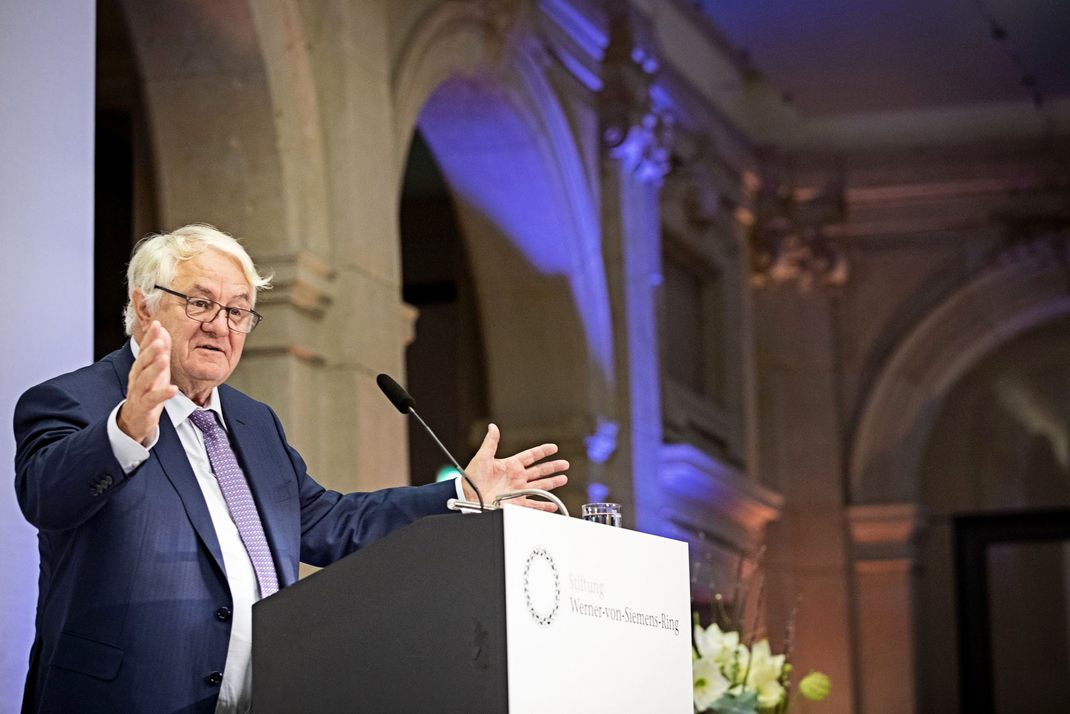
- 2018: Receipt of the German Werner-von-Siemens-Ring
- 2016: Awarded the prize for "Understanding and Tolerance" by the Jewish Museum Berlin
- 2015: Received the „Lifetime Achievement Award“ from the German American Business Association (GABA)
- 2012: Received the "Global Benefactor Award" of the Churchill Club
- 2010: Received of the "AmCham Transatlantic Partnership Award" in Berlin
- 2007: Awarded the Order of Merit of the State by the Brandenburg State Government
- 2006: Elected "Hero" of the last 60 years by the US magazine "Time"
- 2005: Award for Innovation Promoter of the Year by the magazine P.M.
- 2001: Received the Federal Cross of Merit on Ribbon.
- 2001: Voted the most important and influential IT personality by Time Magazine Europe
- 1998: Induction into the "Hall of Fame" of Manager Magazine


The Hasso Plattner Foundation: The Organization Behind HPI
The Hasso Plattner Foundation is a charitable foundation based in Potsdam. Established in 2015, it supports projects in science and education, social matters and conservation, and art and culture. Its mission is to educate and inspire current and future generations through long-term initiatives such as the Hasso Plattner Institute, Sabine Plattner African Charities, Museum Barberini, and a range of other international education initiatives.
The Foundation
Media inquiries

The three focus areas
The Foundation supports initiatives solely within the scope of its statutes. Its main areas are:

Science & Education
Initiatives in this area educate future generations to enable technology-based science, develop innovative solutions, and make a tangible impact. All of this is done with the goal of strengthening Europe’s digital sovereignty.
- Hasso Plattner Institute (HPI)
- Hasso Plattner Institute for Digital Health at Mount Sinai (HPI•MS)
- Hasso Plattner d-school Afrika at UCT
- Data4Life
- Brauhausberg & Griebnitzsee Campi

Social & Conservation
In order to preserve our planet for future generations, the foundation supports nature conservation and educational projects, especially on the African continent.
- Sabine Plattner African Charities (SPAC)
- SPAC EduConservation
- Desmond Tutu Health Foundation
- Embark in Knowledge
(Inkcubeko Youth and Science Center) - George Child & Family Welfare (GCFW)
- Dzanga Forest Elephant Project
- Leadership for Conservation in Africa (LCA)
- Nano Nation (Nano’s Kidsclub)
- Care in Action

Art & Culture
The initiatives in this area promote cultural preservation, education, and access to art. In addition, the foundation is involved in provenance research and the preservation of cultural heritage.
- Museum Barberini
- DAS MINSK Kunsthaus in Potsdam
- TALES: @talesofus.initiative
- Wildenstein Plattner Institute (WPI)
- Navigating.art
The Foundation establishes and runs long-term projects in partnership with experts in relevant fields, rather than giving one-time grants. This approach ensures that its initiatives have a lasting impact. Together with its project teams, the Foundation develops the strategies for achieving a set of shared goals. To address the societal needs of our time and emerging challenges, the Foundation supports select projects through its Special Purpose Funds.
Plattner's commitment to art and culture in Potsdam
Museum Barberini
The traces of Plattner's commitment can also be found in art and culture. Visitors to the "Museum Barberini" in downtown Potsdam enter the reconstruction of a palace destroyed in World War II, which Plattner had rebuilt as a museum building. Former German Chancellor Angela Merkel and former Federal President Joachim Gauck are among the first of the many prominent guests since the opening on 20 January 2017.
Since September 2020, the Museum Barberini has been presenting the Hasso Plattner Collection, which is on permanent loan to the museum from the Hasso Plattner Foundation. With 115 masterpieces of Impressionism and Post-Impressionism, including 40 works by Claude Monet alone, Museum Barberini is one of the most important centers of Impressionist landscape painting worldwide. Based on the collection, the museum also shows up to three temporary exhibitions a year with important loans from international collections. The exhibitions are designed in cooperation with international museum partners and prepared through scientific conferences.
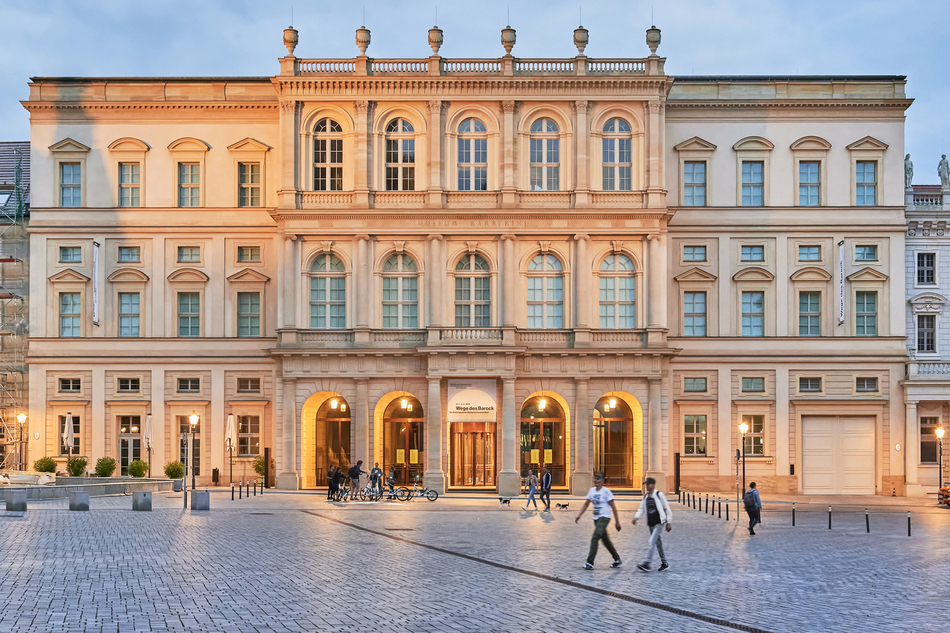
Current Exhibition at Museum Barberini

From July 4 through October 11, the exhibition "Symphony of Colors: Paul Signac and Neo-Impressionism" will be the first comprehensive exhibition devoted to Signac in Germany in 30 years, highlighting the artist's pivotal role within the movement.
More information & ticketsDAS MINSK Kunsthaus in Potsdam
Just a few hundred meters away from the Museum Barberini, DAS MINSK Kunsthaus in Potsdam opened in September 2022. It is a unique place that combines art and history. The former "Minsk" terrace restaurant fell into disrepair after reunification. It was purchased by the Hasso Plattner Foundation in 2019, and construction work began in 2020, with the building's architecture reflecting both preservation and renewal and the name being retained.
The exhibitions in DAS MINSK Kunsthaus in Potsdam show art from the former German Democratic Republic, which is part of the Hasso Plattner collection, as well as contemporary art.
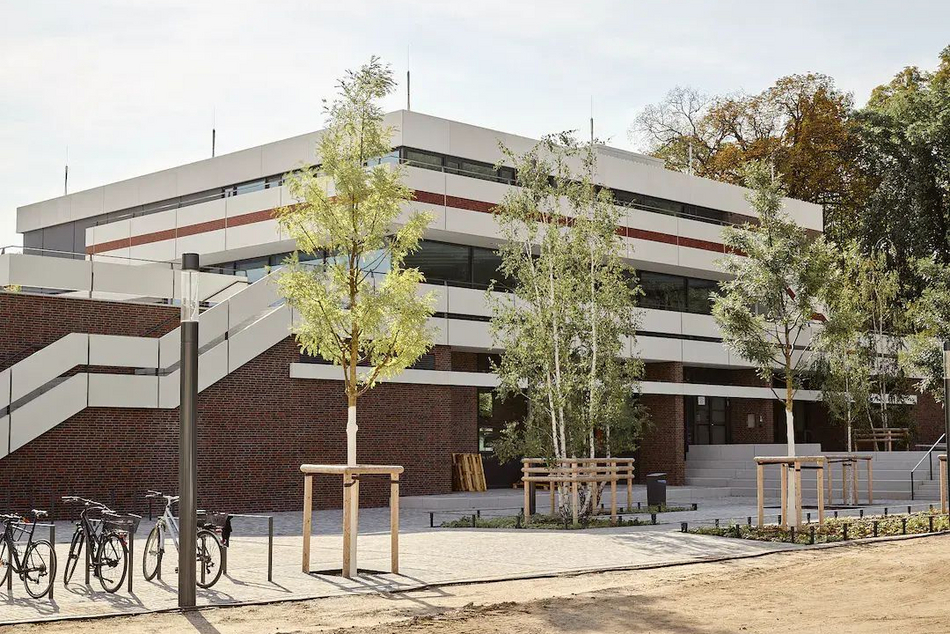
Current Exhibition at DAS MINSK

With his project "Collective Osmosis," Colombian artist Oscar Murillo brings his art into dialogue with the work of Claude Monet and invites visitors to get creative themselves. The exhibition runs from March 14 to August 9, 2026.
More information & ticketsLast change: 02/07/2026, Julia Porstendörfer