

The Systems Cluster covers all systems engineering lifecycle phases, from systems design and analysis to software architectures, programming, testing, networks, deployment, and operations.
To do so, a comprehensive range of computer science methods and techniques is investigated. The broad scope of the Systems Cluster contributes substantially to HPI's strategic goal of engineering complex software systems.
Our Mission
Since the Systems Cluster covers methods and techniques for engineering complex IT systems, it provides valuable contributions to the other HPI method and HPI domain clusters. Further development of the Systems Cluster will, therefore, impact those clusters.
The Systems Cluster strives to help engineering systems that
- meet user needs through dedicated requirements engineering, including systems modelling and process analysis
- can quickly adapt to changing requirements through dedicated systems runtime analysis, from the systems infrastructure level to the business process application level
- provide high-quality systems through functions with predictable quality by incorporating non-functional requirements into a system’s design and runtime
- are a solid basis for transfer activities, including HPI spin-off companies and system engineering projects in the domain clusters.
The systems cluster aims to provide high-quality and well-coordinated teaching to students, where a solid conceptual foundation provides the basis for the engineering of complex IT systems.
HPI Research Schools
Members of the Systems Cluster also play active roles in organizing two Research Schools: Systems Design and Secure Distributed Computing, which offer an outstanding environment for doctoral researchers with funding, training, and peer exchange.
Learn more
Activities and Events
June 26, 2026 | Systems Cluster Workshop
The workshop brings together 10 research groups spanning a broad spectrum of research on the engineering of complex IT systems to build connections between teams, foster cross-group collaborations, and collect ideas for future cluster activities.
June 30 - July 2, 2026 | Special Symposium on Human-Centered Software Engineering and AI (SEAIS)
SEAIS brings ~30 leading researchers in software engineering and AI together with ~30 experienced practitioners and ~30 ambitious students to reflect on the state of the art in (human-centered) software engineering and AI, and to co-shape its future. Learn more
Research Focuses
Models, methods, and systems for modeling software products and processes (business processes, development processes, etc.) play a decisive role in software engineering. This applies to the system view of software-intensive systems as well as to the penetration of individual aspects.
Software architecture is the subject of software engineering, which includes the theoretical foundations, means of expression, and architecture types for software-intensive systems.
This is linked to the classification of components and relationship types, the derivation of model architectures for essential application domains, the prefabrication and use of component types, their management and composition, the evaluation of architecture variants, allocation, and replication.
This subject area, based on knowledge of programming technology, is not just theoretical. It also includes special subsystems, components and frameworks that support certain product features with a reusable character, such as security in software-intensive systems. The practical application of knowledge is what makes this field so exciting and inspiring.
Core software systems are subsystems that are largely application-independent and, together with hardware, form the basis for the development of software-intensive systems.
These primarily include operating systems, database systems, communication systems, systems for human-machine communication, middleware, compilers and interpreters, knowledge processing systems, among others. A deep understanding of the component structure and the program interfaces is paramount for the effective functioning of these systems.
In addition to pure software systems, there are also software-hardware systems. That is, computer systems that have been extended by microcontroller-based components (e.g., cameras, mobile devices, scanners, and machines for manufacturing).
Building on the areas mentioned above, various process-related sub-areas in software engineering aim to create the organizational and technical framework conditions for software design, software management, and software quality assurance. Suitable processes are an indispensable prerequisite for the development of large software-intensive systems.
An outstanding feature of the Digital Engineering Faculty degree programs is integrating all training areas into a holistic system view, including projects and software laboratories. We attach great importance to the practical implementation of our theoretical knowledge. This includes implementing innovative solutions and their application in real-life scenarios.
Cluster Members
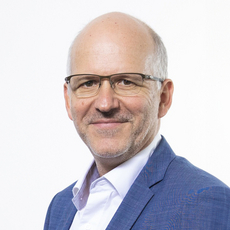
Prof. Dr. Mathias Weske
Head of Business Process Technology
Phone: +49 331 5509-191
Mail: mathias.weske@hpi.de
Research Focuses:
- process mining
- business process support
- process automation
- healthcare
- logistics
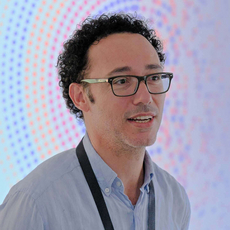
Research Focuses:
- Generative and Agentic Software Engineering
- AI Engineering
- Requirements Engineering for Trustworthy AI
- Mining Software Repositories
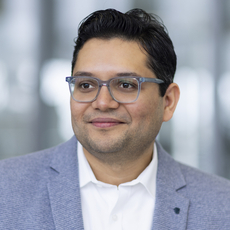
Prof. Dr. Vaibhav Bajpai
Head of Data-Intensive Internet Computing
Phone: +49 331 5509-3435
Mail: office-bajpai@hpi.de
Research Focuses:
- network protocols and architecture
- networked systems
- network infrastructure
- network security and privacy
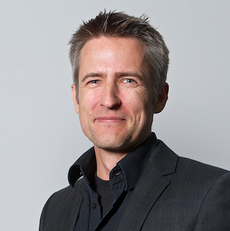
Prof. Dr. Patrick Baudisch
Head of Human Computer Interaction
Phone: +49 331 5509-551
Mail: patrick.baudisch@hpi.de
Research Focuses:
- interactive devices and systems
- haptics
- virtual reality
- fabrication technology
- uniting computer science and mechanical engineering
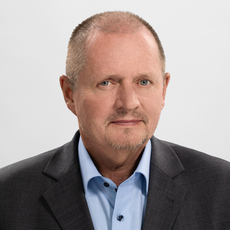
Prof. Dr. Jürgen Döllner
Head of Computer Graphics Systems
Phone: +49 331 5509-170
Mail: juergen.doellner@hpi.de
Research Focuses:
- visual computing
- AI for geometry and geodata
- software analytics
- geospatial analytics
- video analytics
- finance analytics
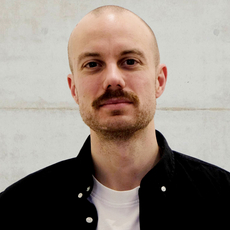
Research Focuses:
- Machine Learning-Based User Modeling
- Interface Optimization
- Computational Design
- Data-Driven Interface Evaluation
- Human-Computer Interaction
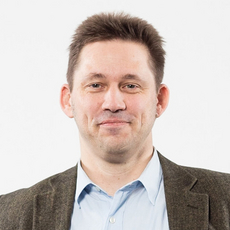
Prof. Dr. Holger Giese
Head of System Analysis and Modeling
Phone: +49 331 5509-366
Mail: holger.giese@hpi.de
Research Focuses:
- models for software-intensive systems
- adaptation policies
- model analysis and development
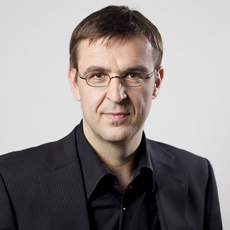
Prof. Dr. Robert Hirschfeld
Head of Software Architecture
Phone: +49 331 5509-220
Mail: robert.hirschfeld@hpi.de
Research Focuses:
- design and understanding of complex software systems
- programming languages
- analysis techniques
- execution environments
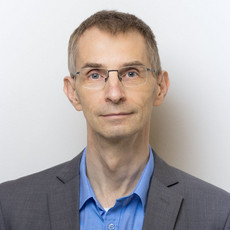
Prof. Dr. Holger Karl
Head of Internet Technologies and Softwarization
Phone: +49 331 5509-3490
Mail: holger.karl@hpi.de
Research Focuses:
- mobile and wireless networks
- data center networks
- zero-touch networking
- micro services
- latency reduction
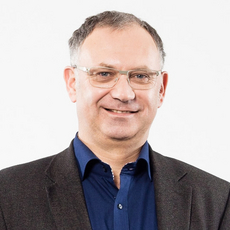
Prof. Dr. Andreas Polze
Head of Operating Systems and Middleware
Phone: +49 331 5509-220
Mail: andreas.polze@hpi.de
Research Focuses:
- large-scale, distributed component systems
- middleware
- embedded systems
- real-time capability
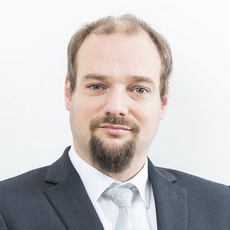
Prof. Dr. Christian Dörr
Head of Cybersecurity – Enterprise Security
Phone: +49 331 5509-4951
Mail: christian.doerr@hpi.de
Research Focuses:
- network security
- data security
- attack detection
- cyber security management
- digital sovereignty
Research News
Last change: 03/07/2026, Mareike-Vic Schreiber