

Scientific Topic
Lately, low-cost sensor devices have gained significant computing capabilities. The way we process data produced by computational nodes is therefore constantly evolving. While historically, mainframes provided heavy lifting for dumb end user terminals, computing capabilities now surround users on increasingly capable mobile devices, on edge compute nodes, and even on network components that were traditionally not imagined as computational nodes.
To harness this opportunity, a research school on secure distributed computing (SeDiC) is proposed. SeDiC aims to tackle the challenges of exchanging and computing data across a network of interconnected systems. It addresses scalability, efficiency, dependability and security, combining expertise in network architectures, distributed systems and cybersecurity. SeDiC aims to develop innovative solutions that enhance secure communications, bolster resilience against cyber threats, and support the deployment of secure, scalable, and efficient distributed systems.
Planned activities
SeDiC conducts research on distributed, scalable, and secure data computing, encompassing both end devices (hosts, personal devices, servers) and network components. The primary objective of this research school is to adopt a holistic approach to understanding the challenges of future distributed computing. We aim to develop methods for novel and enhanced network communication and management paradigms to ensure dependability, efficiency, security and privacy of communication networks and services. To disseminate our research findings, SeDiC will publish them in top networking venues. We actively encourage and enable our doctoral students to integrate diverse perspectives into their research. The Research School focuses on providing support and advice.
Research Colloquium
As concrete instruments, SeDiC will start with a fixed monthly joint research colloquium across its constituent research groups, with additional slots in scheduled in between as the number of students and present grows. The primary objective of these meetings is to gain insights into research problems, methods, and techniques employed by the participating research groups. We are particularly keen to identify differences in approaches and experiences. This collaborative approach will foster cross-research group problem-solving and joint research endeavors. Furthermore, these colloquia provide an opportunity for members (PhD students from various funding sources) to present their research findings annually.
Master Thesis Presentations
Master thesis presentations (inaugural or final defenses) will be held in this colloquium, providing master students from participating research groups with an additional incentive to attend the events and thereby exposing and captivating them early on to the research activities done by the research groups.
Research Methods
We believe that a school’s primary purpose should not be limited to specific research exchanges; it should also encompass a broader understanding of research methods. For instance, it’s important to comprehend how the publication process operates, how to write papers, and the various scientific methods that exist in the field. In this regard, SeDiC aims to leverage and contribute to the growing culture of talks and events organised at HPI. Practically, this involves aligning our colloquium schedule to encourage members to participate in these events at sister research schools and cluster meetings.
Research School Retreat
We plan to organise a research school retreat annually. In this event, all participants of the research school gather at an off-site location to engage in discussions and collaborative exploration of an emerging research topic in working groups that will be orthogonal to the content covered in monthly joint research colloquia. In the annual retreat, each participant contributes their unique perspectives, fostering an interdisciplinary understanding and problem solving approach. The primary objective of the annual retreat is to enhance cohesion and collaboration between the research groups and their members, leading to the co-creation of research ideas that may ultimately result in joint research activities among the members.
Internal Evaluation Procedures
PhD students closely interact with their primary and secondary advisors on a regular basis to advance their research efforts. In those interactions they present their work, explore directions, and get advice. Each funded student is expected to present at least once a year in the research school, with the SeDiC PIs providing constructive feedback about the work and progress to student and supervisor.
Collaborations
As all participating PIs are closely involved in systems research, SeDiC will collaborate with the Systems cluster and will also establish connections with the Systems Design Research School. We also plan to invite external speakers to our monthly joint research colloquia to further broaden the perspectives of the students of our research school.
Principal Investigators
Speaker
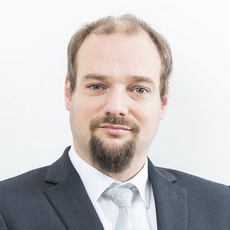
Prof. Dr. Christian Dörr
Head of Cybersecurity – Enterprise Security
Phone: +49 331 5509-4951
Mail: christian.doerr@hpi.de
Co-Speaker

Prof. Dr. Vaibhav Bajpai
Head of Data-Intensive Internet Computing
Phone: +49 331 5509-3435
Mail: office-bajpai@hpi.de

Prof. Dr. Holger Karl
Head of Internet Technologies and Softwarization
Phone: +49 331 5509-3490
Mail: holger.karl@hpi.de

Prof. Dr.-Ing. Jiska Classen
Fachgebietsleiterin Mobile and Wireless Security
Phone: +49 331 5509-1353
Mail: jiska.classen@hpi.de
Last change: 28/05/2026, Patrick Lenz