
One day his employer called with a question: "Can you come to Kenya?" The project focuses on East Africa — satellite data, crop forecasting, and food security.
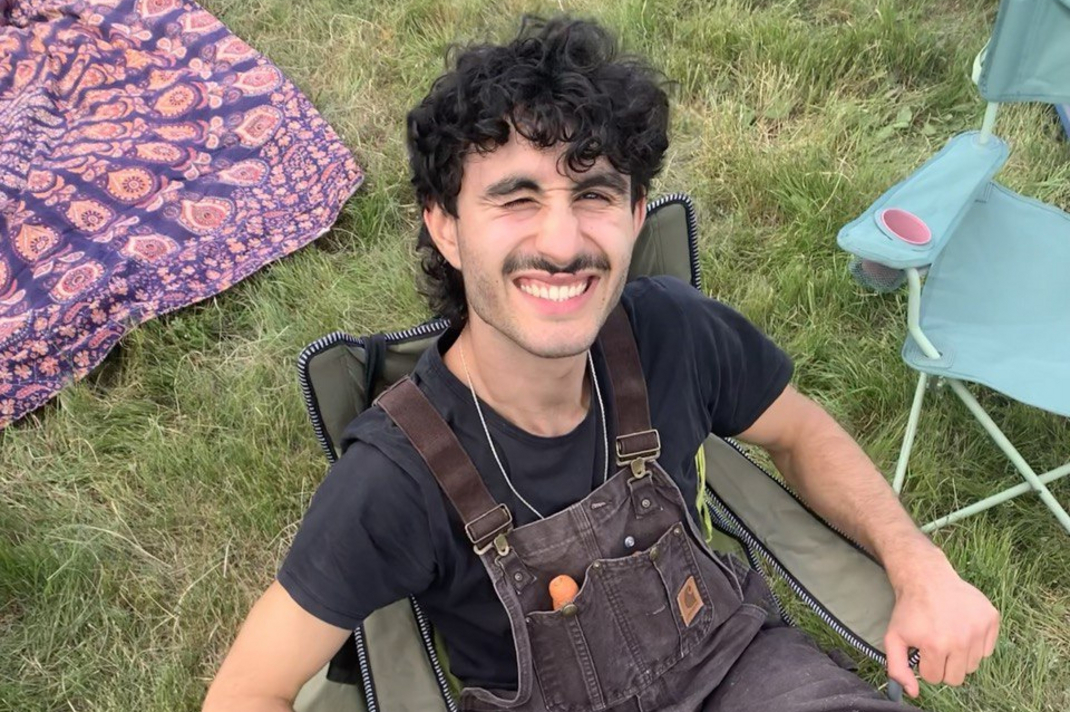
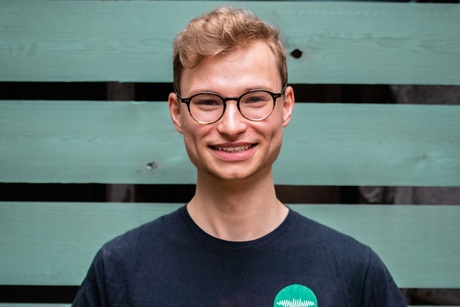
Rohan Sawahn is based in Strasbourg and works for NASA Harvest. There, he develops systems and machine-learning models that analyze more than 100 terabytes of satellite data: images that allow models to estimate what is happening in agricultural fields. At first glance, it may sound highly technical. But the implications are profound: predicting crop yields — ideally up to two months in advance.
Rohan agreed to the request and joined the trip to Kenya, where the goal was to build new partnerships and generate forecasts. "Our aim is to say as early as possible what will likely happen by the end of the season," he explains. "Whether crop failures are likely. Whether imports might be necessary. Whether markets will react."
Rohan studied at HPI until and graduated 2024. Today, he works as a Research Scientist and Software Engineer within an international network of universities, governments, and AI labs. And when he talks about big data processing, it doesn’t sound like an IT buzzword. It sounds like responsibility.
In Europe, agricultural fields are often large, commercially organized, and well documented. In Kenya, however, many farmers are smallholders working small plots of land. Their dependence on the weather is significant — and the weather is becoming increasingly unpredictable. "If a drought begins within just a few days or rain comes at the wrong time, an entire harvest can be ruined,” says Rohan. "And if you only have one small field, your livelihood depends on it."
Vast amounts of data - and no manual for how to use them
Satellites deliver images. But in reality, they deliver much more than that. "You can think of it like a camera orbiting the Earth," Rohan explains. "Except the sensor sees far more than we do. Not just red, green, and blue — but information that the human eye can’t detect."
The volume of data is enormous: hundreds of terabytes of raw information that first needs to be structured, cleaned, and processed. This is where Rohan’s expertise comes in. "I work a lot on big data processing," he says. "Our job is to make sure these massive datasets can be processed efficiently so we can generate forecasts quickly enough."
At the same time, much of the work is true research. There is no ready-made manual for turning massive satellite datasets into accurate crop forecasts across different countries. Together with his colleagues, Rohan develops new methods that simply did not exist before.
Not everything works on the first attempt. But the ambition to work on solutions that make a real-world difference has guided him long before his time at NASA Harvest.
Thinking about responsibility - systematically
Even during his studies, Rohan was politically engaged, particularly in climate protection. At HPI, he took part in a project seminar focused on protecting gorillas in the Congo. "That’s when I realized that what you study can be connected to issues that matter to you personally."
Today, that sense of responsibility is central to his work. "We’re not developing a product for a single customer," he says. "We always have to ask: Who will be affected by our decisions? And does our solution actually create value?"
His workday is highly international. On some days, his work begins at 5 a.m. in Strasbourg: laptop open, camera on, first meeting with colleagues in the United States. Collaboration with universities, research institutes, AI labs, and governments follows.
And somewhere in between: a quick game of table tennis at the office. What advice would he give students today? He pauses for a moment before answering: "Don’t choose modules because they’re easy. Choose the ones you truly care about. And look for projects that are more than just credit points."
More news

Contact persons