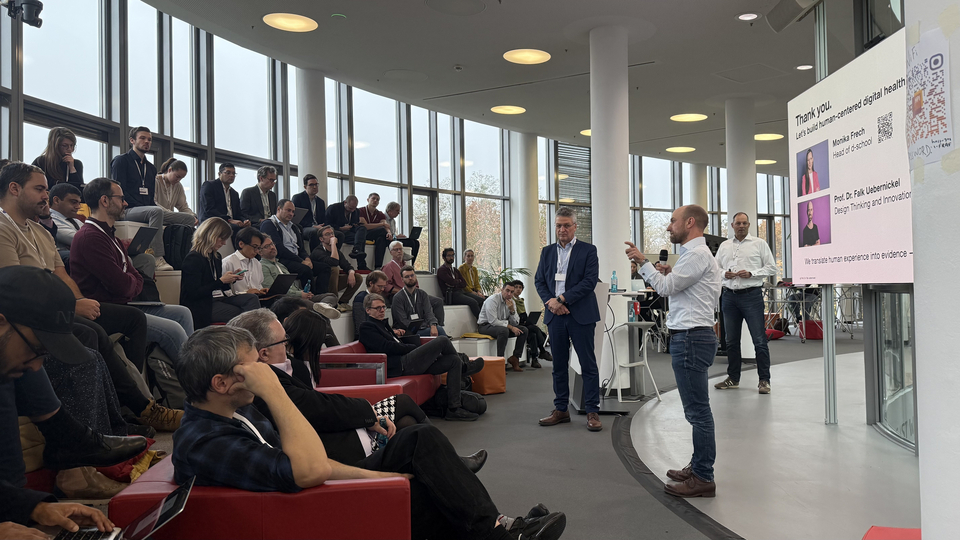
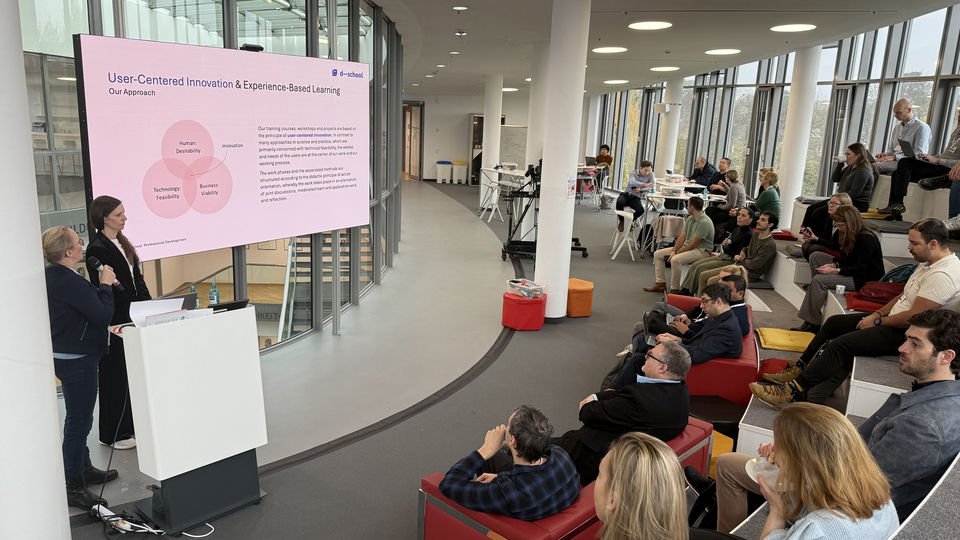
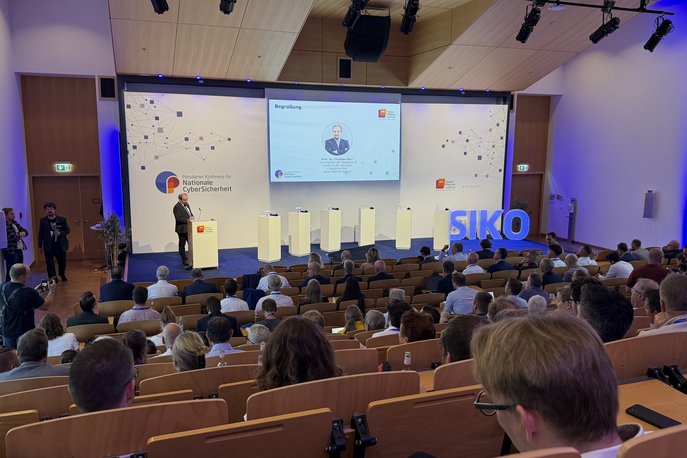
On the first day, Prof. Dr. Falk Uebernickel, Co-Head of the HPI d-school, gave a Spotlight Talk in the “AI and Society” section entitled:
“Design as an Engine for Digital Health Innovation – How Human-Centered Prototyping creates real value for patients”
His core message:
Many brilliant technological solutions fail not because of the technology, but because of the reality of the people for whom they are intended.
- Adoption is not a technological problem, but a human one: technologies develop quickly, but their introduction into everyday life is often slow.
- Design is the engine that brings innovation to life: only when solutions are consistently aligned with the needs and routines of users can they have a real impact.
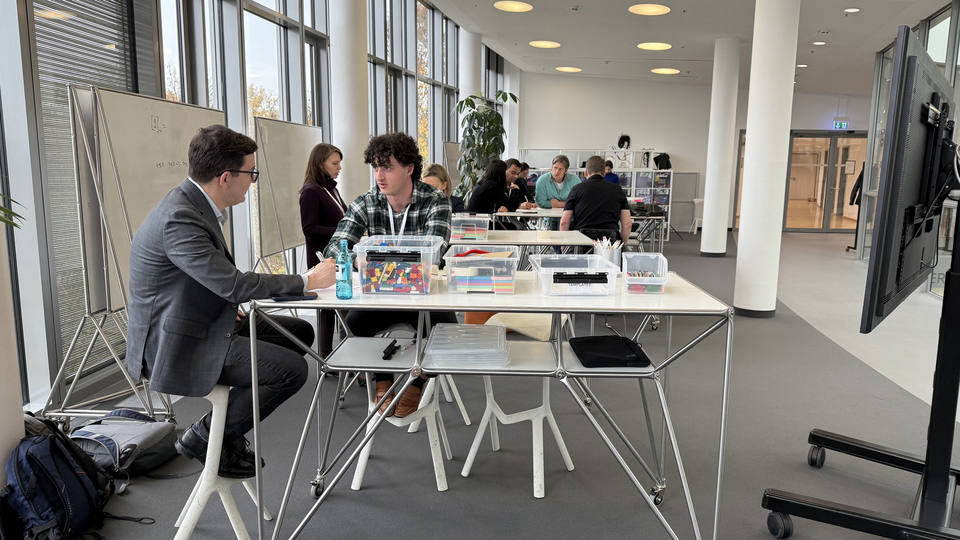
- Prototyping as the fastest route to truth: early, tangible prototypes allow assumptions to be tested and iteratively improved – long before significant resources are invested.
Using two very different student projects, Falk showed how this approach works in practice and what role design plays in bringing together behavior, context, and evidence-based work.
Example 1: CURAFA – Rethinking access to primary healthcare in Kenya
In the CURAFA project, a social innovation pilot initiated by Merck KGaA in Kenya, a team worked with design thinking students to improve primary healthcare.
A key challenge:
There was little data on how people actually use healthcare services in their everyday lives. In order to develop effective solutions, the team first had to understand how people actually navigate their way to care.
- The team observed interaction patterns in real-life contexts and accompanied patients on their journey through the healthcare system.
- Interviews with healthcare providers revealed how they perceive access, trust, and value from their perspective.
- A key learning: Many providers were primarily focused on optimizing the clinic—not the patient journey. The biggest gap was not so much in the available medical technology, but in the everyday barriers in patient behavior.
The project impressively demonstrated how important it is to understand system logic as well as the individual realities of patients' lives.
Example 2: ABBI – A companion for people with multiple sclerosis
In the ABBI project, the team worked on the question:
“What could a patient support program of the future for people with multiple sclerosis (MS) look like?”
MS affects approximately 2.8 million people worldwide. The disease can worsen slowly or abruptly – with a significant impact on everyday life. In terms of design, this means that solutions must support people long before they experience severe impairment.
To understand this reality, the team relied on self-immersion and experiential prototyping:
- limitations were simulated to experience firsthand how MS-related impairments feel in everyday life.
- The team visited patients at home and observed everyday activities outside the clinic.
- The focus shifted: it is not only medication that is crucial, but also the ability to function in everyday life.
This research led to ABBI, a prototype for a digital companion:
- ABBI sends daily micro-nudges – small prompts for movement and activity.
- The goal is to maintain functionality for as long as possible and slow down the effects of disability in everyday life.
- The intervention is based on behavioral psychological mechanisms that have been previously tested in low-fidelity experiments.