News

From technology to trust: human-centered innovation in healthcare

HPI d-school at the intersection of people and technology

Insights from the Digital Health Innovation Forum at HPI

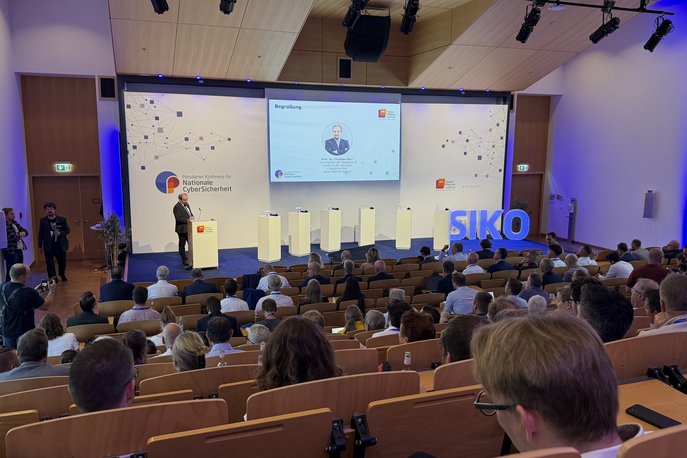
Digitalization and connectivity are accelerating the transformation of healthcare towards a new medical practice. From personalized medicine and telehealth to AI-supported diagnostics, new technologies are increasingly shaping the relationship between patients, medical professionals, and care institutions. Against this backdrop, the second Digital Health Innovation Forum took place at HPI on March 25 and 26, 2026, hosted by Prof. Ariel Dora Stern and Prof. Lothar H. Wieler.

Why human-centered innovation matters in healthcare

As technology becomes more important across the entire healthcare journey, one question becomes increasingly urgent: how can we design the intersection between people and technology in a way that creates real value for patients?

Finding the right balance is essential. Technology can improve treatment, rehabilitation, prevention, and access to care – but only if it responds to real human needs. This is where Design Thinking becomes especially relevant. By focusing first on the people affected, it helps teams develop solutions that are not only technologically feasible, but also meaningful, usable, and trustworthy in practice.

For this reason, the HPI d-school offered a workshop on “Design Thinking and Co-Creation” on the second day of the conference. The session was led by Flavia Bleuel, Monika Frech, and Andrea Rhinow.
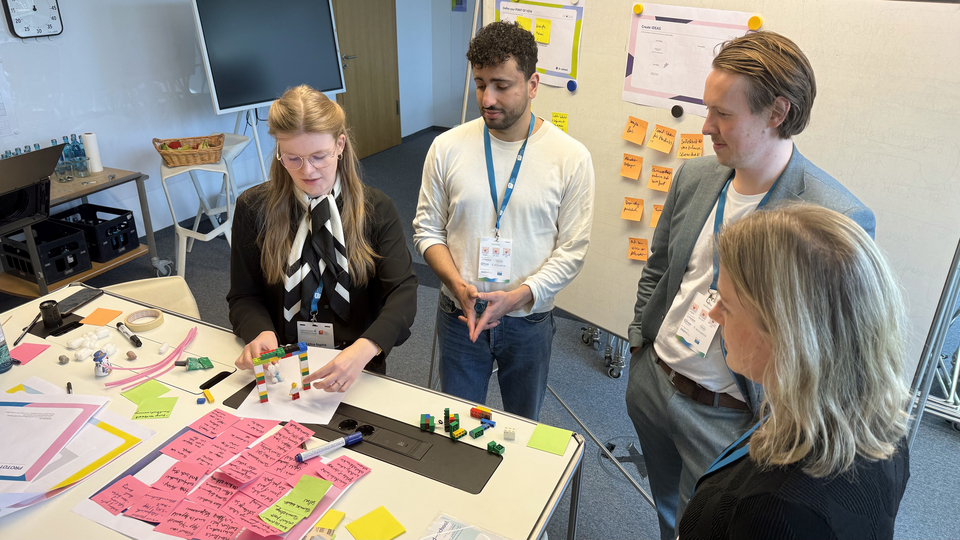
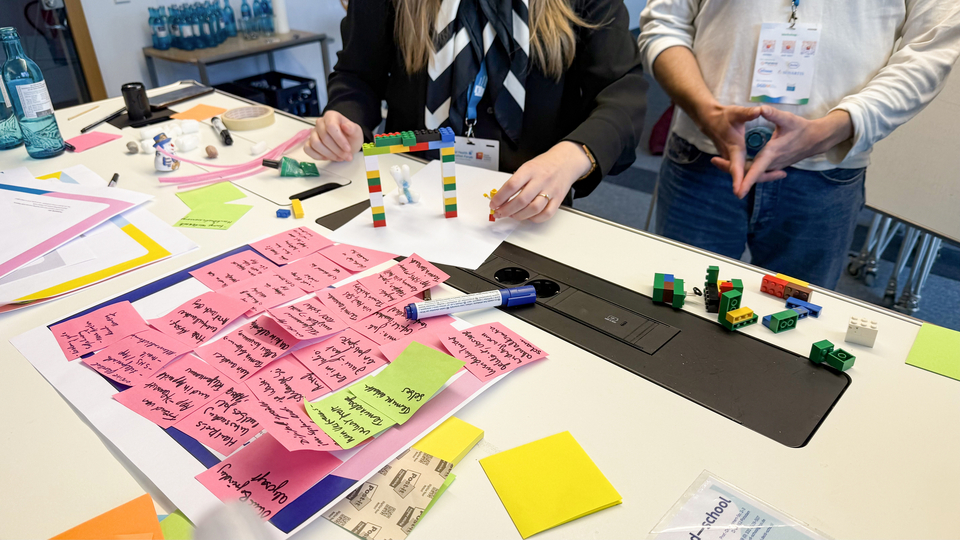
A hands-on workshop on trust, technology, and patient experience

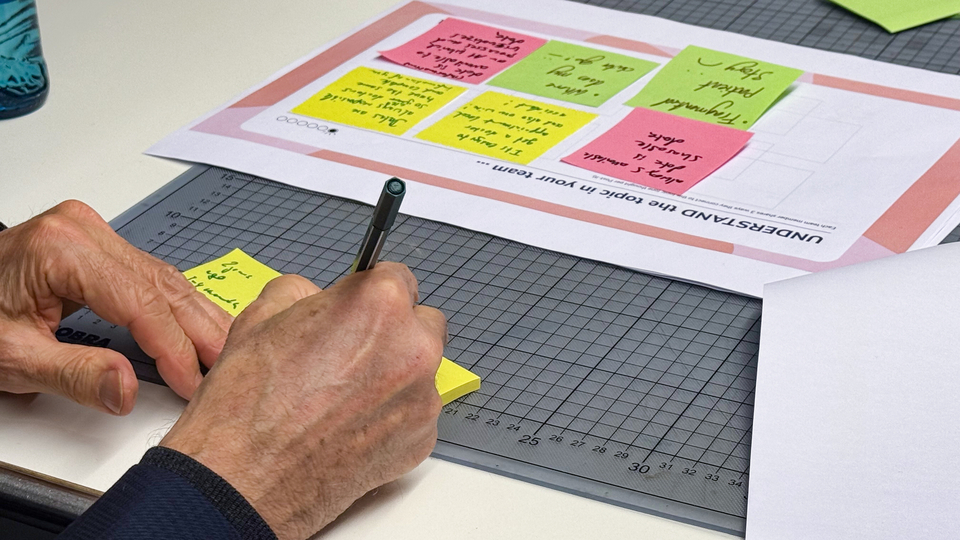
In two and a half hours, participants received an intensive, hands-on introduction to the Design Thinking process. Working in small groups on a real healthcare-related challenge, they explored how new ideas can emerge when technology is viewed from the patient perspective.

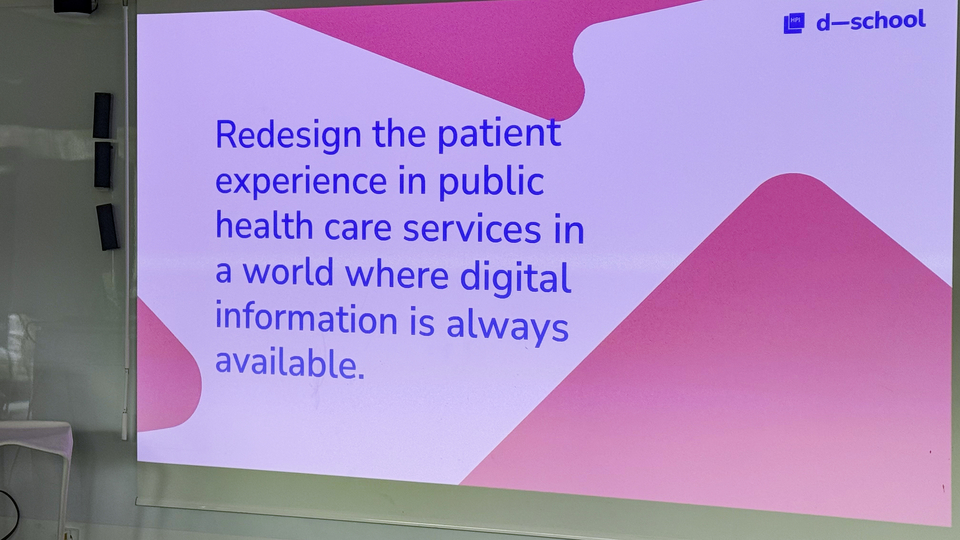
At the center of the workshop was a question that is becoming more relevant across healthcare systems: „How can patient experience and public healthcare services be designed in a world where digital information is always available?“ When information is abundant, trust, orientation, and guidance become even more important.

Rather than discussing these questions only in theory, participants worked through the process themselves – from building a shared understanding of the challenge to interviewing people with patient experience, defining a clear point of view, generating ideas, building prototypes, and testing them.

The six Design Thinking steps in the workshop

  1. Understand: The workshop began with a shared reflection on the challenge. Participants exchanged their first thoughts, assumptions, and personal associations with the topic. This helped teams align their perspectives and become aware of the different experiences already present in the room.
  2. Observe: Next, participants interviewed people about real patient experiences. They explored what had worked well, what had not, and where uncertainty, frustration, or unmet needs had emerged. Follow-up questions such as “why?” helped uncover deeper motivations and concerns behind what people said.
  3. Define a point of view: After gathering these insights, teams came back together to synthesize what they had heard. They identified patterns, discussed underlying issues, and decided which specific problem they wanted to focus on. This step was about moving from many observations to one clear design opportunity.
  4. Ideate: With a focused point of view in place, participants entered the solution space. They generated a range of possible ideas – both digital and non-digital – before selecting one concept that seemed especially relevant and valuable from the user’s perspective.
  5. Prototype: The chosen idea was then made tangible. Teams created simple prototypes that allowed others to experience the concept in a concrete way. The goal was not perfection, but to make the idea visible, discussable, and testable.
  6. Test: In the final step, participants presented their prototypes and gathered feedback. This was not about defending an idea, but about learning from users: what worked, what did not, what remained unclear, and what new ideas emerged through the conversation.
  • Workshop Design Thinking & Co-Design at Digital Health Innovation Forum 2026
  • Workshop Design Thinking & Co-Design at Digital Health Innovation Forum 2026
  • Workshop Design Thinking & Co-Design at Digital Health Innovation Forum 2026
  • Workshop Design Thinking & Co-Design at Digital Health Innovation Forum 2026

HPI d-school at the intersection of people and technology

This is exactly where the HPI d-school works: at the intersection of human needs, technological possibility, and real-world implementation. Across both Academic Programs and Professional Development, all work starts with practical challenges brought in by partners and participants themselves.

With the mindset of Design Thinking, students and professionals repeatedly engage with healthcare-related questions – from user-centered sensor systems in rehabilitation to new ways of transferring medical knowledge into general practice. The goal is always the same: to develop innovations that are grounded in reality, shaped with people, and capable of making a meaningful difference.

Further news

  • News
    What future skills do we need, and how can we acquire them? A look at experimentation, a culture of learning from mistakes, and Design Thinking.
    • Academic Programs
    • Professional Development
    • Design Thinking
    • Digital upskilling
  • News
    HPI at Potsdamer Tag der Wissenschaften 2026
    Hands-on experiments, computer science activities, and digital learning offers brought research to life for visitors.
    • Academic Programs
    • Design Thinking
    • Innovation
    • Research
  • News
    Mitarbeiter:innenfoto
    How much decision-making should AI have? Samuel Tschepe explains why conscious agency matters more than chasing the next tool hype.
    • Artificial intelligence
    • Digital upskilling
    • Professional Development

Contact

Do you have any questions? We will be happy to help you.