Project Case

Step by step: Data4Life and Charité Universitätsmedizin Berlin

Intro

Using Design Thinking to examine sensor-based stroke rehabilitation

In cooperation with the Charité – Universitätsmedizin Berlin and the digital health organization Data4Life, we developed concepts for the feasibility of the “Sensor-S” study. The stated goal was to increase user-friendliness for stroke patients in a sensor-based rehabilitation study. The result was an all-in-one box that meets the needs of patients. “STEPbySTEP” ensures that all technical components for the study are easily accessible and understandable. This is designed to motivate patients to work on their recovery.

Project partner

Challenge

The design challenge in this project was: "Improve the engagement and retention of participants in a sensor-based study on stroke rehabilitation!"

Starting point

After a stroke, it is difficult for many patients to regain their ability to move.

Patients need a lot of time and motivation to recover from a stroke. As a result of neurological deficits, they are often physically and cognitively limited, which can lead to restricted mobility. Our project partners Charité - Universitätsmedizin Berlin and Data4Life are conducting the “Sensor-S” study to investigate the extent to which mobile devices can support the rehabilitation process. In particular, the study is looking at whether sensors in combination with mobile devices can have a positive influence on the motivation to participate in rehabilitation. For example, stroke patients can track their progress in real time and receive regular feedback via the D4L Collect app. One of the hypotheses is that this in turn increases their motivation and participation and makes the rehabilitation program more effective overall.

In the associated experimental setup, it is important to minimize the burden on the study participants. This includes making the attachment of sensors to the feet and the technical set-up for data collection as practical as possible. These are precisely the challenges that Design Thinking students at our HPI d-school addressed in the summer semester of 2024.

  • Use Case Data4Life - Charité Stroke Patients Design Thinking
  • Use Case Data4Life - Charité Stroke Patients Design Thinking
  • Use Case Data4Life - Charité Stroke Patients Design Thinking

Aha-moments

Human-centered design can be the key to a successful study.

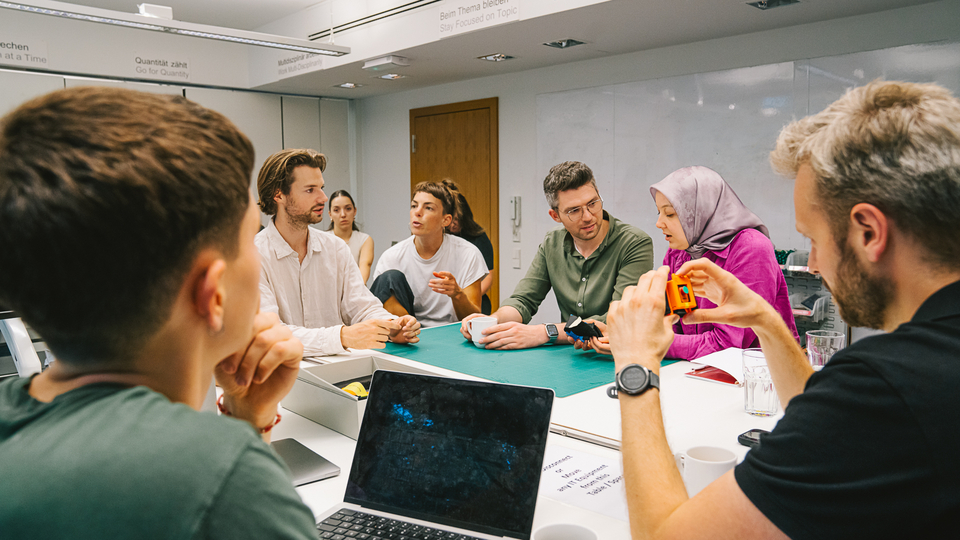
During the research phase, it became clear that, in addition to a change in lifestyle, patience in particular plays a crucial role in the success of rehabilitation. When recovering from a stroke, rapid progress is rare. Interviews with patients, their relatives and medical staff confirmed this assessment. Furthermore, the Design Thinking process provided other important insights: 

  1. To keep patients motivated, they need mental and emotional support.
  2. There is a tension between the boredom caused by repetitive rehab exercises and the motivation gained from visible progress.
  3. It is important to record individual progress and set realistic goals.
  4. Instructions for rehab must be clear and easy to understand.
  5. The sensor attachment devices planned so far have proven to be too challenging to use.

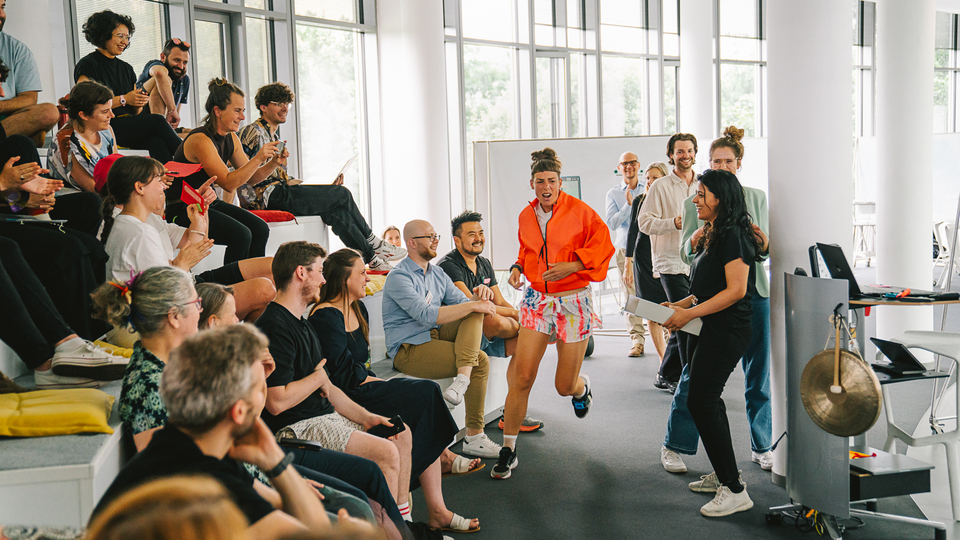
The project team then presented their interim results to Data4Life and asked for feedback. The company saw the greatest potential benefit in the instructions and handling of the sensors, which the students then focused on. 

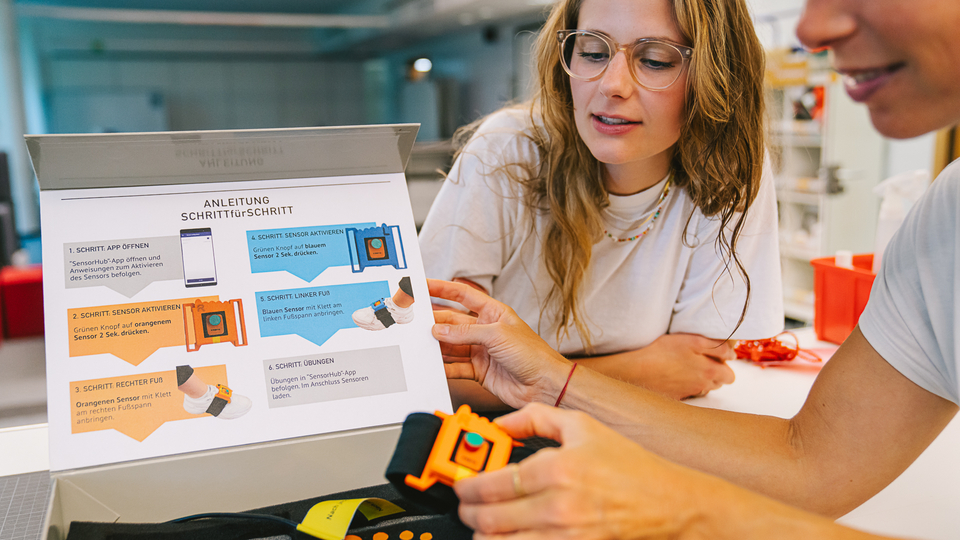
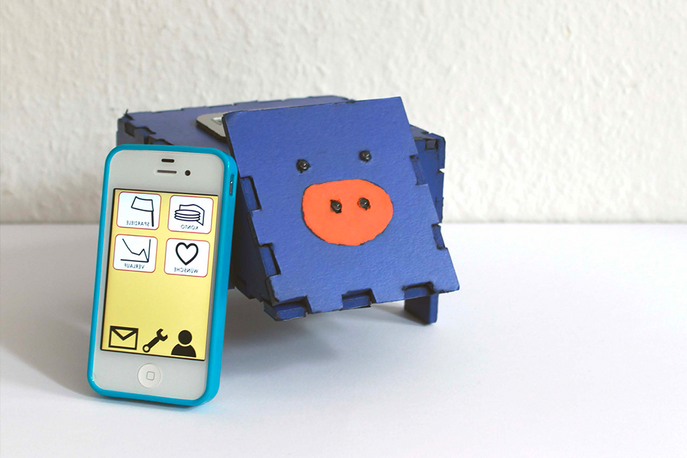
A comprehensive solution was developed as a prototype: all the components needed for the “Sensor-S” study were combined in a box. These included the sensors themselves, the associated mounting options and simple instructions for use, positioning and establishing a Bluetooth connection with mobile devices. User experience and usability were at the forefront here – in line with the needs of patients and the expectations of our project partners.

The sensors for the left and right foot are in their own cases and are color-coded, formally identified, and labeled with the letters “L” and “R.” The buttons on the sensors are enlarged and also colored. The wide Velcro straps position the sensor cases on the midfoot with minimal slippage and jerking. Since they are elastic, they can be slipped over any shoe and any sock. The box includes compartments for technical set-up such as smartphones and/or smartwatches, which can be charged directly via integrated connectors. Likewise, clear instructions are placed wherever they are actually needed. This allows patients to use the box contents step by step and is also what gives the all-in-one box its name: “STEPbySTEP.”

The result and proposal of the HPI d-school project team is a compact sensor application that stands out from existing solutions due to its human-centered design.
 

Impact

The innovative all-in-one box from “STEPbySTEP” could help to implement sensor-based rehabilitation measures.

Many stroke patients find it difficult to consistently follow their prescribed recovery plan. “STEPbySTEP” supports them by offering an easy-to-use sensor service in a compact set. This consists of sensors with fastening straps, several charging options, and accessible instructions that use images and simple language. In particular, the elastic Velcro solutions, which allow the sensor cases to be intuitively attached to the feet, save the wearers a lot of frustration. 

Thanks to this optimization proposal from the Design Thinking process, they would face fewer difficulties, allowing the patients to focus entirely on their recovery. The more motivated they are, the more successful their rehabilitation will be – step by step.
 

Newsletter

Sign up for our newsletter and receive the latest updates about the HPI d-school directly in your mailbox.

Register here

More Use Cases

  • Use Case
    VoiceChain - Foundations for Design Thinking
    What happens when voices can be cloned to sound deceptively real, and no one can be sure what’s truly authentic anymore?
    • Academic Programs
    • Design Thinking
    • Innovation
  • Use Case
    CO₂ offsetting is considered a key tool in climate protection – yet many people barely understand how it works. Students developed a playful format to raise awareness among company employees about emissions.
    • Academic Programs
    • Design Thinking
    • Sustainability
  • Use Case
    HPIdschool Use Case Ecosia Team 4 Planet Plates
    What do search engines and food have in common? Students designed a tool for Ecosia that nudges users towards climate-friendly nutrition.
    • Academic Programs
    • Design Thinking
    • Sustainability
  • Use Case
    Montessori - Plan M - MonteLab
    How can children be involved in designing their school right from the start? In a new Montessori school in Neumarkt, kids were able to incorporate their own ideas.
    • Academic Programs
    • Design Thinking
  • Use Case
    Use Case Design Thinking Museum Barberini
    How can a traditional art museum cater to the interests of young people? In the Museum Barberini, digital and analog tools are combined to create inspiring and immersive creative experiences.
    • Academic Programs
    • Design Thinking
    • Innovation
  • Use Case
    In collaboration with the Würth Elektronik eiSos Group, we developed innovative new work concepts, whose solutions were integrated into the new High-Tech Innovation Center at the company's site in Munich-Freiham.
    • Academic Programs
    • Design Thinking
    • Innovation
  • Use Case
    Use case rethink vacuuming Robert Thomas AG
    How can vacuuming become more hygienic, easier – and even enjoyable? Students from HPI d-school joined forces with Robert Thomas AG to rethink vaccuming.
    • Academic Programs
    • Innovation
    • Design Thinking
  • Use Case
    Use Case Digitale Probierstadt Gütersloh
    The city of Gütersloh was looking for a concept to make digital education more accessible. A team developed the “Digital Trial City” prototype, which introduces people to new technologies.
    • Academic Programs
    • Design Thinking
    • Digital upskilling
  • Use Case
    Prototype Hans
    A cold entrance area without orientation and work opportunities? A team from the HPI d-school developed a solution that makes libraries more modern, functional and inviting.
    • Academic Programs
    • Design Thinking
  • Use Case
    How an AI lab and a chatbot connect SMEs and startups – for real solutions instead of just buzzwords. A project with the KI-Service Zentrum Berlin-Brandenburg.
    • Design Thinking
    • Academic Programs
    • Artificial intelligence
  • Use Case
    Policy Transformation Lab
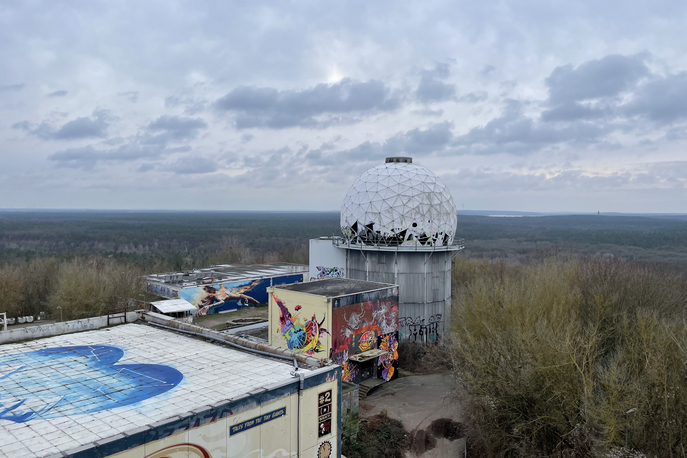
    Together with the Teufelsberg KG investment company, we developed solutions for utilizing the Teufelsberg. In the end, a concept for a Policy Transformation Lab was developed to inspire political change.
    • Academic Programs
    • Design Thinking
    • Sustainability
  • Use Case
    Simulation Routen Guide
    Spontaneously to Lübben - and then? A digital scavenger hunt makes exploring the town easier and more exciting. A team from the HPI d-school developed a playful solution for guests and locals.
    • Design Thinking
    • Academic Programs
  • Use Case
    Man holds smartphone
    Company cars are a thing of the past - modern business travelers need flexible alternatives. A team from the HPI d-school developed an app that combines different modes of transportation and makes mobility more convenient.
    • Academic Programs
    • Design Thinking
    • Sustainability
  • Use Case
    Prototyp
    A digital piggy bank for children? What began as an idea for teenagers developed into a playful financial companion for younger children. The result: a clever solution with a real impact.
    • Academic Programs
    • Design Thinking

Contact

Do you have any questions? We will be happy to help you.