News

How AI creates real added value

Intro

Johann Dornbach on successful use cases and bold decisions

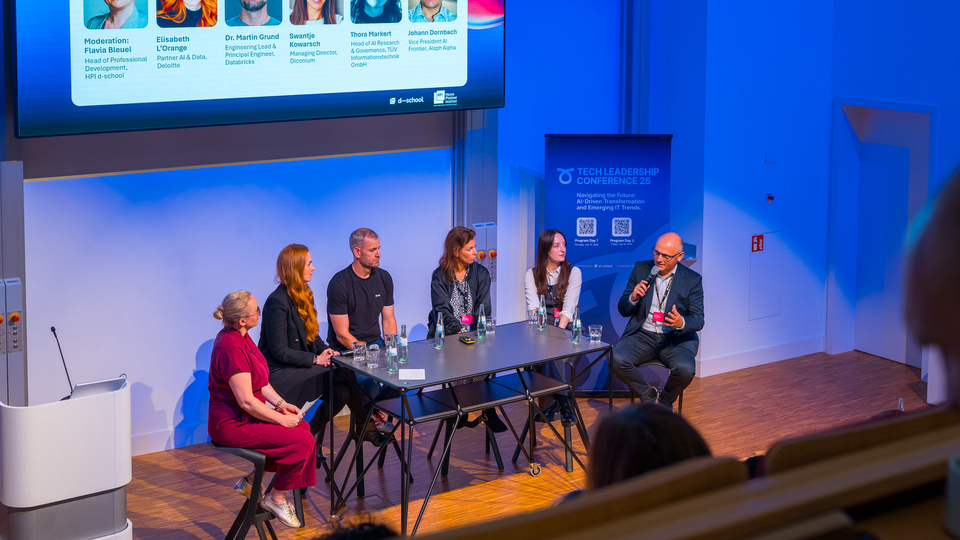
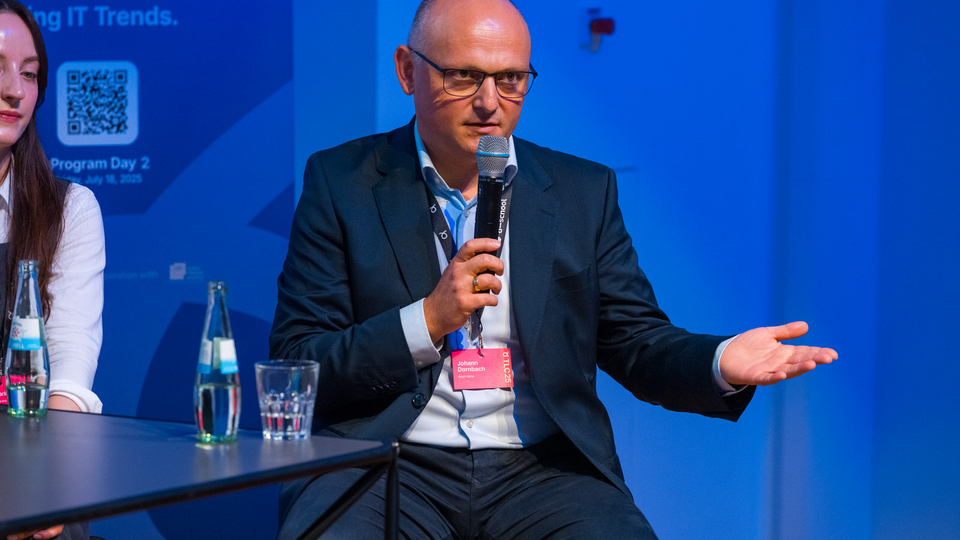
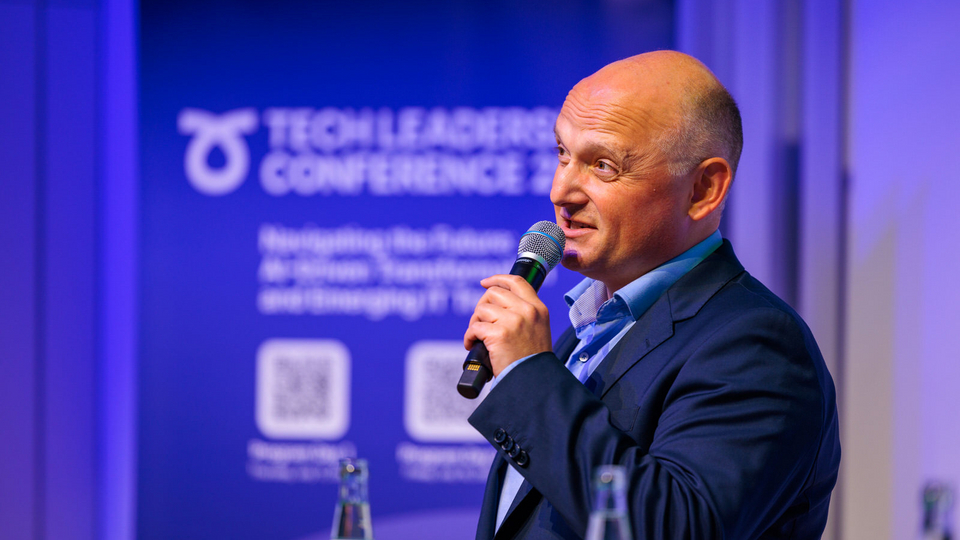
At the Tech Leadership Conference 2025 at the Hasso Plattner Institute, Johann Dornbach, Vice President AI Frontier at Aleph Alpha, spoke as a keynote speaker about the potential and challenges of generative AI. In an interview with Flavia Bleuel, Head of Professional Development at the HPI d-school, on the sidelines of the conference, he explains how AI already supports complex processes in administration, industry, and regulated sectors today – and what it takes to use it effectively and responsibly.

Johann Dornbach has more than 22 years of experience in the enterprise software industry. At Aleph Alpha, he is responsible for developing innovative AI solutions tailored to complex business and administrative processes. Previously, he served as Senior Vice President of Product at Revalize, where he was responsible for global product strategy and successfully launched the SaaS PLM solution PRO.FILE 10.

Watch interview

Three key insights from the conversation

1. AI creates measurable added value – when used correctly.

Dornbach emphasizes that it's not the hype that matters, but concrete, measurable results. Using practical examples, he shows how generative AI is already having a real impact today: “We were able to achieve time savings of around 80% with generative AI in approval procedures for complex investments.” Significant efficiency gains have also been achieved in industry and the banking sector – for example, through automated testing procedures in systems engineering or AI-supported compliance checks in accordance with the new EU DORA standard.

2. Humans remain responsible – “human in the loop” is a design principle.

AI must be explainable and traceable, especially in safety-relevant or regulated areas. Dornbach explains: "It is extremely important to have full transparency – through explainability and traceability. [...] The respective employee is in full control of this entire activity." Only when experts can understand, classify, and actively decide on AI results can trust – and real progress – be achieved.

3. Not every use case is a good AI use case.

A key message from the interview: Organizations must learn to identify the right use cases – and have the courage to reject unsuitable ideas. Dornbach explains: “We have to show that we really have a measurable impact – otherwise it will do more harm than good to the technology.”

Conclusion and outlook

Johann Dornbach paints a nuanced but clear picture: Generative AI will fundamentally change the world of work and many industries. It's not just about technology, but about courageous decisions, interdisciplinary collaboration, and a conscious approach to responsibility. His appeal: “We mustn't be afraid of failure. Just get started – no matter where. Small businesses, large companies, government agencies: if we don't get started, the wave will overwhelm us.”
 

Further news

  • News
    Talk with Hande Yildiz from Ismir
    How does digitalization shape Design Thinking education? Hande Yıldız Çekindir on hybrid spaces, teamwork, and proximity in learning.
    • Academic Programs
    • Design Thinking
    • Digital transformation
  • News
    Moral and Ethics using AI
    Why critical thinking is becoming a key skill for the future when dealing with AI
    • Academic Programs
    • Innovation
    • Professional Development
    • Artificial intelligence
  • News
    Mitarbeiter:innenfoto
    AI can reveal patterns, but innovation needs human judgment. Marc Stussak explains why critical thinking and empathy remain essential.
    • Professional Development
    • Innovation
    • Artificial intelligence
  • News
    What future skills do we need, and how can we acquire them? A look at experimentation, a culture of learning from mistakes, and Design Thinking.
    • Academic Programs
    • Professional Development
    • Design Thinking
    • Digital upskilling

Contact

Do you have any questions? We will be happy to help you.