Traditionally, talent development has been organized around fixed job descriptions and clearly delineated roles. However, as market demands evolve faster than org charts can adapt, this model is showing its age. Forward-thinking companies are flipping the script – focusing less on what people are hired to do, and more on what they are capable of learning and becoming.
Skill-based learning empowers organizations to deploy talent dynamically, identify growth potential, and respond swiftly to emerging needs. This approach not only improves operational agility but also boosts employee engagement and career ownership. It's no longer just about preparing people for the job they have – it’s about preparing them for the new challenges and even for jobs that don’t exist yet.
We are focusing on two future skills in particular here:
- human-machine interaction and
- adaptability.
1.) Clear goals and sufficient context as success factors
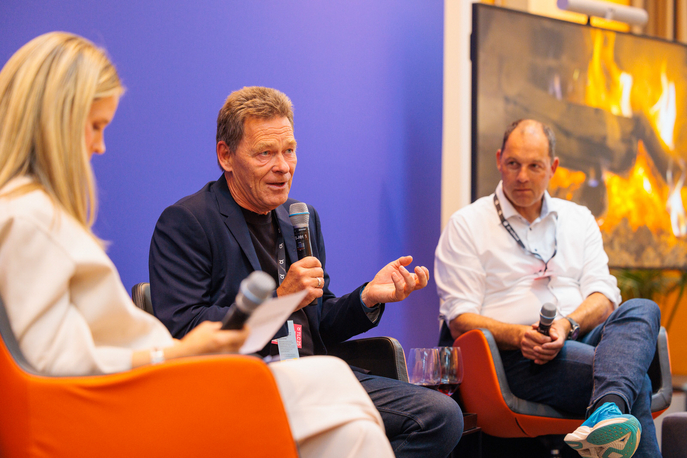
Human-machine interaction requires a whole new skill set. Humans can implicitly supplement complex contextual information in communication and classify social situations such as unspoken expectations. Machines cannot do this. Implicit information must therefore be formulated explicitly. Accordingly, successful human-machine interaction requires the “(...) skill of writing effective briefs that provide clear goals, context, constraints, and success criteria,” as Patrick Löber (Google DeepMind) emphasized in his keynote speech at the Tech Leadership Conference 2025. Such skills are the basis for functioning and beneficial human-in-the-loop systems.
2.) The rise of adaptability as a meta-skill
As AI augments human capabilities and reshapes business processes, employees must learn to operate in environments of constant change. Adaptability today means more than flexibility – it means learning how to learn, navigating ambiguity, and embracing experimentation.
Learning and development leaders are reimagining learning pathways to cultivate this adaptive mindset. Modular programs, microlearning, simulation-based experiences, and AI-enhanced personalization are becoming the new norm. The goal: equip talent not just with technical know-how, but with the strategic resilience and mental agility to thrive in uncertainty.