First, it is important to clarify that strategic foresight and Design Thinking are different concepts. Nevertheless, we incorporate elements of strategic foresight at several points in the Design Thinking process, as they add perspectives of the longer-term time horizon.
As part of a problem analysis, we look to the past to understand what has happened so far. We use this knowledge to develop scenarios that could happen in possible futures. In doing so, we not only focus on existing developments, but also try to anticipate what could happen in a time horizon of ten to fifteen years.
At the d-school, we want to teach our students to develop a sensitivity for different futures, which they should also take into account when designing their innovations. In order to develop an innovation that will still work and people will still need in ten years' time, it is important to envision not only our current users, but also our future users. What needs will they have? What technologies might have been developed by then?
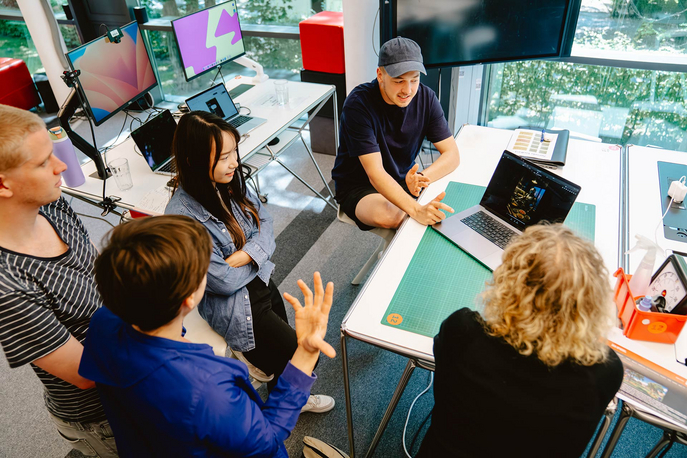
In the context of testing, this means that we also invite experts to test our products. For example, when we develop a prototype for a new learning method for students, of course it is important to get feedback from potential users of this learning method. However, the assessment of an expert, in this case an educator, is just as crucial, as they are well placed to evaluate the long-term developments of learning methods. This is how Design Thinking becomes a strategic innovation process.
Thank you very much!