News

When digitalization can advance sustainability – and when it can't

Intro

What does digitalization have to do with climate protection, and can it contribute to sustainability? Sure, with increasing digitalization, less paper will be used, and fewer trees will be cut down for letters and other documents. But what about the electricity that computers need to write emails? How was the smartphone manufactured, what rare raw materials were extracted for it, and what emissions were produced in the process? 

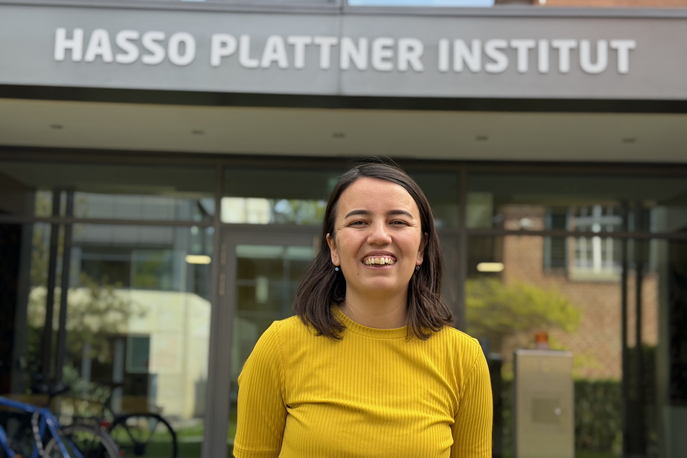
Anyone who takes a close look at the intersection of digitalization and sustainability will quickly realize: it's complicated. "AI data centers consume enormous amounts of electricity and water. The International Energy Agency estimates that artificial intelligence will account for about 3% of total global energy consumption by 2030. That's remarkable, especially when you consider that hundreds of millions of people still have no access to electricity," Virginie Cauderary, PhD student at the HPI d-school, explains. She researches the emissions that companies release along the entire value chain. In the interview, she explains why so-called scope 3 emissions are crucial and what kind of political changes need to take place. 

Accounting greenhouse gas emissions with the help of digitalisation

What's for sure is that digitalization by itself cannot ensure climate protection. However, no digitalization at all cannot be the solution either – not even from an ecological perspective. In order to reduce greenhouse gas emissions, we need to know more about when, where, and how many emissions are being released. With databases and innovative software, companies can accurately measure their emissions along the entire value chain. Policy makers can use this data to formulate effective strategies to curb global warming. By collecting data on emissions, digital infrastructure becomes a lever for change. 

Too often, climate protection is made an individual responsibility, but the scope for action by individuals is limited. According to a study by the Carbon Major Database from 2024, just 32 companies are responsible for half of global CO2 emissions (The Guardian, 2026). These companies can only be held accountable for their carbon footprint if emissions accounting becomes mandatory for corporations worldwide. Only when we know how much companies emit can we demand that they reduce their harmful impact on the climate. 

The climate crisis is a complex problem that requires holistic solutions. If digital infrastructure is produced sustainably and used sensibly, it can help us mitigate global warming. However, this must be backed by a clear political vision that enables a socially just life for all people within planetary boundaries.

Design Thinking challenges on sustainability

Students in our programs are also working on carbon footprint assessments to promote sustainability. In a project with the start-up Cula Technologies, a team of students developed a tool to raise awareness among employees about the emissions their employer generates along the supply chain and in the office. In addition, the Global Design Thinking Workshops (GDTW) at the HPI d-school each focus on one of the United Nations' Sustainable Development Goals (SDGs).

Further news

  • News
    What future skills do we need, and how can we acquire them? A look at experimentation, a culture of learning from mistakes, and Design Thinking.
    • Academic Programs
    • Professional Development
    • Design Thinking
    • Digital upskilling
  • News
    HPI at Potsdamer Tag der Wissenschaften 2026
    Hands-on experiments, computer science activities, and digital learning offers brought research to life for visitors.
    • Academic Programs
    • Design Thinking
    • Innovation
    • Research
  • News
    Mitarbeiter:innenfoto
    How much decision-making should AI have? Samuel Tschepe explains why conscious agency matters more than chasing the next tool hype.
    • Artificial intelligence
    • Digital upskilling
    • Professional Development

Contact

Do you have any questions? We will be happy to help you.