Project Case

Cula Technologies: Making CO₂ offsetting easy to understand

Intro

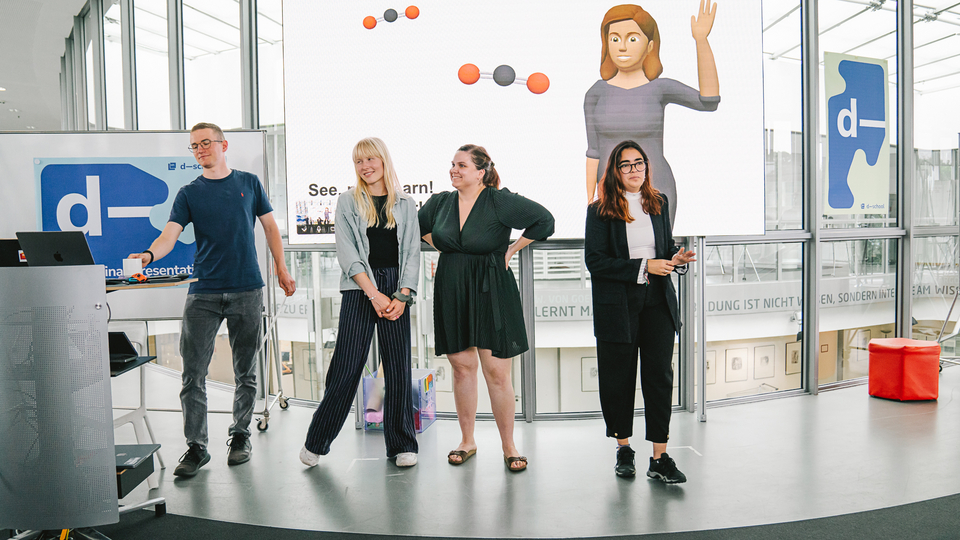
To curb climate change, companies must drastically reduce their CO₂ emissions. However, reducing and offsetting greenhouse gases along the value chain is highly complex. Together with the startup Cula Technologies, students at the HPI d-school therefore developed a prototype for an innovative learning format that playfully raises employee awareness of CO₂ offsetting and sustainable practices in their daily work.

Project partner

Challenge

“Design accessible and trustworthy mechanisms for consumers to enhance understanding and confidence in carbon credits.” With this challenge, the Potsdam-based technology company Cula approached a team of students from the HPI d-school.
Cula develops innovative software that helps companies measure, reduce, and offset their emissions along the value chain. A key challenge, however, is building trust in the complex topic of CO₂ offset measures. Therefore, they sought an approach that conveys knowledge in an understandable way while simultaneously sparking interest in sustainable behavior.

Starting Point

For effective climate protection, companies must drastically reduce their greenhouse gas emissions. Emissions that cannot be avoided can be offset using so-called CO₂ credits. Initiatives that remove emissions from the atmosphere and store them permanently – for example, through reforestation – sell these credits. CO₂ credits are crucial for the transition to a climate-neutral economy, as they offer companies a way to offset their emissions.

The problem: So far, there is no widespread awareness of how CO₂ credits work, and there is also general public skepticism about the actual impact of such offset mechanisms. Since the regulations are complex and there are currently no uniform standards for emissions trading, there is a lack of transparency. At the same time, many companies lack simple ways to inform their employees about sustainability issues or actively involve them.

Furthermore, in the day-to-day work routine, there is usually little time to delve deeply into topics such as emissions measurement or climate protection strategies. For Cula, this raised the question of how information on CO₂ offsetting could be communicated in a way that is understandable, trustworthy, and easily accessible.

  • Use Case Cula Technologies and Design Thinking
  • Use Case Cula Technologies and Design Thinking
  • Use Case Cula Technologies and Design Thinking
  • Use Case Cula Technologies and Design Thinking
  • Use Case Cula Technologies and Design Thinking
  • Use Case Cula Technologies and Design Thinking

Aha Moments

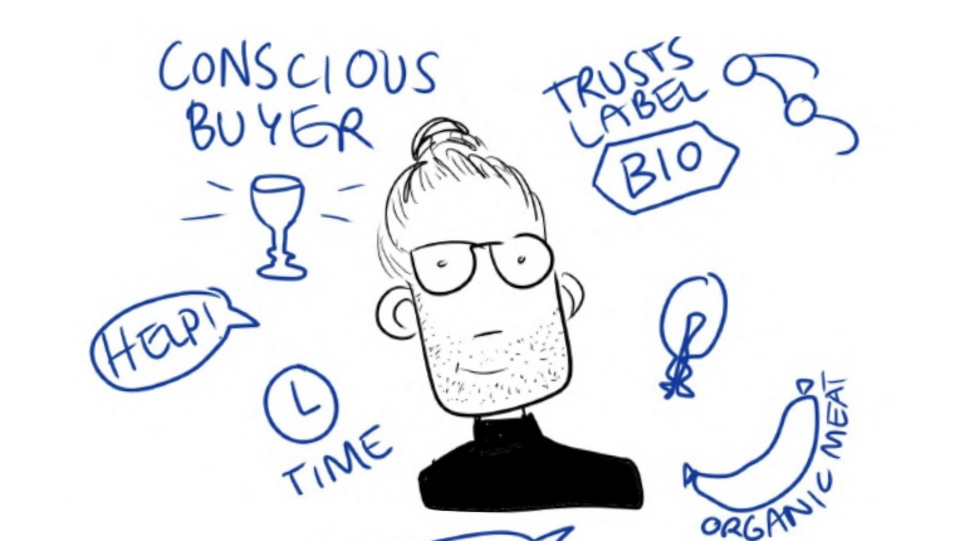
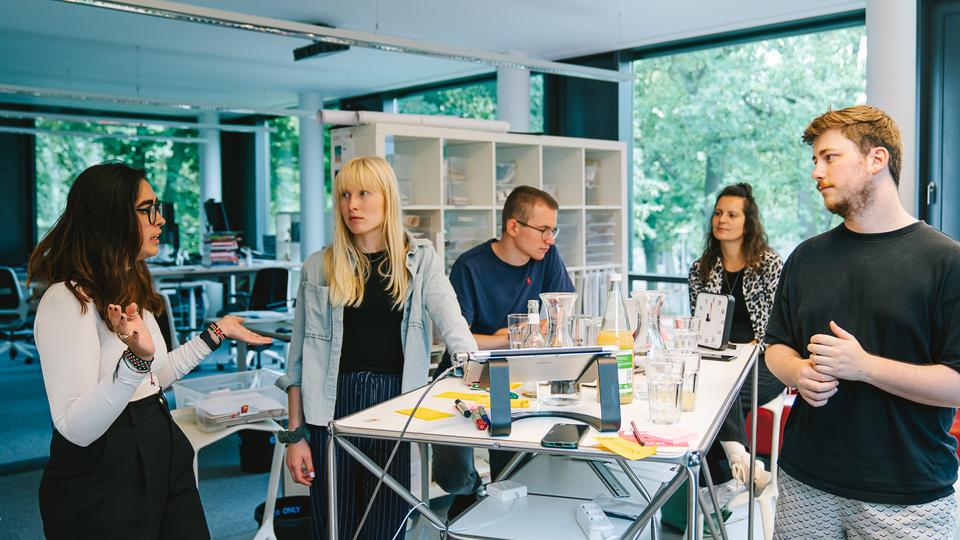
As part of the Design Thinking project, students at the HPI d-school conducted interviews with potential users. Their findings revealed that while many people are interested in sustainability, they feel overwhelmed by the complexity of CO₂ offset mechanisms. They want clear information, transparent processes, and simple ways to take action themselves.

The students discovered that transparent information and honest communication from companies foster people’s trust in CO₂ offsetting. Through multimedia approaches such as augmented reality (AR) and gamified formats, new information becomes accessible, especially for people who have little time in their daily work lives.

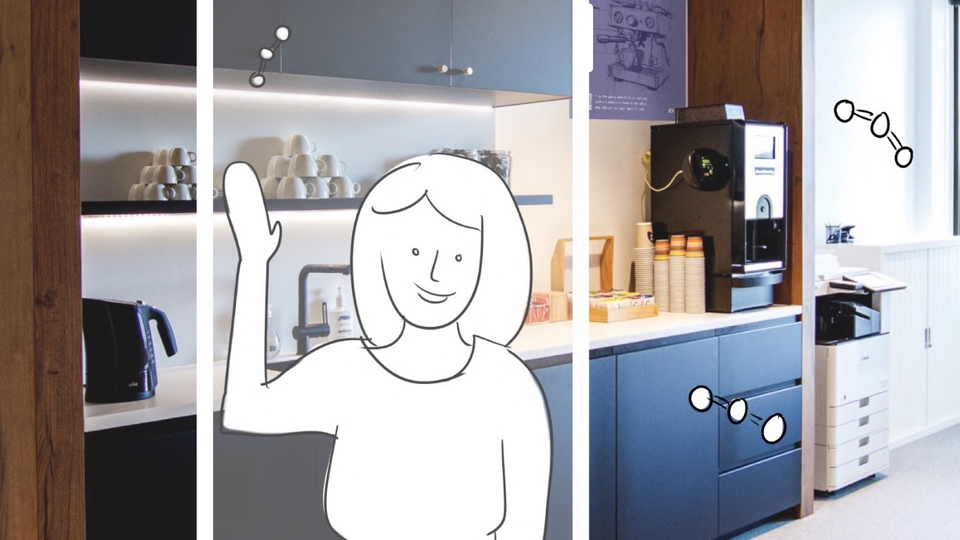
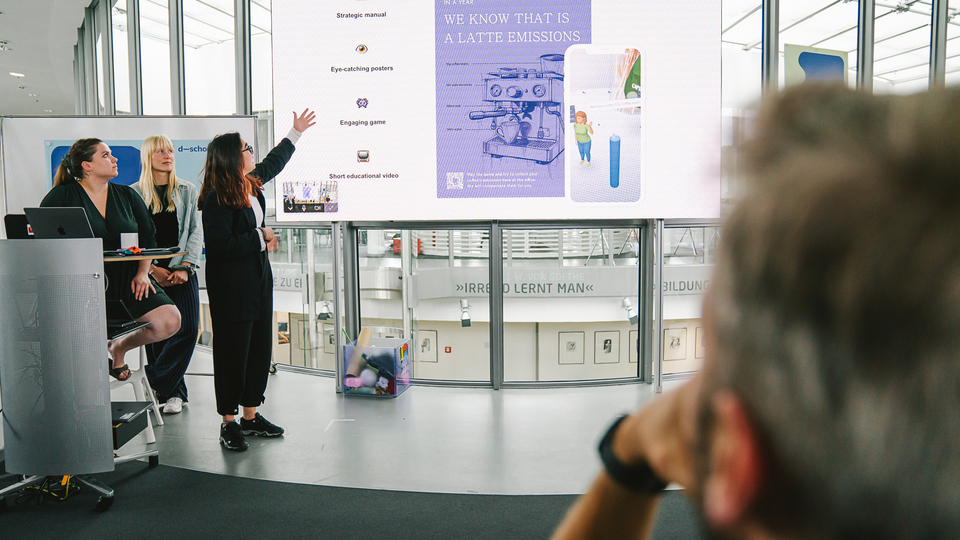
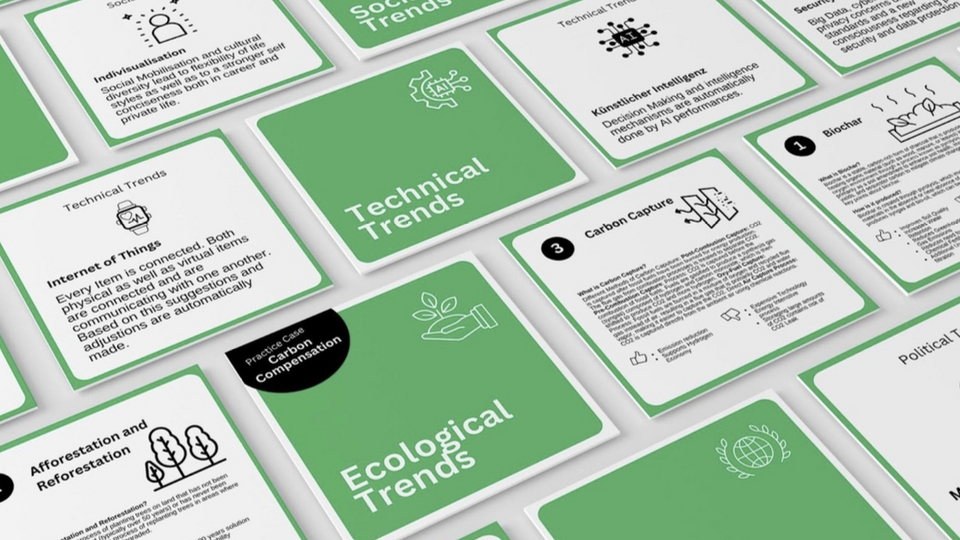
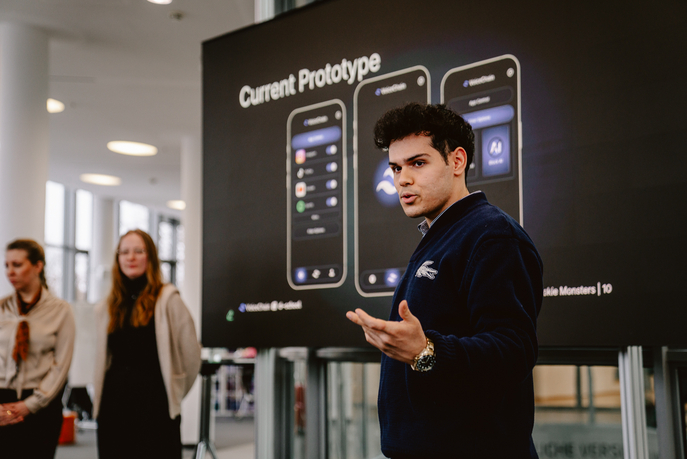
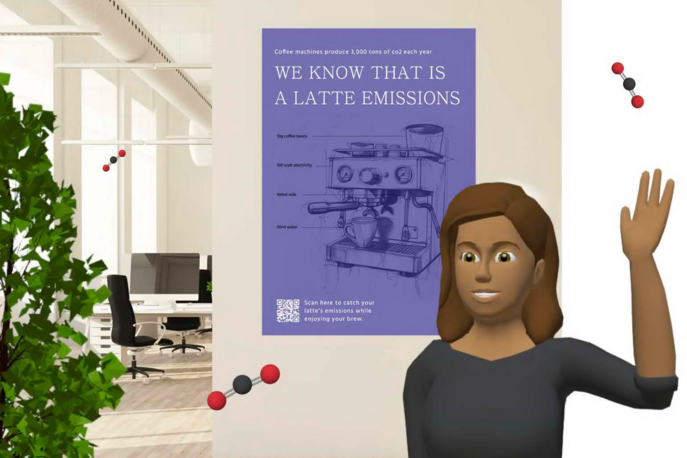
Based on these valuable insights, the students developed a prototype for an augmented reality application called “CO₂ Coffee Hunt”: In a playful office setting, employees learn how greenhouse gas emissions arise and how CO₂ credits work. In addition, informational posters and workshop formats were developed to clearly explain sustainability topics. Initial tests showed that the playful AR format in particular quickly sparked interest and made complex content easier to understand.

Impact

With their prototypes, the students demonstrate how sustainability can be brought to life in a corporate context. Playful learning formats like the AR application help employees better understand CO₂ emissions in their daily work and identify more strongly with their company’s climate strategies.

In the long term, such approaches can help integrate sustainable practices more deeply into corporate culture. When employees understand how emissions arise and how they can be reduced or offset, they can make more sustainable decisions in their personal and professional lives and support their employers in their efforts to advance a climate-neutral economy.

Newsletter

Sign up for our newsletter and receive the latest updates about the HPI d-school directly in your mailbox.

Register here

More Use Cases

  • Use Case
    VoiceChain - Foundations for Design Thinking
    What happens when voices can be cloned to sound deceptively real, and no one can be sure what’s truly authentic anymore?
    • Academic Programs
    • Design Thinking
    • Innovation
  • Use Case
    CO₂ offsetting is considered a key tool in climate protection – yet many people barely understand how it works. Students developed a playful format to raise awareness among company employees about emissions.
    • Academic Programs
    • Design Thinking
    • Sustainability
  • Use Case
    HPIdschool Use Case Ecosia Team 4 Planet Plates
    What do search engines and food have in common? Students designed a tool for Ecosia that nudges users towards climate-friendly nutrition.
    • Academic Programs
    • Design Thinking
    • Sustainability
  • Use Case
    Montessori - Plan M - MonteLab
    How can children be involved in designing their school right from the start? In a new Montessori school in Neumarkt, kids were able to incorporate their own ideas.
    • Academic Programs
    • Design Thinking
  • Use Case
    Use Case Design Thinking Museum Barberini
    How can a traditional art museum cater to the interests of young people? In the Museum Barberini, digital and analog tools are combined to create inspiring and immersive creative experiences.
    • Academic Programs
    • Design Thinking
    • Innovation
  • Use Case
    In collaboration with the Würth Elektronik eiSos Group, we developed innovative new work concepts, whose solutions were integrated into the new High-Tech Innovation Center at the company's site in Munich-Freiham.
    • Academic Programs
    • Design Thinking
    • Innovation
  • Use Case
    Use case rethink vacuuming Robert Thomas AG
    How can vacuuming become more hygienic, easier – and even enjoyable? Students from HPI d-school joined forces with Robert Thomas AG to rethink vaccuming.
    • Academic Programs
    • Innovation
    • Design Thinking
  • Use Case
    Use Case Digitale Probierstadt Gütersloh
    The city of Gütersloh was looking for a concept to make digital education more accessible. A team developed the “Digital Trial City” prototype, which introduces people to new technologies.
    • Academic Programs
    • Design Thinking
    • Digital upskilling
  • Use Case
    Prototype Hans
    A cold entrance area without orientation and work opportunities? A team from the HPI d-school developed a solution that makes libraries more modern, functional and inviting.
    • Academic Programs
    • Design Thinking
  • Use Case
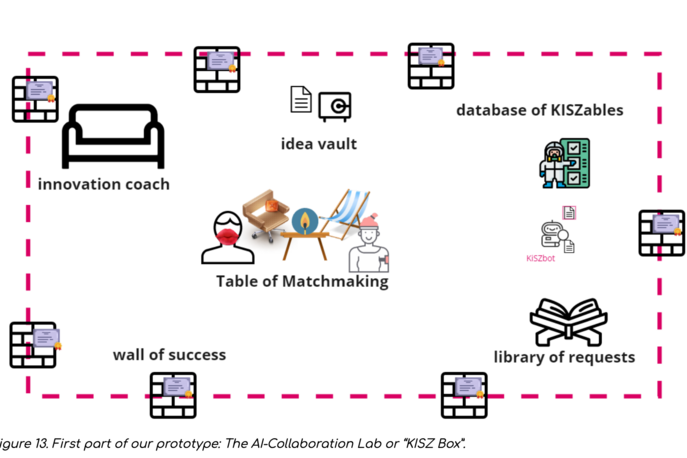
    How an AI lab and a chatbot connect SMEs and startups – for real solutions instead of just buzzwords. A project with the KI-Service Zentrum Berlin-Brandenburg.
    • Design Thinking
    • Academic Programs
    • Artificial intelligence
  • Use Case
    Policy Transformation Lab
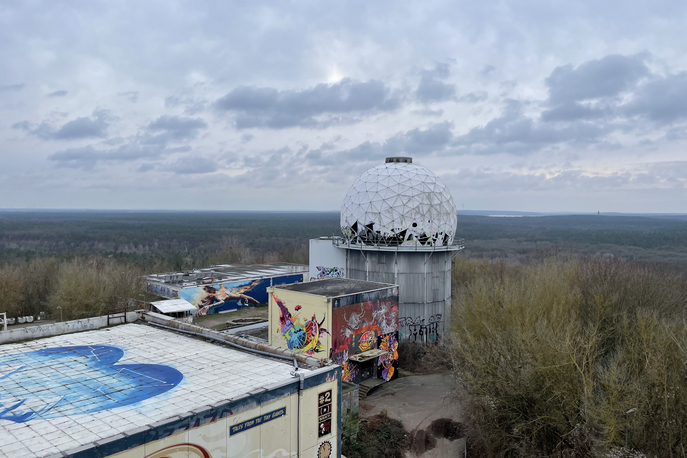
    Together with the Teufelsberg KG investment company, we developed solutions for utilizing the Teufelsberg. In the end, a concept for a Policy Transformation Lab was developed to inspire political change.
    • Academic Programs
    • Design Thinking
    • Sustainability
  • Use Case
    Simulation Routen Guide
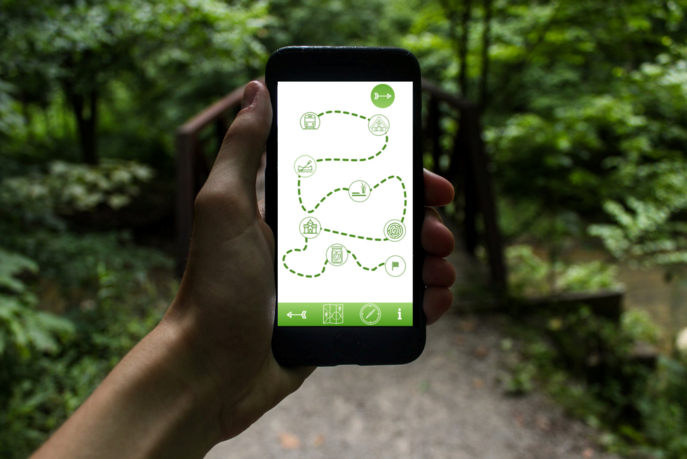
    Spontaneously to Lübben - and then? A digital scavenger hunt makes exploring the town easier and more exciting. A team from the HPI d-school developed a playful solution for guests and locals.
    • Design Thinking
    • Academic Programs
  • Use Case
    Man holds smartphone
    Company cars are a thing of the past - modern business travelers need flexible alternatives. A team from the HPI d-school developed an app that combines different modes of transportation and makes mobility more convenient.
    • Academic Programs
    • Design Thinking
    • Sustainability
  • Use Case
    Prototyp
    A digital piggy bank for children? What began as an idea for teenagers developed into a playful financial companion for younger children. The result: a clever solution with a real impact.
    • Academic Programs
    • Design Thinking

Contact

Do you have any questions? We will be happy to help you.