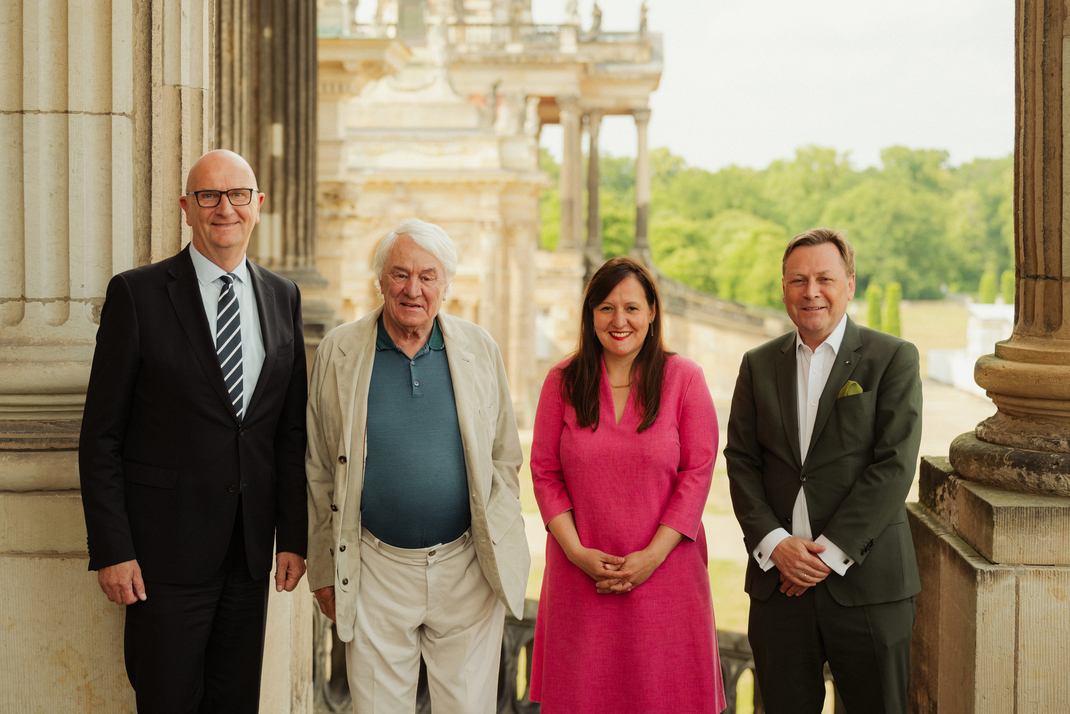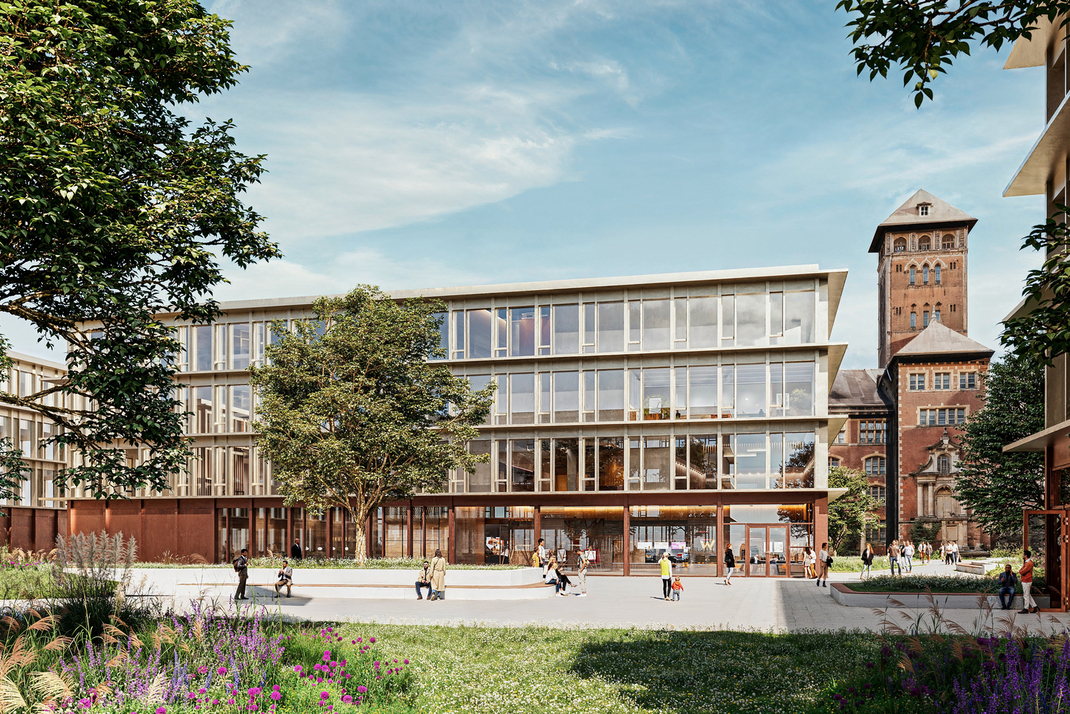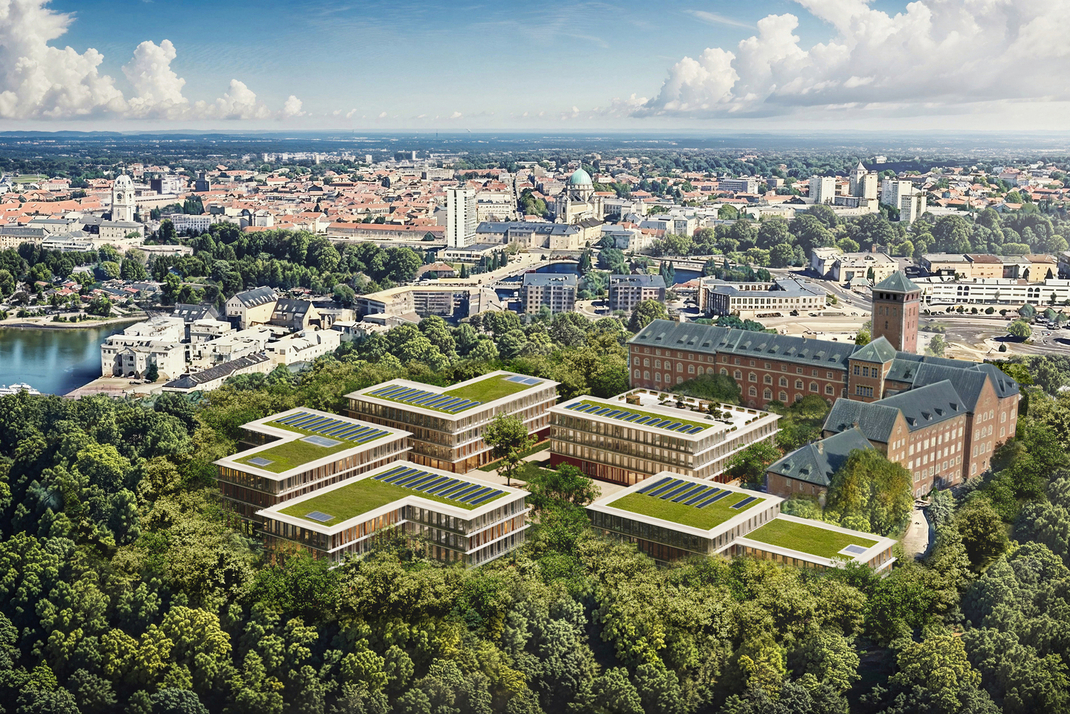

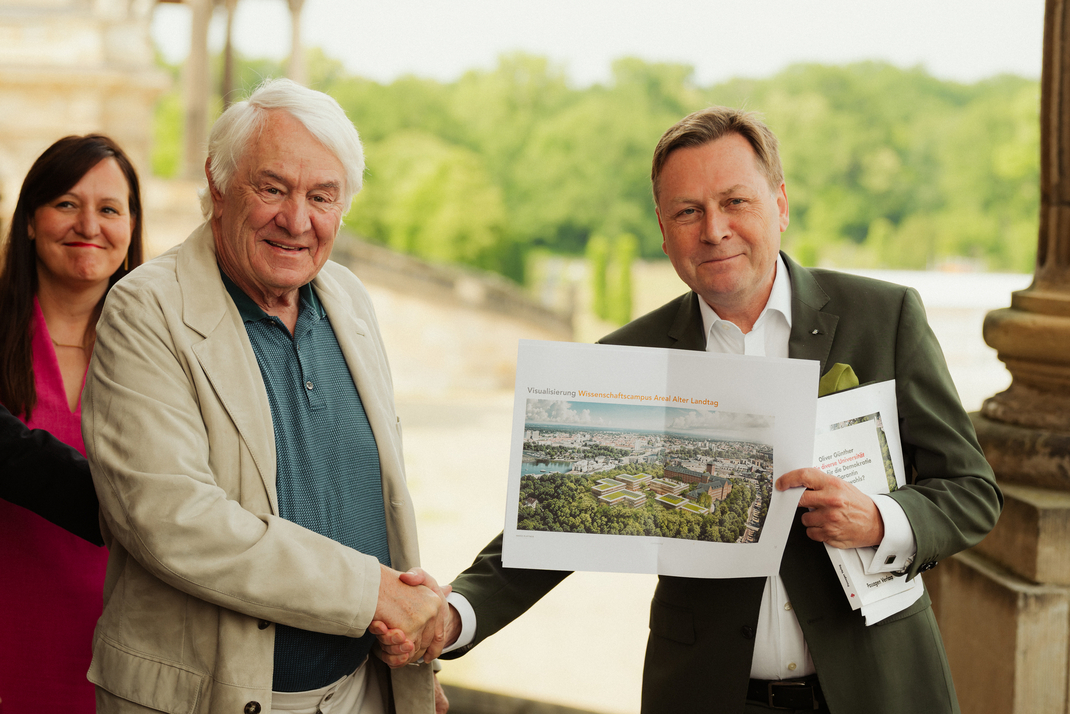
It is a clear commitment to academic freedom – and good news for students and researchers from all over the world. The University of Potsdam is getting another campus: Over the next ten years, exceptional study and research conditions will be created on the historic site of the former state parliament building on Brauhausberg. At the same time, the Hasso Plattner Institute (HPI) at the Griebnitzsee site will continue its expansion and development as a leading international computer science institute with the aim of strengthening Europe's digital sovereignty. The basis for the comprehensive development of both sites is a letter of intent signed today between the State of Brandenburg, the University of Potsdam, and the Hasso Plattner Foundation.
Prof. Oliver Günther, President of the University of Potsdam: “These great developments allow the University of Potsdam to shape the teaching and learning environments of the future across the entire university. Especially at Brauhausberg and Griebnitzsee, completely new forms of shared academic life and learning will emerge. The Digital Engineering Faculty, jointly supported by HPI and UP, will develop into a globally visible center of excellence in AI and computer science.”
Prof. Hasso Plattner: “With the new campus on the Brauhausberg, the University of Potsdam is moving into the heart of the city – both spatially and symbolically. At the same time, we are significantly expanding the Hasso Plattner Institute at Griebnitzsee to enable internationally leading research and teaching with a focus on artificial intelligence. Together, we are sending a clear signal: for education, openness, and sustainability. Europe needs places where talents from all over the world can think, research and shape freely – Potsdam will be such a place.”
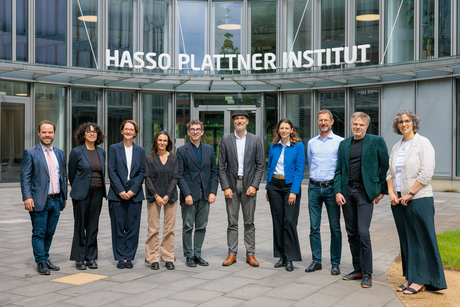
The HPI is already an outstanding institution for digital education, research, and innovation. Together with the University of Potsdam, it is being expanded into a beacon in the international scientific landscape. To this end, HPI will develop additional degree programs, international collaborations, and research priorities, particularly in the field of artificial intelligence. At the heart of this growth is computer science, whose methods are being applied to other research areas such as digital health, security, and business, and society. The joint Digital Engineering Faculty of the HPI and the University of Potsdam will train students to not only apply new technologies such as AI, but also in the crucial steps of promoting their further development. By doing so, HPI is contributing to strengthening digital sovereignty in Europe.
At the Griebnitzsee site, the Hasso Plattner Foundation will take over the land and buildings previously used by the University of Potsdam. In return, it will provide the University of Potsdam with replacement space on the Brauhausberg. Another university campus will be built there, along with renovation of listed historical buildings. Both sites are scheduled for completion by 2035 at the latest.
Further information is available in the joint press release here (German only).