
In order for forests to be preserved in the long term and adapt to changing environmental conditions, they require ongoing monitoring. For example, to detect damage and disease or to estimate growth. These assessments provide the foundation for many key decisions in forestry.
However, much of this work is still done analogously. "In forest inventories, the trunk diameter and height of trees are measured manually. This provides very precise data, but due to the high effort involved, it is only possible for selected, small sample areas," explains Josafat-Mattias Burmeister.
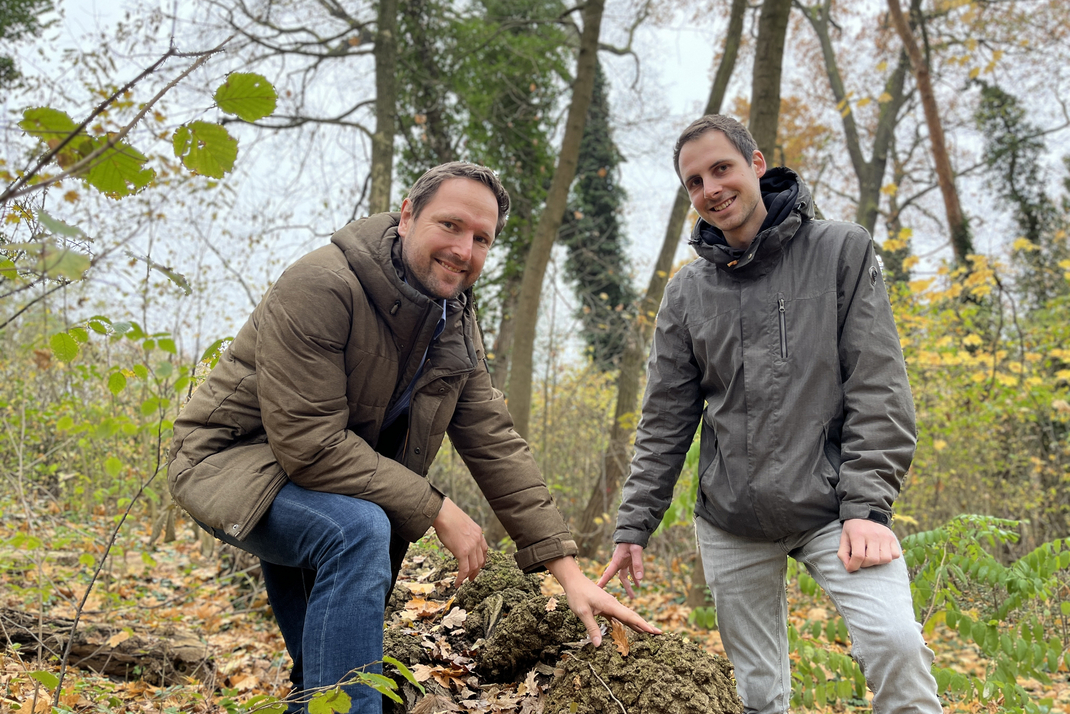
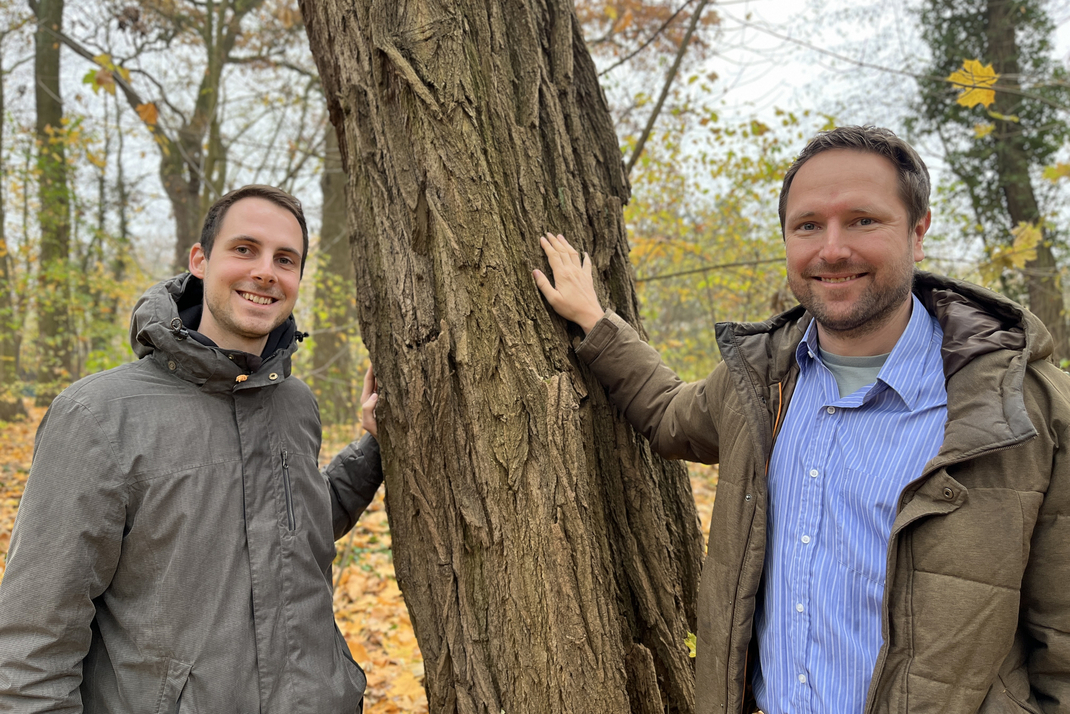
Josafat-Mattias completed his master's degree at HPI and has been a research assistant to Prof. Döllner since 2023. He contributes significantly to the “TreeDigitalTwins” project at the Digital Engineering Faculty. Both he and Prof. Döllner are nature enthusiasts who share a personal passion for forests and the goal of establishing a connection between technology and real-world forestry.
"In forestry, the potential of AI is still underutilized when it comes to automatically recording the condition and processes in forests on a large scale," says Prof. Döllner.
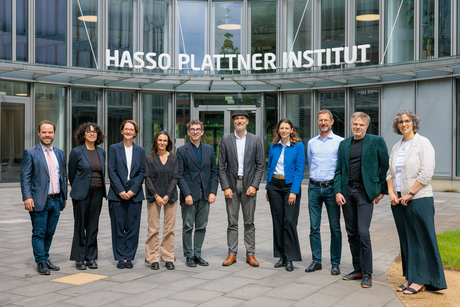
This is precisely where the research project comes in, which the Digital Engineering Faculty (Department of Computer Graphics Systems, Prof. Döllner) is working on together with the Eberswalde University for Sustainable Development (HNEE, Department of GIS and Remote Sensing, Prof. Mund), the Leibniz Institute for Agricultural Engineering and Bioeconomy (ATB, Working Group on Process Engineering for Energy Crops, Dr. Ralf Pecenka) and other project partners. Using remote sensing data and AI methods, the interdisciplinary team digitally records numerous exemplary forest areas and then analyzes them using AI-based methods to support evidence-based, data-driven decisions in forestry.
The forest as a 3D data model
Laser scanners, drones, and millions of measuring points replace the measuring tape. The team is developing digital methods that use AI to detect specific individual trees in these spatially explicit 3D point clouds. "In other words: Where are the trunks, where is the foliage, where is the ground?" This data is used to generate key figures on height, trunk diameter, and crown volume, and with repeated data collection, time series are also created to observe growth, timber harvests, and losses.
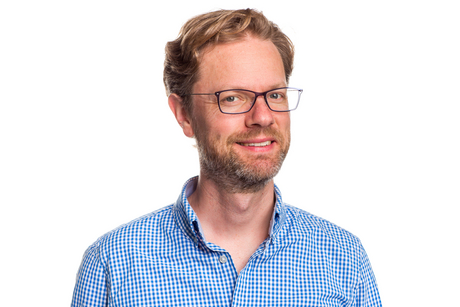
The researchers are aware of the limitations of their work. "AI does not replace foresters," says Dr. Rico Richter, postdoctoral researcher at the Digital Engineering Faculty. "But it can help to create a better empirical basis for decision-making."
The challenge is considerable: forests are complex ecosystems, and no algorithm can capture all their dynamics. At the same time, there is increasing pressure to respond quickly to climate change, drought, and pest infestations.
To develop the AI methods the project partners are working together closely. "We bring together different perspectives—forestry practice and data science," explains the project team.
The researchers regularly head out into the forest themselves: "We need reference data—real measurements—to train and test the AI. That means standing among the trees with a tape measure and a tablet."
One focus of the project is to develop AI methods that also work in different types of forests. "Many existing AI approaches are only specialized for coniferous or deciduous forests. Our goal is to make models more robust and transferable."
One of the test areas for this is the Sauener Forest (in eastern Brandenburg, Oder-Spree), which is home to complex mixed forests that present a particularly challenging test scenario for AI due to their high structural and species diversity. "This allows us to see how well the methods cope with reality."
Skepticism and enthusiasm
How is the forestry industry responding? "Very mixed," report the researchers. "There is skepticism—some are critical of digitalization. But when we show that our data provides real insights, that convinces them."
One example: after a storm, the project partners from HNEE flew over affected forest areas in Berlin and identified fallen trees using an AI model (WinMolAnalyser). "Suddenly, the foresters had a map of their entire stock – that was an ‘aha’ moment for many," says Stefan Reder, research assistant and doctoral student at HNEE.
"The restructuring of the forest must be pushed forward," says Josafat-Mattias. "But to do that, we first need reliable information. If I don't know what I have, I'm flying blind – and we can't afford that in the face of climate change."
After all, decisions made in the forest have an impact for decades. "What we do today will only become apparent in 50 or 100 years," says the team. "That's why it's important to create the conditions for data-driven decisions now."
The project is part of the "REGULUS" (Regional Innovation Groups for Climate-Protective Forestry and Timber Industry) research initiative of the Federal Ministry of Education and Research and is expected to last another three years. With the help of further data collection and AI, forest areas will continue to be recorded. In the future, the data and digital forest models will support forest administrations, forest owners, and local authorities with reliable information about forest stocks, growth, and condition. This will enable informed decisions to be made for sustainable management.
Research project website: treedigitaltwins.de