
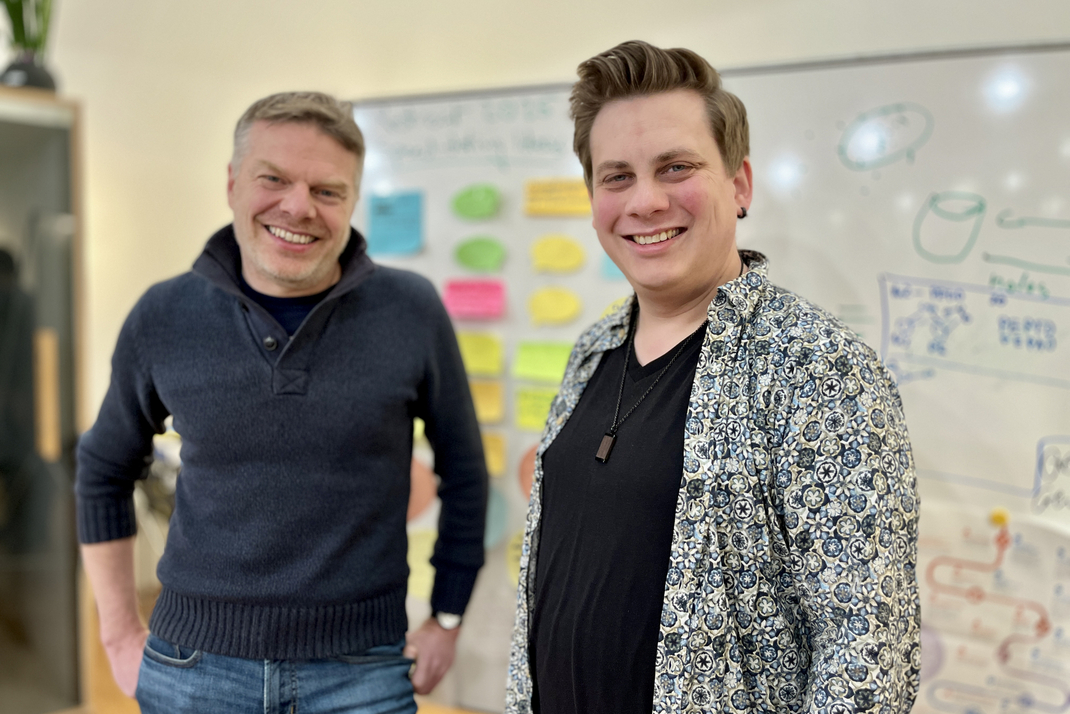
Tiny differences in tau proteins made visible through computer science: Dr. Christoph Schlaffner analyzes more than 6 TB of data using algorithms and statistics.
Have you ever heard of the tau protein? It is found in the cells of our brain and spinal cord and, among other things, ensures that signals are transmitted correctly.
“Problems arise when the tau protein loses its normal function. When this happens, it turns into a sticky template that other copies attach to. Eventually, the cell can no longer cope and dies,” says Dr. Christoph Schlaffner.
As a result, memory and cognitive abilities suffer. In Alzheimer’s disease, for example, affected cells contain up to a hundred times more tau than healthy brain cells – because the cell cannot dispose of the altered, clumped tau, yet continues to produce new tau.
Tau plays a key role in neurodegenerative diseases – conditions in which nerve cells in the brain gradually lose their function and die. Experts refer to these diseases as tauopathies. This is exactly where the work of Christoph Schlaffner begins. He is a group leader at HPI in the department of Data Analytics and Computational Statistics led by Prof. Dr. Bernhard Renard.
Christoph and his team examine tau at a level that very few researchers have reached so far. Using a method called mass spectrometry, the team can weigh every protein in a sample while simultaneously detecting even the smallest modifications.
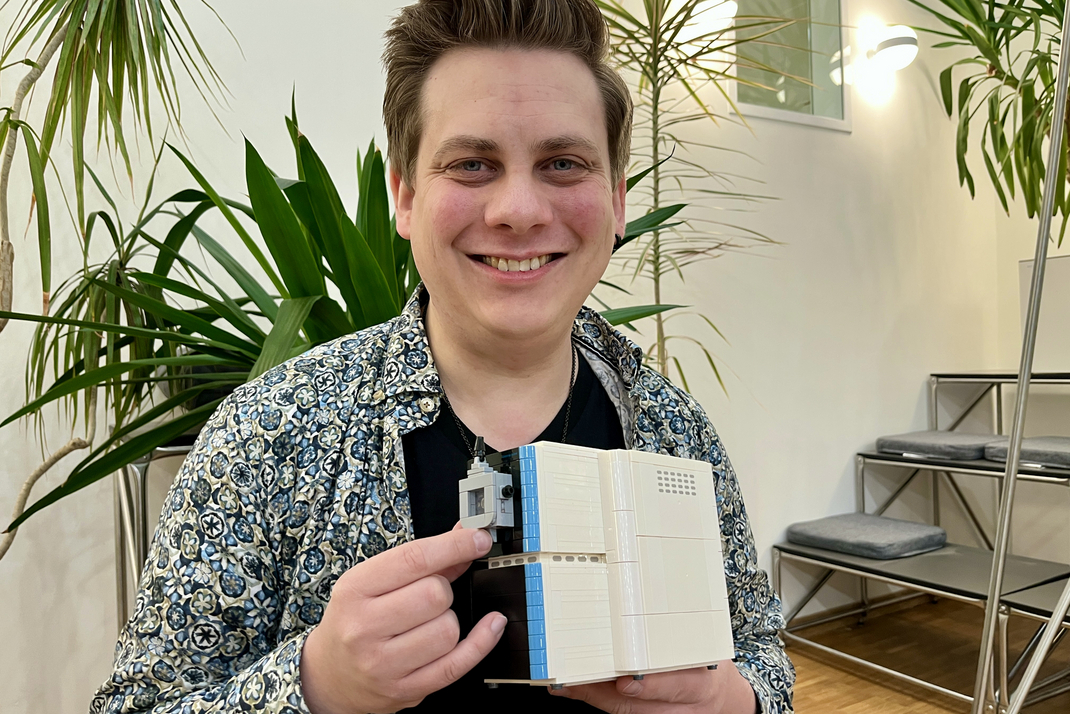
To make this easier to understand, Christoph uses a memorable analogy: tau is like a cake. The gene provides the recipe, and the proteins are the cake itself. The small changes – known as post-translational modifications – are the cake’s decorations: candles, icing, sprinkles. Each disease decorates the cake differently.
Christoph searches for these tiny differences in decoration.
This is only possible thanks to the analysis of enormous amounts of data behind the scenes – more than 6 terabytes of raw data from mass spectrometry. Using computer science, algorithms, and statistical methods, the data can be systematically analyzed to identify patterns and reveal crucial differences.
“We first captured and compared all the different ‘decorations’ of tau – across different diseases and with healthy controls. This allowed us to identify shared features within a disease that clearly distinguish these patients from other neurodegenerative conditions. These features are known as markers.” In the long term, such markers could enable faster and more precise disease detection.
The challenge? The combinatorial complexity is enormous. A single protein can have hundreds of modifications – resulting in more possible combinations than there are atoms in the universe. And that’s multiplied across roughly 20,000 proteins active in our cells. Christoph’s team filters out what truly matters, creating datasets that are currently unique worldwide.
Only recently, his team published their latest findings in Cell, one of the world’s most renowned scientific journals. “For our Cell paper, we analyzed data from 203 patients – the largest proteomics dataset ever assembled for neurodegenerative diseases.”
This research lays the foundation for more precise diagnoses and therapies that could one day slow or halt the progression of these diseases.
“I love what I do because I don’t just collect knowledge – I generate it and share it. For me, research is ‘sharing is caring.’ It’s incredibly rewarding to make complex relationships understandable and to see others recognize their significance.”