
The motorcade slowly rolled onto the campus of the Hasso Plattner Institute. The doors opened and the guests of the day stepped out of their limousines: Federal Chancellor Friedrich Merz and Brandenburg's Minister President Dietmar Woidke. Both stopped at the HPI on Tuesday afternoon during the Chancellor's inaugural visit to Brandenburg. They were welcomed at the entrance to House K by HPI Managing Director Prof. Tobias Friedrich. He accompanied the guests to the Project Studio in the HPI Maker Universe. Here, Prof. Friedrich began by giving the visitors an overview of the institute's work, its plans for the future, and its goals for expanding the professorial staff.
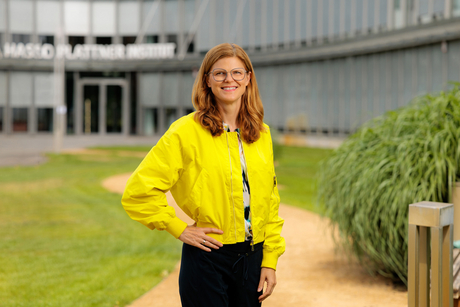
Prof. Helene Kretzmer presented her research in the field of digital health. Using computational genomics as an example, she showed how research and practice are intertwined. Together with the University Hospital Schleswig-Holstein, her team is developing a hybrid approach to classify brain tumors in real time. This allows genetic and epigenetic markers to be evaluated during brain surgery. The Chancellor praised this approach and saw great potential for development.
In the Media Studio, Dr. Holger Rhinow and Markus Wutzlhofer presented the opportunities offered by the use of artificial intelligence in teaching. Interactive case studies enable students to expand their skills in project development and team management. Dr. Frank Pawlitschek, Director of HPI Engine, showed how students at HPI are supported in developing viable businesses from ideas. The example of Voize demonstrates how successful the entrepreneurship program on campus is. The start-up originated at HPI. Marcel Schmidberger, one of the founders, showed the Chancellor and the Minister President how AI-based documentation systems can relieve the burden on nursing staff. During the conversation, it emerged that this application is also used in the nursing home in the Sauerland region where the Chancellor's parents live. Friedrich Merz was so enthusiastic that he immediately invited the founder to another meeting in his home town.
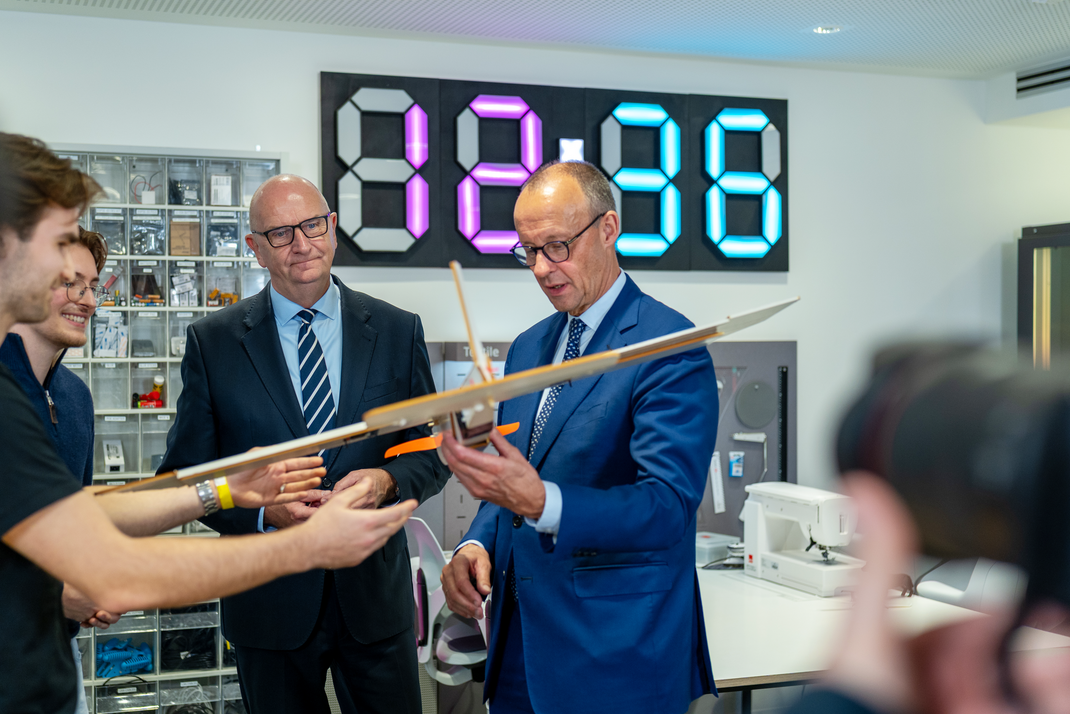
The last stop at HPI Maker Universe, the Hardware Studio, also featured very practical student projects. Elizabeth Yuu and Klara Munz presented their research project on a 3D-printed plant tower that opens up new possibilities for space-saving urban gardening. Gian-Luca Ehses and Vadim Samborski demonstrated a model airplane they developed themselves, which is equipped with sensors for autonomous flight. Finally, Constantin Sachse and Cristian-Aron Pasca presented how their self-built robot arm is controlled by AI and can move objects precisely into containers.
"What you are doing here is very impressive," said Chancellor Merz at the end of his visit to the HPI. The Minister President also thanked the researchers for their work and for their time. Woidke emphasized the importance of the HPI for Brandenburg as a center of science. Both guests received a gift out of the 3D printer. Friedrich Merz was presented with a small model of his sports plane. Dietmar Woidke was delighted with a miniature plastic dog – modeled after his own wire-haired dachshund.
In his concluding press statement at the Glienicke Bridge, Chancellor Merz also mentioned the HPI and expressed his appreciation for our commitment to strengthening digital sovereignty. He stated that with the HPI, significant progress was being made in this regard. "This is not only a gain for Brandenburg, but a gain for the entire Federal Republic of Germany," said the Chancellor. Merz emphasized that everything possible would be done to provide such an institution with a solid foundation in the future, so that the technology of artificial intelligence and its applications could become a model for all of Germany.
-
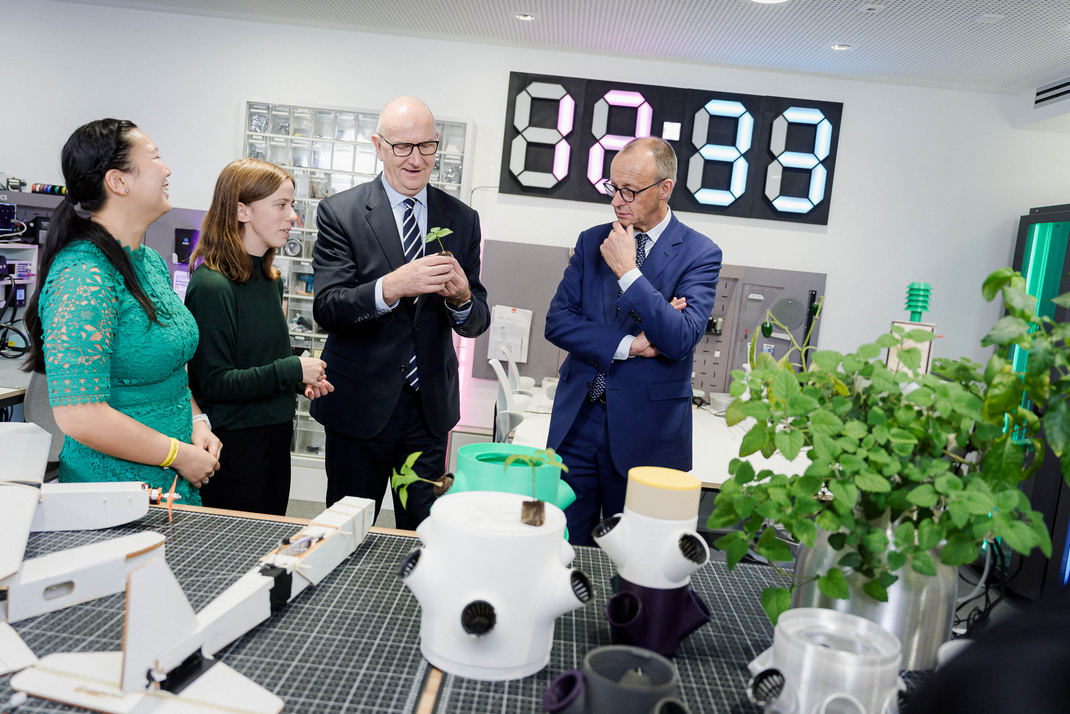 Elizabeth Yuu and Klara Munz demonstrate how space-saving urban gardening can work using a 3D-printed plant tower (photo: The Federal Government/Jesco Denzel)
 -
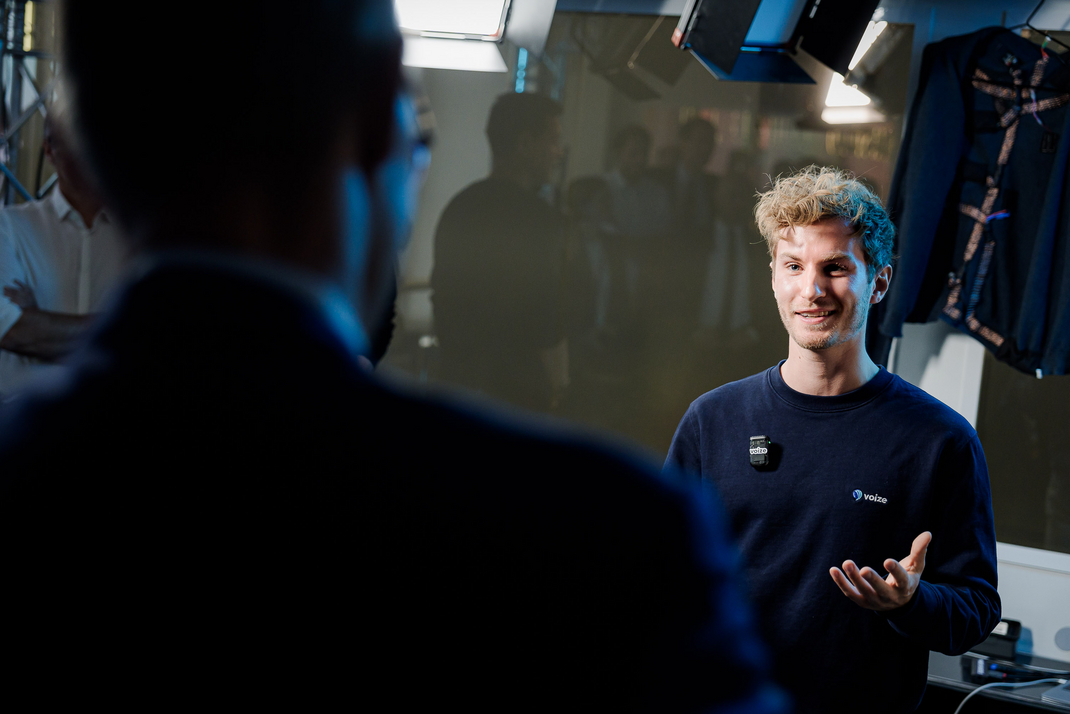 HPI alumnus Marcel Schmidberger presents the startup Voize, which aims to reduce the documentation workload for nursing staff (photo: The Federal Government/Jesco Denzel)
 -
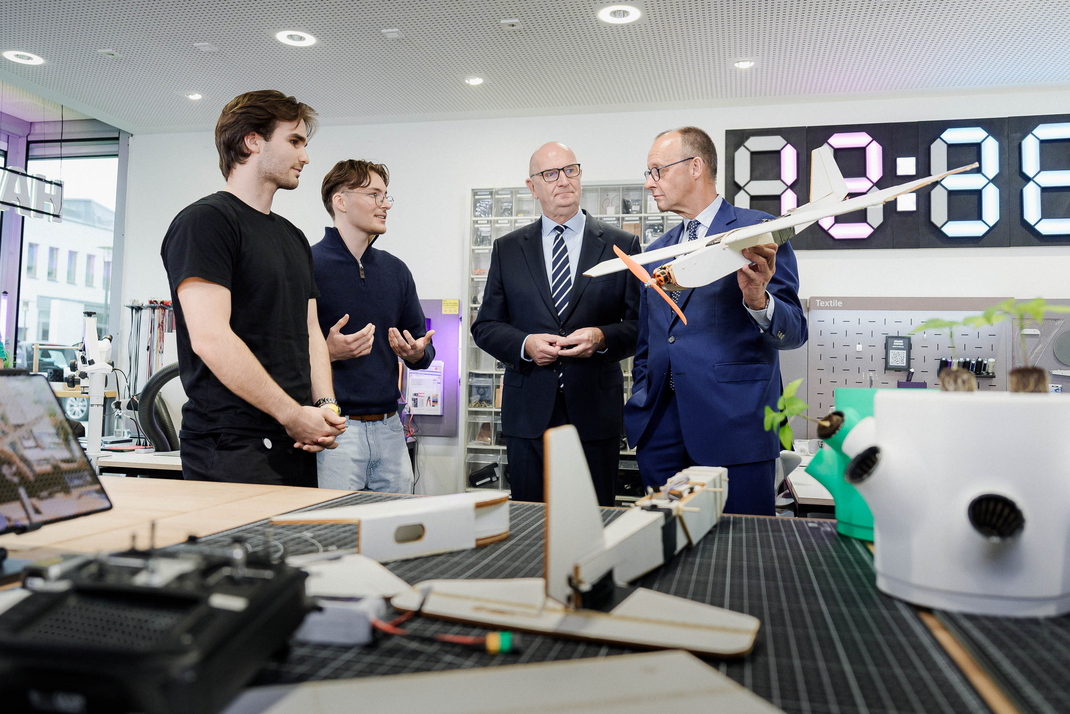 Gian-Luca Ehses and Vadim Samborski have developed a model aircraft equipped with sensors for autonomous flight (photo: The Federal Government/Jesco Denzel)
 -
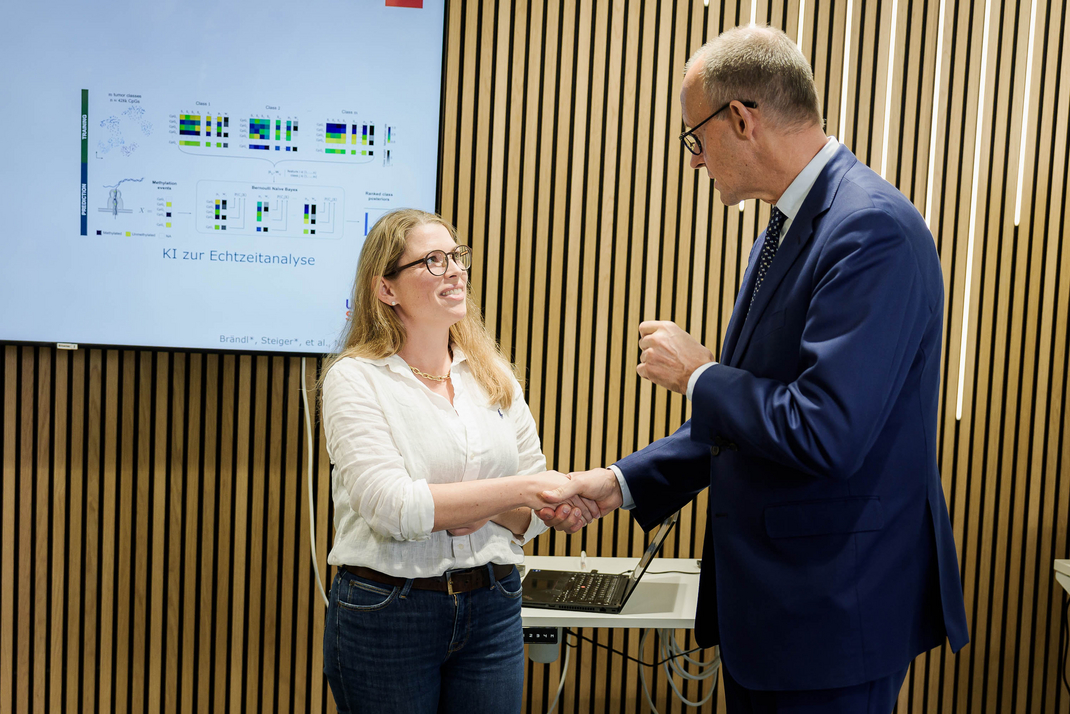 HPI Professor Helene Kretzmer provides insights into her research in the field of computational genomics (photo: The Federal Government/Jesco Denzel)
 -
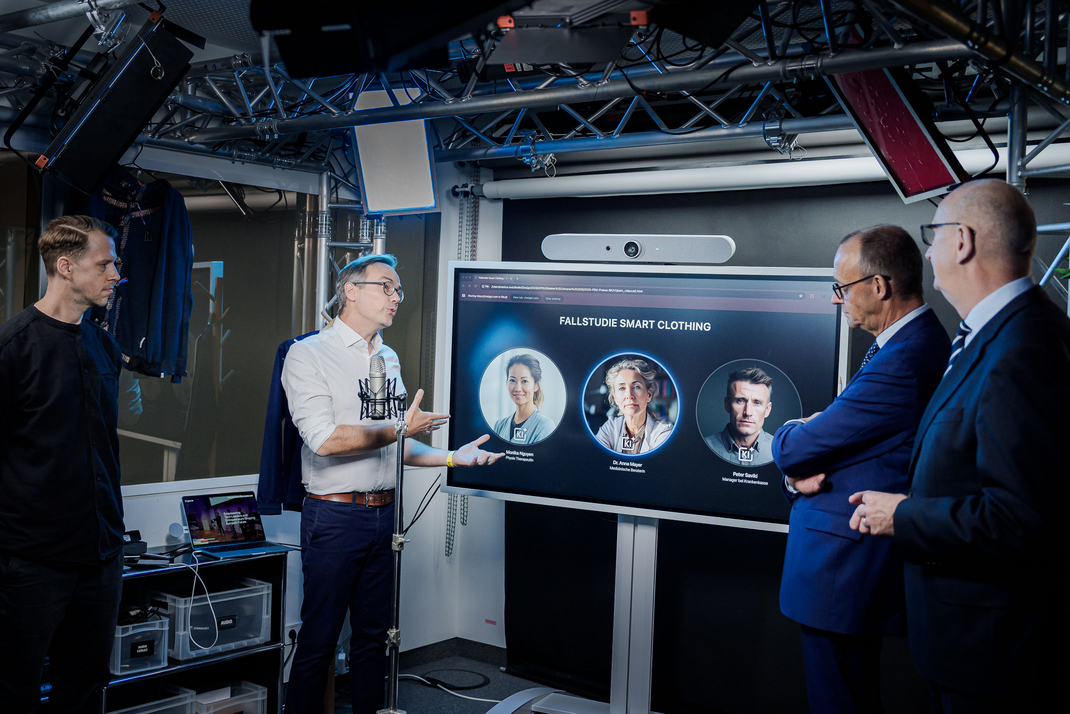 Dr. Holger Rhinow, Head of HPI Maker Universe, presents an HPI project on “Smart Clothing” (Photo: The Federal Government/Jesco Denzel)
 -
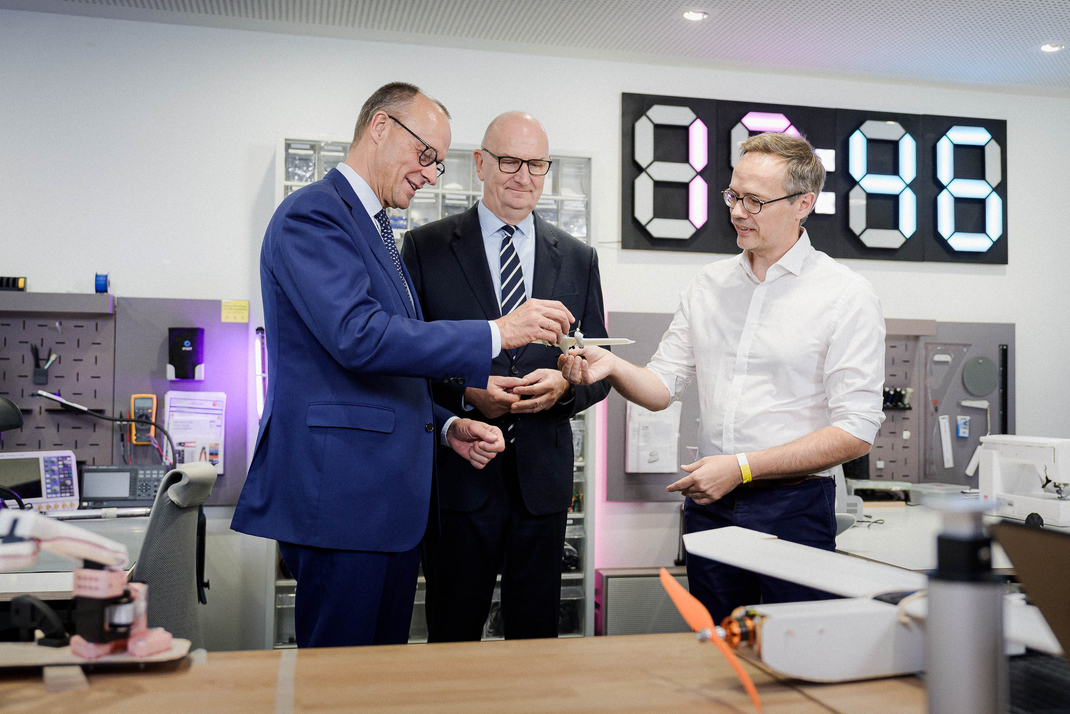 As a gift, the HPI presented the Chancellor with a small model of his sports plane printed on a 3D printer (photo: The Federal Government/Jesco Denzel)
 -
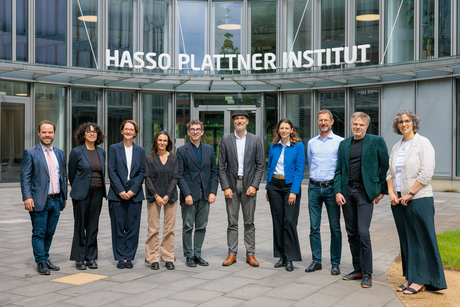
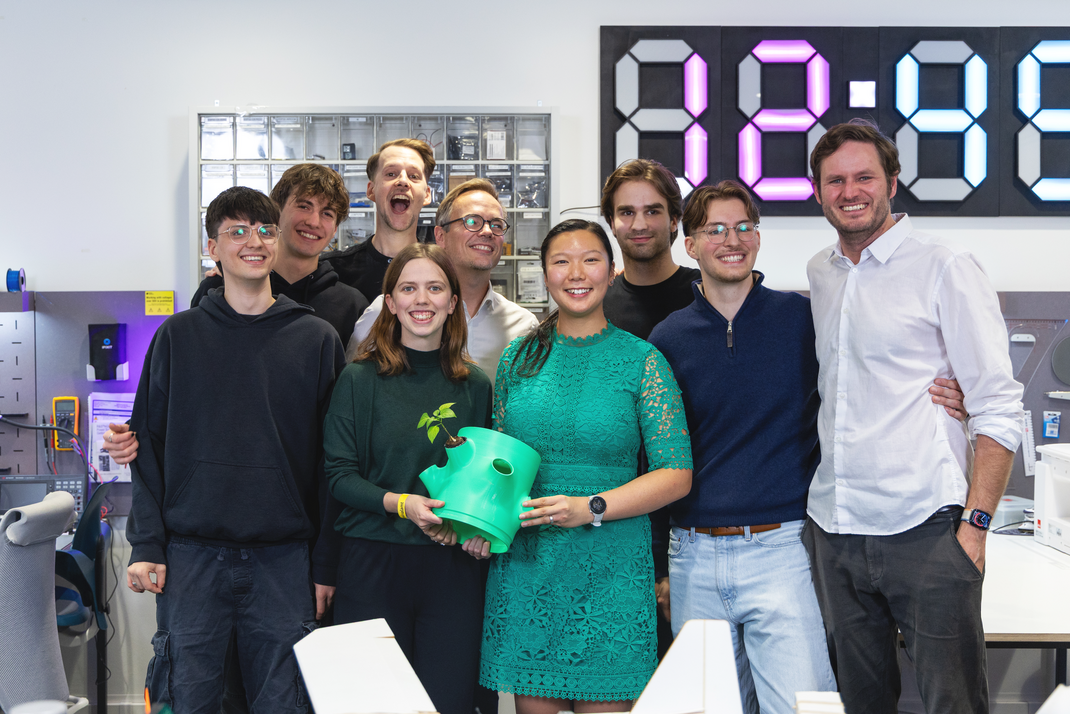 The HPI team at Maker Universe (Photo: HPI/Geronimo Foerster)