



Why do we make the decisions we make? Why does it take so much self-control to motivate ourselves to exercise instead of continuing to binge a TV series, and what really helps us do that? Jan Enkmann, a doctoral student at Falk Uebernickel's chair "Design Thinking and Innovation Research", addresses these questions in his dissertation.
He is researching self-control and the neuroscientific principles underlying it. Because if we understand how we make decisions, we can directly influence this process and thus help ourselves to lead a healthier lifestyle, for example.
Jan is currently working with postdoctoral researcher Vincent Beermann (HPI), Prof. Falk Uebernickel (HPI), Prof. Peter Mohr (Freie Universität Berlin), student Evelyn Lianto (Massachusetts Institute of Technology), and doctoral student Friedericke Stock (Max Planck Institute) on a browser extension that makes it easier for users to avoid unhealthy foods when shopping at an online supermarket. Jan explains how exactly this works and shares some tips on how to outsmart your inner demons in this interview:
Hasso Plattner Institute (HPI): Why do we find it difficult to make future-oriented decisions?
Jan Enkmann: There are many potential reasons for this, and of course it is also very individual. But one key phenomenon that we often observe in behavioral research is called present bias or temporal discounting. We can think of our decisions as a kind of rapid cost-benefit analysis performed by our brain: it weighs up in a flash which of several options has the greatest subjective benefit for our organism and how much effort it will take to obtain it.
In this weighing process, our brain tends to favor immediate and certain rewards—such as the calories in a bag of chips—and to give less weight to consequences that lie further in the future and are therefore somewhat uncertain—such as potential cardiovascular problems in old age. From an evolutionary perspective, this makes sense—better to have a smaller but certain benefit now than to wait for a potentially larger but uncertain benefit in the future—who knows what will happen by then.
However, our environment has changed dramatically: many services and products are optimized for a quick, low-threshold dopamine rush—social media, stores full of high-calorie foods, optimized video games. Today, there are many things that exploit this mechanism and can make it difficult for us to pursue our long-term goals.
HPI: What mechanisms control our self-control when making decisions?
Jan: Self-control in the brain does not necessarily arise solely from suppressing impulses – that is, of course, a frequently cited model: an impulsive and emotional system that must be kept in check by a rational and cognitive system. This feels very intuitive, but such two systems have long been sought in vain in the brain, and it is actually much more complex than that.
According to a more recent theory, our brain constantly evaluates the subjective value of different courses of action – short-term rewards such as a piece of chocolate compete with long-term goals such as health. Whether we opt for the short-term reward or long-term planning then depends on many factors influencing this process: what experiences we have had in the past or which motives, attributes, or options are currently particularly salient. This is where interventions can come in.
HPI: What intervention approach are you working on in your current project?
Jan: In a current project, we are pursuing a situation-based approach. Situation-based interventions attempt to anticipate critical decision-making situations and specifically change the environment in such a way that “good” decisions are easier and “bad” decisions are more difficult. For example, I can place sweets in the far corner or not buy them in the first place. Or I can install an app that limits my social media consumption via Time Blocker.
We are currently developing and testing a browser extension that is designed to help people better translate their own nutritional goals into purchasing decisions. Many people aim to eat healthier and shop accordingly, but in the end, a lot of unhealthy items often end up in their shopping cart.
HPI: How does this browser extension work?
Jan: The extension recognizes food items in online supermarkets, and an image recognition and prediction model then ranks them according to their health value. Particularly unhealthy products are then simply reduced in contrast on the website in real time, so that they visually recede into the background.
This may sound trivial, but there is good evidence that smaller everyday decisions in particular are strongly influenced by the visibility of the available options. Previous studies – by us and other research teams – indicate that less visible options are ultimately less present in the decision-making process, even if we are still consciously aware of them.
HPI: Why focus your research on online supermarkets in particular?
Jan: Online shopping is growing rapidly and also allows for interventions in visual design that would not be possible in physical supermarkets. This design – the “decision architecture” – is usually controlled by the supermarket operators themselves, who are well aware of the effects of product placement and visibility on decisions. This is often referred to as nudging.
Our idea is to put some of the control over the design of the decision-making environment back into the hands of users, so that they can use such nudging effects to serve their own long-term goals. Our colleagues at the Max Planck Institute have coined the term “self-nudging” for this.
HPI: Why could self-nudging be a better approach than nudging?
Jan: With classic nudges, others determine the decision-making architecture—they may have good intentions, but in the case of online supermarkets, it's more likely to be financial interests. Self-nudging is the idea of enabling people to take advantage of the mechanisms behind nudges themselves. It offers a toolkit for modifying one's own decisions but leaves the responsibility for its application to the individual.
HPI: Do you have any other projects currently underway?
Jan: In addition to our work on nutritional decisions, we are currently collaborating with our partners at MIT on personalized and context-sensitive interventions for greater self-control in social media use. Many users report a complete loss of control – they know it's not good for them, but they can't resist checking TikTok again or watching the next short video.
We are currently working on a study to determine how we can predict in real time whether the next usage session is likely to be problematic or not. Later, we want to use this to develop more context-aware interventions—for example, a certain app could be blocked or a warning sent if the prediction system concludes that you are currently prone to impulsive usage behavior.
HPI: Which finding from your research would surprise other people the most?
Jan: Relying solely on your own discipline in the moment of temptation often doesn't work very well. The secret to good self-control lies more in a set of strategies that we can build up over time.
One promising approach is to consciously adapt our environment in such a way that it becomes easier for us to make good decisions: For example, we can install social media blockers, consciously surround ourselves with athletic people, or automatically deposit a certain monthly amount into a retirement fund. All of this takes some of the pressure off self-discipline in everyday life.
HPI: What is the goal of your research?
Jan: In the area of health in particular, our daily behavior gives us much more control than we often realize. Healthy habits such as getting enough sleep, eating a healthy diet, and exercising have a really big impact on our well-being in the long term and also, quite specifically, on our life expectancy. Of course, we need to discuss this at the societal level, e.g., a more preventive healthcare system, structural retirement provisions, or better access to healthy food.
However, many of us can also do a great deal for ourselves on our own initiative. And here I would like to contribute a small part to a toolkit that people can use to navigate our modern and, frankly, rather unhealthy world a little better.
Thank you very much for the interview!
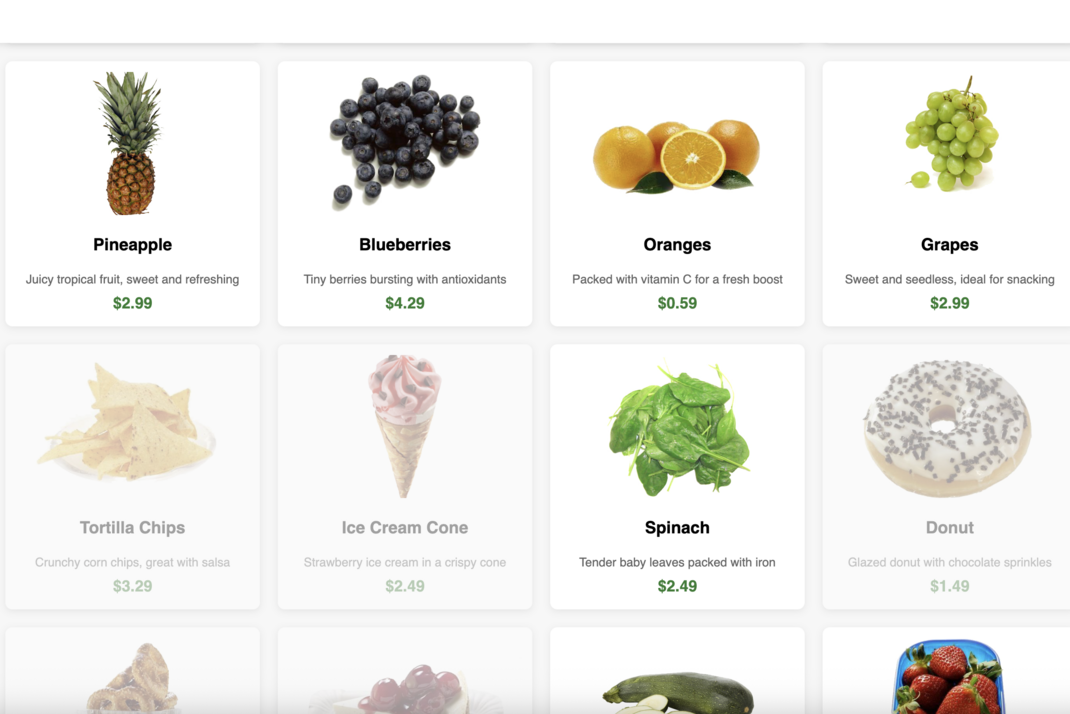
is designed to help people make better
purchasing decisions.
More news


Contact persons

Joana Bußmann
Team Lead Editorial / Science Communication
Phone: +49 331 5509-375
Mail: presse@hpi.de