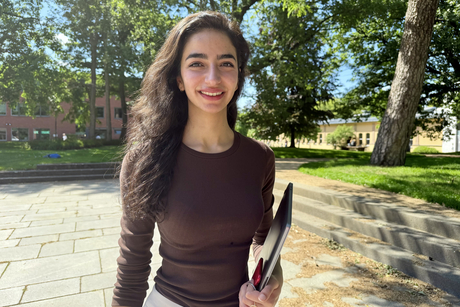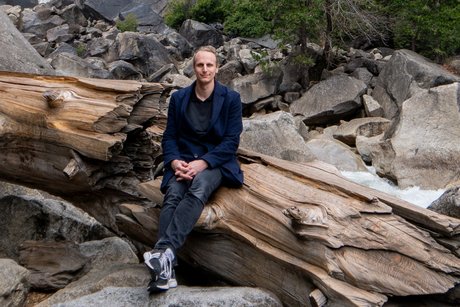


How can artificial intelligence support the conservation of gorillas? Project leader Prof. Gerard de Melo from the Artificial Intelligence & Intelligent Systems research group, doctoral student Maximilian Schall and the team of Bachelor students Emirhan Dogan, Vincent Eberwein, Bennet Kampe, Kajo Kratzenstein, Ben Meyer-Meisel, Joscha Schroff, Liam van der Viven and Robert Weeke have tested just that. They have developed a system at HPI that automatically recognizes gorillas based on videos.
Gorilla tracking for species conservation
The “Gorilla Tracker” project presented by HPI can identify individual gorillas in the zoo on video recordings and observe them over longer periods of time. The technology is based on deep learning and computer vision and enables tracking gorilla movements and behavior, a key technology in species conservation. This is because the data collected can be used to detect outbreaks of disease at an early stage and take timely protective measures.
The western lowland gorilla is on the Red List of the International Union for Conservation of Nature (IUCN), and the animals are threatened with extinction. The population has fallen by 80% in the last 70 years.
How does gorilla tracking work?
The AI initially searches for gorillas and their faces within the images recorded by the installed cameras. A specially trained neural network then analyzes the specific facial features and creates a digital fingerprint. This digital fingerprint can be compared (numerically) between the different images and assigned to the respective animal.
A project of global relevance
The gorillas at Zoo Berlin, Sango, Bibi, Djambala, Fatou, and the young animal Tilla, are probably not aware of the scope of the project. But they play a crucial role. The gorilla group reaches the hearts of millions of people, bringing the protection of gorillas to the fore. Media interest in the project was correspondingly high. HPI doctoral student Maximilian Schall and the two students Bennet Kampe and Emirhan Dogan explained the system and their work directly at the gorilla enclosure to several media in individual interviews.
Project leader Prof. Dr. Gerard de Melo from the Artificial Intelligence & Intelligent Systems research group at HPI explains:
Artificial intelligence can make a significant contribution to species conservation. By closely observing gorillas in their natural habitat using cameras, we gain valuable insights into their behavior. We use the collected data to train our AI models and thus respond to disease outbreaks in a targeted manner. This primarily supports the researchers in Odzala National Park in the Republic of Congo. We are grateful to Zoo Berlin for the opportunity to test and further develop this technology here.
Project partners in the Republic of Congo
Project partners are the team led by primatologist Dr. Magdalena Bermejo of the Sabine Plattner African Charities (SPAC), also part of the Hasso Plattner Foundation network. Conservation X Labs is also involved. With their help, 60 cameras have already been set up in Odzala National Park in the Republic of Congo, and a video database with around 10,000 videos of gorillas has been created. This training data will be used to gain further insights into the animals' behavior - and thus continuously improve the AI model.
The project group trained their model on the AI infrastructure of the AI Service Center Berlin-Brandenburg, which is funded by the Federal Ministry of Education and Research. The HPI team is now developing its system further and expanding its possible applications.
-
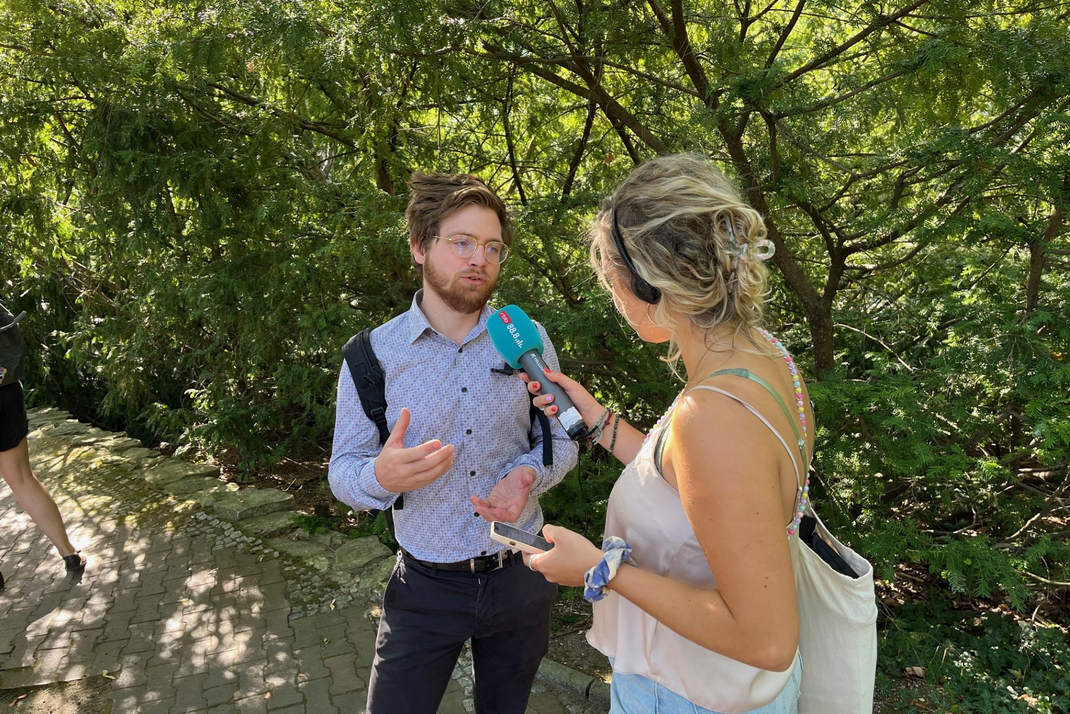 Interview with HPI doctoral student Maximilian Schall
 -
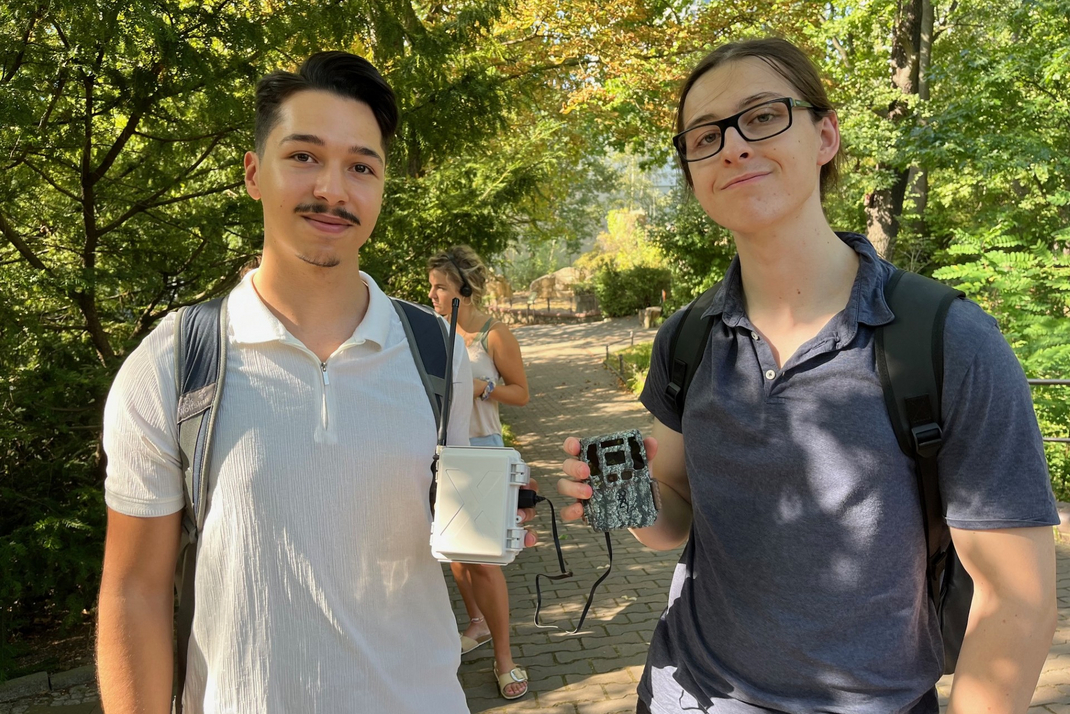 The two HPI students Emirhan Dogan and Bennet Kampe present the “Gorilla Tracker”
 -
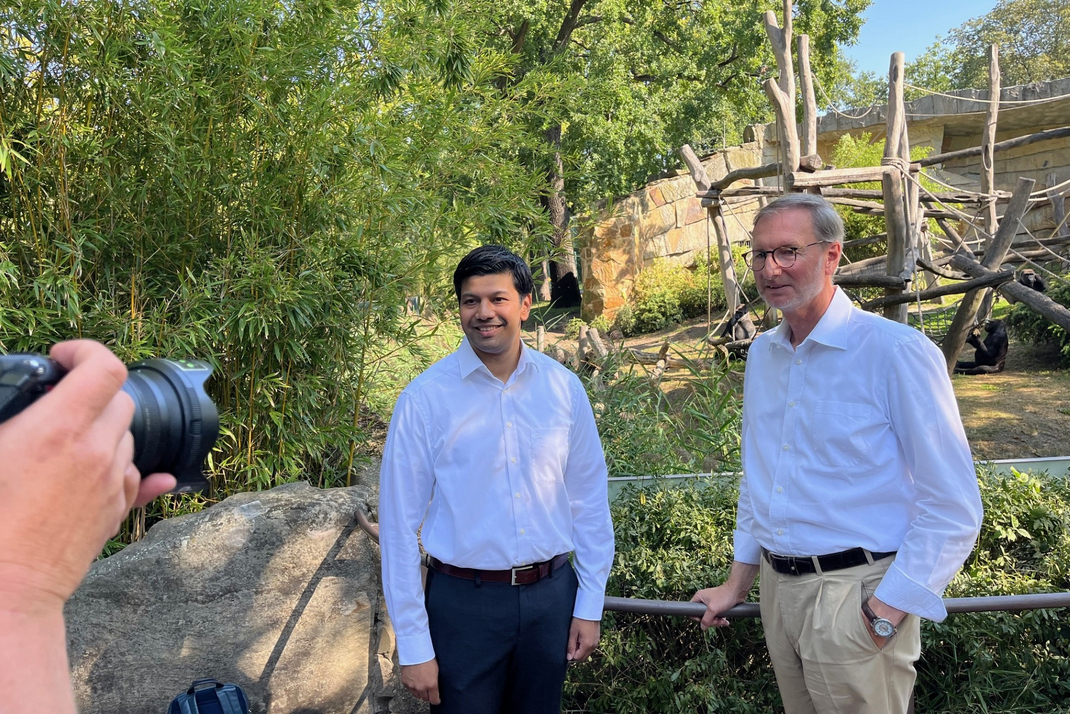 HPI professor and project manager Gerard de Melo and zoo director Dr. Andreas Knieriem are interviewed in front of the gorilla enclosure at Berlin Zoo
 -
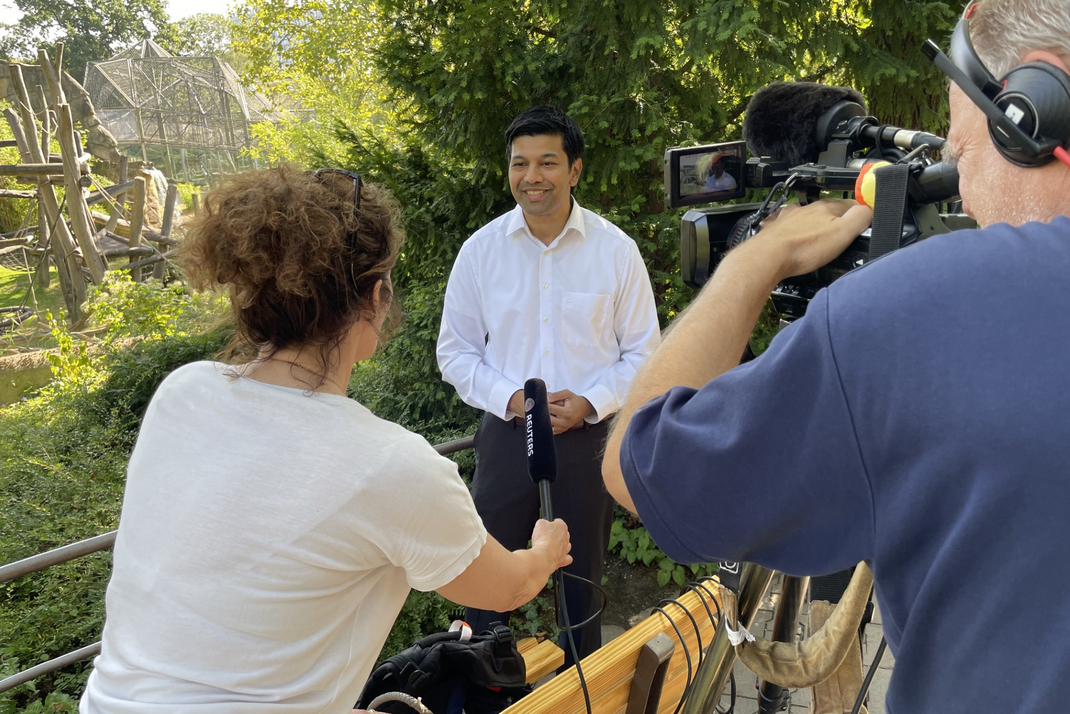 HPI professor and project manager Gerard de Melo is interviewed in front of the gorilla enclosure at Berlin Zoo
 -
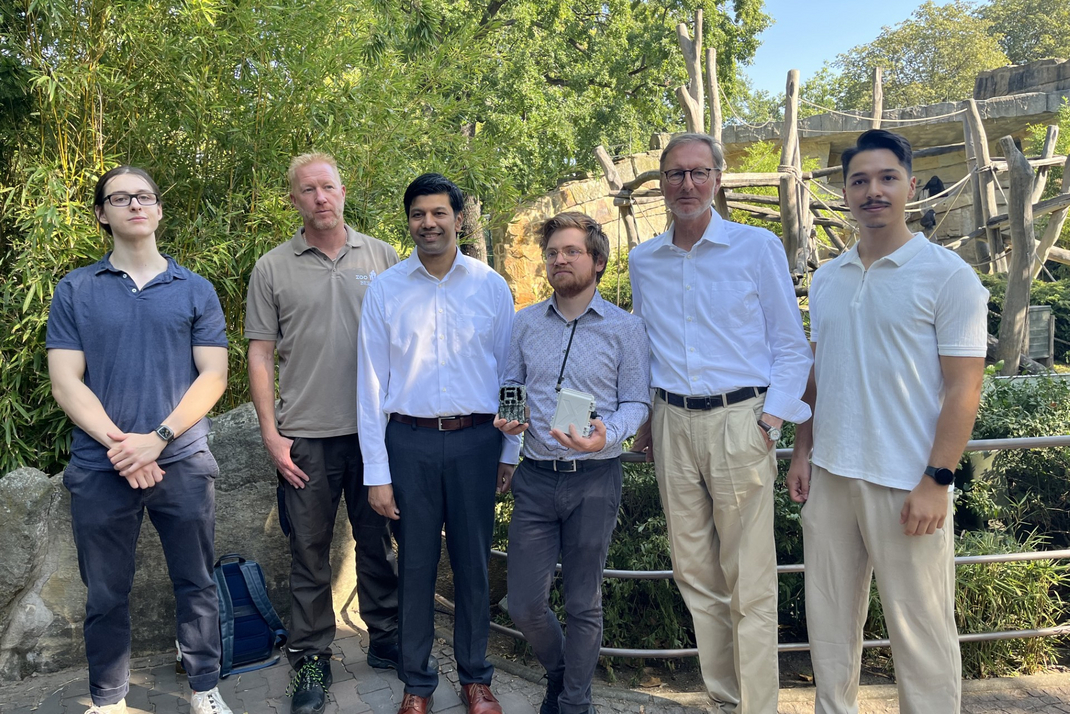 The project team at Berlin Zoo: HPI student Bennet Kampe, zoo veterinarian Dr. André Schüle, project manager Prof. Gerard de Melo, HPI doctoral student Maximilian Schall, zoo director Dr. Andreas Knieriem and HPI student Emirhan Dogan (from left to right)
 -
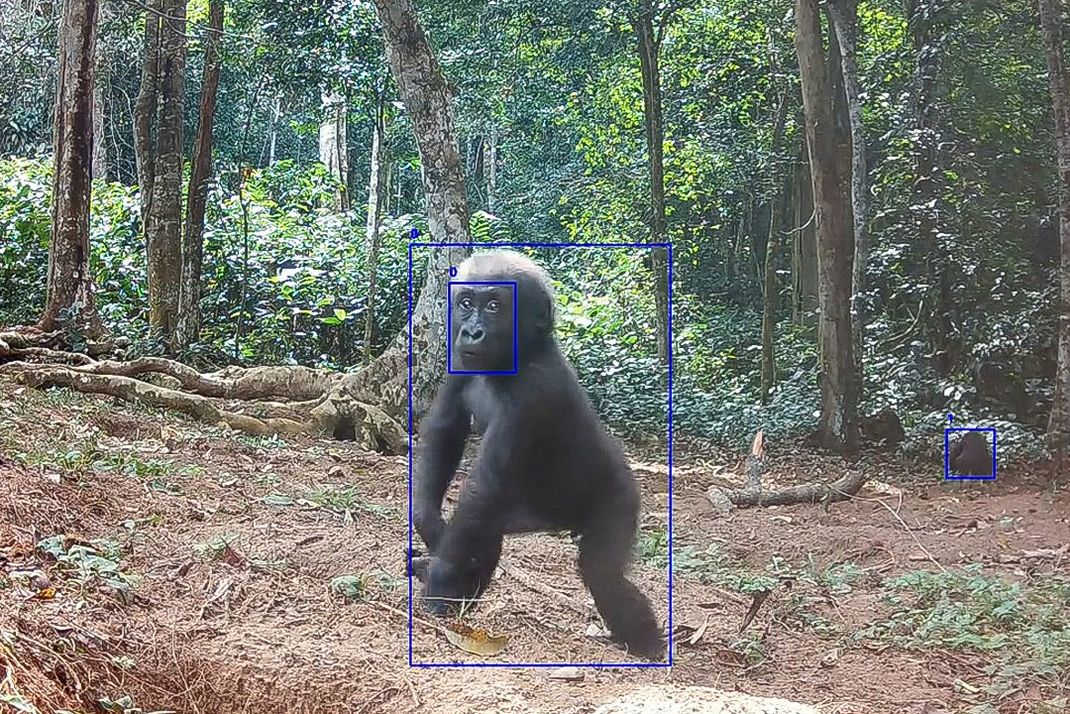 The “Gorilla Tracker” marks and tracks a young gorilla on a video recording