
On platforms like LinkedIn, success is often staged. Funding rounds, growth, visibility — these are usually the dominant topics. But what happens in spaces where people interact anonymously and the pressure to perform disappears?
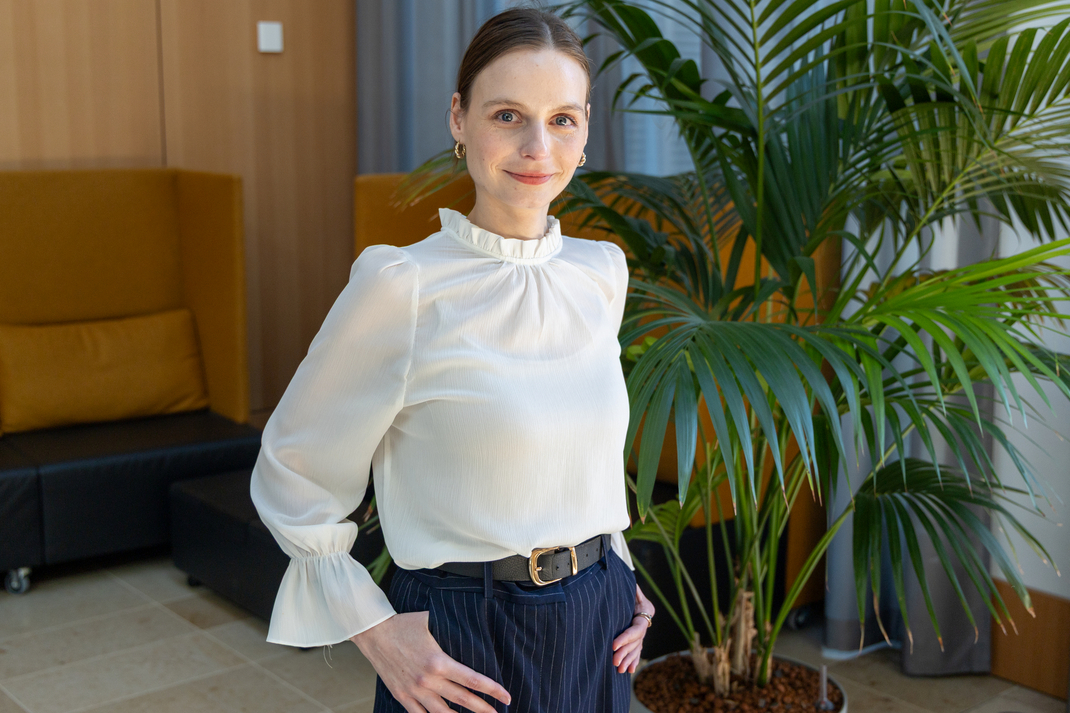
This is exactly what Anne Radunski set out to explore — through the analysis of large-scale data. For her dissertation, she analyzed tens of thousands of posts from anonymous online communities such as Reddit, where entrepreneurs spoke openly about mental strain. "LinkedIn really is all about performance. You present the best version of yourself — and Reddit is more like a background space where you can actually be who you really are."
When data tells stories that surveys often miss
Many studies in entrepreneurship rely on interviews, surveys, or smaller samples. Anne Radunski takes a different approach. Methodologically, she works with open platform data, text-analytic methods, topic modeling, and network analysis. She studies the digital traces that naturally emerge in online communities: posts, comments, reply structures, interactions, networks. Her focus is not only on individual statements, but on the patterns behind them: How do conversations emerge? Which topics keep resurfacing? And who actually holds influence in anonymous networks?
That is precisely where the strength of her work lies: data science methods make it possible to analyze much larger discursive spaces. Not just 20 survey responses or 900 comments reviewed by hand, but tens of thousands of posts that reveal what people are actually concerned with. "That’s exactly what data science methodologies are there for — to take a closer look at certain things."
This "closer look," however, does not simply lead to a single result. Rather, it forms the basis for the central research question of her dissertation, which is already made clear in its title: Behind the Pseudonym. How Anonymized Online Communities Enable Entrepreneurial Sensemaking, Social Capital and Network Influence.
Behind the pseudonym, the real discussion often begins
Anonymous settings do not merely create protected spaces. They also create productive spaces in which stressful situations can be processed collectively. "Anonymous communities really are a safe space." Anne Radunski shows that anonymity does not automatically lead to hostility — a common prejudice about pseudonymous platforms. On the contrary, well-moderated communities can be remarkably supportive. And that is where topics emerge that are otherwise rarely discussed at all.
Asked what she saw on Reddit that she would not find on LinkedIn, she answers: "Identity doubts — that feeling of not even knowing who you are anymore. Extreme pressure, lack of sleep…" Others respond by sharing their own experiences or pointing to support services. What emerges here is not a substitute for professional help. But it is a space in which people say things they would not say elsewhere.
Research at the intersection of information systems and digital society
Anne Radunski wrote her dissertation in the field of Information Systems. That positioning makes sense, because her work sits precisely at the intersection where digital infrastructures, social dynamics, and data-driven analysis come together.
She is not only asking what people say in online communities, but also how platforms need to be designed in order to become sustainable digital spaces. What role does moderation play, and why can pseudonyms be more than just a shield? In doing so, she opens up a broader perspective on platform design — as a decisive factor in whether exchange remains superficial or gains real relevance.
This is highly topical for the development of future platforms. Radunski’s research suggests that digital spaces need more than reach and visibility. They need structures in which unresolved issues also have a place. Or, as she puts it herself: "Where it’s not all just that shiny facade, but where you can go backstage and really let it out."
From a research perspective to a community perspective
Since February, Anne Radunski has been Cluster Manager of the HPI clusters Data & AI and Foundations. The move is a surprisingly good fit for her research topic. In her new role, too, the focus is on building connections, bringing people together, and creating spaces where exchange is more than the mere transfer of information.
She describes herself, "to some extent," as an information broker — someone who connects people, translates between contexts, helps others move forward, and strengthens smaller communities within larger structures.
That is more than organization. It reflects an understanding of how scientific environments remain vibrant: not only through excellence, but also through connectivity, openness, and the feeling that one does not have to navigate a complex system alone.
She also brings this perspective into the international research community. In December, at the International Conference on Information Systems (ICIS), one of the leading conferences in the field, she presented a paper that continues her work on anonymous online communities.
More news
Contact persons