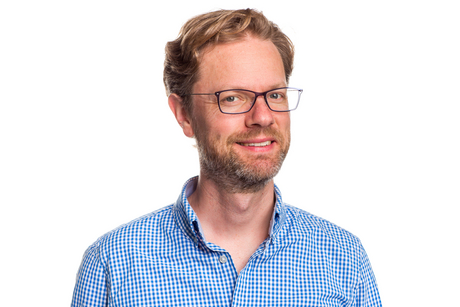

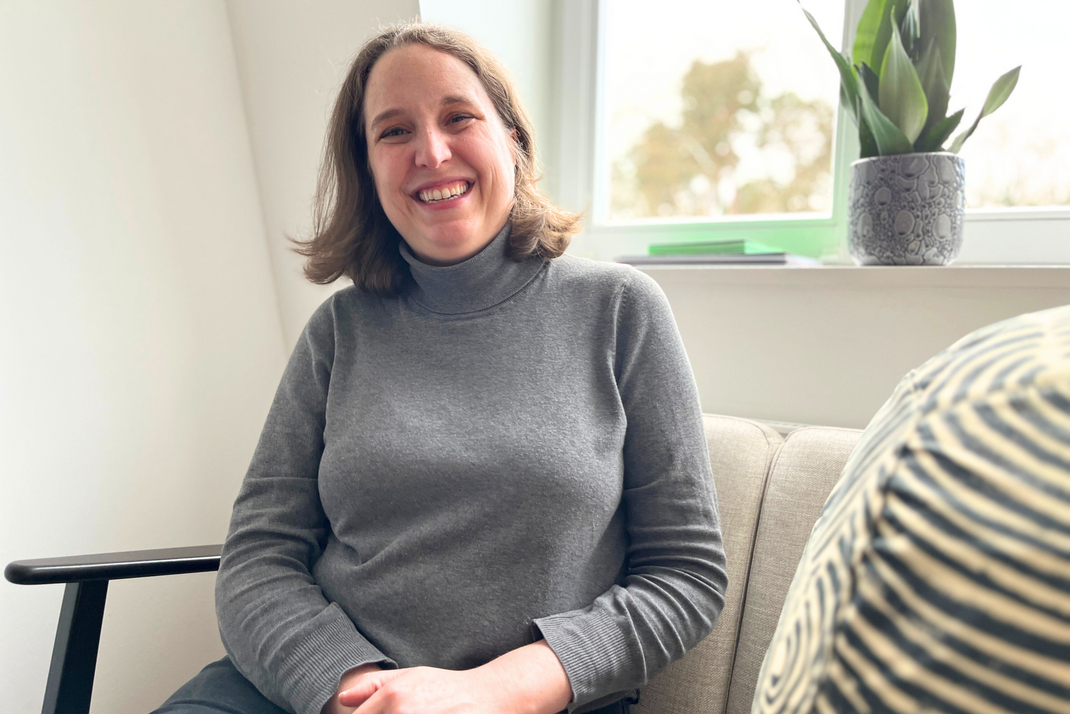
Freshly arrived in Germany, Julia Dennett is conducting research in the field of digital health at HPI. Her highlight: seeing the first results and experiencing the enthusiasm of her team. “I have seen and continue to see a lot of very smart and hard-working people trying to better understand the world, and how to make it a better place. Their work inspires me and pushes me to try to do the same.”
During the phone call with Julia Dennett, she asks: “Am I talking too fast? I always get so excited when I talk about my research.” Julia Dennett works as a scientist at the Hasso Plattner Institute, she is a postdoc in the field of Digital Health and her research focuses on the determinants of health and innovation in health care. She moved to Germany with her family just a few months ago.
What drives her? Getting to the bottom of health crises and understanding correlations so that policymakers can take better action in the future.
The most rewarding part is when you start to see the results, and others become as excited about your findings as you are!
Julia received her Ph.D. in Health Policy (focus on Economics) from Harvard University and her B.S. in Economics from the Massachusetts Institute of Technology. She is currently in the final stages of her research, studying the effect of heat on drug overdose mortality in the United States. There clearly is a connection and in light of rising global temperatures this is an alarming signal for policymakers. Further insights on her research: papers.ssrn.com/sol3/papers.cfm
Furthermore, she is also currently investigating several issues related to the consequences of COVID-19 and Long COVID. In doing so, she wants to examine the impact on the working population, people with disabilities, the healthcare system and other causes of mortality and morbidity. “The most challenging part to me is narrowing down research ideas into specific questions that you can answer with data and your empirical toolkit.”
Julia has met many people in her research career who have given her valuable advice. She has always held on to these three recommendations, which have helped her along the way: “First, setbacks and failures are a normal part of research and a career in science. Learn as much as you can from them and then move on. Second, it’s very important to be around other researchers that energize you and improve your research, either through helpful feedback or your ability to learn from them – find them and engage with them. Third, find an area of research that is important, interesting, or exciting to you. Then you are always motivated to wake up in the morning and continue your work!”
If you run into Julia on campus, feel free to ask her about her new favorite German word. (Hint: It's snail-shaped with icing on top) “I'm currently taking a German course, but my go-to phrase is still: ‘My German is not good.’ So still a work in progress."
Thanks to Julia Dennett for this interview!