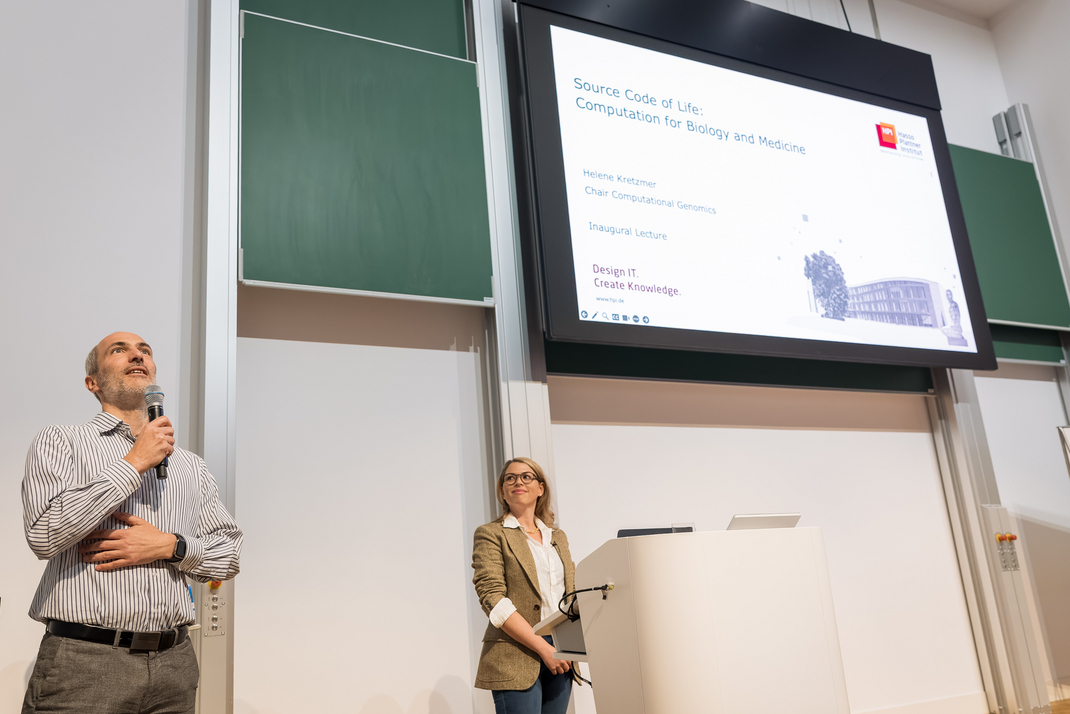

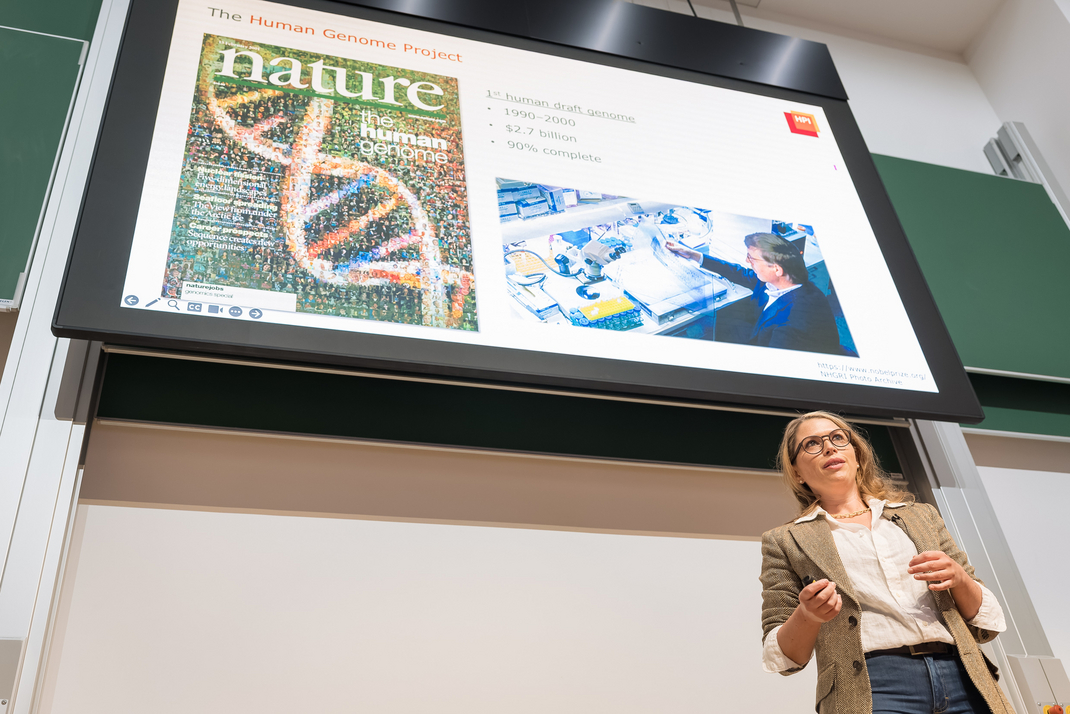
What does a typical inaugural lecture at HPI look like? Meaning the traditional inaugural speech that professors at German universities have been giving for over 500 years to celebrate the start of their teaching career. The fact is, there are no clear guidelines. That's why Prof. Kretzmer turned to recordings of previous inaugural lectures to prepare for her own, in order to derive a few “rules.” Rule 1: It is between 35 and 70 minutes long. Rule 2: The structure and content is also fairly open. So she would try to stick to these two rules, she told the laughing audience with a wink.
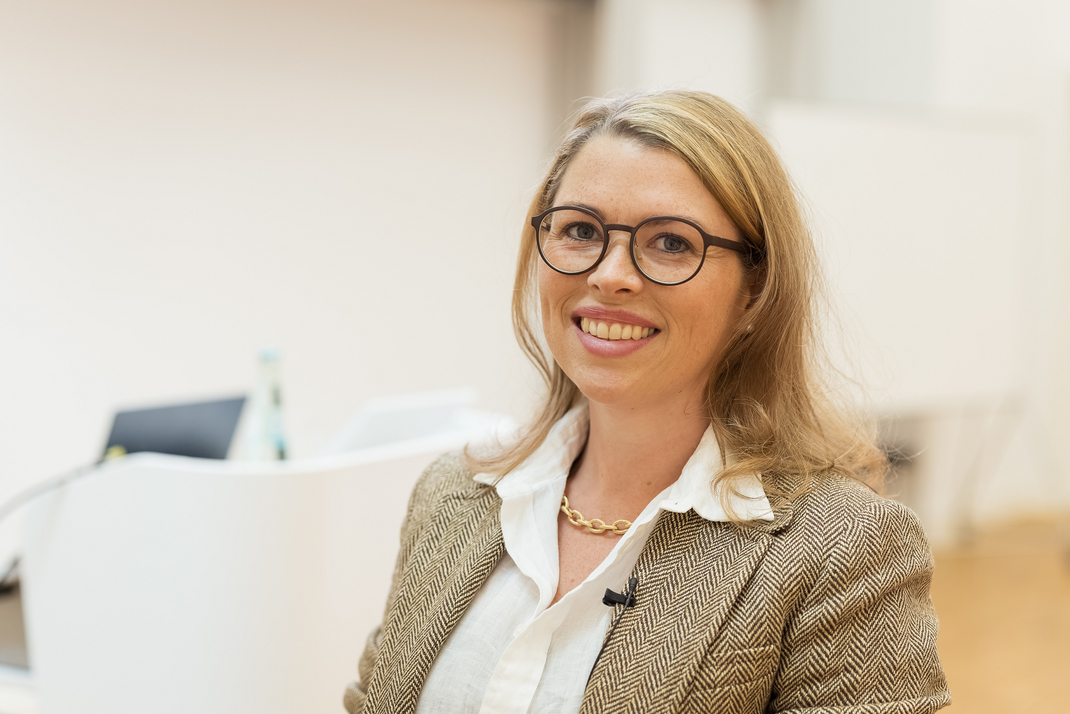
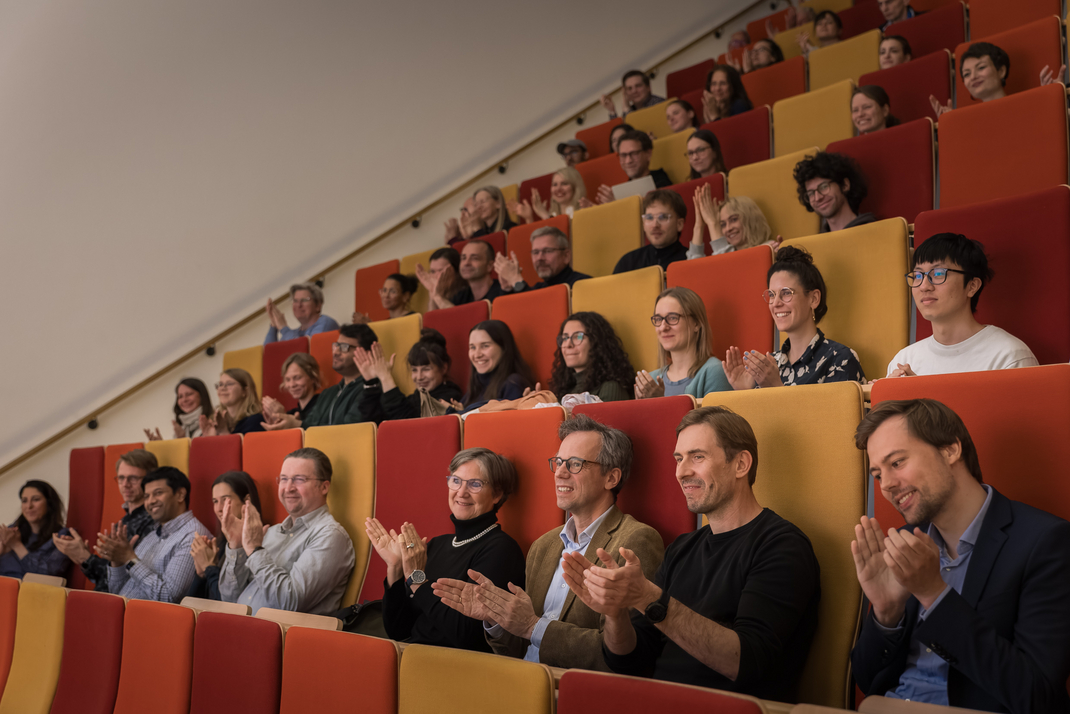
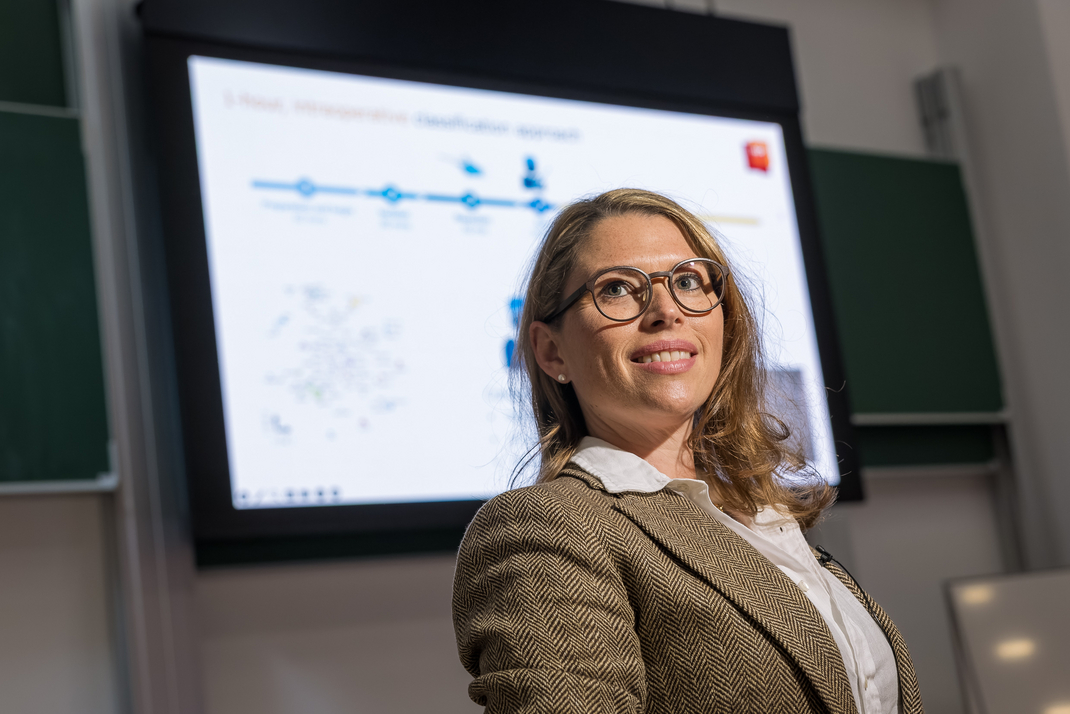
Prof. Dr. Helene Kretzmer has been head of the “Computational Genomics” department in the Digital Health Cluster at the joint Digital Engineering Faculty of University of Potsdam and the HPI since October 2024. She gave her inaugural lecture on the topic of “Source Code of Life: Computation for Biology and Medicine.” The lecture hall was filled with students and colleagues, as well as people who have accompanied her throughout her career, friends, and family.
Prof. Kretzmer studied bio-mathematics and holds a doctorate in computer science. She was part of the International Cancer Genome Consortium (ICGC). Her research focus, then as now, is on methods and analyses in the field of epigenetics.
Following Rule 2, she began her inaugural lecture with a look back at the origins of bioinformatics. Prof. Kretzmer explained that the intertwining of biology and computer science, on which the field of “digital health” is based, is by no means new. Alan Turing, one of the most important mathematicians who pioneered the field of computer theory, published a paper on pattern formation in nature in the 1950s, in which the early connection between these two fields is apparent.
Prof. Kretzmer said that she discovered her own path into her field of research in the late 2000s. In 2008, a new method of genome sequencing was developed that reduced the cost from millions of dollars to an affordable price. This possibility inspired Prof. Kretzmer to also devote herself to this topic in order to better understand the “source code” of humans.
Her research focuses on epigenetic genome regulation, i.e., the regulation of how a gene expresses itself in humans. Investigating the causes and consequences of regulatory changes in the genome can help us understand exactly how our genetic material works. This would not only improve the detection of diseases, but also their treatment. One of her major achievements in this field is a project for the real-time classification of brain tumors. So far, molecular diagnosis of tumors has been something that only happens after surgery and can take days or even months, she reported. With her machine learning-based method, tumor classification should be possible during surgery. In the future, surgeons would then be able to react directly according to the classification and remove the tumor in a more targeted manner.
Prof. Kretzmer looks to the future of her research field with anticipation, quoting bioinformatician Ewan Birney: “Biology is becoming an information science — and every dataset is a chance to discover something fundamentally new about life.”That is the spirit with which she also approaches new data sets.
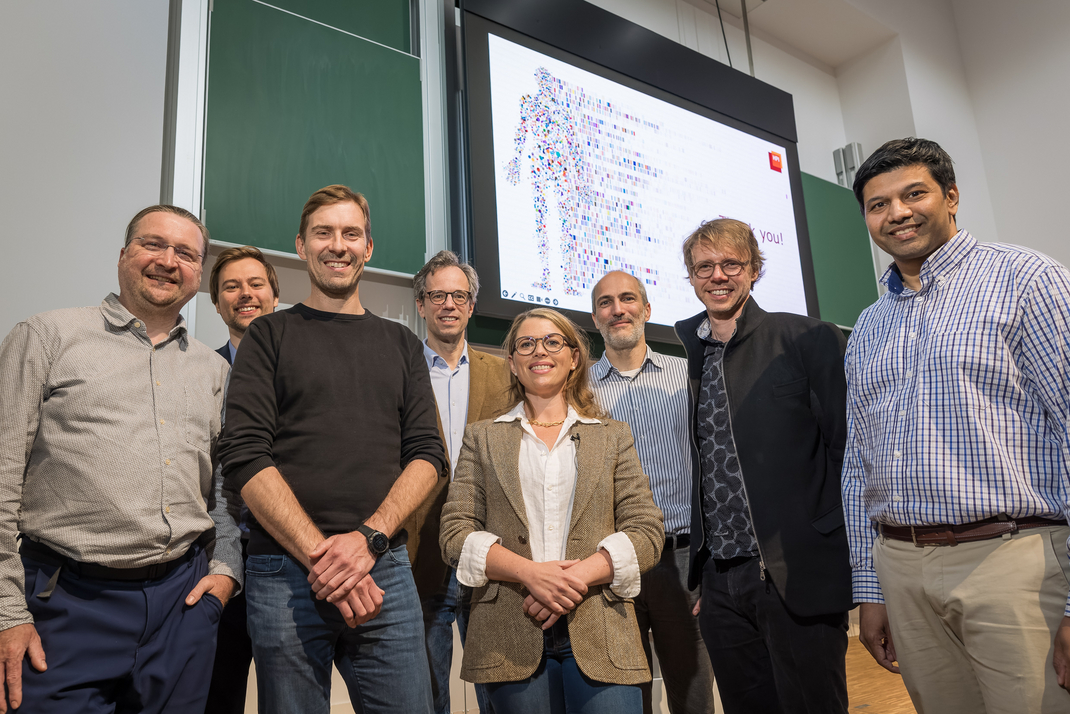
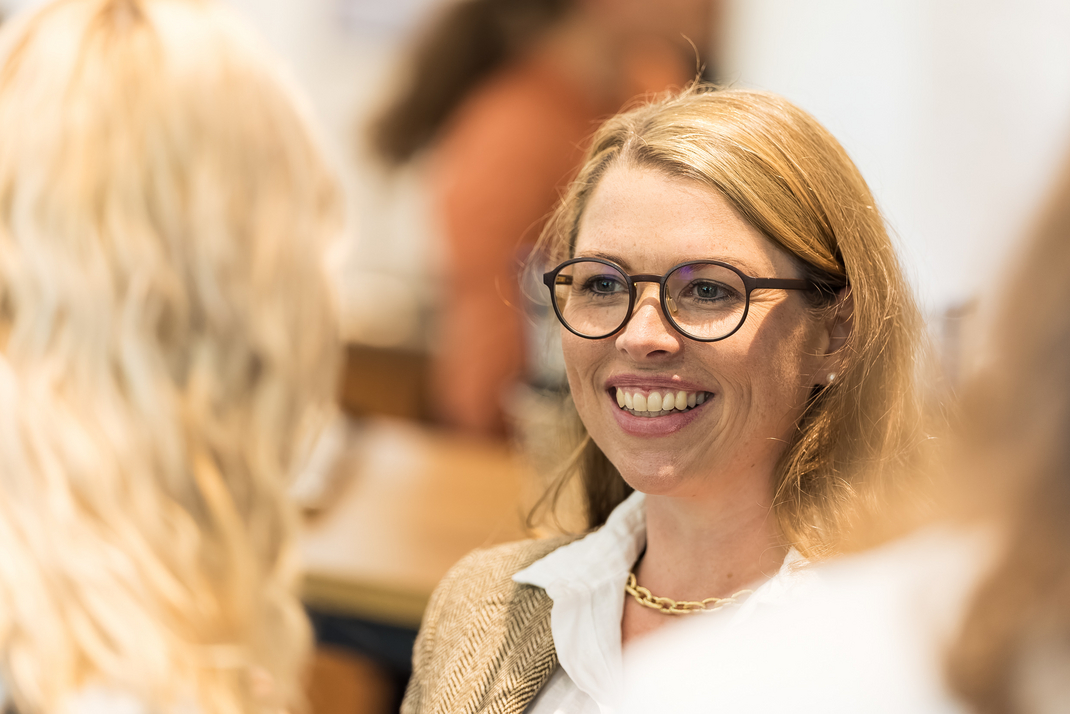
Prof. Kretzmer's authentic nature was reflected both in her infectious enthusiasm for her research topic and in her sincere words of thanks to her many companions, family, and friends at the end of her presentation. She expressed special thanks to Prof. Niclas Böhmer, who started at HPI at the same time as her and whose friendship made her start easier. In addition to resounding applause, there were also enthusiastic shouts from the audience. A glance at the clock – 45 minutes. Rule 1 for HPI inaugural lectures: fulfilled as well. As soon as the obligatory final photo had been taken her friends embraced her.
Prof. Kretzmer's complete inaugural lecture is available at: https://www.tele-task.de/lecture/video/11195/