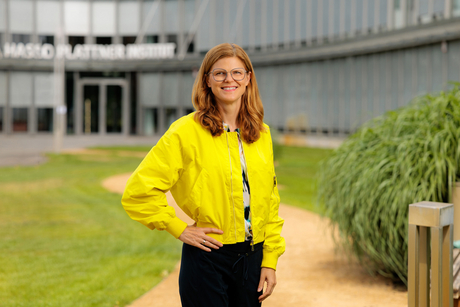

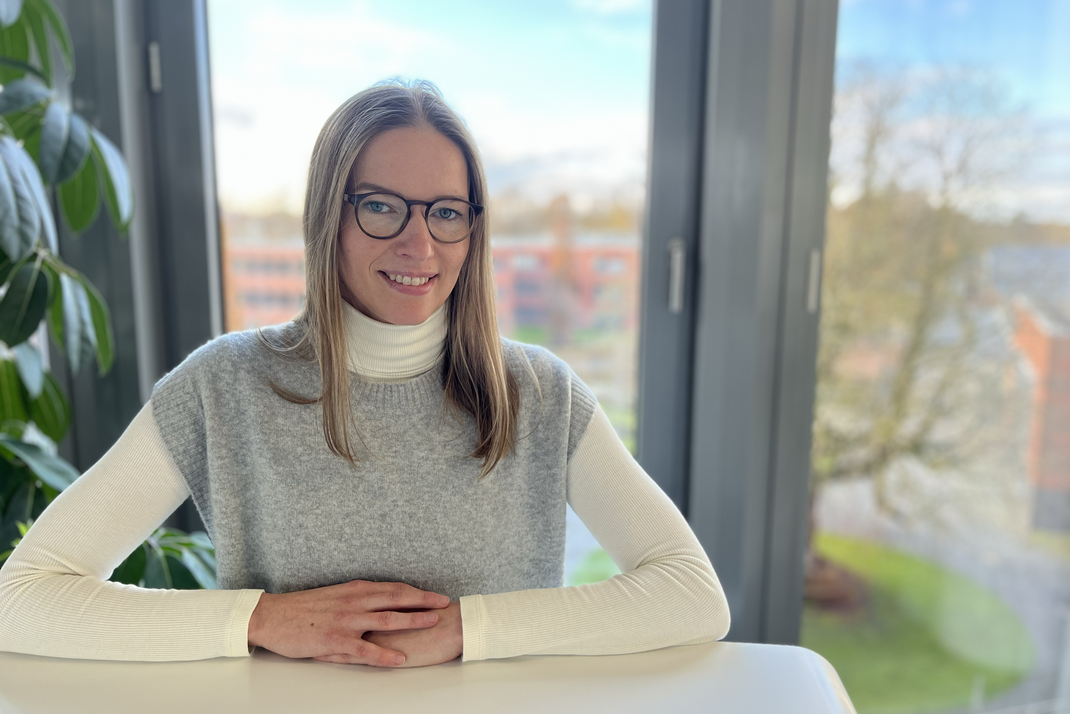
In our interview series, HPI employees regularly provide insights behind the scenes at the institute and into the working methods of the various departments. Katja Grzebiela, Senior Business Process Manager in the Project Management Office, kicks off the series this year.
Hasso Plattner Institute (HPI): How long have you been working in the Project Management Office? Please explain exactly what the Project Management Office (PMO) does and what its role is at HPI.
Katja Grzebiela: I have been working in the Project Management Office since April 2023 and have been responsible for various digitization projects at HPI in the past. For example, I introduced SAP SuccessFactors together with the HR department and SAP Concur and DocuWare with the finance department. I usually work as a project manager, although I also provide operational support in projects and, for example, contribute to process analysis, testing, and change management.
HPI: What does a typical workday look like for you, and which tasks are particularly exciting or challenging?
Katja: I usually start work shortly after eight in the morning and drink two cups of coffee with milk and a little sugar. I don't have any other working routines. My working day is very diverse, and it is precisely this diversity that I particularly like. The time around the go-live of a new system is particularly exciting and challenging. This period is also particularly appealing because the project team always has a clear goal in mind, and together, we have to move mountains to achieve it.
HPI: What projects are you currently working on, and how does the PMO specifically support these projects?
Katja: I am currently supporting the introduction of SAP S4 Hana with regard to the integration to other administrative systems, such as Concur (travel expense accounting), DocuWare (invoice management), and SuccessFactors (human resource management). Over the past two years, many processes have been digitized, and now they need to be better connected and optimized step by step. The nice thing about it is that the improvements can now be seen more quickly because we now have a solid basis.
The PMO supports various digitization projects by often providing project managers from the PMO. In addition, we are designing different project management templates that have been adapted to the requirements of the HPI and then made available to other project teams.
HPI: What interfaces exist between the PMO and other departments, and how do you work together?
Katja: We mainly interface with other HPI administration and IT departments. For example, as part of the CAS implementation, other colleagues from the PMO worked very closely with the Studies Department. We also work very closely with our IT colleagues in the Applications team. For example, there are often joint weekly project coordination and additional appointments on special topics, such as process optimization, training, or the evaluation of user feedback.
HPI: What challenges do you face most often in project management and how do you deal with them?
Katja: Over the past two years, a large number of processes have been digitized at HPI, and new software applications have been implemented, particularly for administration departments such as HR or Finance, which have to manage this alongside their daily operational business and simultaneous company growth. I have a great deal of respect for my colleagues. They manage to shoulder this enormous double burden, never forget their sense of humor, and are still motivated to get the job done.
Although the challenges in the project are often very great and the software does not always meet all requirements, the project team always discusses the issues together and on an equal footing in order to find the best solution for the HPI. It is often a significant puzzle because even though HPI is not a large corporation, the requirements of a research institution and non-profit are very complex and cannot be compared to many other service companies.
HPI: How do you manage to keep all project participants and ensure good communication?
Katja: I don't always manage that well. We are always trying out new formats in the team. I am open to new suggestions. Communication in the project team is usually very open, honest, and respectful, despite the high stress levels, and appreciative. However, communicating with users is often challenging because, on the one hand, you don't want to spam people, but on the other hand, it's also necessary to provide information about the project status. However, we haven't found the perfect format or the best frequency yet.
HPI: Please complete the sentence: "For me, HPI is …
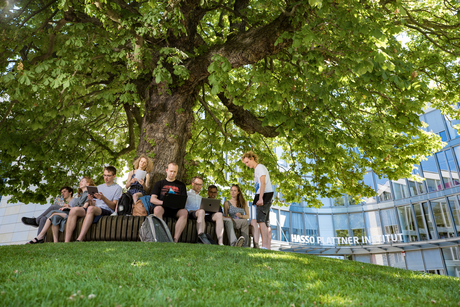
Katja: ... the perfect place to solve exciting challenges with very great, clever and committed colleagues. I enjoy coming to work every day. The campus is like a huge schoolyard where you always meet friends."