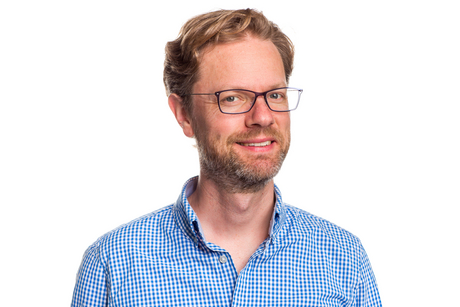

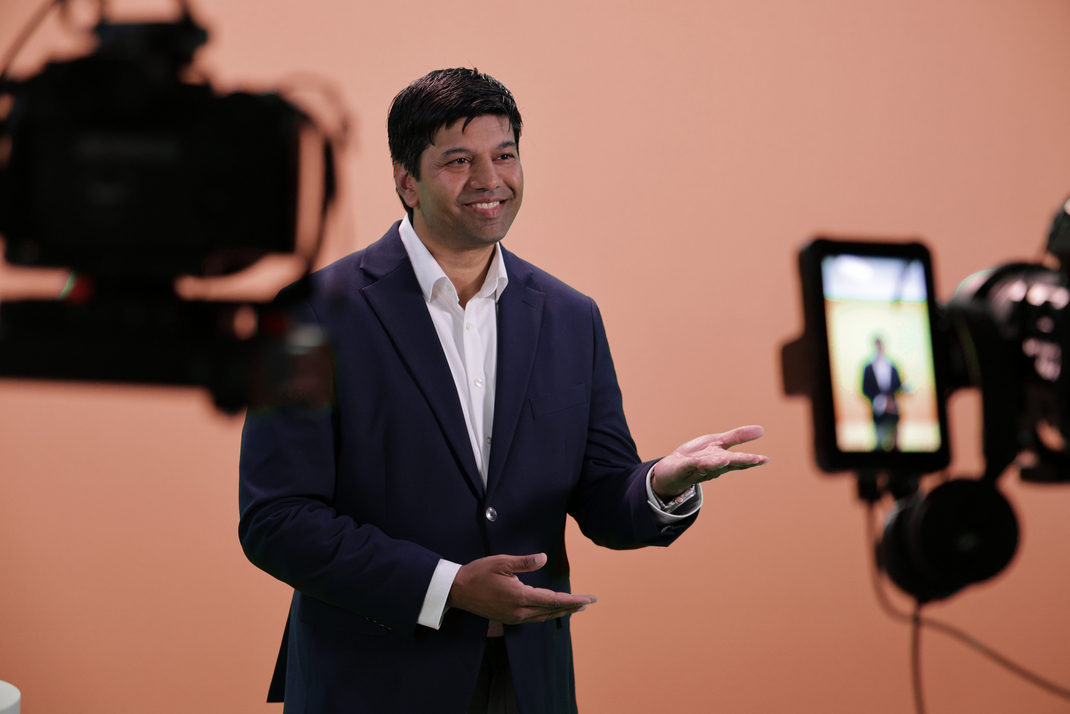
"If we fall behind in the field of technology, we will be significantly worse off in the future," says Prof. de Melo. He heads the Artificial Intelligence and Intelligent Systems research group at HPI and has been researching AI for years.
Prof. de Melo observes the rapid development of the field and notes that European companies are rarely at the forefront. This needs to change. Europe needs digital sovereignty.
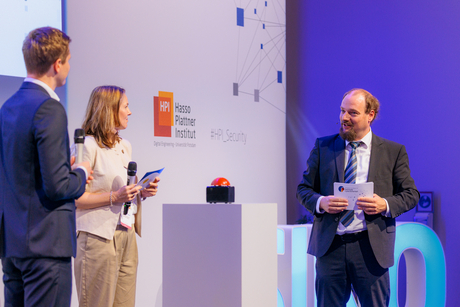
From December 2 to 4, 2025, Prof. de Melo will host the AI@HPI Conference, which will focus on precisely this topic under the title "Shaping AI Sovereignty." The event will bring together scientific excellence, economic responsibility, and political leaders to develop concrete strategies for a sovereign and independent approach to artificial intelligence. As part of the conference, Germany's AI service centers will also exhibit a selection of their projects that are gradually making European AI sovereignty a reality.
In advance of the conference, we interviewed Prof. de Melo about why Europe has some catching up to do in the field of AI and what European AI sovereignty means.
Hasso Plattner Institute (HPI): Technological sovereignty sounds abstract – why should all of us in Europe be interested in it?
Prof. Gerard de Melo: Our prosperity in Germany is largely due to our industry, which was rebuilt and massively expanded after World War II, for example in the automotive sector. In the future, however, completely different economic sectors will dominate. The decision is already being made as to which countries will be successful in the next 50 years and whose economies will flourish. If we fall behind in the field of technology, we will be significantly worse off in the future. A glance at our smartphones shows that although Europe is involved in important key technologies, other countries often set the tone in the global hardware and software market. This dependence is a warning sign. Added to this is the current geopolitical situation, which further exacerbates this development.
HPI: How do you assess Europe's current position in the global competition for artificial intelligence – especially in comparison to the US and China?
Prof. de Melo: Unfortunately, when it comes to AI, European companies rarely play in the top league, even though we have excellent basic research. It would be a mistake if we only adopted innovations from other countries. The goal must be to play on an equal footing and help shape the technology.
HPI: Are there specific factors that you believe are responsible for Europe's need to catch up?
Prof. de Melo: AI has been at the top of the political agenda in the US and China for quite some time, while many of us still underestimate the extent of the coming change. Initial steps have been taken, for example, with the creation of larger data centers such as the one in Jülich. We also have a solid foundation in basic research and are investing in the training of young talent. However, it must become much easier and faster to found start-ups and enable them to grow sustainably. In Estonia, it often takes only one day to start a company, while here it still takes weeks or months. To turn visionary ideas into reality, we also need more innovation-friendly investments. After all, many of today's AI successes are based on the fact that funds were made available and new concepts were realized even without a mature business model. A little more courage in this regard would certainly do us good.
HPI: What does "AI sovereignty" mean for Europe in concrete terms—is it primarily about proprietary technologies, infrastructure, or also values and governance?
Prof. de Melo: We certainly don't want opaque AI to decide who gets invited to a job interview or who gets promoted. AI that shapes our lives should be guided by fundamental human values. Without technological sovereignty, however, this will be difficult to achieve. We are currently seeing how large tech companies from the US are trying to use political tailwinds to undermine European regulations.
Becoming completely independent from other countries is not a reasonable goal. However, it is important that we build our resilience to potential risks and create the framework conditions for the sensible use of AI.
HPI: You are hosting this year's AI@HPI Conference. Where do you see the greatest opportunities and added value of such an event – both for the professional community and for business and society?
Prof. de Melo: Our particular added value lies in bringing together stakeholders from politics, business, science, and society. We don't want a purely academic conference or a purely industry meeting, but rather to build bridges between different spheres. This creates new impulses that stimulate reflection and action. For a long time, AI research tended to take place in an "ivory tower." Today, it is clear that we need dialogue between all areas of society.
HPI: You yourself have been researching artificial intelligence for many years. What role does research play in strengthening AI sovereignty – and how can universities and research institutions help ensure that innovation does not just remain in the laboratories, but also really reaches the economy and society?
Prof. de Melo: Research lays the foundation for what will be possible in the future. With traditional software development, it is relatively easy to plan what the result should look like. With AI, it's different: here, we often don't know in advance which methods and approaches will lead to which goals. That's why new ideas have to be tried out constantly. In science as well as in business. Creativity, a willingness to take risks, and the ability to respond dynamically to developments are crucial. This requires closer interaction between science and industry. We need to be willing to try new things quickly and to invest the necessary financial resources. Talent and start-ups must be promoted so that ideas don't remain in the lab but find their way into society.
HPI: Looking ahead to the next five to ten years, what would be a realistic scenario for you in which Europe has truly become AI-sovereign? We always talk a lot about how we are falling behind. But where are our opportunities to catch up?
Prof. de Melo: New scientific ideas can lead to AI systems becoming many times more efficient and cheaper. Models that still require large data centers today could then simply fit in your pocket. Such developments, together with open-source software and open data, will enable us to use AI systems that correspond to our ideas and values. Above all, it is important that we remain in control.
HPI: Germany's AI service centers will also present their work at the conference. What is the great opportunity offered by such centers, and what can visitors expect to see at the conference?
Prof. de Melo: The AI service centers are an important first step toward creating the right conditions for research and start-ups in Germany. They bring together expertise, infrastructure, and data. At the conference, we want to discuss how this model can be taken to the next level.
Thank you very much for the interview!
Further information about the conference and registration can be found here. The conference language is English.