

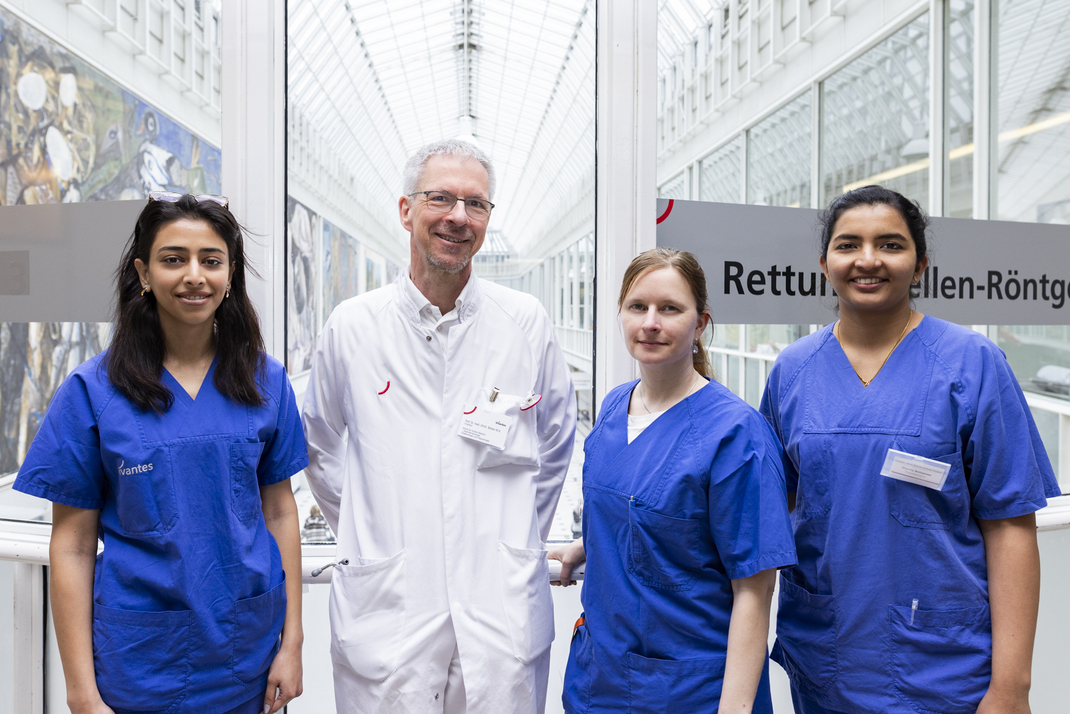
On a weekday in March, we meet our HPI students very early, in an environment that is unfamiliar to many of them. Instead of on campus or in front of their computers, they’re spending four days in sterile corridors, among white coats, beeping monitors and buzzing machines. At various hospital wards in the Vivantes network, the student teams accompany hospital staff in their daily work.
They are part of the Digital Health Spark Seminar at HPI. Their task is to observe everyday clinical practice and talk to hospital staff and patients. In doing so, they’re supposed to identify potential for improvement and develop initial ideas for how digital solutions can be used to make everyday clinical practice easier.
We had the opportunity to meet two of the student teams on site and learn about their ideas.
Giving parents of sick children more security
One of the seminar participants is Eva Habib, a Digital Health Master's student who previously studied medicine. In the neonatal intensive care unit, she experiences moments that touch her: “We have come across some scenarios where the parent needed emotional support. The baby was going into the operating theater and the father didn't know what to do, to be with the mother or just care for the baby. He was very emotional.”
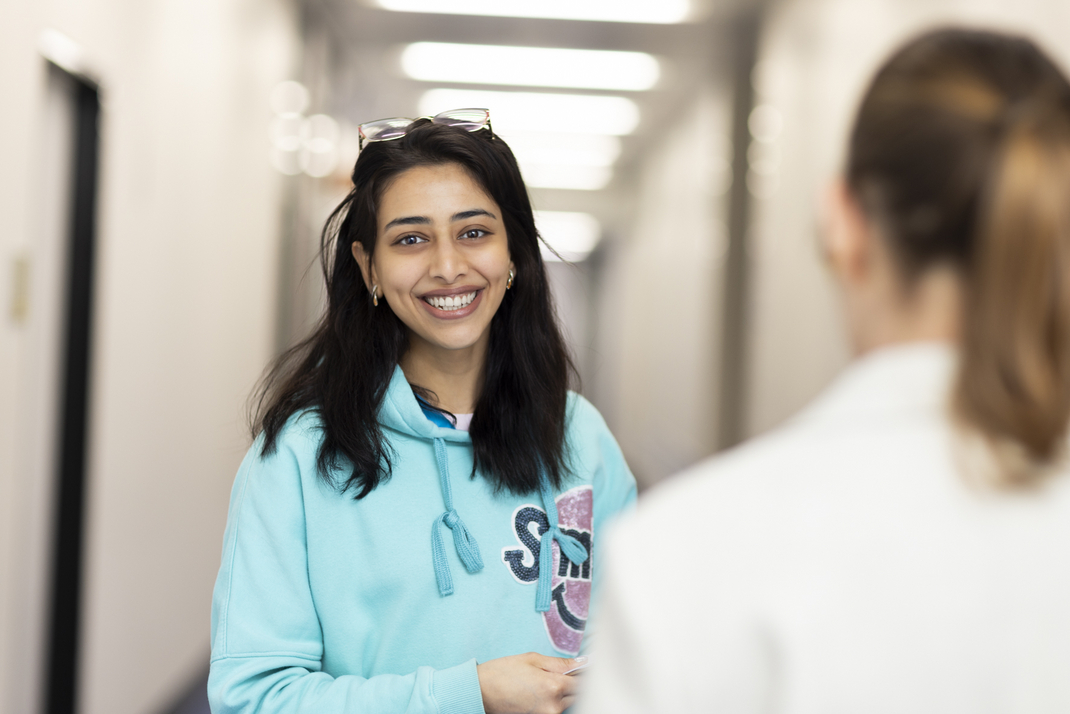
It was this situation that inspired her and her teammate Sharmy Ann James. “NeoGuide” is their idea for an app that is designed to provide parents with regular updates on their child's condition and also to provide helpful teaching materials. In addition to multilingual support and AI-supported chatbots, parents could also be supported with information material on social services after they have been discharged. This could help parents who accompany their children in the intensive care unit to feel more involved in their child's care. This provides them with security. At the same time, it could also relieve the burden on hospital staff.
For Eva, it was precisely this insight into everyday practice that motivated her to take part in the Spark project.
This is actually my main interest when I joined the Digital Health program at HPI. I see myself on the bridge between the health and the digitization world.
-
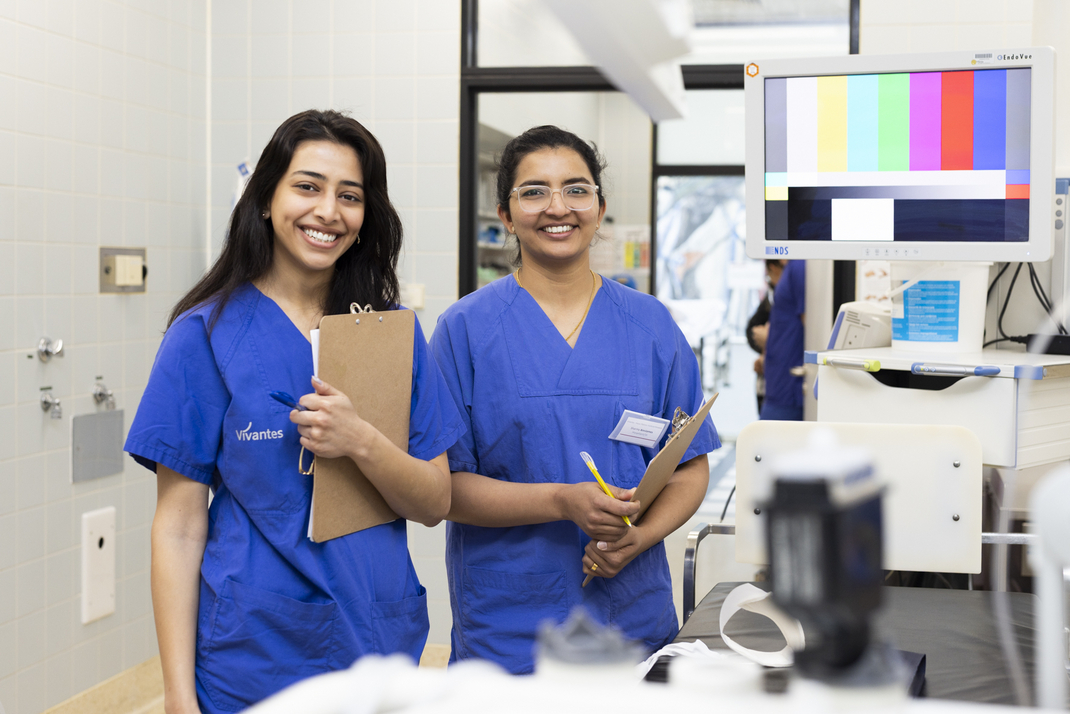 Studierende vom HPI, Hasso-Plattner-Institut, bei der Projektarbeit am Vivantes Klinikum in Berlin-Neukölln, 12.03.25, "Digital Health Spark – Igniting Need-Driven Innovation in Healthcare", Foto: Nicole Krüger
 -
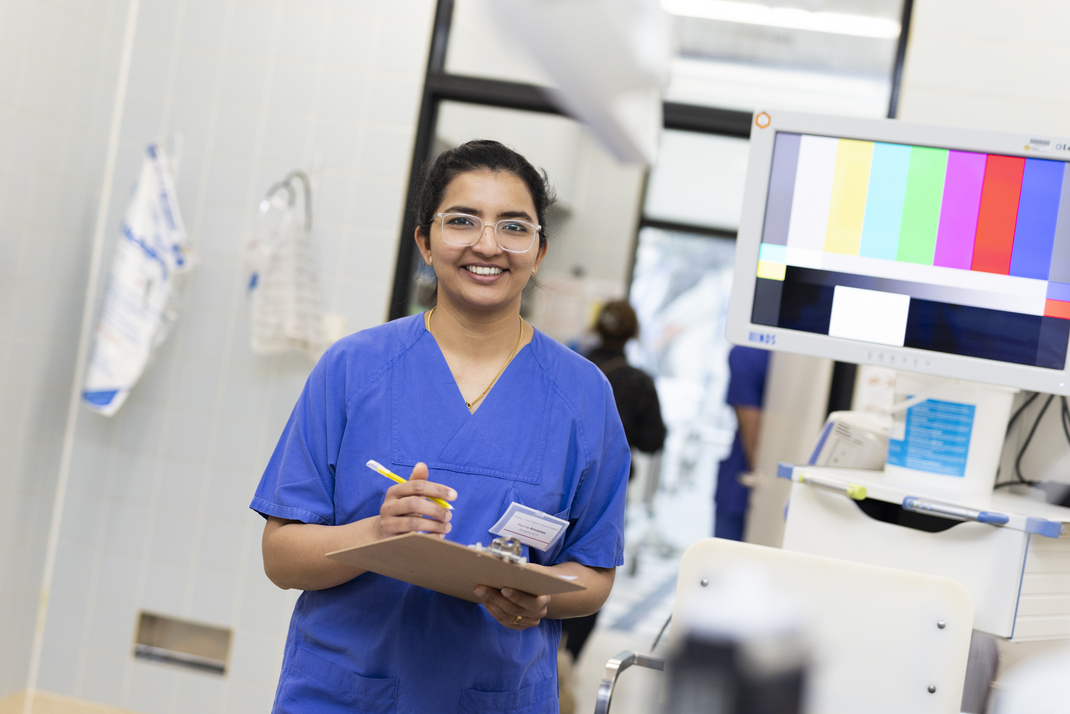 Studierende vom HPI, Hasso-Plattner-Institut, bei der Projektarbeit am Vivantes Klinikum in Berlin-Neukölln, 12.03.25, "Digital Health Spark – Igniting Need-Driven Innovation in Healthcare", Foto: Nicole Krüger
 -
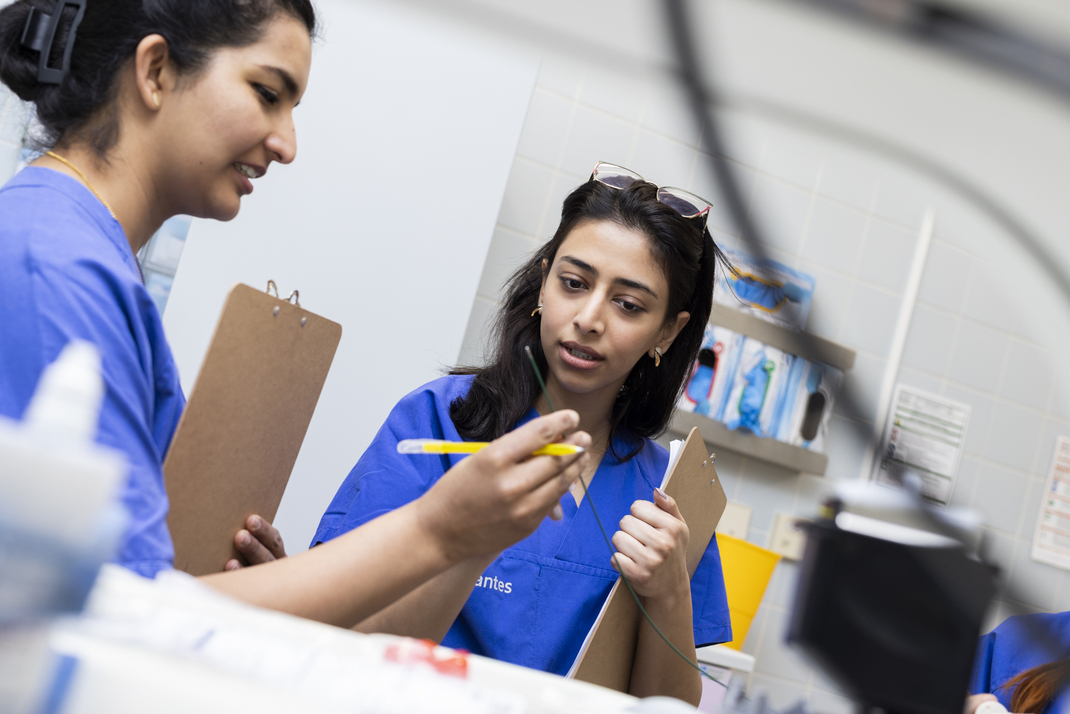 Studierende vom HPI, Hasso-Plattner-Institut, bei der Projektarbeit am Vivantes Klinikum in Berlin-Neukölln, 12.03.25, "Digital Health Spark – Igniting Need-Driven Innovation in Healthcare", Foto: Nicole Krüger
An important impulse for the future
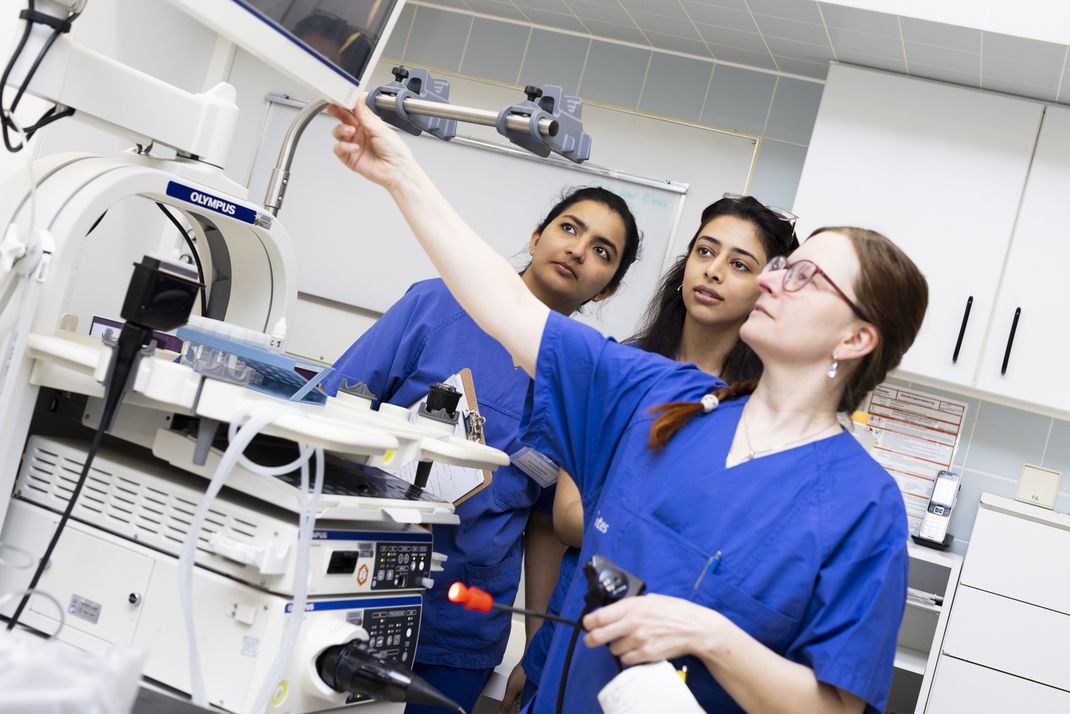
This bridging between the health sector and the digital world is also becoming more and more of a topic for hospital staff. Nursing manager Sylvia Ressler supervises Eva's team at their second ward, the endoscopy, and answers the many questions of the HPI students.
While she has observed that many current and especially older patients still have little desire for digital solutions, she nevertheless sees the Spark project as forward-looking: “The next generation, who will be here in ten to twenty years, has a completely different focus on their health, on their bodies and every detail than is the case today. Today's patients don't really trust the whole (digital) thing. But I think, the new generation, they’re already living with it. They wake up with it in the morning and go to sleep with it at night. And even when they're in the hospital, it will still play a role. I think it will be a completely different experience, learning environment and advancement of digitalization in the hospital as well.”
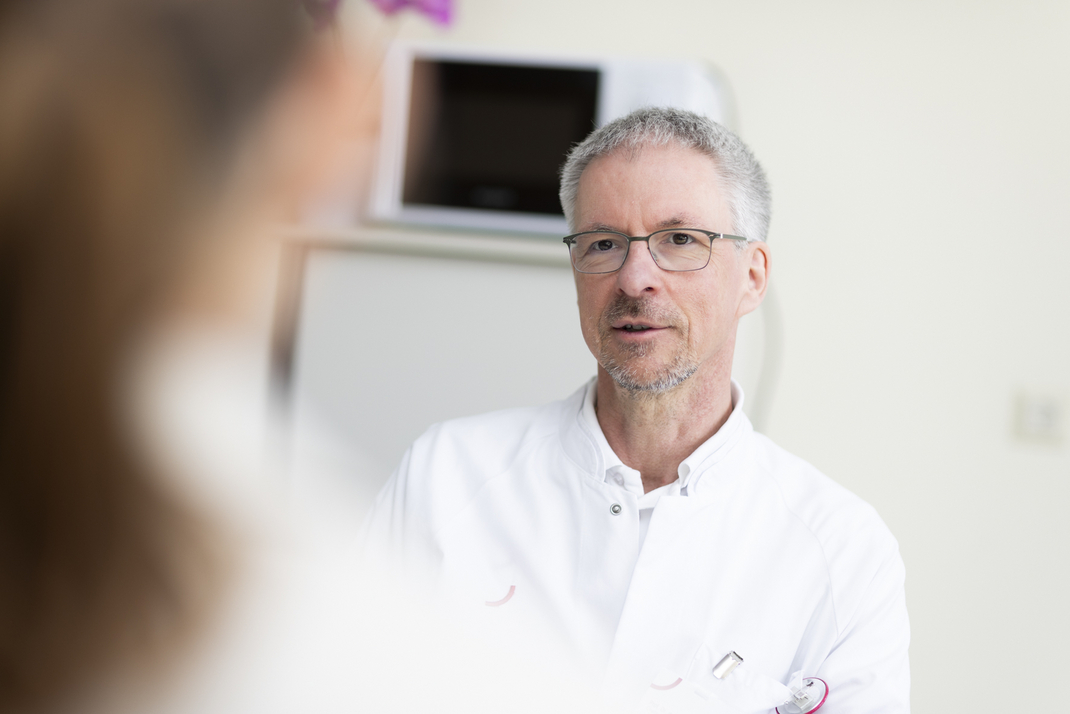
Prof. Dr. Ulrich Böcker, Chief Physician at the Clinic for Internal Medicine, also emphasizes the value of the cooperation. Like many members of the hospital staff, he particularly appreciates the fresh perspective that the students bring with them. The interdisciplinary student teams come from different fields of healthcare and IT and have varying degrees of previous experience in the clinical environment.
It's fascinating: as soon as someone comes in from outside who doesn't work directly in this field, often entirely new perspectives arise. We ourselves are so entrenched in the business that we no longer perceive certain things. And then sometimes a single question is enough, like, 'Have you ever looked at that before?' – and suddenly you see something completely differently.
Delirium: a condition that deserves more attention
Thanks to the Spark Seminar, a total of 22 HPI students are observing the everyday clinical practice and working on digital solutions. The ideas that are developed are very diverse.
We meet the team of Pierre Burghardt, SaadBin Khalid and Sophia Seidel on the geriatric ward of the Ida-Wolff Hospital. Here they found themselves confronted with a topic they had never heard of before. “Delirium” describes a state of acute confusion that can occur in connection with severe illnesses, especially in older patients. It can disrupt attention and cognitive abilities and also unsettle or frighten patients.
To prevent delirium, as well as loneliness and stress, the team developed the idea for “Sparkles”. “It is an interactive, voice-controlled tool that motivates patients to do physical and cognitive activities every day and makes their progress visible. The goal is more effective recovery and shorter hospital stays through active patient participation”, explains Digital Health Master's student Pierre.
-
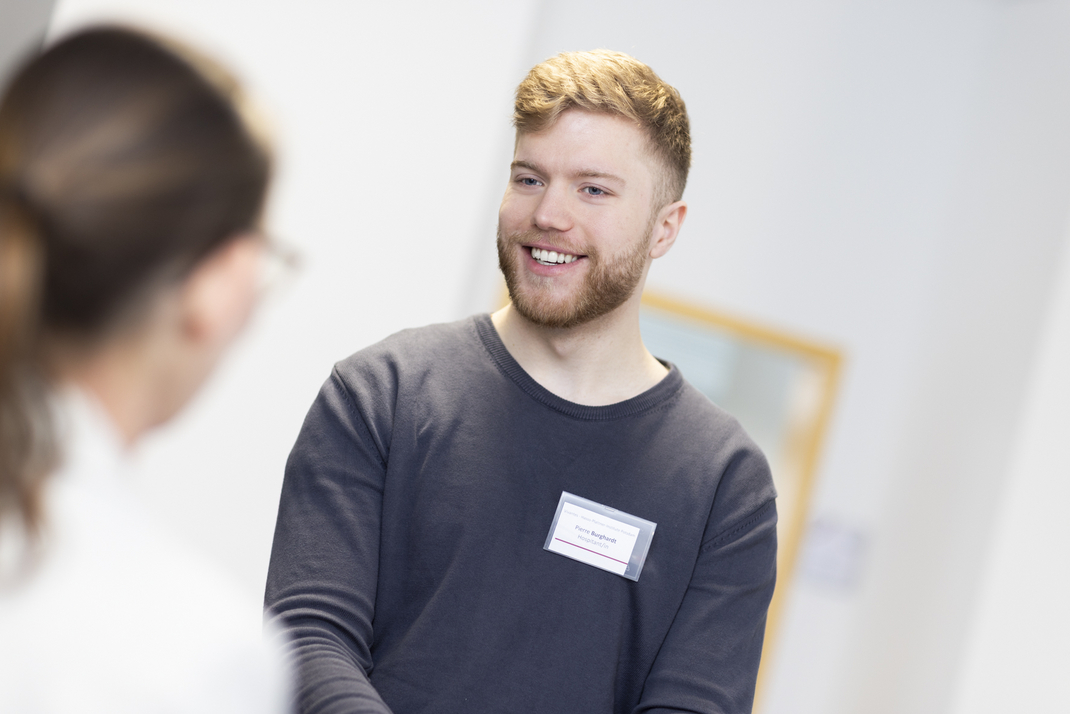 HPI-Masterstudent Pierre
 -
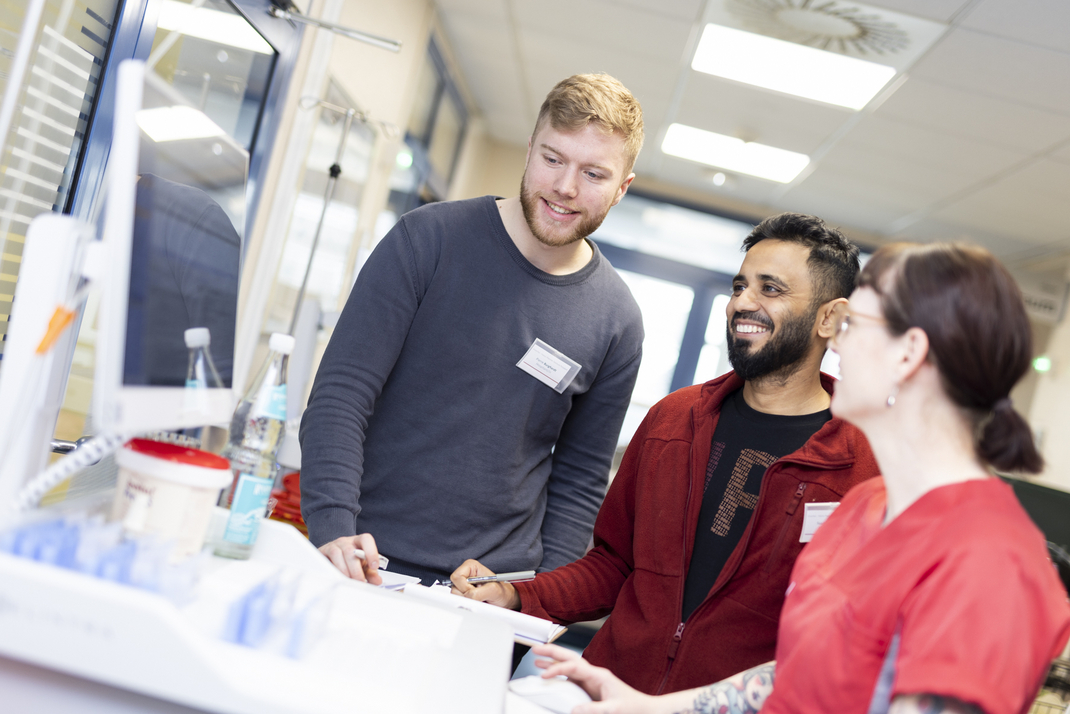 Studierende vom HPI, Hasso-Plattner-Institut, bei der Projektarbeit am Vivantes Klinikum in Berlin-Neukölln, 12.03.25, "Digital Health Spark – Igniting Need-Driven Innovation in Healthcare", Foto: Nicole Krüger
 -
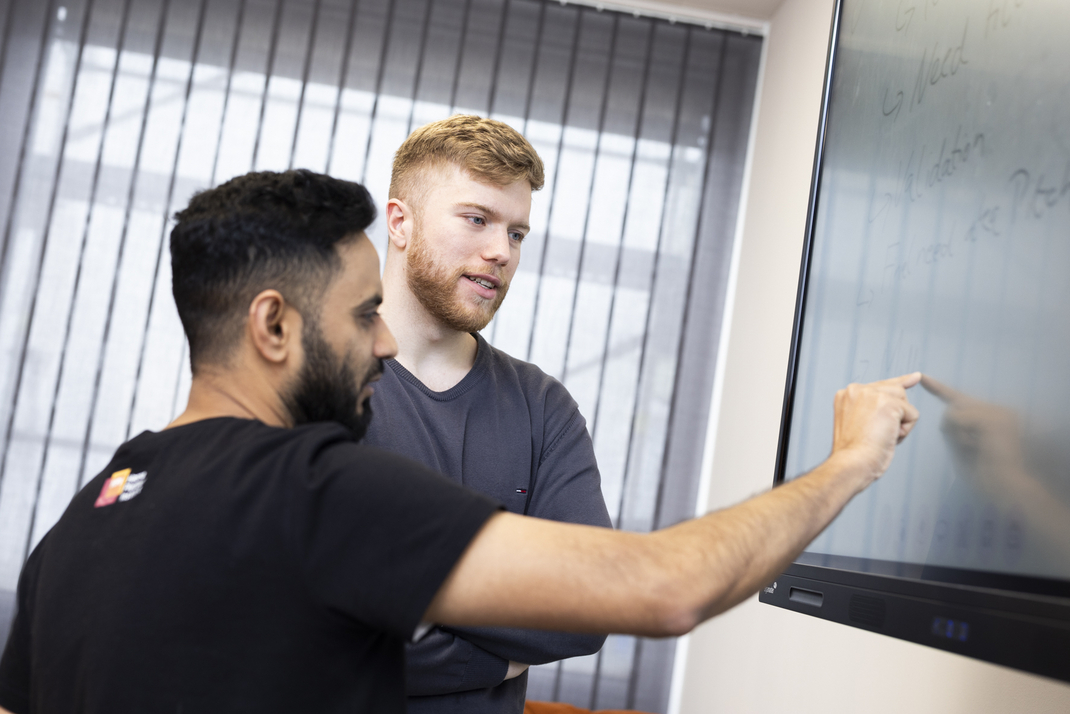 Studierende vom HPI, Hasso-Plattner-Institut, bei der Projektarbeit am Vivantes Klinikum in Berlin-Neukölln, 12.03.25, "Digital Health Spark – Igniting Need-Driven Innovation in Healthcare", Foto: Nicole Krüger
 -
 Studierende vom HPI, Hasso-Plattner-Institut, bei der Projektarbeit am Vivantes Klinikum in Berlin-Neukölln, 12.03.25, "Digital Health Spark – Igniting Need-Driven Innovation in Healthcare", Foto: Nicole Krüger
The aim here, too, is to relieve the burden on the busy hospital staff and to give patients a greater sense of security. “Accordingly, by interacting with the patient, the tool could also identify risks that might lead to delirium. This way, you could say at the team meeting in the morning: Patient XY has talked particularly little for the last few days and has had conversations particularly often that the AI, for example, couldn't really follow. Or mentioned pain particularly often that isn't improving”, says Pierre, taking a look into the future of their idea.
Prof. Dr. Hans-Peter Thomas, Chief Physician of the Geriatric ward, sees the cooperation with the HPI and the Spark Seminar as a great enrichment:
This close cooperation in the hospital does not yet exist in this form. Of course, there is cooperation in the development of software, but I believe that we can achieve a great deal of good by intensifying networking with companies and universities, and by examining research questions from a practical point of view. Because what we really need in Germany is health services research, and IT can play a central role in this.
From idea to foundation
The Digital Health Spark Seminar is designed not only to give students a direct insight into the practical side of things, but also to motivate and empower them to turn their ideas into reality by founding their own company. According to physician Dr. Philipp Stoffers, Strategic Program Manager for Health Innovation at HPI and one of the project initiators, interdisciplinary “interface work” is needed to successfully bridge the gap between the original idea, technical feasibility and patient benefit.
That is why the jobshadowing days are supplemented by plenty of input on Stanford Biodesign and Design Thinking methods, background knowledge on the healthcare landscape and business models. To implement this interdisciplinary approach, the course's teaching team is made up of the Chair of Digital Health Economics and Policy, the HPI d-School and the HPI Engine.
Practical teaching at HPI
The HPI places particular emphasis on the connection between research and practice. The aim is to enable students to create solutions that are people-oriented and offer real added value. Our students regularly give this approach top ratings in the CHE university ranking in the category “Practice orientation in teaching”.
Learn more
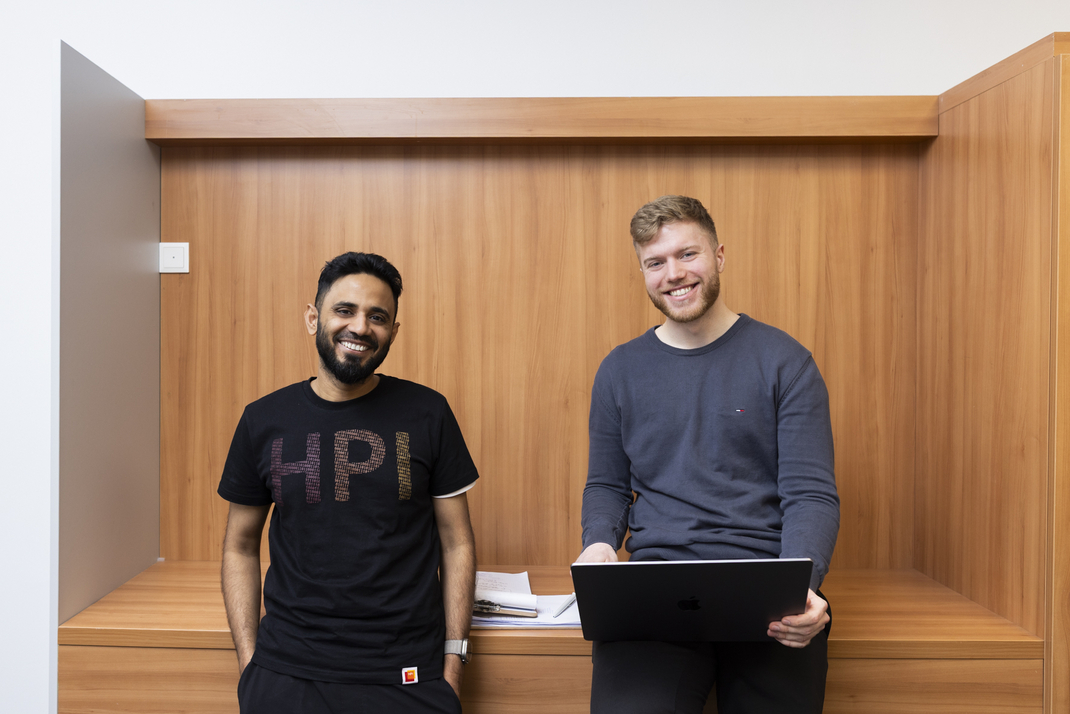
Both student teams can imagine continuing to work on their idea and even founding a company. “This has been a long-standing idea for me personally, but this seminar has defined some practical frameworks to it, such as identifying potential next steps, key contacts, and exploring opportunities like the product builder program. It has empowered me to have a clearer vision about the path forward”, says Eva about the seminar.
“The seminar has greatly encouraged us by providing practical insights into real-life hospital challenges and processes. It has provided us with basic and important concepts of problem identification, observation and validation and has equipped us with concrete steps and knowledge to plan a startup”, says Pierre. His team would like to develop their idea in the next step in the ‘Product Builder’ program of the HPI Engine.
In Benjamin Storek, senior physician of the Geriatric ward, Pierre's team has found an ally who enthusiastically welcomes the students' digital ideas:
I think the path that Vivantes has been following for a few years now is a step in the right direction. And if we now have you as students on board to get input, maybe a start-up will emerge from it, that would be great. I think that was one of the highlights of this year, working with your institute. For sure.
About the Digital Health Spark Seminar
The Digital Health Spark course is offered by the Chair of Digital Health, Economics and Policy of Prof. Ariel D. Stern in cooperation with the Vivantes Clinics. In addition to providing insights into everyday clinical practice, the course also covers concepts of the Stanford Biodesign, design thinking and the fundamentals of the healthcare system. This novel teaching approach is designed to enable students to create people-oriented solutions with real added value and was recently awarded a prize as an innovative teaching project by the University of Potsdam.
The seminar was initiated by Dr. Philipp Stoffers and the Core Teaching Team around Linea Schmidt and Constanze Cavalier, as well as Jens Klaubert and Gino Liguori from the Vivantes healthcare group.
More news



Last change: 11/06/2026, Patrick Lenz