Project Case

Cheese opens the market: Hochland relies on Design Thinking for the future

User-centered design always in mind

“Establish Design Thinking in your company and ensure innovative solutions in the long term!” With this design challenge, the food company Hochland tested new ways of staying strong and sustainable with us at the HPI d-school. The traditional family business successfully experimented with the Design Thinking approach and recognized its potential. It anchored it in its methodology toolbox.

Interesting for

Entrepreneurs, Executives, Manager, Professionals

Challenge

To remain strong and fit for the future, the Hochland company set itself the following Design Thinking challenge: “Establish Design Thinking in your company and ensure innovative solutions in the long term!”

Starting point

The learning curve at Hochland is too flat.

The German company Hochland SE is one of the largest private cheese manufacturers in Europe and is represented by subsidiaries on several continents.

“We have well-established and functioning processes in our traditional company. Nevertheless, the learning curve for projects was sometimes too flat,” notes Elena Zloteanu, a long-standing employee who is now Design Thinking program manager at Hochland. ”When developing new products, for example, we didn't always manage to get our customers on board, and we also had product flops.” This was not only frustrating for the highly motivated product managers, it was also not very efficient and therefore expensive.”

The company wanted to establish agile working not only in product development, but for all innovation projects. When Hochland tested our innovation method, the strong user focus was particularly well received. In the meantime, Hochland has systematically implemented HPI Design Thinking in the company.

Aha-moments

Trained Design Thinking ambassadors carry the change throughout the entire company.

Hochland decided to introduce Design Thinking into the company through a decentralized network of ambassadors. To do this, we at the HPI d-school trained ten Hochland employees in Design Thinking. These employees came from different departments and locations in various countries.

Employees who were open to new and playful approaches were selected as future ambassadors for Design Thinking. The Design Thinking training reinforced this trait and methodically underpinned it.

The employees from Germany, Russia, Romania and Poland took on their new role as Design Thinkers in addition to their existing roles. They continued to be professionally involved in the company. This enabled the ambassadors to become active in a wide range of areas and in their work contexts – with small impulses or more extensive interventions.

To establish Design Thinking in the company, it was important to make the process and results visible: “With the Design Thinking projects, we were therefore on the road a lot instead of ‘hiding’ in meeting rooms.

Colleagues see us in a brainstorming session or building prototypes in the kitchen – and that's how you start a conversation or get your first tester. The inhibition threshold drops, and curiosity is aroused.”

Initial successful practical examples finally helped to anchor Design Thinking in the company: “If a project team has been working on a topic for quite some time but has reached an impasse, we are sometimes called in. Then a small intervention is often enough to help them break the deadlock and create space for creativity,” Zloteanu reports. ”And once the Design Thinkers have proven themselves as troubleshooters, their colleagues recognize the value of the approach and approach the ambassadors the next time a new project is set up.”

The number of interventions by internal design thinkers at Hochland has steadily increased. Elena Zloteanu alone has given over 60 internal Design Thinking workshops in the last five years. In addition, numerous workshops were organized by the ambassadors in various countries.

Case HPI Hochland

Impact

The new mindset leads to a successful future.

In its “Vision 2025,” Hochland emphasized its user-centered approach. Management views Design Thinking as an important building block in achieving this goal. Based on their work, the ambassadors confirm that the innovation method is firmly anchored in the company today.

For Elena Zloteanu, Design Thinking is more than a toolset: “It's more of a mindset – that's where a lot of its power lies.” This mindset is increasingly finding its way into the corporate culture through the ambassadors' work and is helping to fulfill the vision, says Elena Zloteanu. The Design Thinking mindset is now evident in a wide range of projects. These include collaborations with the Natec subsidiary's mechanical engineers and the Human Resources Department.

A project on Generation Z has just recently been launched. It focuses on future generations of consumers who are already influencing today's. Hochland intensively involves young people as customers and in the project team. Elena Zloteanu is enthusiastic about the scope of this initiative: “This goes far beyond market research: we are building relationships and gaining deep insights into the mentality and needs of our future customers. We are a company with tradition but still clearly future-oriented.

Newsletter

Sign up for our newsletter and receive the latest updates about the HPI d-school directly in your mailbox.

Register here

More Use Cases

  • Use Case
    VoiceChain - Foundations for Design Thinking
    What happens when voices can be cloned to sound deceptively real, and no one can be sure what’s truly authentic anymore?
    • Academic Programs
    • Design Thinking
    • Innovation
  • Use Case
    CO₂ offsetting is considered a key tool in climate protection – yet many people barely understand how it works. Students developed a playful format to raise awareness among company employees about emissions.
    • Academic Programs
    • Design Thinking
    • Sustainability
  • Use Case
    HPIdschool Use Case Ecosia Team 4 Planet Plates
    What do search engines and food have in common? Students designed a tool for Ecosia that nudges users towards climate-friendly nutrition.
    • Academic Programs
    • Design Thinking
    • Sustainability
  • Use Case
    Montessori - Plan M - MonteLab
    How can children be involved in designing their school right from the start? In a new Montessori school in Neumarkt, kids were able to incorporate their own ideas.
    • Academic Programs
    • Design Thinking
  • Use Case
    Use Case Design Thinking Museum Barberini
    How can a traditional art museum cater to the interests of young people? In the Museum Barberini, digital and analog tools are combined to create inspiring and immersive creative experiences.
    • Academic Programs
    • Design Thinking
    • Innovation
  • Use Case
    In collaboration with the Würth Elektronik eiSos Group, we developed innovative new work concepts, whose solutions were integrated into the new High-Tech Innovation Center at the company's site in Munich-Freiham.
    • Academic Programs
    • Design Thinking
    • Innovation
  • Use Case
    Use case rethink vacuuming Robert Thomas AG
    How can vacuuming become more hygienic, easier – and even enjoyable? Students from HPI d-school joined forces with Robert Thomas AG to rethink vaccuming.
    • Academic Programs
    • Innovation
    • Design Thinking
  • Use Case
    Use Case Digitale Probierstadt Gütersloh
    The city of Gütersloh was looking for a concept to make digital education more accessible. A team developed the “Digital Trial City” prototype, which introduces people to new technologies.
    • Academic Programs
    • Design Thinking
    • Digital upskilling
  • Use Case
    Prototype Hans
    A cold entrance area without orientation and work opportunities? A team from the HPI d-school developed a solution that makes libraries more modern, functional and inviting.
    • Academic Programs
    • Design Thinking
  • Use Case
    How an AI lab and a chatbot connect SMEs and startups – for real solutions instead of just buzzwords. A project with the KI-Service Zentrum Berlin-Brandenburg.
    • Design Thinking
    • Academic Programs
    • Artificial intelligence
  • Use Case
    Policy Transformation Lab
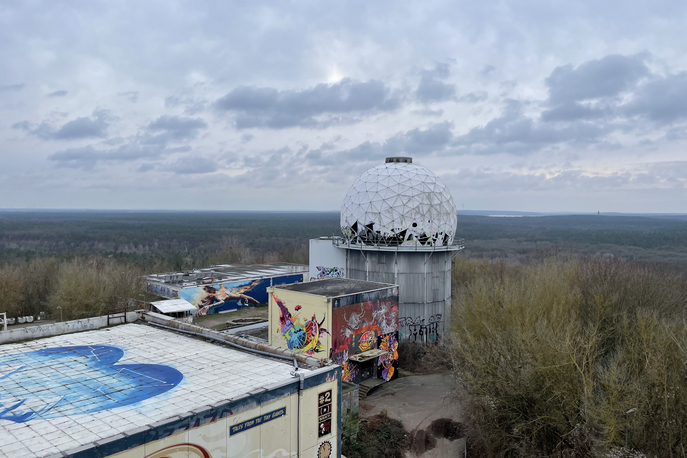
    Together with the Teufelsberg KG investment company, we developed solutions for utilizing the Teufelsberg. In the end, a concept for a Policy Transformation Lab was developed to inspire political change.
    • Academic Programs
    • Design Thinking
    • Sustainability
  • Use Case
    Simulation Routen Guide
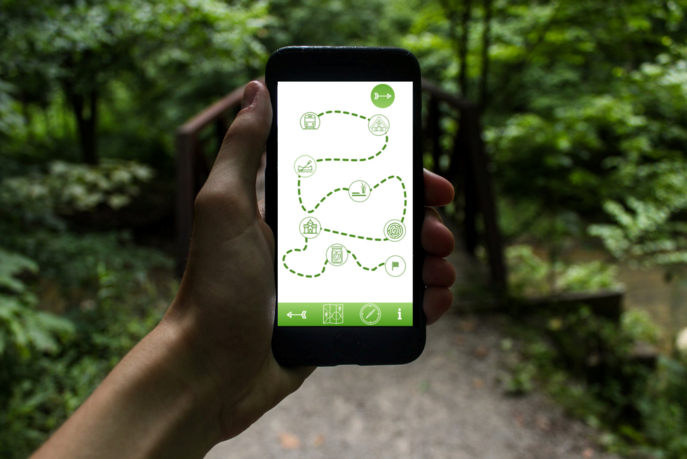
    Spontaneously to Lübben - and then? A digital scavenger hunt makes exploring the town easier and more exciting. A team from the HPI d-school developed a playful solution for guests and locals.
    • Design Thinking
    • Academic Programs
  • Use Case
    Man holds smartphone
    Company cars are a thing of the past - modern business travelers need flexible alternatives. A team from the HPI d-school developed an app that combines different modes of transportation and makes mobility more convenient.
    • Academic Programs
    • Design Thinking
    • Sustainability
  • Use Case
    Prototyp
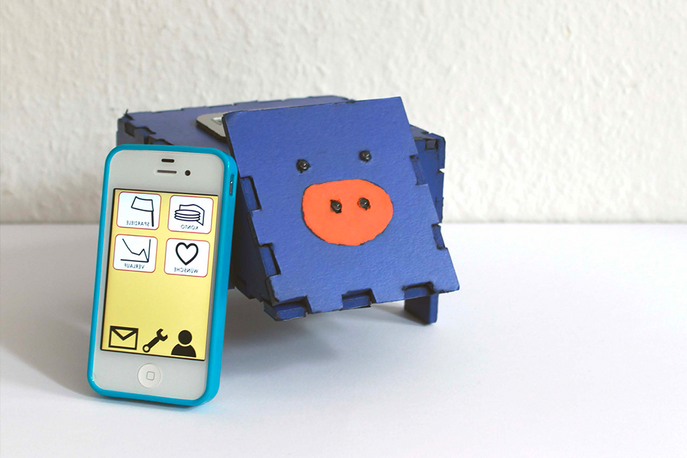
    A digital piggy bank for children? What began as an idea for teenagers developed into a playful financial companion for younger children. The result: a clever solution with a real impact.
    • Academic Programs
    • Design Thinking

Contact

Do you have any questions? We will be happy to help you.

Dr. Julia Oberhofer
Program Manager
Mitarbeiter:innenfoto