Project Case

Innovative solutions for a wastewater problem in Ghana with Design Thinking

Intro

Is time an enemy or a driving force for innovations that promote sustainability?

The intercultural project in Ghana integrated Design Thinking into the research design of the study. Daily check-ins strengthened empathy and team cohesion and promoted the involvement of everyone, creating trust and intercultural bridges. The focus was on the needs of the target groups, especially women. With the help of prototyping, realizable solutions for improving sanitary facilities were developed in the shortest possible time.

Challenge

In all types of intercultural projects, one question always arises: Do we really understand the culture and needs of the people involved?

This question becomes even more important when dealing with a sensitive topic. This was the case for the project of the social innovation agency Archipel&Co and its project partner Purpose House. The aim of the research was to support the introduction of innovative sanitary facilities to reduce the number of open toilets and achieve Goal 6 of the UN Sustainable Development Goals: Sanitation.

Starting point

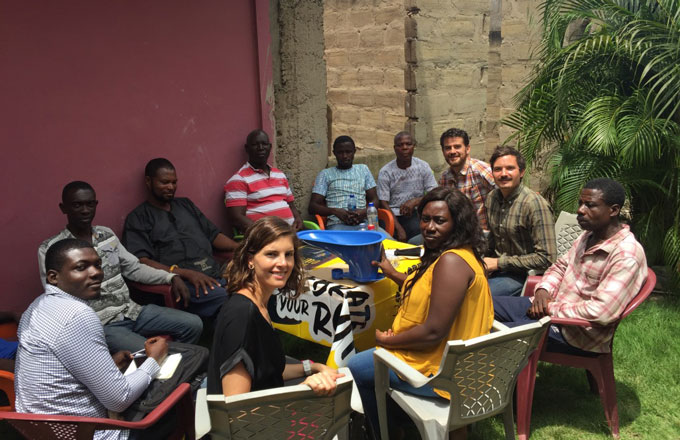
In order to truly understand the needs, desires and decision-making processes of the target group in Ghana, Justin DeKoszmovszky (Managing Partner of Archipel&Co), Laura Arribas (Senior Consultant at Archipel&Co), and Vittorio Cerulli (Founder of Purpose House) planned a field research in Ghana.

The project presented various challenges. Not only did the team have to take into account the intercultural context, but the topic itself was also very sensitive. Above all, Vittorio Cerulli and his team had only nine days to gain a qualitative understanding of the problem and provide a clear orientation for solving it. Normally, ethnographic field trips of this kind take up to two months. How could the team accomplish this research in just nine days?

Martina Zelt and Purpose House began working together at the Impact Hub in Berlin while studying Design Thinking at the HPI d-school. When Martina first talked about Design Thinking, Vittorio, who has over ten years of experience in research and innovation, was immediately fascinated by the concept: “What sparked my interest from the beginning was that Design Thinking is outcome-oriented, it seemed very pragmatic, and it does something I like to do: it puts people first.”

When Vittorio heard that it was possible to achieve valuable results in a very short time, he was immediately keen to incorporate Design Thinking into the qualitative approach and take on this public health challenge.

The project with the qualitative approach receives valuable support from Archipel&Co, a team with decades of experience helping clients understand and do business sustainably with the lower-income segments in emerging markets. Justin and Laura, who designed the entire study, aimed to gain qualitative and quantitative insights for a scaled rollout of the sanitation innovation.

Aha-moments

During the field phase, Martina and Vittorio created a detailed plan for the nine days available. "I had to make sure that everyone involved, and especially Vittorio, who was leading the Design Thinking process on site, really understood the “why” behind each of the Design Thinking steps. This is the only way to deal with unexpected changes in practice," said Martina, who was unable to take part in the fieldwork herself.

On the ground: innovating and co-creating in Ghana
"This project was special," recalls Laura Arribas of Archipel&Co. “From the outset, it was clear that everyone on the team was equally involved, and the excitement was palpable.”

The core team was international and multidisciplinary – the perfect set-up for Design Thinking: Laura (originally from Spain) and Justin (originally from the United States), Vittorio (originally from Italy), the Ghanaian research group El-Parah with Reuben (project lead), Henry (recruiter) and Jumima (translator), Richard and Rachel from the Ghanaian NGO Total Family Health Organization.

Team dynamics turned upside down
What changed the nature of teamwork at first glance was the "check-in" with the team at the beginning of each day and the "check-out" at the end – two steps that play an important role in the Design Thinking process. "Both steps made an enormous difference for the research and especially for the team dynamics," says Vittorio. Check-in was especially important for the human connection in the team, while check-out was helpful for our reflection and synthesis.

In typical field trips, Vittorio had the role of the researcher leading the project and sharing his interpretations only during the debriefing with the team. “It's as if the researcher almost magically gains insights from random conversations – and rarely could we see how that happens. This time, however, we did it together. I included everyone because I needed their insights and commitment to the entire Design Thinking process. As a result, the team was much more engaged; it was also their project.”

Building bridges – intercultural collaboration at its best
Jumima, who was originally only intended as a translator, changed completely during the project. "When she realized that we appreciated her opinion (and not just her translation) and that we wanted her as part of the team, she really opened up," says Vittorio. In doing so, she did much more than translate the language and was able to bridge the intercultural divide in a much more empathetic way. "You could see her confidence growing day by day. Without the ownership she has taken, the whole team would never have been as successful," says Vittorio.

The interviews: how do you talk about a sanitary situation?
To understand the situation regarding health care and the problem of open defecation, the team had to talk to many different people and interest groups. The focus was on the different target groups. Both women and men were of great interest, with a focus on their role within the family, their dreams for the future, their fears, but also their needs in terms of sanitation and their decision-making power within the family.

Furthermore, the homeowners were an interesting target group. Since Ghana is a deeply religious country where a collective culture is lived, the team also wanted to talk to religious leaders, village elders and chiefs to gain a better understanding of the issue. 

Empathy: The guiding principle of all qualitative research, and for this project in particular.
A high degree of empathy is always required in the first two phases of the Design Thinking process, "understanding" and "observing." In this project, empathy was particularly important because it is a very sensitive topic. "There were also some tense moments. We made sure to build empathy and often justified our questions by saying that we are not Ghanaians and do not understand the topic well enough. We also found analogies between things that happen in our lives and in theirs," said Vittorio.

Remote coaching at its best
During the project, something happened that Vittorio later described as "the second wave of trust." The first wave of trust in Design Thinking arose when Martina presented the method and the way of thinking. Then, halfway through the project, he reached out to Martina and sent her the interim reports and part of the synthesis.

"When I received her comments on my work, I experienced the second wave of trust. I understood that some of the steps within the method had to be followed exactly, and I noticed the difference it made when you did," said Vittorio.

Key insight: the role of women in addressing the sanitation challenge
One of the key insights was the role of women in solving the sanitation challenge. Women are the ones who feel the need for a hygienic sanitation solution the most, and they are the ones most affected when it is not provided. At the same time, they are usually not the ones who are allowed to make the final decision. This was always the husband's responsibility, even if the women in question had their own money. It's simply not their decision, because the issue of hygiene is strongly seen as a man's job.

Prototyping: “How could this have happened in just 20 minutes?”
"When it came to ideation and prototyping, it was almost like the moment of truth had arrived," recalls Vittorio. After all the interviews and insights gathering, we all started a creative ideation session, everyone was really involved, and we came up with new and actionable ideas.

"To be honest, I expected a long and boring qualitative briefing with lots of text ... instead there were human stories, images and prototyping. It was fun," Rachel sums up the day.

Justin from Archipel&Co added: "I have been to other prototyping sessions, but this one was particularly impactful. In just a few hours, we created three valid and promising prototypes that meaningfully reflect the days of research." Jumima from El-Parah adds: “And there was no need to repeat ourselves over and over again. The team was already on the same page.”

Impact

The Design Thinking process as a field research method fostered team cohesion and empathy: Daily check-ins strengthened the dynamic, and the involvement of all team members, including translators, created trust and intercultural bridges. Prototyping was used to develop concrete solutions in the shortest possible time, solutions that can generate sustainable impact.

Newsletter

Sign up for our newsletter and receive the latest updates about the HPI d-school directly in your mailbox.

Register here

More Use Cases

  • Use Case
    VoiceChain - Foundations for Design Thinking
    What happens when voices can be cloned to sound deceptively real, and no one can be sure what’s truly authentic anymore?
    • Academic Programs
    • Design Thinking
    • Innovation
  • Use Case
    CO₂ offsetting is considered a key tool in climate protection – yet many people barely understand how it works. Students developed a playful format to raise awareness among company employees about emissions.
    • Academic Programs
    • Design Thinking
    • Sustainability
  • Use Case
    HPIdschool Use Case Ecosia Team 4 Planet Plates
    What do search engines and food have in common? Students designed a tool for Ecosia that nudges users towards climate-friendly nutrition.
    • Academic Programs
    • Design Thinking
    • Sustainability
  • Use Case
    Montessori - Plan M - MonteLab
    How can children be involved in designing their school right from the start? In a new Montessori school in Neumarkt, kids were able to incorporate their own ideas.
    • Academic Programs
    • Design Thinking
  • Use Case
    Use Case Design Thinking Museum Barberini
    How can a traditional art museum cater to the interests of young people? In the Museum Barberini, digital and analog tools are combined to create inspiring and immersive creative experiences.
    • Academic Programs
    • Design Thinking
    • Innovation
  • Use Case
    In collaboration with the Würth Elektronik eiSos Group, we developed innovative new work concepts, whose solutions were integrated into the new High-Tech Innovation Center at the company's site in Munich-Freiham.
    • Academic Programs
    • Design Thinking
    • Innovation
  • Use Case
    Use case rethink vacuuming Robert Thomas AG
    How can vacuuming become more hygienic, easier – and even enjoyable? Students from HPI d-school joined forces with Robert Thomas AG to rethink vaccuming.
    • Academic Programs
    • Innovation
    • Design Thinking
  • Use Case
    Use Case Digitale Probierstadt Gütersloh
    The city of Gütersloh was looking for a concept to make digital education more accessible. A team developed the “Digital Trial City” prototype, which introduces people to new technologies.
    • Academic Programs
    • Design Thinking
    • Digital upskilling
  • Use Case
    Prototype Hans
    A cold entrance area without orientation and work opportunities? A team from the HPI d-school developed a solution that makes libraries more modern, functional and inviting.
    • Academic Programs
    • Design Thinking
  • Use Case
    How an AI lab and a chatbot connect SMEs and startups – for real solutions instead of just buzzwords. A project with the KI-Service Zentrum Berlin-Brandenburg.
    • Design Thinking
    • Academic Programs
    • Artificial intelligence
  • Use Case
    Policy Transformation Lab
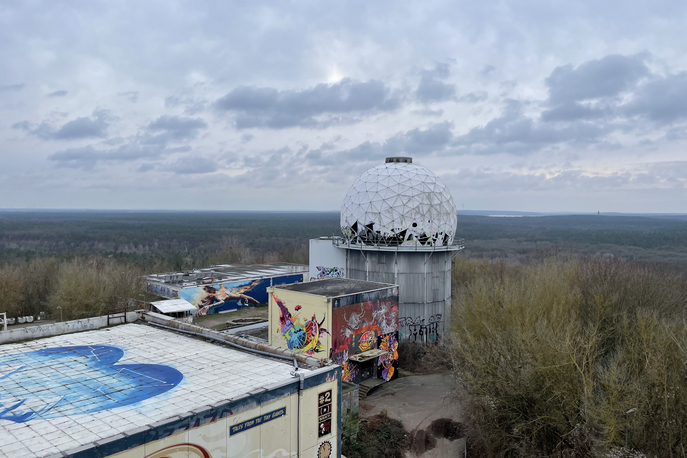
    Together with the Teufelsberg KG investment company, we developed solutions for utilizing the Teufelsberg. In the end, a concept for a Policy Transformation Lab was developed to inspire political change.
    • Academic Programs
    • Design Thinking
    • Sustainability
  • Use Case
    Simulation Routen Guide
    Spontaneously to Lübben - and then? A digital scavenger hunt makes exploring the town easier and more exciting. A team from the HPI d-school developed a playful solution for guests and locals.
    • Design Thinking
    • Academic Programs
  • Use Case
    Man holds smartphone
    Company cars are a thing of the past - modern business travelers need flexible alternatives. A team from the HPI d-school developed an app that combines different modes of transportation and makes mobility more convenient.
    • Academic Programs
    • Design Thinking
    • Sustainability
  • Use Case
    Prototyp
    A digital piggy bank for children? What began as an idea for teenagers developed into a playful financial companion for younger children. The result: a clever solution with a real impact.
    • Academic Programs
    • Design Thinking

Contact

Do you have any questions? We will be happy to help you.

Trixi Gumbel
Project Development
Mitarbeiter:innenfoto
Charlotte Dreyer
Project Development
Mitarbeiter:innenfoto
General Inquiries
Contact us for every question.
Placeholder image for contacts