Different skilled workers need to be deployed flexibly, while at the same time employees want more co-determination. The HPI d-school's Design Thinking team took on this challenge and developed a solution for Rolls Royce.
Accessibility Settings
It is important to us that you have a smooth navigation experience on our website. To ensure this, you can set global settings for your view of the website here.
Animations
We use some animations on this website. If you find these annoying, you can switch them off here at any time.
Different skilled workers need to be deployed flexibly, while at the same time employees want more co-determination. The HPI d-school's Design Thinking team took on this challenge and developed a solution for Rolls Royce.
Rolls Royce's challenge to the Design Thinking team was: “Redesign the shift planning experience for workers, team leaders, and production planners to create a more flexible and effective working environment in a collaborative way.”
Shift planning in production is a real challenge! Different stations require specialized personnel, while the three-shift system with shift handovers and regulations presents additional hurdles. What's more, personnel planning has to be constantly adapted – depending on the availability of parts and modules. At the same time, employees want more co-determination in order to achieve a better work-life balance. Reconciling all these requirements and finding a solution that is both efficient and fair for everyone involved – that is what Rolls Royce hoped the HPI d-school team would do.
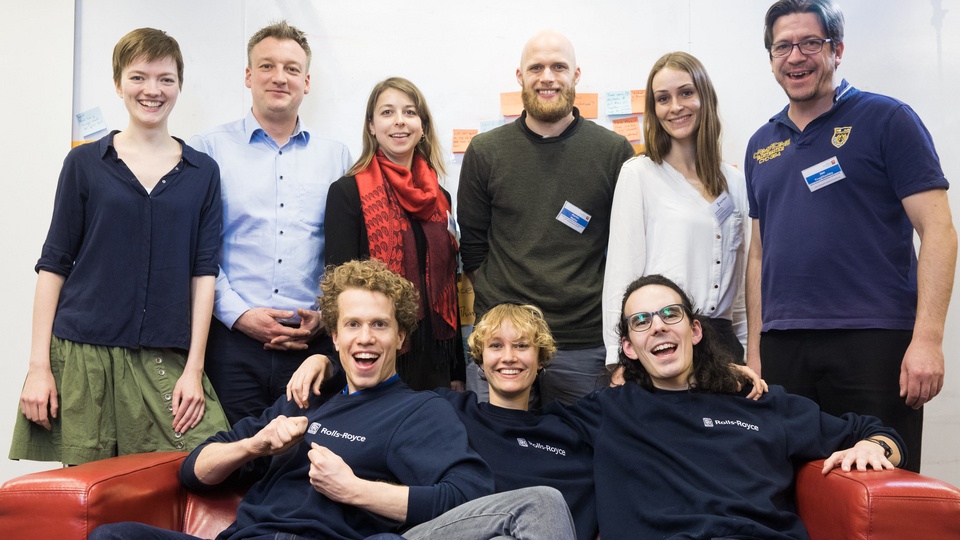
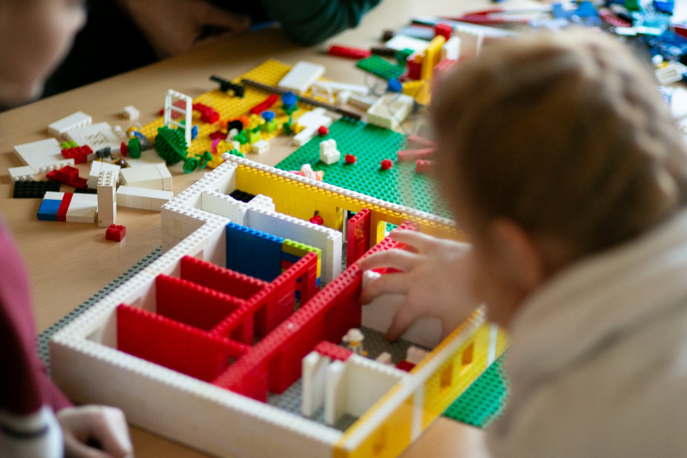
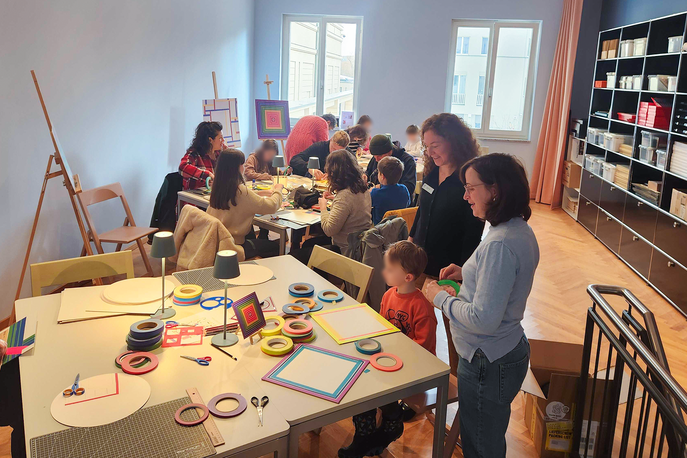
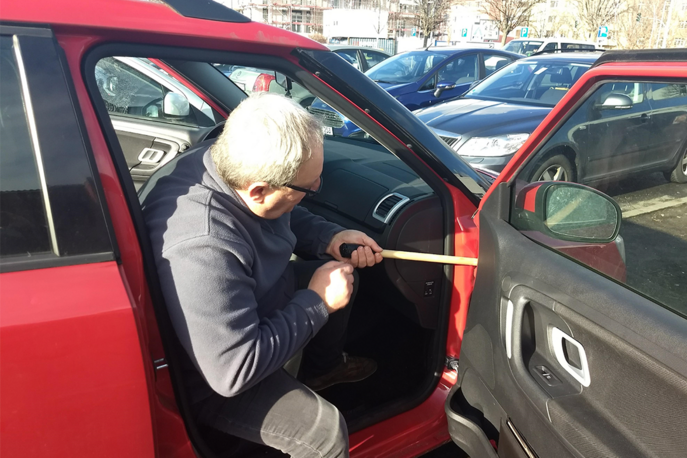
The student team first delved deep into concepts such as New Work, self-organization and flexible working hours. They then moved on to the next phase of the Design Thinking process: Interviews with employees from various departments at Rolls Royce. It quickly became clear that there was a great desire for a standardized system for shift planning and task coordination across all departments. At the same time, it became clear that although many employees in production were generally satisfied with the shift planning, they would still like more flexibility and individual customization options. In several co-creation sessions, the students and employees brought their findings together and developed initial solutions. The exchange between employees from different departments was particularly valuable. In some departments, this took place for the first time in this form. This resulted in a better mutual understanding of the respective challenges and needs, which took the collaboration to a new level.
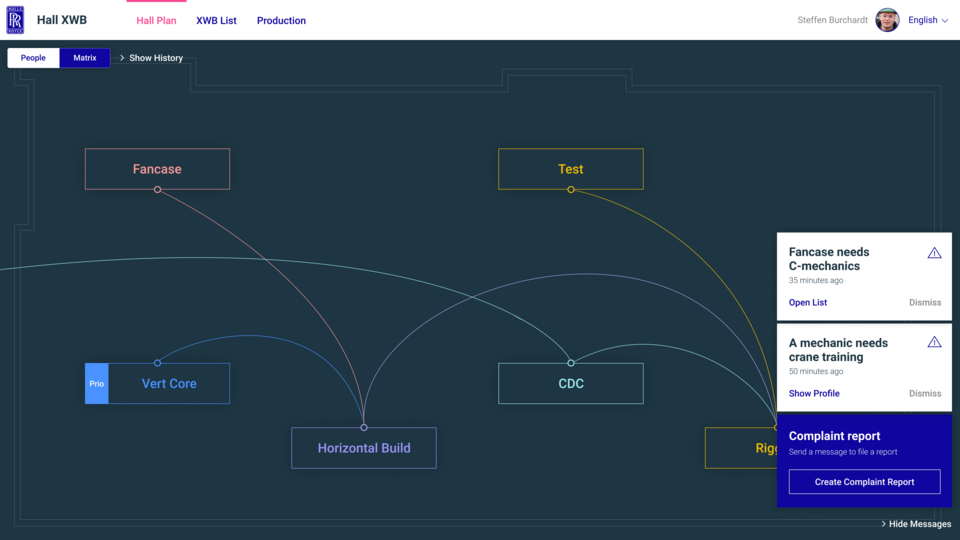
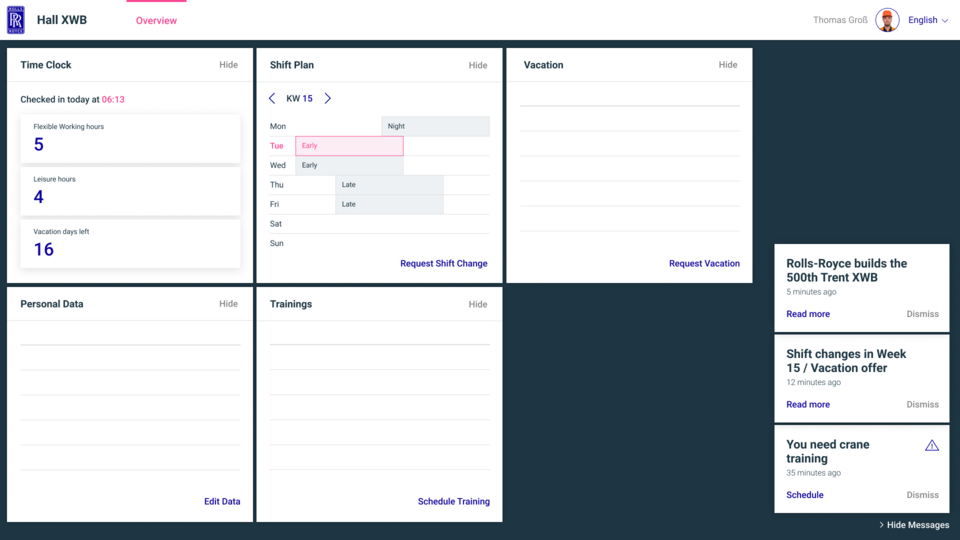
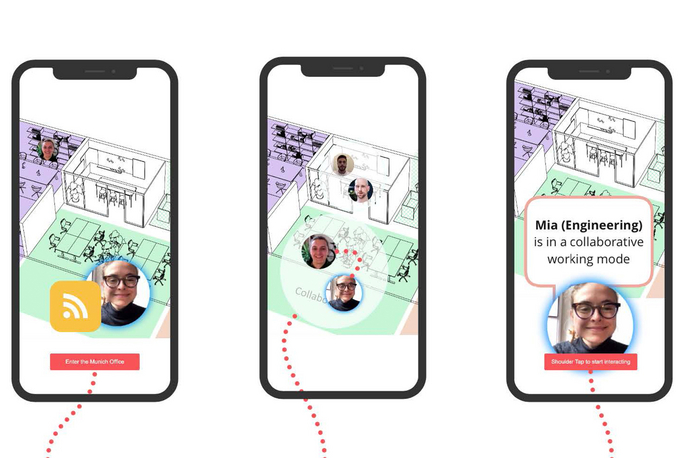
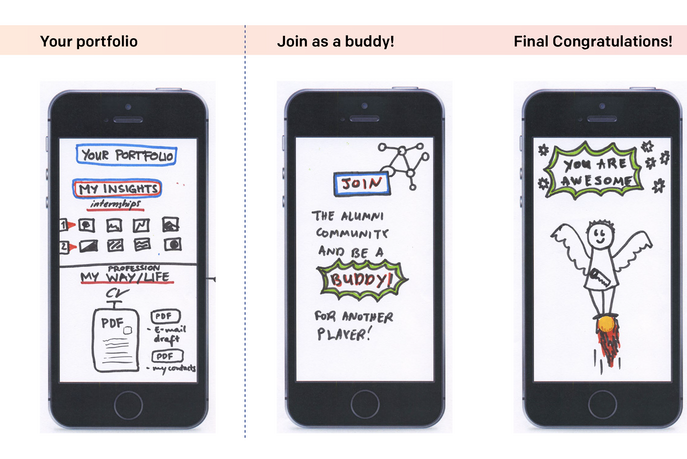
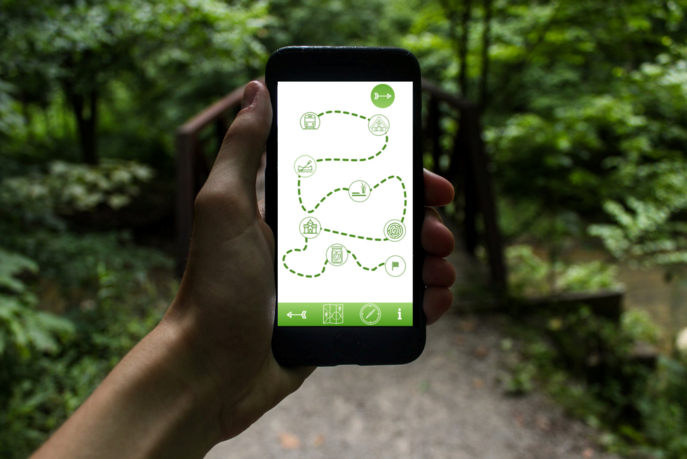
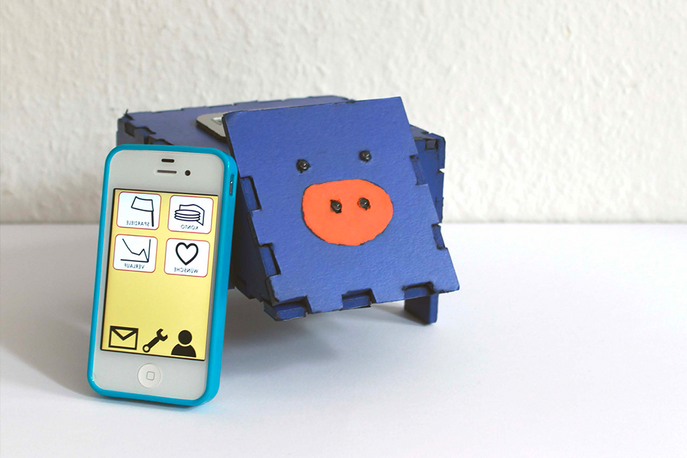
The students developed a prototype for a digital information hub that makes it easier for production employees and team leaders to start their shift. When they log in, they automatically receive all relevant information for their shift - from current tasks to hours worked, upcoming training and remaining vacation days.
The software required for this was developed in cooperation with the Fraunhofer Institute in Leipzig.
Sign up for our newsletter and receive the latest updates about the HPI d-school directly in your mailbox.
Register here