

The conference focused on the question: How can Europe gain sovereignty in the field of artificial intelligence?
As AI reshapes many areas of our everyday lives, the need for true technological sovereignty has never been more urgent.
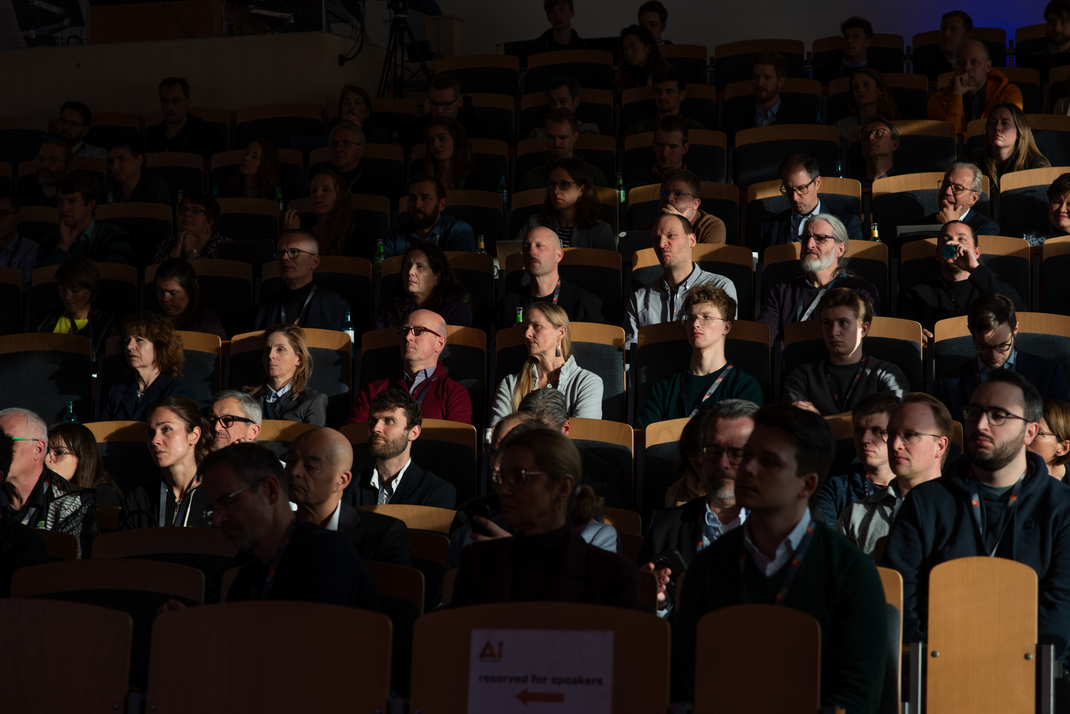
Under the motto “Shaping AI Sovereignty,” the AI@HPI Conference 2025 addressed this central issue of our time: establishing a framework for artificial intelligence that is innovative, value-oriented, and future-proof. More than 300 people from various fields – research, business, and politics – registered for this three-day event on the HPI campus.
Conference 2025
Kick-off
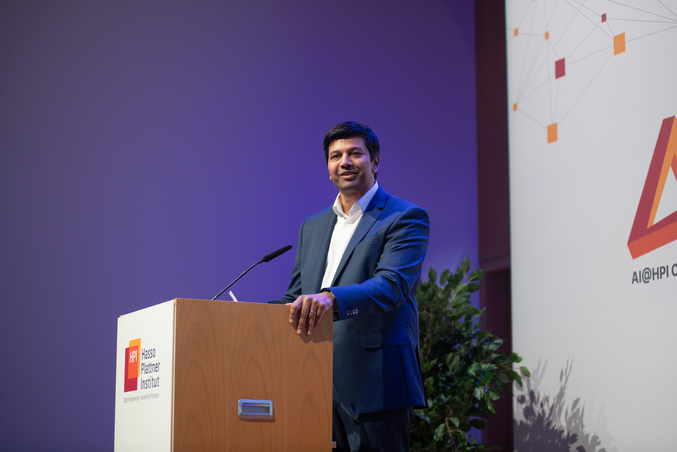
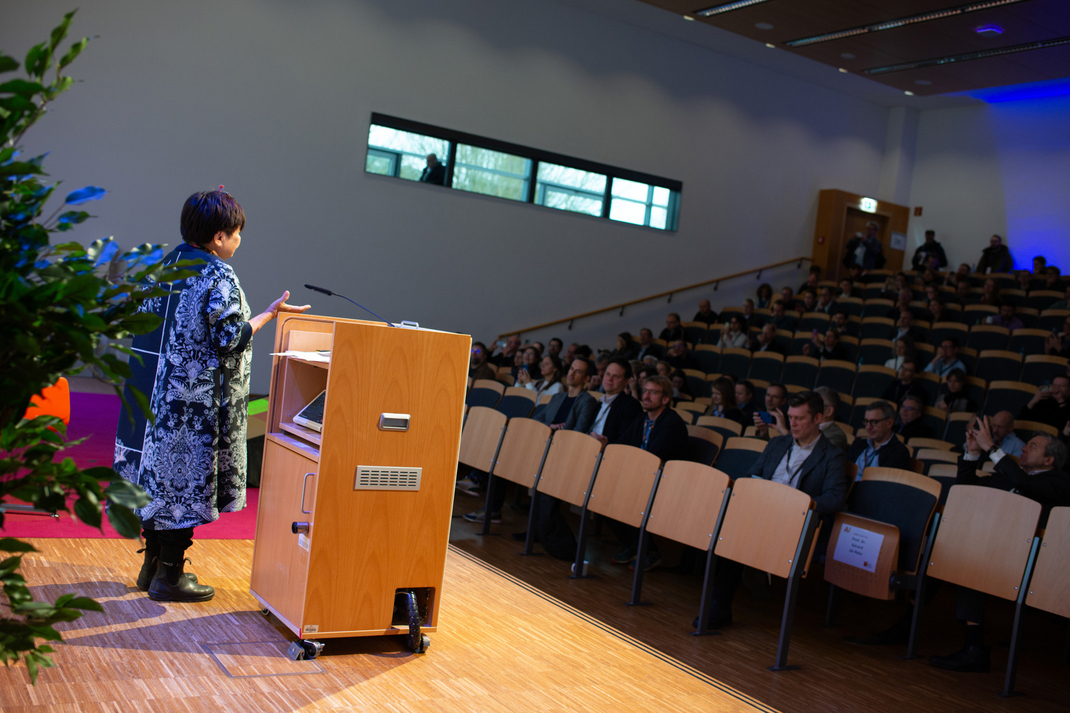
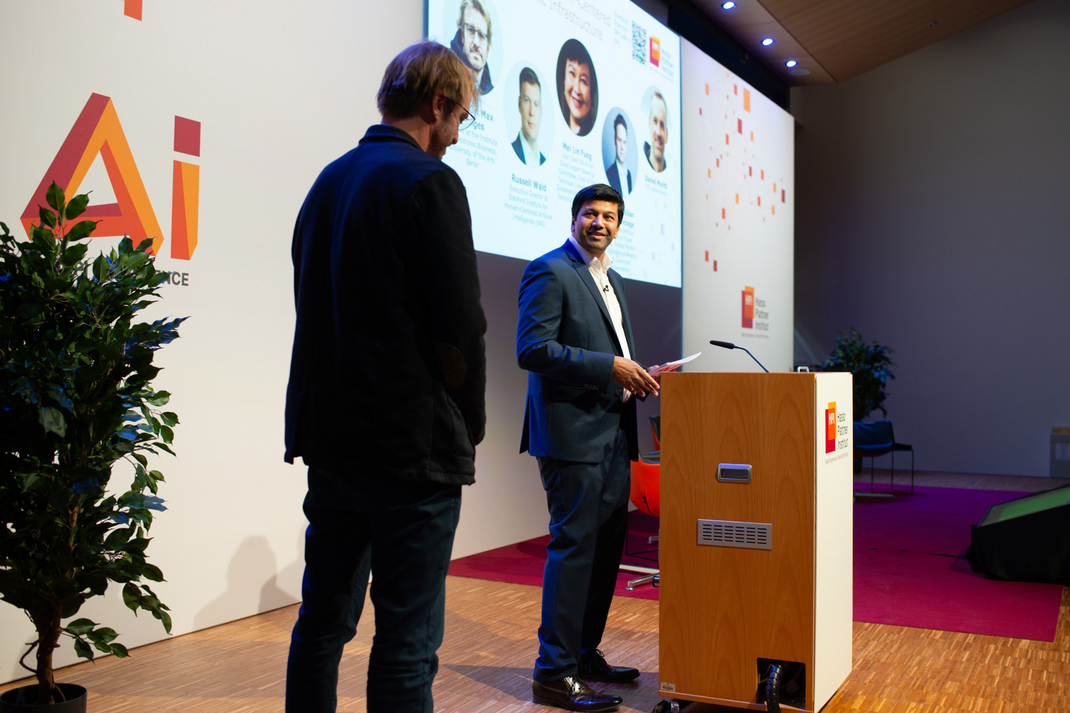
Conference host Prof. Gerard de Melo, head of the HPI department “Artificial Intelligence – Intelligent Systems,” welcomed the audience in Lecture Hall 1. In his opening speech, he emphasized that when planning the conference months ago, the team had no idea how relevant the motto would actually become. The issue of sovereignty is not just an academic question or a question for industry. It is a question that affects everyone's everyday life. Ultimately, the question is: what kind of world will we live in?
Comments from the conference
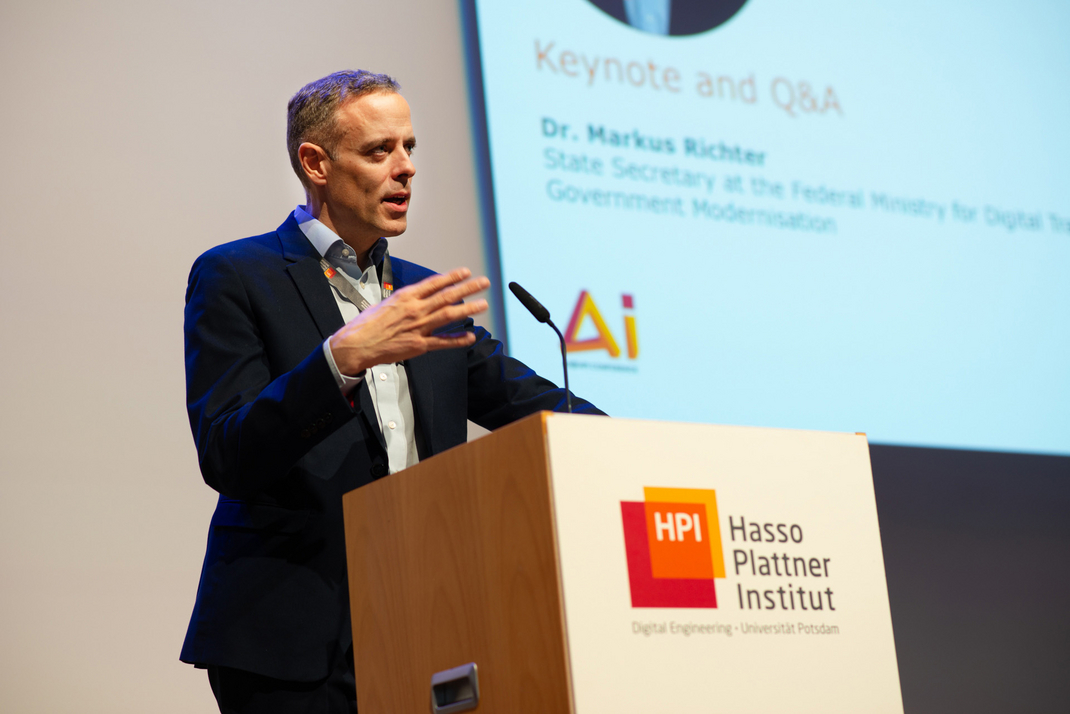
Dr. Markus Richter, State Secretary at the Federal Ministry of Digital and Public Service, agreed with this analysis in his keynote speech. He emphasized that the federal government supports all those who are driving this innovation forward in Europe. “When we talk about sovereignty, we are talking about options.” Germany in particular has excellent expertise in this area. The goal must be to create an environment in which business models can also emerge in Europe.
The State Secretary called on startups and companies to form appropriate alliances. The federal government also intends to take coordinated action.
State Secretary Richter announced that the Federal Ministry of Digital Affairs would in future be given a right of veto over IT projects from other ministries. The aim is to bundle and control IT spending and digital projects across departmental boundaries: instead of each ministry tinkering with its own solutions, compatibility, efficiency, and a uniform strategic orientation should be ensured centrally. The Digital Ministry's right of approval will start with artificial intelligence applications, Richter said.
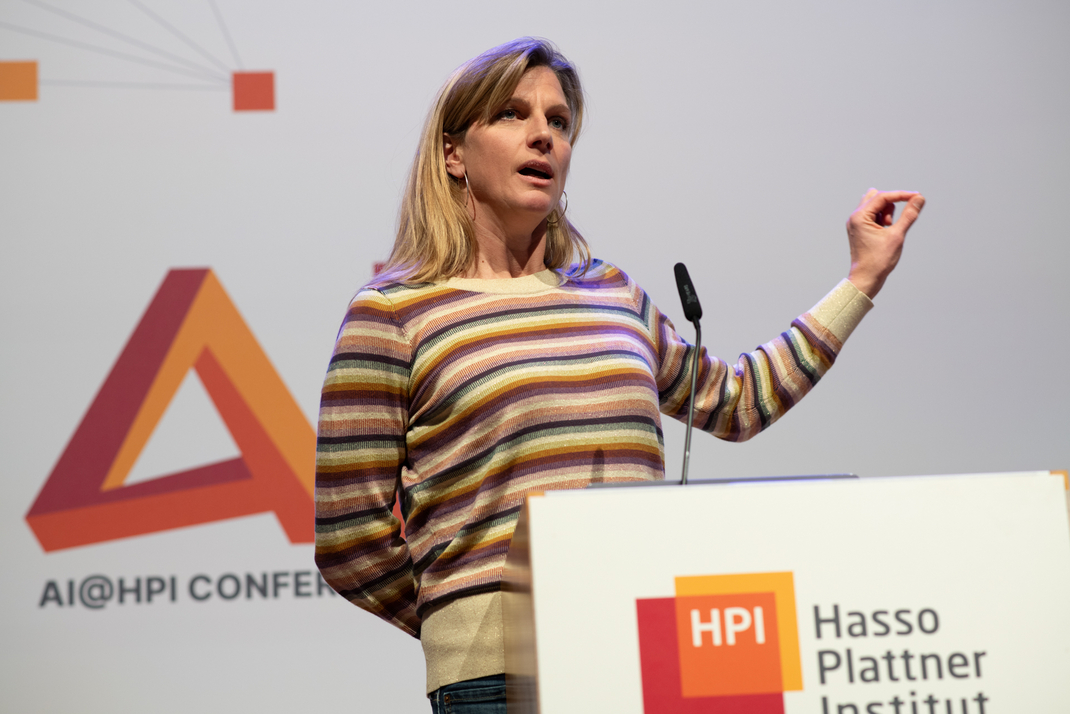
Prof. Dr. Maja Göpel, an expert in sustainability policy and transformation research, made it clear that more than technological innovation is needed if we really want AI to improve our lives. We need a clear purpose – a goal that goes far beyond efficiency and growth – and AI systems that are guided by human values, sustainability, and the common good.
In his keynote speech, Prof. Dr. Holger Hoos, Alexander von Humboldt Professor of Artificial Intelligence, spoke about the future of AI “Made in Europe.” Europe is not yet on the right path to become a global leader in this field, which makes us vulnerable to technological and economic dependence. This is a cause for concern because, according to Hoos, “AI systems and services are essential public infrastructure.”
Europe has the necessary prerequisites to take on at least a partial global leadership role. However, it is important to act boldly and, above all, now.
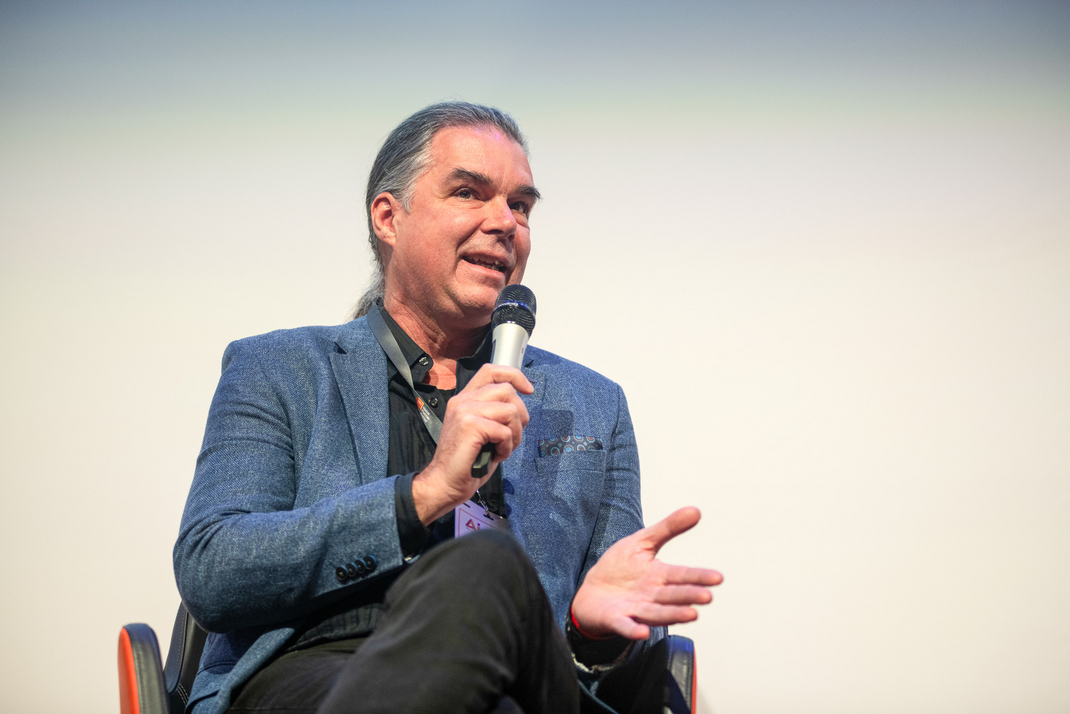
Hands-on AI research
Research becomes particularly exciting when it is accessible and creates points of contact in everyday life. At the AI@HPI conference, scientists demonstrated exactly that – with demonstrators that make complex research tangible.
- The “TreeDigitalTwins” team, for example, presented how drones, laser scanners, and AI create precise 3D models of forest areas. The team had already been accompanied by ZDF in advance. Josafat-Mattias Burmeister draws a positive conclusion: “There have already been many interesting discussions, and we have received very positive feedback.”
- At the neighboring booth, Zi Yang and Jona Otholt showed how AI makes weather forecasts energy-efficient, fast, and accessible to more people. Thanks to high spatial resolution and a model that even runs on a single GPU.
- Another project, supported by the AI service center WestAI, follows a similar principle with the aim of protecting people and cities: Floodwaive predicts within seconds whether heavy rain will lead to flooding. Denny Gert explains: “Our AI model immediately shows how high the water could rise and where dangers lie – without expensive simulations.” The importance of this is apparent: “Having answers to flood predictions is essential for disaster control. Early precautions can prevent immense damage – especially in light of climate change.”
Fireside Chat with Richard David Precht
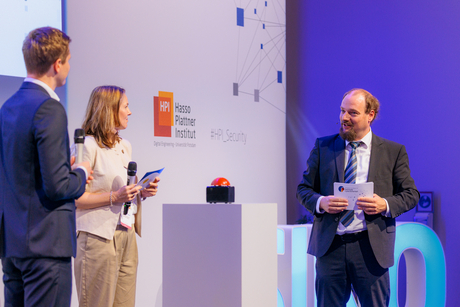
At the end of the first day of the conference, a fireside chat took place in the evening. In dialogue: HPI Professor Ralf Herbrich and author and philosopher Richard David Precht. While a digital fireplace flickered in the background, the head of the HPI department “Artificial Intelligence and Sustainability” asked the first question: “What is the crucial difference between human and artificial intelligence?”
Precht emphasized that machines can only imitate emotions, have no focus on the present, cannot develop imagination, and have no sense of self-awareness. What work will remain in the future? For Precht, it is becoming apparent that the activities that will remain are primarily those “where it is important to people, that people are dealing with people.”
The discussion about possible superintelligence was also quickly summed up: both interlocutors agreed that we are still a long way from this. According to Herbrich, current AI models are still highly specialized, and self-improving general intelligence is not scientifically in sight. An interesting contrast emerged on the subject of creativity. Precht expressed concern that music, art, and design will primarily be created by machines in the future. He is particularly skeptical about how pop songs are created today. Herbrich countered this by pointing out that art and culture have always used new technologies to develop new forms of expression.
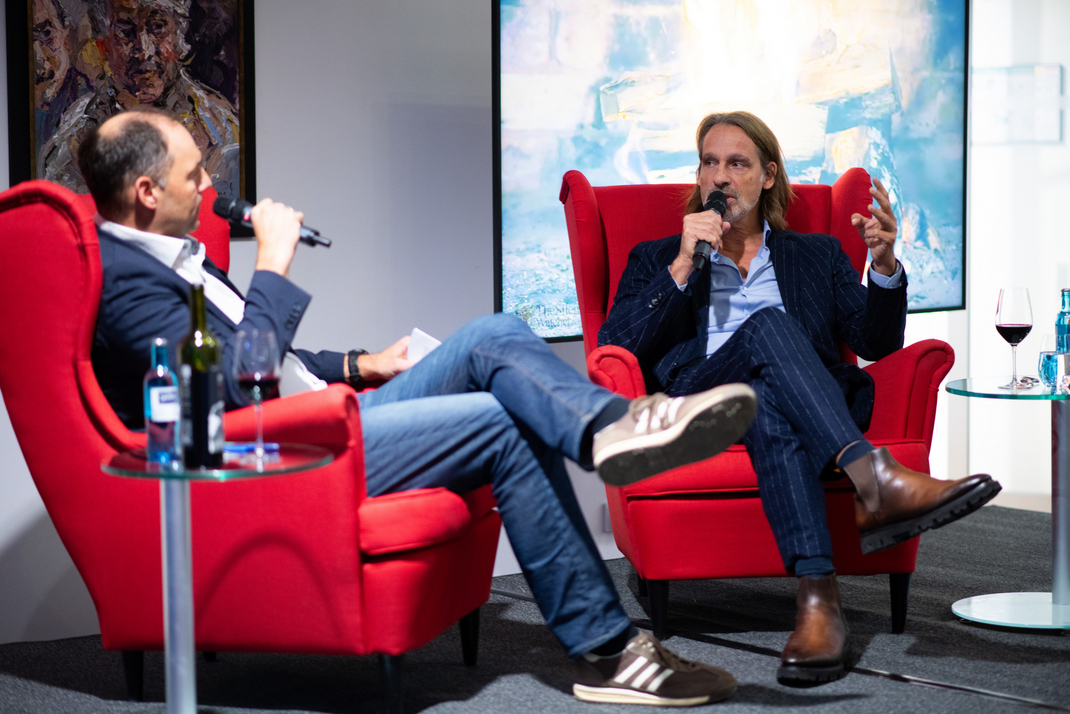
Finally, the question was raised as to whether Europe can still catch up in the global AI race. Precht drew a historical comparison with Argentina in the 1920s – at that time one of the richest nations, but later permanently left behind due to missed technological change.
Herbrich took a much more optimistic view of the future. He said there was enormous potential for innovation, for example through completely new methods or more energy-efficient computing architectures. This presented a great opportunity for Europe.
The final question was a personal one: “What are you most excited about in the field of artificial intelligence?” Precht hopes that routine mental work will decrease and that we humans will be able to focus more on “what really defines us.”
Conference of the German AI Service Centers
Day three of the conference was dedicated to the AI service centers in Germany. Their task is to support small and medium-sized enterprises in the development and application of AI technologies, with the help of knowledge transfer and AI infrastructure.
The four service centers, funded by the Federal Ministry of Research, Technology, and Space (BMFTR), came together for the first Conference of the German AI Service Centers.
Dr. Alexandra-Gwyn Paetz, Head of the Technological Sovereignty and Innovation Department at the BMFTR, emphasized in her introductory keynote speech the role of AI service centers on the path to technological sovereignty. This sovereignty is characterized by four aspects:
- Understanding and mastering key technologies.
- Transforming them into applications.
- Ensuring independent production.
- Building a base of skilled workers.
All these areas are addressed by the AI service centers. Dr. Paetz congratulated the centers on what they have already achieved in their first three years.
The four AI service centers – WestAI, hessian AI Service Center, KISSKI, and the AI Service Center Berlin Brandenburg – provided insights into their work and presented excerpts from their projects. Subsequent Q&A sessions provided an opportunity for lively discussion with the audience.
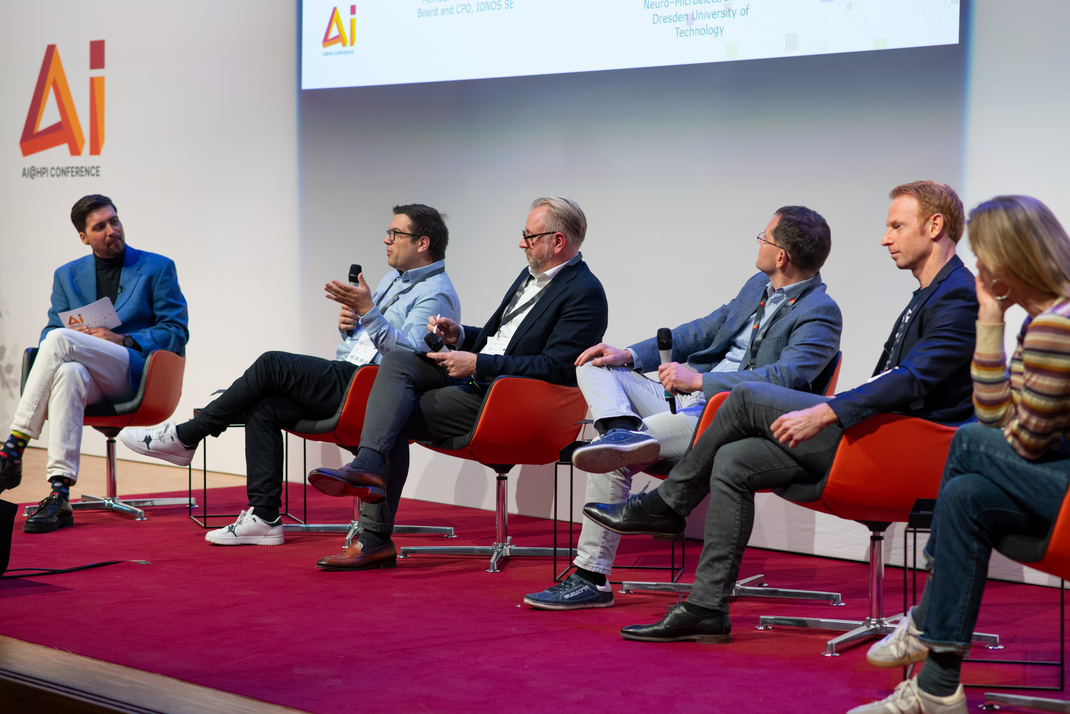
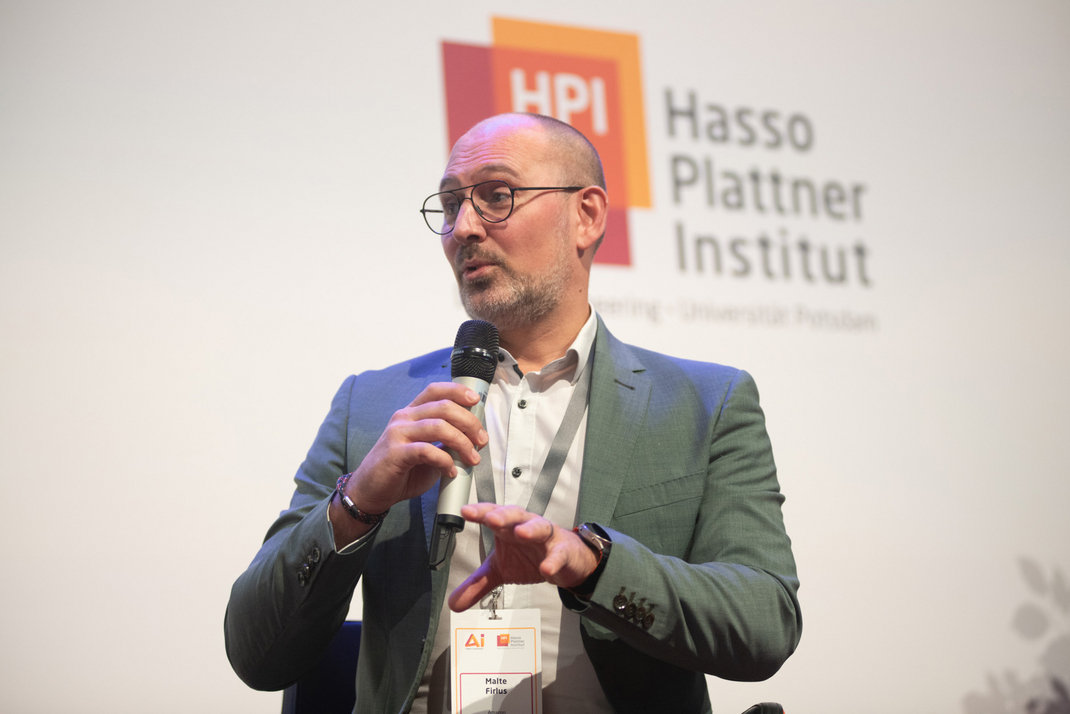
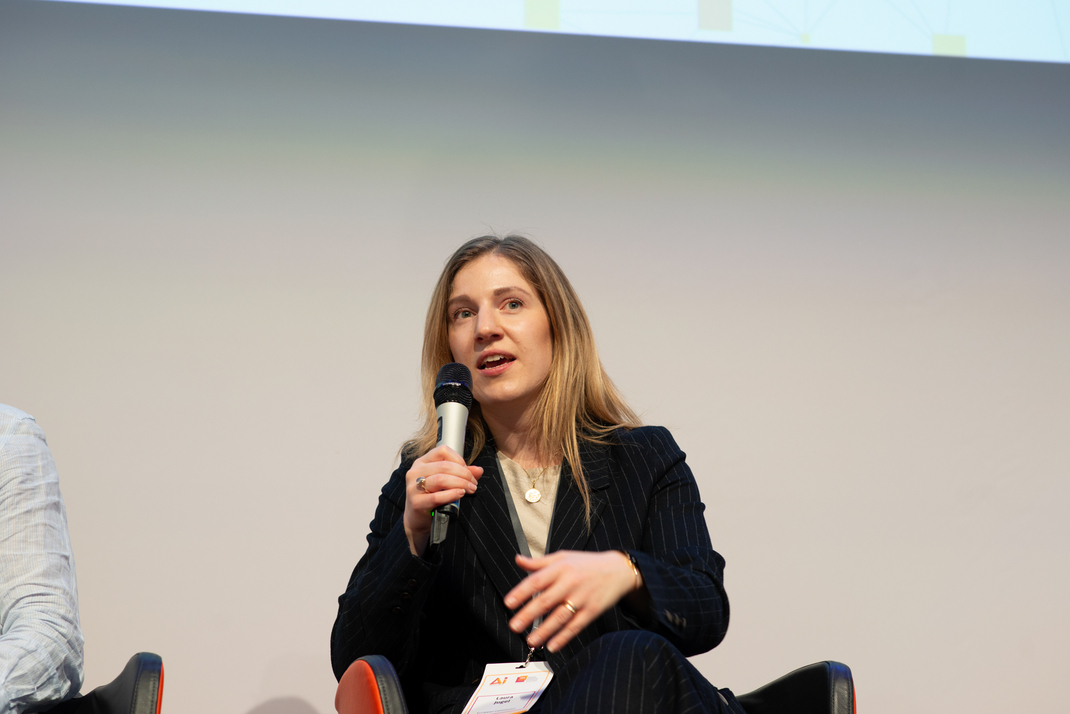
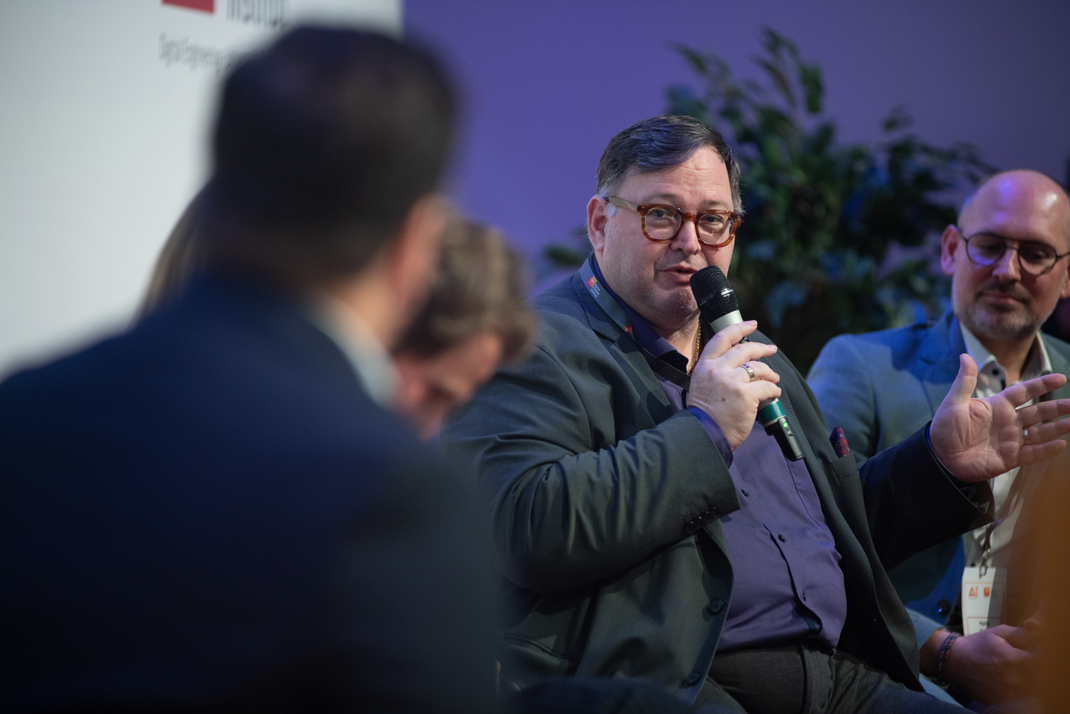
The day's closing panel brought together invited experts from politics and research to discuss risks, strategies, responsibilities, and opportunities for strengthening Europe's position in the field of AI.
The AI service centers are delighted that their funding has recently been extended until 2027.
Impressions AI@HPI 2025







More news
Last change: 11/06/2026, Patrick Lenz