

What does a professional football player with type 1 diabetes wish for? More acceptance, better support, and technological solutions that make everyday life easier.
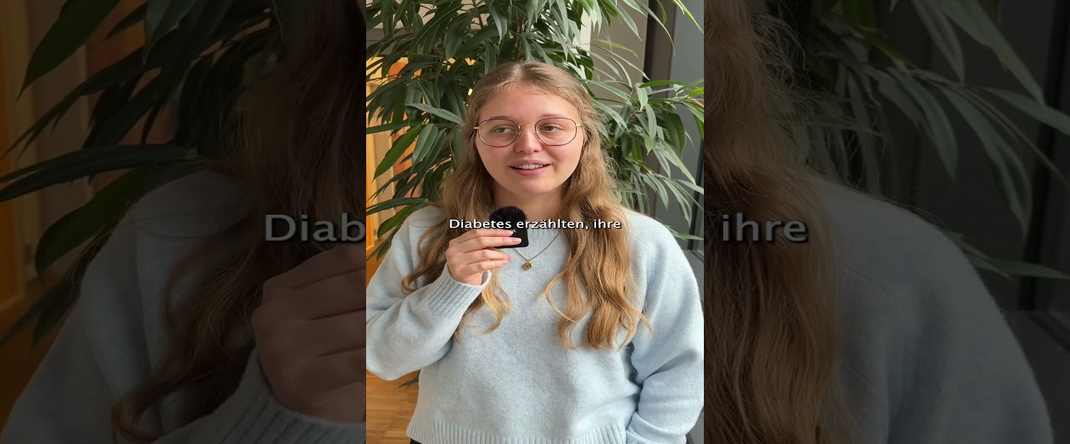
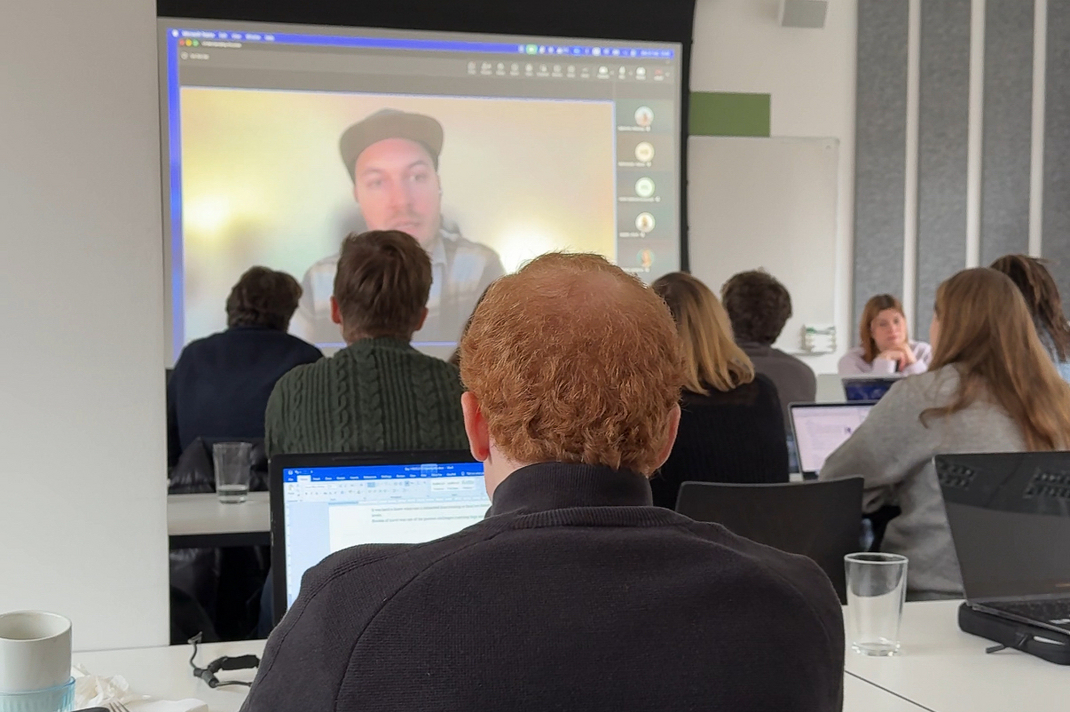
That’s what Felix Petermann, former professional football player living with type 1 diabetes, shared with master’s students during an HPI seminar. He spoke about his daily life as an athlete managing a chronic condition, discussing monitoring tools, body awareness, and the challenges of high-performance sports.
These very topics set the stage for an intensive seminar week at the Hasso Plattner Institute titled "Understanding Glucose Dynamics through CGM Self-Application."
Master’s students from the Digital Health and Computer Science tracks explored the world of continuous glucose monitoring (CGM) in depth — not only in theory, but also through hands-on personal experience.
10 days, 1 sensor, real data: How CGM is changing our understanding of diabetes


Learning through self-experimentation: Experiencing CGM in everyday life
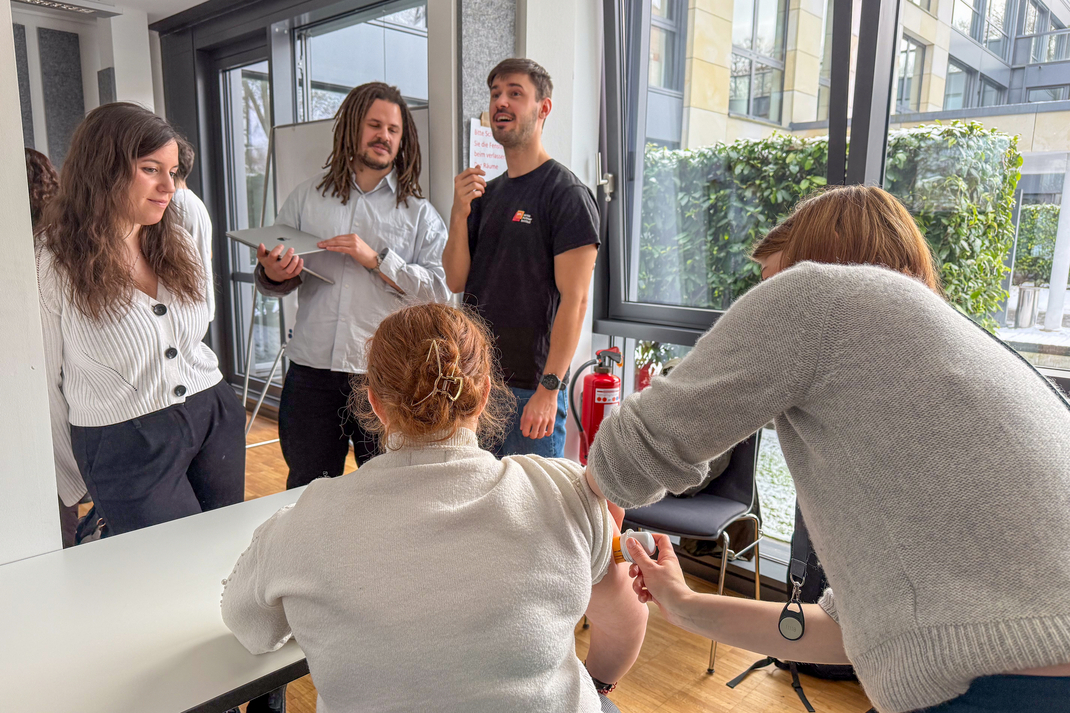
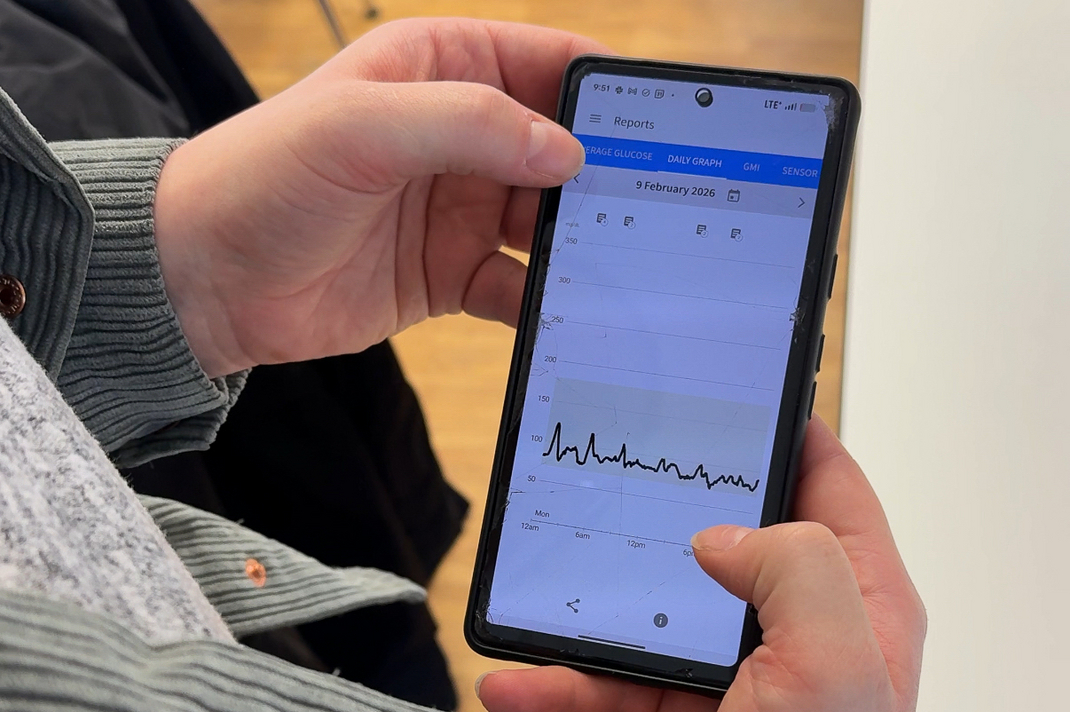
Even before the seminar began, participants received onboarding. During the seminar, things quickly became practical: over the course of ten days, all students tested a CGM sensor (Continuous Glucose Monitoring) themselves. Attached to the upper arm and connected to a smartphone via QR code, the sensor continuously delivers real-time glucose data through an app. Trends, curves, and alerts make it visible how nutrition, sleep, exercise, or stress directly influence metabolism.
This marked the beginning of each student’s personal "CGM journey."
Eating habits were reflected on, behaviors were deliberately adjusted, and glucose fluctuations were analyzed. It quickly became clear how complex glucose dynamics are. Different meals led to highly individual responses, and isolating single influencing factors proved difficult. Many students also admitted feeling a strong urge to constantly check the app for new readings — something that itself created stress.
The self-experiment was accompanied by a strong theoretical foundation: physiology, hormones, metabolic processes, and the many factors influencing glucose levels in the human body.
The HPI Digital Health research group "Non-Communicable Diseases," led by Prof. Katarina Braune and consisting of Christine Knoll, Drew Cooper, Mohammed Seyam, and Ulrike Thurm, guided the seminar week with scientific expertise and close mentorship.
Several guest speakers shared insights from their professional practice and personal experiences:
- Felix Petermann, former professional football player with type 1 diabetes, spoke in a virtual fireside chat about life as an athlete with a chronic condition. He discussed monitoring tools, body awareness, and the challenges of competitive sports.
- Stephanie Haack, entrepreneur and diabetes blogger, and Svea Krutisch, science communicator living with type 1 diabetes, addressed stigma, misdiagnoses, and the importance of person-centered communication — highlighting the crucial role of education and empowerment.
- Manuel Eichenlaub from the Institute for Diabetes Technology Ulm shared insights into current research on diabetes technologies.
- The founders of LineSystems, Martin Johannesen and Simon Madsen, demonstrated in their talk "From Code to Clinic" how CGM technologies can improve clinical workflows.
- Marc Grüner from Syntactiq presented AI-based approaches for analyzing CGM data.
The mission: To develop digital solutions that deliver real value
The mission for the students was clear: Develop digital solutions that help people with diabetes manage their everyday lives more easily.
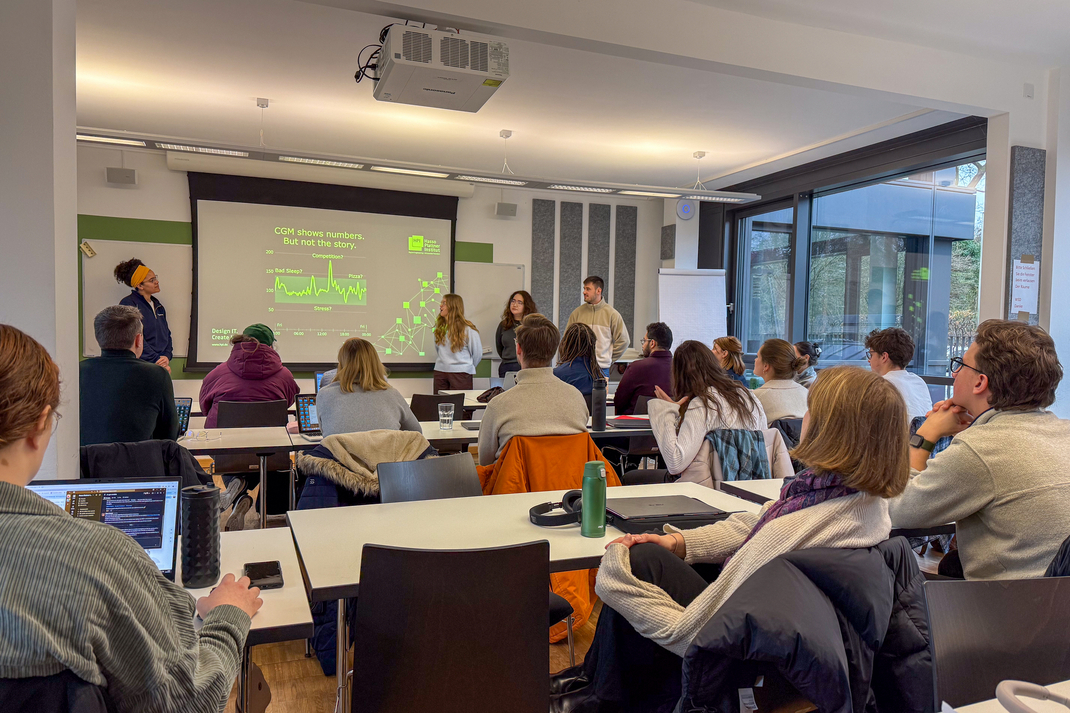
The final team pitches demonstrated the impressive innovation potential that can emerge from just one week of intensive work:
- a system for glucose monitoring in anesthesiological hospital management,
- a smartwatch app with AI-supported data analysis and personalized therapy recommendations,
- and an application that incorporates hormonal cycles for women with diabetes.
and insights that extend far beyond the seminar room.
More news
Last change: 21/04/2026, Patrick Lenz